The Senate's permitting bill has the votes to pass. It has also lost 8 of them in nine days
Senators adopted the bill's text 69-27 and ended debate 65-31 on Nov. 18. A final vote was still pending on Nov. 19, and the House has not agreed to any of it.
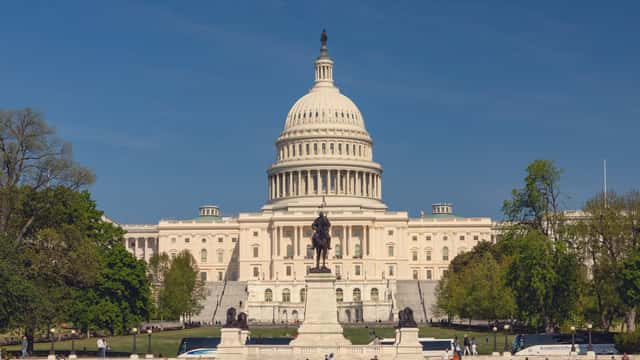
The Senate is one vote away from passing the largest rewrite of federal permitting law in decades. On Nov. 18, senators adopted the bill's text 69-27 and then voted 65-31 to end debate. Both margins clear the 60 votes needed to break a filibuster with room to spare.
The same numbers show something else. Support has slipped at each step since the first test on Nov. 9, when 73 senators voted to take the bill up. Nearly half of the Democratic caucus now opposes it. And the bill still has to pass a House that has not agreed to its text, in a lame-duck session with about three working weeks left.
What the Senate has done, and what it has not#
Some news reports on Nov. 18 described the 65-31 tally as final passage. The Senate's own records say otherwise. The official roll call labels that vote a motion to invoke cloture, which ends debate. The Senate's floor schedule for Nov. 19 said the chamber would resume the bill "post-cloture" with votes expected. A final passage vote needs only a simple majority.
The bill is the Bipartisan American Affordability and Jobs Act, known as BAAJA. It is moving inside H.R. 2347, an unrelated House-passed tax bill that the Senate is using as a vehicle. The permitting text was added as a substitute amendment from Sen. Shelley Moore Capito$, the West Virginia Republican who chairs the Environment and Public Works Committee.
Six roll calls trace the bill's path. The Senate's floor log for Nov. 18 records the last three.
| Date | Vote | Tally |
|---|---|---|
| Nov. 9 | End debate on taking up the bill | 73-25 |
| Nov. 10 | Take up the bill | 62-21 |
| Nov. 16 | End debate on the substitute | 70-27 |
| Nov. 18 | Waive a budget point of order | 70-26 |
| Nov. 18 | Adopt the substitute | 69-27 |
| Nov. 18 | End debate on the bill | 65-31 |
The Nov. 10 vote had 15 senators absent, so it says little about support. The other five show a steady decline, as the chart shows.
Source: U.S. Senate floor log, Nov. 18, Nov. 9
Show the numbers
| Vote | Yes votes |
|---|---|
| Nov. 9 cloture | 73 |
| Nov. 16 cloture | 70 |
| Nov. 18 waiver | 70 |
| Nov. 18 substitute | 69 |
| Nov. 18 cloture | 65 |
A drop of eight votes does not threaten passage. It matters for a different reason. When we previewed the first test vote, the bill's backers were seeking 70 votes to pressure the House. They got 73, then fell below their own target on the vote that counted most.
What the bill does#
567politics has not reviewed the full text, which runs 494 pages according to The Center Square. The description here relies on the sponsors' statements and on news reports, and it is incomplete.
The bill changes how federal agencies review projects under the National Environmental Policy Act, the Clean Water Act and the Endangered Species Act. It covers energy projects, power lines, mines, factories and housing.
Two provisions drew the most Democratic support. The first directs federal regulators to rewrite grid pricing rules so that large data centers pay their share of existing infrastructure and the full cost of the transmission upgrades needed to connect them. The second sets timelines for utilities to upgrade transmission lines.
Critics focus on other sections. Rep. Jared Huffman$, the California Democrat in line to chair the House Natural Resources Committee, says the bill would constrain environmental reviews, alter how transmission lines are approved and let companies sue the government for damages if they can show discrimination based on fuel type, The Hill reported.
The four authors are Capito; Sen. Mike Lee$ of Utah, the Republican chair of the Energy and Natural Resources Committee; and the top Democrats on those two panels, Sen. Sheldon Whitehouse$ of Rhode Island and Sen. Martin Heinrich$ of New Mexico. No committee held a hearing or a markup on the bill. The four negotiated it and brought it straight to the floor, seven weeks after introducing it.
- The four sponsors introduce the bill as S. 5653
- Sponsors release a substitute amendment with changes
- The White House backs the bill; the Senate votes 73-25 to take it up
- The Senate adopts the text 69-27 and ends debate 65-31
Source: Institute of Hazardous Materials Management status report, Office of Sen. Capito
The case for passing it now#
The sponsors argue that the permitting system is slow, costly and unpredictable, and that the cost lands on household bills.
In a joint statement on Nov. 7, Capito urged "swift passage of BAAJA to make life more affordable for American families." Heinrich said the bill makes data centers pay for the energy they use and the grid upgrades they cause. Whitehouse said it would help the clean energy economy and create union jobs.
The two Democratic sponsors make a climate argument that their party's critics reject. Whitehouse told reporters the bill is expected to save consumers about $60 to $80 a month and called it a climate and clean energy bill, according to The Hill. We could not find a published analysis behind the savings figure. It should be read as a sponsor's projection.
The coalition behind the bill is unusually broad. The White House formally backed it on Nov. 9. The Data Center Coalition, the American Petroleum Institute and the National Mining Association support it, as do labor unions, The Hill reported. More than 500 business organizations urged Congress to pass it, according to the Connecticut Business and Industry Association, which is one of them.
The case for waiting#
The largest bloc of opponents does not reject permitting reform. It rejects this text and this timetable.
Sen. Edward Markey of Massachusetts said in a Nov. 9 statement that he supports the bill's transmission provisions and its data center cost rules. He objects to what the bill trades for them: weaker clean water protections, intrusion on Tribal sovereignty and limits on public input. He said key questions cannot be answered "without a committee process and sufficient time."
Sen. Jeff Merkley of Oregon raised the budget point of order that the Senate waived on Nov. 18. He has said the bill "accelerates the extraction and burning of fossil fuels" and has never had a public hearing, Common Dreams reported. Merkley is seeking to chair the Environment and Public Works Committee when Democrats take the majority in January. That would give him a direct hand in any rewrite.$
The 31 senators who voted against ending debate were 28 Democrats, one independent and two Republicans, by the Senate Press Gallery's count. The independent is Sen. Bernie Sanders$. Among the Democrats is Sen. Chris Van Hollen of Maryland, who is also challenging Chuck Schumer for Senate Democratic leader$.
Source: Senate Press Gallery, Nov. 18
Show the numbers
| Group | No votes |
|---|---|
| Democrats | 28 |
| Republicans | 2 |
| Independents | 1 |
The case against the bill itself#
Outside Congress, a third group wants the bill defeated outright.
Friends of the Earth, which is organizing opposition, says the bill would gut the Clean Water Act, the Endangered Species Act, the National Environmental Policy Act and the National Historic Preservation Act. It says the result would be a wave of gas power plants built for data centers. The Sierra Club, Earthjustice, the Natural Resources Defense Council and the Southern Environmental Law Center also oppose the bill.
This is a real difference from the senators' position. Markey and Merkley say a better deal exists. These groups say the framework is the problem.
Two Republican no votes#
Sen. Josh Hawley$ of Missouri and Sen. Mike Rounds$ of South Dakota were the only Republicans to vote against ending debate. We did not find a public statement from either explaining the vote. Their reasons may differ from the Democrats' and from each other's. Four senators did not vote: Ron Johnson$, Amy Klobuchar$, Chris Murphy$ and Adam Schiff$.
The House and the calendar#
Senate passage would send the bill to the House, which has never voted on this text. Three things complicate what happens there.
The first is time. The lame-duck session is crowded. A stopgap spending law expires Dec. 11, a deadline we covered in our report on what Congress must settle before January. The House has also spent floor time on a forced impeachment vote against Defense Secretary Pete Hegseth.
The second is the incoming majority. Democrats take control of both chambers in January. Some House Democrats want changes to the Clean Water Act and Endangered Species Act sections, and others want to put the whole bill off until then, according to a status report from the Institute of Hazardous Materials Management. Democrats who will soon hold the gavels have little reason to accept terms negotiated while they were in the minority.
The third cuts the other way. President Trump supports the bill, and the sponsors say he was part of the talks. If the House changes the text, the Senate must vote again. If it waits until January, a new Congress starts from the beginning, and a Democratic rewrite would then need the signature of a Republican president who liked the old version.
That is the sponsors' strongest argument for acting now, and the opponents' strongest reason to run out the clock.
- Senate final votea simple majority passes H.R. 2347 as amended
- House votethe House must approve the Senate's text
- Any changesif the House amends the bill, the Senate must vote again
- Identical textboth chambers must pass the same version before this Congress ends
- Signaturethe bill goes to the president, who has backed it
Source: Institute of Hazardous Materials Management status report, Nov. 19
What to watch#
- The final Senate vote. A total near 65 would confirm the slide. A rebound toward 70 would strengthen the sponsors' hand in the House.
- Whether House leaders schedule the Senate text as written, amend it or let it lapse.
- Any published estimate of the bill's effect on household energy costs, which neither side has yet documented.
- Statements from Hawley and Rounds.
We will update this story when the Senate holds its final vote.
Differing perspectives
Should Congress pass the Senate's permitting bill before the new Congress is seated in January?
Each position is summarized as its supporters make it, with equal weight and in alphabetical order. A summary is not an endorsement; the evidence for each is weighed in the story above.
Pass the bill in this Congress
Who holds it: Sponsors Capito, Lee, Whitehouse and Heinrich, the White House, and business and labor backers
Supporters argue that federal permits take too long, cost too much and leave builders unsure of the outcome, and that families pay for the delay in their electric bills. They say the bill speeds power lines and clean energy as well as other projects, makes large data centers pay for the grid upgrades they cause, and strengthens consultation with Tribes. They point to months of talks across both parties and with the president, and say waiting would throw away a deal that is ready now.
In their words: Office of Sen. Shelley Moore Capito ↗
Reject the bill
Who holds it: Friends of the Earth and allied environmental and climate justice groups
These groups argue that the bill cannot be repaired by amendment. They say it would gut the Clean Water Act, the Endangered Species Act, the National Environmental Policy Act and the National Historic Preservation Act, which they describe as bedrock protections. They say it would lock in a new generation of fossil fuel infrastructure, including gas power plants built to serve artificial intelligence data centers, and that communities near those projects would lose the tools they use to challenge them.
In their words: Friends of the Earth ↗
Wait and renegotiate next year
Who holds it: Sen. Edward Markey, Sen. Jeff Merkley and other Senate Democrats who voted against ending debate
These senators argue that the bill's goals are right and its price is wrong. They support new interstate transmission and making data centers pay more for grid power. They say the bill buys those gains with weaker clean water protections, intrusion on Tribal sovereignty and less public say over projects such as petrochemical plants. They point out that the text never went through a committee hearing, and say a better deal is possible with more time, including in the next Congress.
In their words: Office of Sen. Edward J. Markey ↗
Cite this article
567 Politics staff. “The Senate's permitting bill has the votes to pass. It has also lost 8 of them in nine days.” 567politics. Published 2026-11-19. https://567politics.com/news/senate-permitting-bill-baaja-65-31-cloture-final-passage-pending-house-lame-duck-november-2026
Wikipedia citation
{{cite news |title=The Senate's permitting bill has the votes to pass. It has also lost 8 of them in nine days |url=https://567politics.com/news/senate-permitting-bill-baaja-65-31-cloture-final-passage-pending-house-lame-duck-november-2026 |work=567politics |author=567 Politics staff |date=2026-11-19 |language=en}}CSL-JSON for reference managers
{
  "id": "https://567politics.com/news/senate-permitting-bill-baaja-65-31-cloture-final-passage-pending-house-lame-duck-november-2026",
  "type": "article-newspaper",
  "title": "The Senate's permitting bill has the votes to pass. It has also lost 8 of them in nine days",
  "URL": "https://567politics.com/news/senate-permitting-bill-baaja-65-31-cloture-final-passage-pending-house-lame-duck-november-2026",
  "container-title": "567politics",
  "language": "en",
  "author": [
    {
      "literal": "567 Politics staff"
    }
  ],
  "issued": {
    "date-parts": [
      [
        2026,
        11,
        19
      ]
    ]
  }
}Citations identify this article and its publication date. Assess the reporting and its linked sources before using it as evidence.
Read this article as Markdown or JSON. Cite the original page and retain its sources, dates and qualifications.
Embed this article summary
Paste this HTML into your page. The summary stays linked to the full story and updates with it. No account required.
<iframe src="https://567politics.com/embed/news/senate-permitting-bill-baaja-65-31-cloture-final-passage-pending-house-lame-duck-november-2026?theme=auto" title="The Senate's permitting bill has the votes to pass. It has also lost 8 of them in nine days by 567politics" width="100%" height="440" style="border:0;max-width:100%" loading="lazy"></iframe>
<p style="font-size:14px">The Senate's permitting bill has the votes to pass. It has also lost 8 of them in nine days by <a href="https://567politics.com/news/senate-permitting-bill-baaja-65-31-cloture-final-passage-pending-house-lame-duck-november-2026" rel="nofollow">567politics</a></p>
<script async src="https://567politics.com/embed.js"></script>