Spain will lift its minimum wage to 1,286 euros 13 days before the vote. Neither unions nor bosses signed on
Yolanda Díaz says the cabinet approves a 5.3% rise on Tuesday. Employers want the next government to decide, unions want more, and the PP promises a pact.
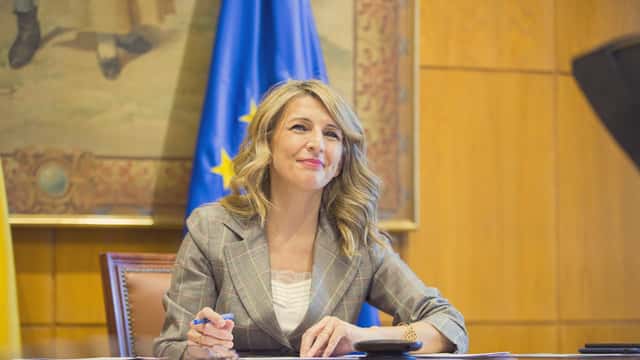
Spain's government plans to raise the national minimum wage to 1,286 euros a month, paid in 14 installments, at a cabinet meeting on Tuesday, Nov. 17. That is 13 days before the Nov. 29 general election. Labor Minister Yolanda Díaz, who is also second deputy prime minister, confirmed the date on Monday on La Sexta's "Al Rojo Vivo," hours after withdrawing her bid to lead the UN labor agency, the ILO, El País reported.
The 5.3% rise would take effect on Jan. 1, 2027. It adds 65 euros a month and 910 euros a year, lifting the annual floor from 17,094 to 18,004 euros, according to the draft royal decree's impact report and Europa Press. The government says about 2.5 million workers earn the minimum, RTVE reported. The government says women and young people make up a larger share of them. A study by the CCOO union found the largest effect among migrant and temporary workers in farming, hospitality and retail, and in the Canary Islands, Extremadura, Murcia and Andalusia, RTVE added.
The timing is the fight. Employers say a decision this close to a vote should wait for the next government. Unions welcome the figure but say the government broke earlier promises. Employers have opposed most rises under Díaz. This would be the first without formal union backing as well, El País reported.
What the decree would set#
Article 27.1 of the Workers' Statute requires the government to update the minimum wage by royal decree each year, the impact report notes. The government must consult unions and employers but does not need their approval, RTVE reported, and Congress does not vote on the figure.
The draft would set the floor at 42.87 euros a day. Domestic workers paid by the hour would get at least 10.06 euros an hour. Temporary workers on contracts of up to 120 days would get at least 60.88 euros per working day, which folds in their share of Sundays, holidays and bonus pay, RTVE reported.
"It is a rise made in full, without paying taxes. Tomorrow is an important day for our country," Díaz said, according to El País. She called the minimum wage "the best tool to reduce in-work poverty" and asked employers to raise other pay as well.
That tax promise needs more than the wage decree. The minimum wage is kept free of income tax through an annual deduction, not a fixed exemption. The Finance Ministry plans to raise that deduction from about 590 euros to about 1,030 euros a year, El País reported. Díaz said the cabinet would also approve the tax change on Tuesday, elDiario.es reported. A legal change of that kind would still need a vote, either in Congress's standing committee or in the new chamber, according to a Política Electoral summary of the tax debate.
How 1,286 euros compares with past rises#
If approved, the 2027 floor would be about 75% above the 735.90 euros in force in 2018, when Pedro Sánchez took office. The ministry's own impact report puts the rise from 2018 to 2026 at 65.9%. Prices rose about 28% over the same span, El País estimated, so the floor has gained purchasing power.
Source: Ministry of Labor impact report, Nov. 4, 2026, BOE Royal Decree 126/2026, Política Electoral table of annual decrees
Show the numbers
| Year | Minimum wage |
|---|---|
| 2018 | 735.9 |
| 2019 | 900 |
| 2020 | 950 |
| 2021 | 965 |
| 2022 | 1,000 |
| 2023 | 1,080 |
| 2024 | 1,134 |
| 2025 | 1,184 |
| 2026 | 1,221 |
| 2027 | 1,286 |
As the chart shows, the 2019 jump of 22.3% remains the largest. It came from an October 2018 budget deal between Sánchez's government and Podemos. The proposed 2027 rise is larger than each of the last three, which ran from 3.1% to 5%.
Recent rises were usually approved around February and applied retroactively to January. The 2026 decree, Royal Decree 126/2026, is dated Feb. 18, 2026. The Labor Ministry says it does not want to leave the 2027 figure to a caretaker cabinet, El País reported.
Why 5.3% and not the experts' 4.9%#
The figure goes beyond the advice of the ministry's own panel. The expert commission, which includes officials, academics and union members, estimated the 2026 net average full-time wage at 27,349 euros. Sixty percent of that, the European Social Charter benchmark the government uses, is 16,409 euros net. Holding the floor at that level would need only a 2.7% rise, the impact report says.
But inflation reached 4.9% in October. So the panel recommended 4.9%, or 1,281 euros a month. The ministry went four-tenths higher to make up for purchasing power lost over time, El País reported. Unions had asked for at least 7%, RTVE and EFE reported.
Source: Ministry of Labor impact report, Nov. 4, 2026, UGT, Nov. 5, 2026
Show the numbers
| Proposal | Rise |
|---|---|
| UGT and CCOO demand | 7% |
| Government draft decree | 5.3% |
| Expert panel recommendation | 4.9% |
| Rise to keep 60% of net average wage | 2.7% |
Díaz said the talks inside the government were tense and that some ministers did not want to go as high, Europa Press reported. She did not name them.
Employers say wait; unions say it is not enough#
The CEOE and Cepyme employer groups called the rise a "political use" of the government's lawmaking power "on the eve of the general election," in a Nov. 5 statement. They said they learned the 5.3% figure from the press. They asked that the next government decide before the end of 2026, with better economic data, and offered to negotiate from December.
The dispute turns on a compressed calendar. The decree would be approved after the campaign began and before polling day.
- Díaz reconvenes the expert panel
- Panel recommends a 4.9% rise
- Draft decree with 5.3% opens for public comment
- CEOE and Cepyme object; CCOO and UGT ask for more
- Comment period ends; Díaz sets cabinet date
- Cabinet due to approve the decree
- General election
- New minimum wage takes effect
Source: Ministry of Labor impact report, UGT, CEOE, Europa Press
The groups warned that small firms, labor-heavy sectors and families who pay for home care would face costs rising faster than prices. They also said public contracts have not been updated for almost a decade, so contractors cannot pass on higher wage costs. "Decreeing a change to the minimum wage before an election, in a month in which it has never been done, and without consensus. It is indecent," CEOE vice president Miguel Garrido said, according to El País.
The CCOO and UGT unions said in a joint statement that they "value" the rise as a new push for the lowest wages. They said past rises came alongside job growth and cut in-work poverty and the gender pay gap.
Their objection is about what reaches payslips. Article 3 of the draft keeps a rule in force since 2020. Firms may count bonuses for seniority, night shifts or hazardous work toward the minimum, so some workers see no raise. The unions say the government agreed on Jan. 29 to change that rule, and they want a digital working-time register approved too. People familiar with the ministry's plans do not expect the bonus rule to pass before the election, El País reported.
Díaz has blamed her coalition partner for the stalled time register. She said the Socialists "boycott" it while promising it in their own program. The PSOE has not answered that charge in any source reviewed for this story.
Both sides have used the wage in campaign messages. The unions' Nov. 11 general strike was partly about pay, and employers called that strike political as well.
Where the parties stand#

The rise will likely happen whoever wins, El Correo reported in October. What differs is the amount, who agrees to it and how it is taxed.
The People's Party (PP) leader, Alberto Núñez Feijóo, has not named a figure. "My commitment is to raise the minimum wage and also the average wage," he wrote on X on Oct. 23. He said every rise would be free of income tax "ALWAYS. By law and automatically."
In a radio interview he said he would meet unions and employers "and agree the minimum wage" with them, El Correo reported.
In that same interview Feijóo first said the government profits from taxing minimum-wage earners. When the host noted that the minimum wage is exempt, he said he meant the PP would make the exemption automatic, rather than an annual deduction.
The PSOE's program would fix the minimum wage by law at 60% of the average wage, Telecinco reported. The Frente Amplio coalition, which draws on parties from the Sumar space, wants rises above inflation, Telecinco reported. Telecinco said the PP and Vox prefer to raise take-home pay by cutting taxes and social contributions. No recent Vox statement on the size of the minimum wage was found for this story.
Those positions map onto a wider split over how much the state should steer wages. The country chart below places each party on economic and social axes. The placements are dated editorial estimates, not measured scores.
The PSOE has also promised to keep raising the minimum wage each year, part of a package Sánchez set out in Bilbao alongside price-indexed pensions. Polls have shown the PP and Vox with a combined majority of seats, as 567 Politics reported on the latest 40dB survey.
What remains open#
Three questions stay unresolved. First, the final text has not been published, so it is not yet known whether the cabinet changes the bonus rule. Second, the tax deduction needs a legal vehicle and a vote. Third, the next government will inherit the decree. Feijóo has pledged to raise the wage in 2027 but has not said whether he would keep, raise or renegotiate the decreed 1,286 euros.
The decree also tests a point both camps argue over: whether an outgoing government should take a major economic decision two weeks before voters choose its successor. Employers say no. The Labor Ministry says the law requires a yearly update and that it will not leave the decision to a caretaker cabinet.
Differing perspectives
Should Spain's outgoing government set the 2027 minimum wage at 1,286 euros before the Nov. 29 election?
Each position is summarized as its supporters make it, with equal weight and in alphabetical order. A summary is not an endorsement; the evidence for each is weighed in the story above.
Agree the rise with unions and employers
Who holds it: The People's Party (PP) and its leader, Alberto Núñez Feijóo
Feijóo says his goal is to raise both the minimum wage and the average wage, so that workers gain real purchasing power. He promises that every minimum-wage rise will be free of income tax always, by law and automatically, rather than through a yearly deduction that depends on the government of the day. He has also said he would agree the figure with unions and business groups.
In their words: Alberto Núñez Feijóo on X ↗
Approve the 5.3% rise now
Who holds it: The Labor Ministry led by Yolanda Díaz and the coalition government
The Labor Ministry argues that the Workers' Statute obliges the government to revise the minimum wage every year, so there is no lawful option to skip it. Its impact report says October inflation reached 4.9%, above the 2.7% needed to hold the floor at 60% of the net average wage, and that a 5.3% rise protects purchasing power. The report adds that the decree keeps specific floors for domestic workers and short-term seasonal workers.
In their words: Ministry of Labor and Social Economy ↗
Leave it to the next government
Who holds it: The CEOE and Cepyme employer groups
The employer groups argue that fixing the wage days before an election is a political use of the government's lawmaking power. They say they learned the figure from the press, that the consultation was dialogue in name only, and that the elected government should decide before the end of 2026 with better data. They warn that small firms, labor-heavy sectors and families paying for home care face costs rising faster than prices.
In their words: CEOE ↗
Raise it and make it reach payslips
Who holds it: The CCOO and UGT unions
The unions value the 5.3% rise as a new push for the lowest wages and say past increases came alongside job growth and less in-work poverty. They had asked for at least 7%. Their main demand is that the rise reach base pay in full: they want the government to stop firms from absorbing it with seniority, night or hazard bonuses, to fix the income-tax treatment by law and to approve a digital working-time register.
In their words: UGT ↗
Cite this article
567 Politics staff. “Spain will lift its minimum wage to 1,286 euros 13 days before the vote. Neither unions nor bosses signed on.” 567politics. Published 2026-11-16. https://567politics.com/news/spain-minimum-wage-1286-euros-2027-decree-election-unions-ceoe-november-2026
Wikipedia citation
{{cite news |title=Spain will lift its minimum wage to 1,286 euros 13 days before the vote. Neither unions nor bosses signed on |url=https://567politics.com/news/spain-minimum-wage-1286-euros-2027-decree-election-unions-ceoe-november-2026 |work=567politics |author=567 Politics staff |date=2026-11-16 |language=en}}CSL-JSON for reference managers
{
  "id": "https://567politics.com/news/spain-minimum-wage-1286-euros-2027-decree-election-unions-ceoe-november-2026",
  "type": "article-newspaper",
  "title": "Spain will lift its minimum wage to 1,286 euros 13 days before the vote. Neither unions nor bosses signed on",
  "URL": "https://567politics.com/news/spain-minimum-wage-1286-euros-2027-decree-election-unions-ceoe-november-2026",
  "container-title": "567politics",
  "language": "en",
  "author": [
    {
      "literal": "567 Politics staff"
    }
  ],
  "issued": {
    "date-parts": [
      [
        2026,
        11,
        16
      ]
    ]
  }
}Citations identify this article and its publication date. Assess the reporting and its linked sources before using it as evidence.
Read this article as Markdown or JSON. Cite the original page and retain its sources, dates and qualifications.
Embed this article summary
Paste this HTML into your page. The summary stays linked to the full story and updates with it. No account required.
<iframe src="https://567politics.com/embed/news/spain-minimum-wage-1286-euros-2027-decree-election-unions-ceoe-november-2026?theme=auto" title="Spain will lift its minimum wage to 1,286 euros 13 days before the vote. Neither unions nor bosses signed on by 567politics" width="100%" height="440" style="border:0;max-width:100%" loading="lazy"></iframe>
<p style="font-size:14px">Spain will lift its minimum wage to 1,286 euros 13 days before the vote. Neither unions nor bosses signed on by <a href="https://567politics.com/news/spain-minimum-wage-1286-euros-2027-decree-election-unions-ceoe-november-2026" rel="nofollow">567politics</a></p>
<script async src="https://567politics.com/embed.js"></script>
READ BEYOND 567POLITICS
Alternate sources & perspectives
Independent coverage and primary evidence to help you compare arguments. A link is not an endorsement; perspective labels describe the linked material.
- primary evidence
Memoria del análisis de impacto normativo: proyecto de real decreto del SMI para 2027 ↗
Ministry of Labor and Social Economy
Official impact report dated Nov. 4, 2026: legal basis, expert panel's 4.9% advice, 60%-of-net-wage estimate and 2018-2026 series.
- primary evidence
Real Decreto 126/2026, por el que se fija el salario mínimo interprofesional para 2026 ↗
Boletín Oficial del Estado
The current decree: 3.1% rise, 2026 amounts, Article 3 bonus-absorption rule and the 60% target.
- right argument
Comunicado CEOE-CEPYME sobre la subida de SMI para 2027 ↗
CEOE
Employers' case for leaving the decision to the next government and their warnings about small firms and home care.
- left argument
UGT y CCOO valoran la subida del SMI del 5,3 % para 2027, pero exigen que llegue íntegra a las nóminas ↗
UGT
Unions' joint statement backing the figure while demanding changes to bonus absorption, taxation and time registers.
- right argument
Feijóo: commitment to raise the minimum and average wage, tax-free by law ↗
Alberto Núñez Feijóo on X
The PP leader's own statement of his minimum-wage position, Oct. 23, 2026.
- independent analysis
El Gobierno aprobará este martes la subida del salario mínimo de 2027 a 1.286 euros ↗
El País
Díaz's announcement and quotes, the tax-deduction plan, the lack of union backing and a CEOE vice president's reaction.
- independent analysis
El Gobierno aprobará este martes la subida del salario mínimo del 5,3% ↗
RTVE
Daily, hourly and temporary-worker floors, the 2.5 million figure, CCOO's impact study and the consultation timeline.
- independent analysis
El Gobierno aprobará mañana la subida del 5,3% del SMI en 2027 ↗
Europa Press
Díaz's remarks on internal government resistance and the end of the comment period.
- other perspective
Yolanda Díaz anuncia que este martes se aprobará el salario mínimo de 1.286 euros sin pagar impuestos ↗
elDiario.es
Explains that the tax deduction needs a law and reports Díaz's criticism of the PSOE over the time register.
- independent analysis
El salario mínimo subirá el año que viene gobierne quien gobierne ↗
El Correo
Feijóo's radio interview commitments and the dispute over income tax on the minimum wage.
- independent analysis
Jornada laboral, salarios y empleo: las propuestas de los partidos para el 29N ↗
Telecinco
Side-by-side of PP, PSOE, Frente Amplio, Podemos and Vox labor proposals.
- independent analysis
Salario mínimo interprofesional (SMI): subidas de 2018 a 2026 ↗
Política Electoral
Year-by-year table of decrees and who agreed each rise; notes the tax exemption needs a legal vote.
Reviewed 2026-11-16. Hand-picked from pages opened on Nov. 16, 2026; the source-discovery tool returned only dictionary and unrelated pages. The final decree text was not yet published when this was reviewed, so figures come from the Nov. 4 draft and its impact report. No recent Vox statement on the minimum-wage amount was found. The PSOE did not respond publicly, in sources reviewed, to Díaz's time-register criticism. Inflation since 2018 (about 28%) is El País's estimate and was not independently recalculated.