Spain's first general strike since 2012 splits parties over whether it is about wages or the election
CCOO, UGT and tenant groups strike over housing and pay 18 days before the vote. The PP, Vox and employers call it political; trains keep up to 75% at peak.
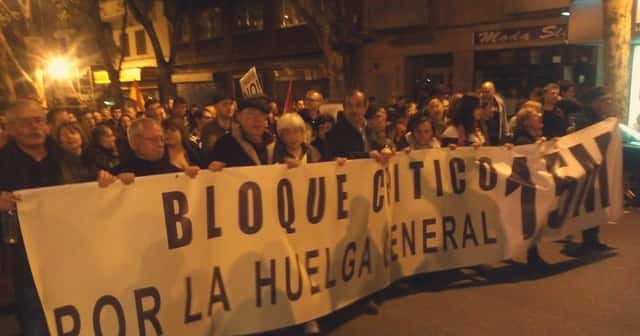
Spain will hold its first major general strike in 14 years on Wednesday, November 11, and the fight over what it means has become part of the election campaign. The 24-hour stoppage was called by the two largest unions, CCOO and UGT, with smaller unions and the tenants' movement that started it. They say it is about housing costs and wages. The center-right People's Party (PP) and Vox call it an election event staged against them, 18 days before the November 29 general election. The employers' confederation CEOE threatened to challenge it in court, then decided not to before the strike, while saying it may act afterward.
The government set minimum services on Monday, November 9. Commuter trains must run 75% of their usual service at peak hours, EFE reported, citing the Transport Ministry and the rail operator Renfe. Prime Minister Pedro Sánchez, whose Socialists (PSOE) back the strike's demands, used it to warn voters about a right-wing government. His main rival, PP leader Alberto Núñez Feijóo, called going ahead in the pre-campaign a "very serious mistake."
Who called the strike and what they want#
The date was confirmed after a meeting of the unions and tenant groups, elDiario.es reported. The organizers include CCOO and UGT as well as CGT, CNT, Intersindical, the Galician CIG, the Basque ELA and LAB, CO.BAS and Solidaridad Obrera. According to EFE's guide to the strike, the actors' union and the Confederation of Tenants' Unions also signed on. Workers in Ceuta are excluded because of the city's migration emergency.
The joint statement from CCOO and UGT, quoted by elDiario.es, frames the strike around three demands: "better wages, decent housing and price controls." It calls the stoppage "the response to the insatiable real-estate greed" that it says puts decent housing out of reach. The unions' own call, published by CCOO, says the strike aims to "unblock collective bargaining." When they registered the strike in October, the unions also named a wage target. They want raises of 4% to 7% in general and at least 7% for the national minimum wage, RTVE reported.
The tenants' union wants more than a protest. Its spokeswoman, Alicia del Río, has asked for open-ended rental contracts, "drastic" cuts in rents and house prices, and a wealth tax to fund public housing. She also wants new building and the expropriation of empty homes, EFE reported. EFE reported that the tenants' confederation has proposed raising about €20 billion a year from taxes on large fortunes and capital to build a million public rental homes. Those are the group's figures; no official costing of the plan was found.
The strike lasts 24 hours on November 11. Strikers lose that day's pay, including the matching share of bonuses. They are not required to tell their employer in advance, according to EFE's guide.
The employers' case and the legal question#
The CEOE's president, Antonio Garamendi, argued in October that the strike is political rather than about labor. "It has been stuffed with labor issues to try to make it legal, but we consider that it is not," he said, as quoted by RTVE. Spain's 1977 decree on labor relations makes a strike unlawful when it is called for political ends or other purposes unrelated to the workers' professional interest. That is the basis for the employers' objection.
On October 22, the CEOE dropped its plan to sue before the strike, RTVE reported. Its sources described employers as "the ones who pay, or the injured party, in a strike against something that is not our responsibility, which is housing." They stressed "a right to work" and guaranteed minimum services, and said they would "adopt the measures that correspond" depending on what happens. The head of the small-business group Cepyme, Ángela de Miguel, said the strike would cause small firms "serious economic harm," EFE reported.
The unions answer that wages are at the center. Labor Minister Yolanda Díaz, who leads the left-wing partner in the governing coalition, went further. At a UGT event on November 6 she rejected doubts about legality as "delirious" and said: "What is a strike if not political? Of course it's political," Europa Press reported. She cited Banco de España findings and record profits at the 35 Ibex companies, €36.473 billion in the first half of 2026, as evidence that employers can afford raises. She also blamed employers for blocking a new national wage framework, the AENC.
Her remark cuts both ways. It is the plainest statement of the strike's political side, which is the PP's main charge, and it came from a minister. Spanish courts have dealt with mixed strikes before, and elDiario.es noted precedents where political and labor demands were combined. No court has ruled on this strike, and with the CEOE's decision not to sue first, none will before Wednesday.
How the parties split#
The strike divides the parties roughly along the left-right line, with exceptions. A roundup in El Periódico set out each party's position. The table summarizes it.
| Party | Position on 11N |
|---|---|
| PSOE | Shares the demands; leaders urge joining |
| PP | Opposes; calls it aimed at the opposition |
| Vox | Demands the unions call it off |
| Frente Amplio (Colau) | Backs it; candidates will march |
| Podemos | Backs it, and aims it at the government too |
| ERC | Backs it |
| Junts | Will not join; calls it electoral |
Within the government camp there are shades. Congress Speaker Francina Armengol called on people to join, while Sánchez stuck to defending "the constitutional right" to strike, El Periódico said. Government spokespeople said they share "the demands of the strike." Sánchez posted a video on X recalling past strikes and warning that rights "can be lost in an instant" if the PP and Vox win, according to EFE.
On the right, Feijóo said he hopes that if the government changes, unions show "a change of attitude" and accept the result, "even if they have tried to interfere in it," EFE reported. PP spokesman Borja Sémper put the charge in one line: "It is a political strike; if not, they would not be demonstrating against the opposition," he told RNE, as RTVE reported. He added that partisan use "does the unions' credibility no favors." Vox leader Santiago Abascal told the unions they should have "a minimum of shame" and call it off, and warned he would take "note," El Periódico reported. The 567politics profile of Vox sets out the party's wider economic positions.
The left is not united either. Podemos frames the strike partly as a protest against the coalition: "The central government has failed the people," its sources told El Periódico. The Frente Amplio is the alliance of the parties in the Sumar space, now led by Ada Colau. It wants the protest to push Congress to approve two housing decrees, one of which El Periódico said is likely to fail. Junts, the Catalan pro-independence party, rejects the strike as a campaign act by "unions close to the government."
The interactive chart below shows where these parties sit on economic and social axes. The positions are dated 567politics editorial estimates, last reviewed November 5, 2026, not measured scores. In those estimates, every party backing the strike sits left of center on economics. The PP, Vox and Junts, which oppose it, all sit right of center.
What the minimum services mean for travelers#
The Transport Ministry's rail minimums vary by service. Long-distance and high-speed trains must keep nearly three-quarters of their schedule, while freight drops to about a quarter. Peak commuter hours are 6 to 9 a.m., 1:30 to 3:30 p.m. and 6:30 to 8:30 p.m., Renfe said.
Source: EFE, citing the Transport Ministry and Renfe
Show the numbers
| Service | Minimum service |
|---|---|
| Commuter rail, peak hours | 75% |
| High-speed and long distance | 73% |
| Medium distance | 65% |
| Commuter rail, off-peak | 50% |
| Freight | 26% |
Air travel has wider bands. Flights to the Balearic and Canary Islands, Ceuta and Melilla, and peninsular routes with public-service obligations, must protect 90% of passengers. That implies minimum services of 52% to 85%. International flights and domestic routes where the alternative takes more than five hours are set at 39% to 64%. Routes with a train or bus alternative under five hours are set at 18% to 37%, with most airports at 32%. EFE said more than 663,000 passengers could be affected based on expected load factors.
Why housing became a strike issue#
The stoppage caps months of housing protest that also shaped the government's last weeks. On October 2, Congress rejected two emergency housing decrees from the Sánchez government, as a 567politics report on the defeated housing decrees explains. The strike's symbol is Maricarmen Abascal, an 87-year-old woman evicted from the home she had lived in for 70 years, who has since died, according to elDiario.es and EFE. Del Río said that "rentism has finished killing Maricarmen." Tenant groups say she was pleased the strike was called.
Those decrees and the strike sit against an unsettled race. The latest 40dB poll still gives the PP and Vox a majority in Congress, with the PSOE within two points of the PP. The campaign had already been disrupted by the Urda rail collision, which killed 69 people on October 28 and led to the resignation of the transport minister.
What to watch on Wednesday#
There is no agreed measure of a general strike's success, and each side will claim one. Unions said in October that the key was a large turnout at the afternoon marches more than a complete shutdown, RTVE reported. Unions and employers usually publish their own turnout estimates, so readers should check who produced any figure. Neutral data such as electricity demand can help, but it does not measure participation directly. Neighboring France faces its own public-sector strike over a pay freeze on November 17. That dispute is about civil-service pay rather than housing.
The legal fight may come later. The CEOE has left open action "depending on what happens," and Abascal has warned the unions he is taking note. If the right wins on November 29, the question of whether this strike was about labor or politics will shape how a new government deals with the unions that called it.
Differing perspectives
Should Spain's unions hold the November 11 general strike during the election pre-campaign?
Each position is summarized as its supporters make it, with equal weight and in alphabetical order. A summary is not an endorsement; the evidence for each is weighed in the story above.
Back it as a legitimate political act
Who holds it: Labor Minister Yolanda Díaz; the Frente Amplio, Podemos and ERC
Every strike has a political side, and that does not make this one unlawful. Record profits at large companies show employers can afford higher wages, while housing costs keep rising. Joining the strike and the marches puts pressure on the government and on regional governments to act, and reminds voters what is at stake before November 29.
In their words: Europa Press ↗
Call it off as an election move
Who holds it: The People's Party, Vox and Junts
Holding a general strike weeks before a vote turns unions into allies of the government. Its marches target the opposition rather than the ministers who have governed for years. That partisan use damages the unions' credibility. Unions should call it off, or at least accept the result of the election and change their attitude if the government changes.
In their words: EFE ↗
Respect the right to work and limit costs
Who holds it: Employers' confederation CEOE and small-business group Cepyme
Employers will pay for a strike over housing, which is not their responsibility. The call mixes in labor issues to look lawful, but its purpose is political. Workers who want to work have that right, and minimum services must be guaranteed. Small firms face serious losses on the day, and employers may take measures afterward depending on what happens.
In their words: RTVE ↗
Share the demands, defend the right
Who holds it: The PSOE and government spokespeople, including Félix Bolaños and Elma Saiz; Prime Minister Pedro Sánchez
The government shares the strike's demands on housing and wages and respects the constitutional right to strike. Labor and social rights were won collectively and are not permanent. They could be lost quickly if the PP and Vox form the next government, so the strike is a reminder of what earlier mobilizations achieved for workers.
In their words: El Periódico ↗
Strike for housing and wages
Who holds it: CCOO, UGT, CGT, CNT, regional unions and the Confederation of Tenants' Unions
Wages have lost buying power since 2021 while company profits grew, and rents have put decent housing out of reach for many workers. Employers have blocked a new national wage framework. A one-day general strike is the strongest lawful tool workers have to unblock collective bargaining, win raises of 4% to 7% and push every level of government to act on housing.
In their words: CCOO ↗
Cite this article
567 Politics staff. “Spain's first general strike since 2012 splits parties over whether it is about wages or the election.” 567politics. Published 2026-11-10. https://567politics.com/news/spain-general-strike-11n-housing-wages-minimum-services-parties-split-november-2026
Wikipedia citation
{{cite news |title=Spain's first general strike since 2012 splits parties over whether it is about wages or the election |url=https://567politics.com/news/spain-general-strike-11n-housing-wages-minimum-services-parties-split-november-2026 |work=567politics |author=567 Politics staff |date=2026-11-10 |language=en}}CSL-JSON for reference managers
{
  "id": "https://567politics.com/news/spain-general-strike-11n-housing-wages-minimum-services-parties-split-november-2026",
  "type": "article-newspaper",
  "title": "Spain's first general strike since 2012 splits parties over whether it is about wages or the election",
  "URL": "https://567politics.com/news/spain-general-strike-11n-housing-wages-minimum-services-parties-split-november-2026",
  "container-title": "567politics",
  "language": "en",
  "author": [
    {
      "literal": "567 Politics staff"
    }
  ],
  "issued": {
    "date-parts": [
      [
        2026,
        11,
        10
      ]
    ]
  }
}Citations identify this article and its publication date. Assess the reporting and its linked sources before using it as evidence.
Read this article as Markdown or JSON. Cite the original page and retain its sources, dates and qualifications.
Embed this article summary
Paste this HTML into your page. The summary stays linked to the full story and updates with it. No account required.
<iframe src="https://567politics.com/embed/news/spain-general-strike-11n-housing-wages-minimum-services-parties-split-november-2026?theme=auto" title="Spain's first general strike since 2012 splits parties over whether it is about wages or the election by 567politics" width="100%" height="440" style="border:0;max-width:100%" loading="lazy"></iframe>
<p style="font-size:14px">Spain's first general strike since 2012 splits parties over whether it is about wages or the election by <a href="https://567politics.com/news/spain-general-strike-11n-housing-wages-minimum-services-parties-split-november-2026" rel="nofollow">567politics</a></p>
<script async src="https://567politics.com/embed.js"></script>
READ BEYOND 567POLITICS
Alternate sources & perspectives
Independent coverage and primary evidence to help you compare arguments. A link is not an endorsement; perspective labels describe the linked material.
- left argument
Convocamos huelga general para el 11 de noviembre ↗
CCOO
The unions' own call: unblock collective bargaining, raise wages, cut hours and act on housing speculation.
- independent analysis
La huelga general por la vivienda será el miércoles 11 de noviembre ↗
elDiario.es
How the date was set and the CCOO-UGT joint statement on wages, housing and prices.
- independent analysis
Huelga general del 11N: la CEOE anuncia que la impugnará ↗
RTVE
Registration of the strike, the 4%-7% wage demand and Garamendi's legality objection.
- right argument
La CEOE renuncia a recurrir la huelga general del 11N ↗
RTVE
Employers' sources on why they will not sue first, the right to work and possible later measures.
- left argument
Díaz alienta a ir a la huelga general y pide votar el 29N para que "la barbarie no llegue a La Moncloa" ↗
Europa Press
The labor minister's case that the strike is political and legitimate, with profit figures she cited.
- independent analysis
Los partidos, divididos entre el rechazo frontal y el apoyo total a la huelga general del 11-N ↗
El Periódico
Party-by-party positions from the PSOE and Podemos to the PP, Vox and Junts.
- primary evidence
El Gobierno decreta los servicios mínimos para la huelga general del 11N ↗
EFE
Rail and air minimum services, Feijóo's and Cepyme's objections and Sánchez's message on X.
- independent analysis
Preguntas y respuestas sobre la huelga general del 11N ↗
EFE
Who is called, the Ceuta exclusion, pay deductions, notice rules and the tenants' program.
- other perspective
Huelga general 11N: horario y recorrido de las manifestaciones ↗
RTVE
Practical guide to the marches planned across Spain on strike day.
- primary evidence
Real Decreto-ley 17/1977, de 4 de marzo, sobre relaciones de trabajo ↗
Boletín Oficial del Estado
Article 11 sets out when a strike is unlawful, including political motives unrelated to workers' interests.
Reviewed 2026-11-09. The source-discovery tool returned only generic Spain pages (encyclopedias, tourism and recipe sites), so these sources were chosen and opened by hand. Perspective labels describe the argument each link carries. No official Transport Ministry resolution on minimum services was located online; the rail and air figures come from EFE's report citing the ministry and Renfe. Turnout figures will not exist until after the strike.