Feijóo wants Basques who fled ETA to vote back home. Estimates of who qualifies run from 9,000 to 200,000
PP measure 132 would let people driven out by ETA vote in the Basque and Navarrese towns they left. It revives a 2012 plan that never reached Congress.
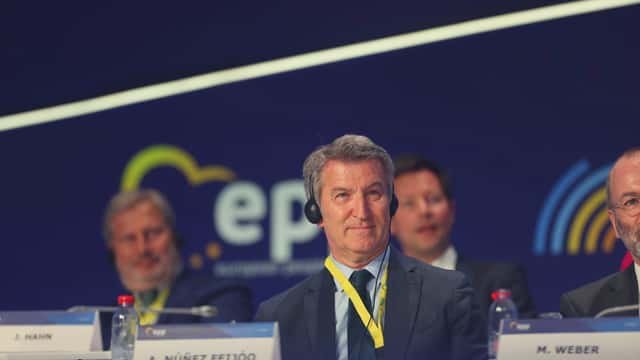
Alberto Núñez Feijóo wants people who left the Basque Country and Navarre because of ETA to vote again in the towns they left. The People's Party (PP) leader announced the plan on Monday, Nov. 16, at a rally in Pamplona, 13 days before Spain's Nov. 29 general election. His party calls it a "Basque grandchildren's law."
The pledge is measure 132 of the PP platform, "La Reconstrucción Nacional." It reads: "Those who had to flee ETA will be able to vote again in their municipality. We will promote reform of the electoral law so that all those who had to leave the Basque Country and Navarre because of ETA terrorism can once again exercise the right to vote in the municipality where they were registered," according to the text published by El País. Translations from Spanish are by 567 Politics.
The idea is not new, and the hardest question has no official answer: how many people it would cover. Spain's Interior Ministry and the Basque government have both said they keep no count of people who left because of ETA, Newtral reported in a 2020 fact-check. Published estimates run from about 10,000 to more than 200,000.
What Feijóo promised in Pamplona#
Feijóo framed the plan as a debt owed to ETA's targets. "There are thousands of Spaniards whom ETA could not break, but whom it did manage to drive out of their homes in Navarre and out of their towns and their land in the Basque Country," he said, Cadena SER reported. "Wherever they live, if they want to vote in a Navarrese town they were driven out of, they will be able to do so again."
He called the measure "dignity," "memory" and "justice." He also said EH Bildu, the Basque pro-independence coalition that backed Pedro Sánchez's 2023 investiture, "will not be the one to sign the democratic memory of our nation," RTVE reported. RTVE described the vote as one for regional elections. El Español said the PP had also pointed to municipal and provincial elections, without explaining the mechanism.
ETA was an armed Basque separatist group that Spain and the European Union listed as a terrorist organization. It announced a definitive end to its armed activity in 2011.
The details are still thin. The platform text does not mention descendants, how a person would prove they left because of ETA, or which years count, El Español noted before the rally. Later on Monday, El Mundo reported on a PP draft it had seen. According to that report, the draft would also offer "aid for return," and party sources said the children of those who left "could also vote, of course." The PP told El Mundo it wants the change in its first year in office, in time for at least municipal elections. It said the reform would not be ready for local elections next May.
The legal argument and the objection#
Today, voting in Basque and Navarrese elections follows residence. Article 7 of the Basque Statute of Autonomy gives Basque political status to people registered as residents of a Basque municipality. It makes one exception. Spaniards living abroad whose last residence was in the Basque Country, and their descendants if they ask, have "identical political rights." Navarre's statute has a similar rule, Electonomics reported. So a Basque emigrant in Argentina can vote for the Basque Parliament, but a Basque who moved to Madrid cannot.
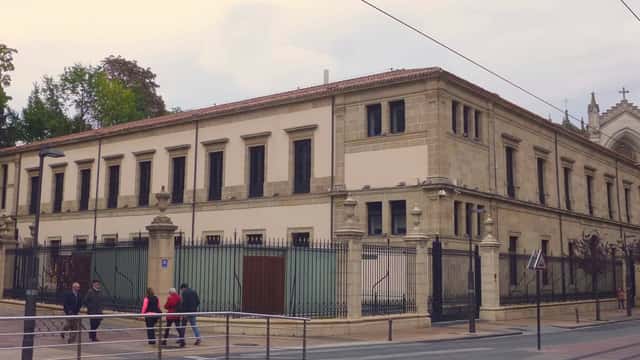
The PP draft seen by El Mundo argues that this gap is the problem. It says people who left under ETA pressure did not move freely, so "there is a clear constitutional basis for breaking the link between residence and the place where the right to vote is exercised." It calls the change a way of "restoring equality violated by ETA and its circle." A committee of lawyers advising the party considers the plan constitutional, El Mundo reported.
Critics read the same facts the other way. The Pamplona newspaper Noticias de Navarra argued that the plan would cut the vote loose from the place where people live, pay taxes and use public services. It also noted that no official register shows who left because of threats and who left for work or family reasons.
Passing the change would take a large majority. Spain's general electoral law is an organic law, and Article 81 of the Constitution requires an absolute majority of Congress, 176 of 350 seats, in a final vote on such laws. A 2012 study for the Interior Ministry considered the matter "undoubtedly" a state power, though the two regions could improve conditions for their own elections, according to Electonomics. In 2012 a UPyD deputy argued that a change this large would need constitutional reform, EITB reported.
How many people left: the estimates#
No official count exists, so every figure is an estimate with a different method. The spread is wide.
Source: Diario de Navarra/EFE, 2018, Basque Institute of Criminology, Proyecto Retorno, 2011, El Mundo, Nov. 16, 2026
Show the numbers
| Estimate | Low end | High end |
|---|---|---|
| Josu Ugarte, Bakeaz (2018) | 9,000 | 10,000 |
| Zaitu victims' association | 45,000 | 60,000 |
| Proyecto Retorno (2011) | 60,000 | 200,000 |
| PP campaign team (2026) | 150,000 | 200,000 |
The lowest figure comes from Josu Ugarte, then director of the Basque human rights group Bakeaz. He studied ETA's extortion of business owners and estimated that about 9,000 people fled the Basque Country and Navarre from 1993 to 2008, and at least 10,000 overall, EFE reported in 2018. The Zaitu association for people threatened and displaced by ETA has used 45,000 to 60,000.
The 2011 Proyecto Retorno study for the Basque government said estimates "vary from 60,000 to more than 200,000," without saying whether family members were counted. Its authors called precision "very difficult." Newtral found that the top figure leans on a 2007 BBVA Foundation population study. That study counted 157,417 residents who left the Basque Country for other provinces from 1980 to 2000 but did not say why they left.
The PP campaign told El Mundo that its "most refined" figure is 150,000 to 200,000. El Mundo also cited a CEU university study putting the number at 180,000. These figures are not comparable: some count only people directly threatened, and others infer departures from population data.
A plan first floated in 2011#
The Basque PP first took the idea to the Basque Parliament in February 2011. Its motion asked for proposals to give the vote to people, and their descendants, forced out by direct ETA threats. In March 2011, the Basque Nationalist Party (PNV) and the Basque Socialists (PSE-EE) filed amendments asking the Basque government for a study of how many threatened people had left, the Proyecto Retorno report records. That study recommended return support, a contact office for victims and a separate study on the right to vote.
In 2012, under Prime Minister Mariano Rajoy, Interior Minister Jorge Fernández Díaz called a reform "viable." The draft terms required at least five years' registered residence in either region between June 15, 1977, and Dec. 31, 2011, plus a signed declaration that the person left because of ETA pressure, Electonomics reported. El Mundo said the declaration would have carried a "presumption of truthfulness," a point the PP now says would need refining. The reform never reached the Cortes. PP sources told El Mundo that the reason was a "lack of political will."
The 2012 reactions mapped today's divides. EH Bildu's then-candidate for Basque premier, Laura Mintegi, said the reform sought to "subvert the natural opinion of the population" by "modifying majorities and minorities," EITB reported. The PNV's Andoni Ortuzar called it "more an electoral fraud than reparation for the victims." The PSE-EE called it "laudable" on moral grounds but very complicated in legal practice. UPN, the PP's partner in Navarre, welcomed it.
- Feb. 2011Basque PP motion seeks votes for people forced out by ETA
- Mar. 2011PNV and PSE-EE amendments ask for a study of the numbers instead
- Sept. 2011Proyecto Retorno report estimates 60,000 to more than 200,000
- ETA announces a definitive end to armed activity
- July 2012Interior Ministry sets draft terms: five years' residence and a signed declaration
- Oct. 2022Democratic Memory Law opens citizenship to descendants of exiles
- Nov. 16, 2026Feijóo unveils PP measure 132 in Pamplona
- Nov. 29, 2026Spain votes in a general election
Source: Proyecto Retorno, EITB, Electonomics, El País
Why the name matters in this campaign#
The label borrows from the 2022 Democratic Memory Law, widely called the "grandchildren's law." It let children and grandchildren of Spaniards exiled for political reasons claim citizenship. Spain's Supreme Court has been weighing challenges over whether the adult children of those new citizens can vote. Feijóo had accused the government of "electoral engineering" over that law. Measure 132 applies the same logic of restored rights to a group the PP says Spain has overlooked.
The announcement also followed an attack. On Saturday, objects were thrown at Jon Echevarría, the PP's 22-year-old Congress candidate for Gipuzkoa, and other party members in Hernani, El País and Público reported. Feijóo blamed EH Bildu directly, El País reported. EH Bildu and the PNV condemned the attack, Público reported. Feijóo added a stop in Eibar on Tuesday to campaign with Echevarría. The PP has not won a Gipuzkoa seat in Congress since 2011, El Español reported.
The plan's effect on results is unknown. No source reviewed has estimated how many people would sign up or how they would vote, Electonomics noted. The PP argues those who left were mostly voters for the PP and the PSOE. That is the party's claim, not a measured finding. Polls show the PP and Vox together at or near a majority, as 567 Politics reported, which makes the PP's platform a live policy guide. The PP's Spanish-only Congress pledge drew a similar fight with nationalist parties last week.
The chart above places Spain's parties on 567 Politics' economic and social axes. Those positions are dated editorial estimates, not measured scores. Basque and Navarrese parties sit far apart on territorial questions that the chart does not show.
Unanswered questions before the Nov. 29 vote#
By late Monday, Sánchez's PSOE, the PNV and EH Bildu had not responded to measure 132 in the sources 567 Politics reviewed. The election is Nov. 29. Sánchez and Feijóo meet in a televised debate on Thursday, Nov. 19, and "fight against corruption and democratic regeneration" is one of its five blocks, Onda Cero reported.
Three questions remain open. Would the reform cover descendants? How would anyone prove why they left? And would it need a statute or constitutional change rather than an electoral-law amendment? The PP has not published its draft. No published poll reviewed by 567 Politics has asked voters about the measure.
Differing perspectives
Should people who left the Basque Country and Navarre because of ETA be able to vote in the towns they left?
Each position is summarized as its supporters make it, with equal weight and in alphabetical order. A summary is not an endorsement; the evidence for each is weighed in the story above.
Count the displaced and fund returns first
Who holds it: The Basque Socialists (PSE-EE), who in 2011 asked with the PNV for a study, and the Basque government's Proyecto Retorno researchers
This view treats people who left under ETA pressure as victims owed reparation, but says the first step is learning who they are and what they need. The 2011 Proyecto Retorno study found no reliable count, citing estimates from 60,000 to more than 200,000. It recommended a contact office, help to return and symbolic recognition, plus a separate study of voting rights. The PSE-EE called the 2012 voting plan morally laudable but very hard to apply legally.
In their words: Basque Institute of Criminology for the Basque government (Proyecto Retorno, 2011) ↗
Keep the vote tied to where people live
Who holds it: The Basque Nationalist Party (PNV) and EH Bildu, in their responses to the 2012 version of the plan
Opponents argue that letting people registered elsewhere vote in Basque and Navarrese elections would change majorities and minorities from outside and override the views of the people who live there. In 2012 the PNV's Andoni Ortuzar called the plan closer to electoral fraud than reparation, and EH Bildu's Laura Mintegi said it served a concrete political aim. The PNV asked instead for comprehensive treatment of victims, separate from the electoral roll.
In their words: EITB (Orain), July 25, 2012 ↗
Restore votes to people who fled ETA
Who holds it: The People's Party (PP) under Alberto Núñez Feijóo and its Navarre partner, Unión del Pueblo Navarro (UPN)
Supporters say ETA's threats and attacks forced thousands of people out of their homes in the Basque Country and Navarre, so their move was not a free choice. They argue that an optional vote in the towns they left would repair a wrong that changed local electorates, much as Basque emigrants abroad already keep their vote. Feijóo calls it a debt of dignity, memory and justice owed to people who defended their freedom and were driven out.
In their words: Cadena SER (Feijóo's Pamplona speech, Nov. 16, 2026) ↗
Cite this article
567 Politics staff. “Feijóo wants Basques who fled ETA to vote back home. Estimates of who qualifies run from 9,000 to 200,000.” 567politics. Published 2026-11-17. https://567politics.com/news/spain-pp-ley-de-nietos-vasca-eta-displaced-voters-measure-132-november-2026
Wikipedia citation
{{cite news |title=Feijóo wants Basques who fled ETA to vote back home. Estimates of who qualifies run from 9,000 to 200,000 |url=https://567politics.com/news/spain-pp-ley-de-nietos-vasca-eta-displaced-voters-measure-132-november-2026 |work=567politics |author=567 Politics staff |date=2026-11-17 |language=en}}CSL-JSON for reference managers
{
  "id": "https://567politics.com/news/spain-pp-ley-de-nietos-vasca-eta-displaced-voters-measure-132-november-2026",
  "type": "article-newspaper",
  "title": "Feijóo wants Basques who fled ETA to vote back home. Estimates of who qualifies run from 9,000 to 200,000",
  "URL": "https://567politics.com/news/spain-pp-ley-de-nietos-vasca-eta-displaced-voters-measure-132-november-2026",
  "container-title": "567politics",
  "language": "en",
  "author": [
    {
      "literal": "567 Politics staff"
    }
  ],
  "issued": {
    "date-parts": [
      [
        2026,
        11,
        17
      ]
    ]
  }
}Citations identify this article and its publication date. Assess the reporting and its linked sources before using it as evidence.
Read this article as Markdown or JSON. Cite the original page and retain its sources, dates and qualifications.
Embed this article summary
Paste this HTML into your page. The summary stays linked to the full story and updates with it. No account required.
<iframe src="https://567politics.com/embed/news/spain-pp-ley-de-nietos-vasca-eta-displaced-voters-measure-132-november-2026?theme=auto" title="Feijóo wants Basques who fled ETA to vote back home. Estimates of who qualifies run from 9,000 to 200,000 by 567politics" width="100%" height="440" style="border:0;max-width:100%" loading="lazy"></iframe>
<p style="font-size:14px">Feijóo wants Basques who fled ETA to vote back home. Estimates of who qualifies run from 9,000 to 200,000 by <a href="https://567politics.com/news/spain-pp-ley-de-nietos-vasca-eta-displaced-voters-measure-132-november-2026" rel="nofollow">567politics</a></p>
<script async src="https://567politics.com/embed.js"></script>
READ BEYOND 567POLITICS
Alternate sources & perspectives
Independent coverage and primary evidence to help you compare arguments. A link is not an endorsement; perspective labels describe the linked material.
- other perspective
El PP propone una 'ley de nietos' para que los exiliados vascos por terrorismo de ETA puedan votar en las elecciones autonómicas ↗
El País
News report that prints the text of measure 132 and covers the Pamplona rally, the Hernani attack and Feijóo's earlier 'electoral engineering' charge.
- right argument
Feijóo propone una 'ley de nietos vasca' para los exiliados por ETA ↗
Cadena SER
Longest quotations from Feijóo's speech making the case for the measure; notes the 2012 Rajoy-era legal study.
- right argument
Así es la propuesta del PP para que 150.000 'exiliados' por ETA puedan votar en el País Vasco ↗
El Mundo
Reports the PP draft's constitutional reasoning, return aid, descendants and the party's 150,000-200,000 estimate.
- left argument
Feijóo revive a ETA en Pamplona para cuestionar la legitimidad de las elecciones ↗
Noticias de Navarra
Navarre paper's critical account: argues the plan cuts the vote from residence and notes no register shows who left because of threats.
- left argument
El PP vuelve a hablar de ETA en una campaña electoral ↗
Público
Frames the pledge as a return of ETA to campaign rhetoric; reports EH Bildu and PNV condemnation of the Hernani attack.
- other perspective
Feijóo promete una 'ley de nietos' para que los exiliados por ETA puedan votar en las elecciones de Euskadi ↗
RTVE
Public broadcaster's account of the speech, the PP-UPN alliance and Tellado's letter to the Interior minister.
- independent analysis
Feijóo propone una ley de nietos vasca para que voten en Euskadi quienes se fueron por ETA ↗
Electonomics
Explainer on current statute rules, the 2012 Interior draft terms and party positions then, with linked primary sources.
- other perspective
Reacciones a la reforma de la ley para que voten los 'exiliados' ↗
EITB (Orain)
2012 reactions from the PSE-EE, PNV, EH Bildu, UPN, Aralar, UPyD and the ELA union to the Rajoy government's plan.
- primary evidence
Proyecto Retorno: informe final (2011) ↗
Instituto Vasco de Criminología / Basque government
The Basque government's 2011 study: 60,000 to more than 200,000 estimate, its limits and its recommendations on return and voting.
- independent analysis
¿Cuántos vascos se marcharon por culpa de ETA? No hay datos oficiales ↗
Newtral
Fact-check confirming no official count exists; traces the 200,000 figure to a population study that does not attribute departures to ETA.
- independent analysis
Los exiliados por ETA, unos dramas personales difíciles de cuantificar ↗
Diario de Navarra (EFE)
Source of Josu Ugarte's 9,000-10,000 estimate and the Zaitu association's 45,000-60,000 figure.
- primary evidence
Ley Orgánica 3/1979, Estatuto de Autonomía para el País Vasco ↗
Boletín Oficial del Estado
Article 7 ties Basque political status to registered residence and extends identical rights to Spaniards abroad and their descendants.
Reviewed 2026-11-16. Hand-picked from pages opened on Nov. 16, 2026; the source-discovery tool returned only unrelated pages (polypropylene, PowerPoint). The PP has not published its draft reform; El Mundo's account of it could not be checked against the document. No same-day response from the PSOE, PNV or EH Bildu to measure 132 was found by late Monday, so their positions are taken from 2011-2012 records. Navarre's statute was not opened directly; its similar rule is cited via Electonomics. El Español's pre-rally report was also reviewed but left off this list for length.