Spain's transport minister resigns over the Urda crash as Cuerpo takes over 25 days before the election
Óscar Puente quit after four hours before Congress over the collision that killed 69. Every party but two had demanded it; the PP and Vox now say Sánchez should follow. What investigators know, what each side says, and what post-crash polls show.
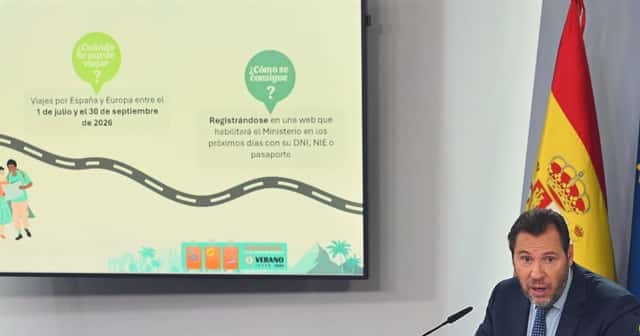
Spain's transport minister, Óscar Puente, resigned on Tuesday evening after more than four hours of questioning in Congress over the October 28 rail collision near Urda, in Toledo province, that killed 69 people. It was the second fatal high-speed crash on the Madrid–Seville line in less than a year. "A Transport minister cannot continue in office with two accidents of this gravity in less than a year," he told the Permanent Deputation of the Congress of Deputies, per The Objective. On Wednesday morning Prime Minister Pedro Sánchez handed the ministry, on an interim basis, to First Vice President and Economy Minister Carlos Cuerpo, with the appointment to be formalized by royal decree the same day, per the same report.
The resignation lands 25 days before a general election that Sánchez called on October 5, and that every published poll since the crash shows his Socialist Party (PSOE) losing. This story sets out what is known about the crash, what Puente said and did, how each party responded, what the polls show, and what remains unknown.
What happened at Urda
The facts below come from Spain's Railway Accident Investigation Commission (CIAF), which has opened case file 146/2026, and from the preliminary report of its technical arm, AITAT, as summarized by the fact-checking outlet Maldita.es.
At 8:53 a.m. on October 28, Renfe high-speed train 2080, an AVE running from Madrid toward Andalusia, struck the rear of Iryo train 6076, which had stopped at the entry signal to Urda, at kilometer point 118+800 on Line 010 between Mora and Urda. AITAT estimates the AVE was traveling at between 160 and 200 kilometers per hour at impact. The AVE carried 397 passengers and seven crew; the Iryo carried 147 passengers and five crew, according to the operators as cited by Maldita.es. The provisional toll is 69 dead and more than 200 injured. All 69 victims had been identified by the night of November 2. CIAF warns that its figures "could be subject to updates."
The sequence that investigators are examining began about 20 minutes earlier. At around 8:30 a.m., the LZB automatic train protection system, which supervises speed and spacing on the line, failed along a stretch of track. Trains then ran under a fallback procedure of lateral signaling. Puente told Congress that the Adif control center in Madrid authorized the AVE to continue at about 8:36 a.m., and that the train covered roughly 25 kilometers at more than 160 km/h before the collision, per Euronews and Maldita.es. Adif is the state infrastructure manager; Renfe is the state operator; Iryo is a private operator. AITAT says all hypotheses remain open. Early reports attributing the crash to "human error" came from unnamed sources and have not been endorsed by investigators, Maldita.es notes.
- Two trains derail near Adamuz, Córdoba, on the Madrid–Seville line; 46 die
- Sánchez dissolves parliament and calls a general election for November 29
- Renfe AVE 2080 strikes the rear of Iryo 6076 near Urda, Toledo; 69 die
- AITAT issues a preliminary report; CIAF opens case file 146/2026
- Authorities say all 69 victims have been identified
- Puente resigns after more than four hours before the Permanent Deputation
- Carlos Cuerpo takes over Transport on an interim basis
The January crash near Adamuz, in Córdoba province, killed 46 people when two trains derailed on the same line, per Euronews. Opposition speakers on Tuesday used a combined figure of 116 deaths for the two accidents.
What the government did before the resignation
In the six days between the crash and Puente's appearance, the cabinet approved a €30 million emergency decree of direct aid and advance compensation for the injured and bereaved, per Spain in English. New operating rules require a second controller to confirm train movements when automatic protection is out of service, and limit trains to 40 km/h where drivers are running on sight. Services on the Madrid–Seville line were cut while the Railway Safety Agency reviews the line and the delayed rollout of the European ERTMS signaling system is completed. Puente defended the line as "neither an abandoned nor a forgotten piece of infrastructure" and cited a €780 million renewal plan, per Euronews.
How the resignation unfolded
Puente appeared before the Permanent Deputation, the body that acts for Congress while parliament is dissolved, from about 5 p.m. on November 3. He said he came "at my own request," not at the opposition's. At 9:11 p.m. he announced he was resigning as minister and withdrawing as head of the PSOE list for Valladolid in the election, per the El Español live blog. Quoting the late Portuguese minister Jorge Coelho, who resigned after a 2001 bridge collapse, he said, "Blame cannot die alone." He called the decision "good for the country and for democracy" and said, "It is not true that all politicians are the same," per Euronews. He said he had decided to go within minutes of learning of the crash and had waited until immediate safety measures were in place, per Spain in English.
Puente said Sánchez "knew nothing" until minutes before the announcement, per El Español. The Objective, citing government sources, reported that the prime minister's office had rejected his departure hours earlier and was caught by surprise. His name will remain on the Valladolid ballot because candidate lists have been published in the official gazette and cannot be changed; his seat, if won, would pass to the next candidate on the list.
Sánchez responded on X on Tuesday night. "Óscar Puente has faced up, has given solutions and, afterward, has stepped aside," he wrote, adding that "politicians like him dignify our country and show us that we are not all the same," as reported by Demócrata and El Español. On Wednesday he said Cuerpo "has shown enormous management capacity and integrity," per The Objective.
What each party said
All parliamentary groups except the PSOE and the Basque left party EH Bildu had called for Puente to go before he did, per The Objective. Their reasons differ, and so do their next demands. The quotations below are as reported by Última Hora, Demócrata and El Español on November 3 and 4; we translated them from Spanish.
| Party or group | Speaker | Position after the resignation |
|---|---|---|
| PP (center-right) | Ester Muñoz, Feijóo | Resignation "comes 116 deaths late"; Sánchez should also resign |
| Vox (right) | Santiago Abascal | Sánchez "hides behind his henchmen"; responsibility is his |
| Sumar / Frente Amplio (left) | Mónica García, Ada Colau | An "honorable gesture"; Colau seeks a cross-party rail pact |
| ERC, Junts (Catalan) | Rufián, Nogueras | Rufián: "a great minister"; Junts calls exit "unavoidable," wants rail powers transferred |
The People's Party (PP) spokeswoman in Congress, Ester Muñoz, said the resignation "comes 116 deaths late." Earlier in the session she had told Puente to "take your hands off the Transport Ministry, we have already lost too many lives because of you." Party vice secretary Juan Bravo called the resignation "a confession of guilt," per Demócrata. On Wednesday PP leader Alberto Núñez Feijóo replied to Sánchez's "dignity" post with a single word, "Aplícatelo," meaning apply it to yourself, per Infobae/EFE. Unnamed PP sources told El Español that Puente had not resigned on his own: "Tezanos resigned him," a reference to José Félix Tezanos, head of the state polling institute CIS, implying the decision followed bad polling.
Vox leader Santiago Abascal wrote on X that "Sánchez always hides behind his henchmen. But the responsibility is his," and called for the prime minister to resign, per Última Hora. Vox's spokeswoman Pepa Millán had earlier accused Puente of "shirking his responsibilities," per Euronews.
On the left, Health Minister Mónica García of Sumar called the resignation "an honorable gesture that sets the standards of politics in dignity and empathy with the victims." Ada Colau, the Frente Amplio candidate for prime minister, thanked Puente for "the dignity of this difficult gesture" and called for a Pacto de Estado, a cross-party agreement, on rail safety, per Demócrata. ERC spokesman Gabriel Rufián was picked up by microphones telling Puente, "You have been a great minister," and said the question that matters now is whether it is "safe" to take a train. Junts spokeswoman Míriam Nogueras called the resignation "unavoidable" and demanded the full transfer of rail services to Catalonia. The Galician BNG called it "the only possible decision" and asked for safety guarantees. The civil-service union CSIF said "now it is the turn" of the leadership at Renfe and Adif.
The Basque Nationalist Party (PNV) and Junts, whose votes the Sánchez government has relied on, had both demanded the resignation before it came, per Euronews.
The election three weeks away
Sánchez dissolved parliament on October 5 and called the election for November 29. In his statement that day he said "we need to renew and widen the support of the people" and sought "a much broader, progressive majority," while warning against handing "the reins of the country to a far-right coalition," according to the Moncloa transcript.
Polls taken after the crash show the PP and Vox together above the 176 seats needed for a majority in the 350-seat Congress. The table gives the three most recent surveys we could verify. Seat estimates are the pollsters' projections, not votes, and the ranges reflect their own stated uncertainty.
| Poll (sponsor, fieldwork) | PP | PSOE | Vox |
|---|---|---|---|
| Target Point (El Debate, Oct. 28–30, n=1,024) | 31.8%, 131–135 seats | 25.5%, 99–103 | 19.9%, 68–72 |
| NC Report (La Razón, Oct. 26–29) | 32.6% | 25.6% | 19.3%, 66–68 |
| Sigma Dos (El Mundo, dates not given) | 31.1% | under 25%, 99 seats | 63–69 seats |
Sources: Demócrata for Target Point; Infobae for NC Report and Sigma Dos. The PSOE won 31.7 percent in July 2023, per Infobae. Target Point's fieldwork began at 6 p.m. on the day of the crash, so every interview was conducted afterward; compared with its October 11 wave, the PSOE slipped from 25.9 to 25.5 percent and Vox rose from 18.7 to 19.9 percent, per Demócrata. NC Report's fieldwork straddled the crash. Sigma Dos published no field dates or sample size in the account we could read, so its figures carry less weight.
Show the numbers
| Pollster | PP | PSOE | Vox |
|---|---|---|---|
| Target Point | 31.8% | 25.5% | 19.9% |
| NC Report | 32.6% | 25.6% | 19.3% |
| Sigma Dos | 31.1% | – | – |
Two cautions. The PP and Vox led most polls before the crash too, so the polls do not show that Urda alone changed the race; Infobae's reading is that a PSOE recovery under way in October "stopped dead." And a poll is a snapshot of stated intention, not a forecast of a vote 25 days away. PSOE sources told The Objective that Puente's exit "clears" the campaign, which they treated as a relief.
The workers' view: strikes before the vote
The train drivers' union Semaf has called strikes at Renfe for November 10 and 12, citing deteriorating conditions and "degraded systems," per Spain in English. Adif's works council has agreed to push for a strike on November 17 over rail safety, though it had not been formally called as of Tuesday, per Euronews. EFE reported that workers at both companies are preparing several strike days, some before the election, per Infobae. Those dates put rail disruption inside the campaign's final weeks. Elsewhere in Europe this autumn, unions have used strikes to press governments over public services, as in Italy's general strike in October.
Where this fits
Puente is the second European minister in two weeks to put his own responsibility on the record. France's interior minister told a parliamentary inquiry that the "lack of anticipation" before the October 17 riots was his own, though he did not resign. Across the border in Belgium, the prime minister offered his government's resignation over a budget rather than a disaster. Spain's case is different in kind: the dispute is not whether a minister should go after 69 deaths, since every party but two said he should, but whether responsibility stops with him. The PP and Vox say it reaches the prime minister; the PSOE and its allies say Puente's departure answers it; the Catalan and Galician parties say the structural answer is devolving or rebuilding the rail system; the unions say it is the Renfe and Adif leadership.
What people are saying online
The reactions above from Sánchez, Abascal, Feijóo, Muñoz, García and Colau were posted on X and reported by Spanish outlets. We could not open X or verify any post against its live permalink during reporting on November 4, and we could not reach Reddit. We have therefore quoted those posts only as the named outlets printed them, with links to those reports, and we have not embedded any. We make no claim about the balance of opinion among Spaniards online. The only representative evidence is the polling above, which asked about party choice, not about Puente.
What remains unknown
The cause of the collision is not established. CIAF's investigation is in its first week. Why the control center authorized the AVE to proceed under fallback signaling, whether the fallback procedure was followed, and why the LZB system failed are the central open questions. Whether a judicial investigation will name individuals is unknown. Whether Cuerpo keeps the Economy portfolio alongside Transport, and for how long, was not stated. And whether the resignation changes any votes on November 29 cannot be known from a poll taken before it happened.
Sources and method
This story relies on the CIAF case-file page and the AITAT preliminary findings as summarized by Maldita.es; the Moncloa transcript of the October 5 election announcement; and reporting by Euronews, The Objective, El Español, Última Hora, Demócrata, Infobae/EFE and Spain in English. Spanish quotations were translated by us; the original wording is in the linked reports. Poll figures are as published by the sponsoring outlets and summarized by Demócrata and Infobae; we could not open El Mundo's or La Razón's own pages. X and Reddit could not be reached, so no social posts are embedded or quoted directly. See our methodology for how we treat polls, attributed claims and online reactions.
Differing perspectives
Does political responsibility for the Urda rail crash end with the transport minister's resignation?
Each position is summarized as its supporters make it, with equal weight and in alphabetical order. A summary is not an endorsement; the evidence for each is weighed in the story above.
Devolve rail management and rebuild the system
Who holds it: Junts per Catalunya (Míriam Nogueras); ERC (Gabriel Rufián); the Galician BNG
The Catalan and Galician parties argue that the resignation was "unavoidable" but that the structural problem is a centralized rail system run from Madrid. Junts demands the full transfer of rail services to Catalonia so that regional governments answer for the lines their citizens use. ERC says the question that matters is whether it is "safe" to take a train, and the BNG asks for guarantees on safety investment. They treat the minister's departure as a first step toward a different model of who runs and is accountable for the network, not as a settlement of responsibility.
In their words: El Español live blog (Junts, ERC and BNG statements) ↗
Renfe and Adif leadership must answer, and workers will strike
Who holds it: The train drivers' union Semaf; the civil-service union CSIF; Adif's works council
Rail unions argue that responsibility runs through the state companies that operate and maintain the line. CSIF says that after the minister, "now it is the turn" of the leadership at Renfe and Adif. Semaf has called strikes at Renfe for November 10 and 12, citing deteriorating working conditions and "degraded systems," and Adif's works council is pushing for a November 17 strike over rail safety. They say the people who run trains under fallback procedures when signaling fails have warned about staffing and equipment for years, and that a change of minister does not change those conditions.
In their words: Spain in English (Semaf strike call and union statements) ↗
The prime minister should resign too
Who holds it: The People's Party (PP) under Alberto Núñez Feijóo and spokeswoman Ester Muñoz; Vox under Santiago Abascal
The PP and Vox argue that two fatal crashes on the same line in under a year, with 116 deaths between them, point to a failure of the whole government, not one minister. Muñoz says the resignation "comes 116 deaths late" and that a minister's job "is not to explain fatal accidents, it is to prevent them." Abascal says Sánchez "always hides behind his henchmen" but "the responsibility is his." Feijóo, answering Sánchez's praise of Puente's "dignity," told him to apply the same standard to himself. They say the prime minister chose the minister, kept him after Adamuz, and should answer to voters by stepping down rather than praising the resignation.
In their words: Infobae / EFE (Feijóo's and PP statements) ↗
The resignation answers it; now fix rail safety
Who holds it: The PSOE government and Prime Minister Pedro Sánchez; Sumar ministers including Mónica García; Frente Amplio's Ada Colau
The government and its allies argue that Puente did what accountability requires: he faced Congress for four hours, set out the facts, ordered immediate safety rules and then stepped aside, which Sánchez called proof that "we are not all the same." They say the right response now is practical: a second controller for every movement when automatic protection fails, speed limits, the €30 million aid decree, finishing the ERTMS rollout and completing the €780 million line renewal. Colau and García call the resignation an honorable gesture and ask for a cross-party state pact on rail safety rather than a contest over who else should go.
In their words: Demócrata (Sánchez, García and Colau statements) ↗
READ BEYOND 567POLITICS
Alternate sources & perspectives
Independent coverage and primary evidence to help you compare arguments. A link is not an endorsement; perspective labels describe the linked material.
- primary evidence
CIAF investigation file 146/2026: Urda collision of Renfe AV 2080 and Iryo 6076, Oct. 28, 2026 ↗
Ministerio de Transportes y Movilidad Sostenible (CIAF)
The official accident-investigation record: time, location, trains, provisional toll and the warning that figures may change.
- independent analysis
Preguntas y respuestas del accidente de trenes en Urda (Toledo) del 28 de octubre de 2026 ↗
Maldita.es
Fact-check summarizing the AITAT preliminary report (speed, LZB failure, passenger counts) and debunking recycled images and early unsourced claims.
- primary evidence
Pedro Sánchez anuncia la convocatoria de elecciones generales para el 29 de noviembre ↗
La Moncloa (Government of Spain)
The prime minister's own statement dissolving parliament, with his stated reasons for the Nov. 29 election.
- independent analysis
Spain's transport minister Óscar Puente resigns over Urda train crash that killed 69 ↗
Euronews
English-language account of the resignation, Puente's testimony on the control-centre authorization, the Adamuz toll and PP/Vox reactions.
- independent analysis
Sánchez elige a Carlos Cuerpo para sustituir a Puente en Transportes ↗
The Objective
Reports the interim appointment of Cuerpo, Sánchez's remarks and government sources saying Moncloa had rejected the resignation hours earlier.
- independent analysis
Elecciones generales del 29-N, en directo (Nov. 3 live blog) ↗
El Español
Timestamped record of Puente's four-hour appearance and every party's reaction, including Junts, ERC, BNG and union statements.
- right argument
Feijóo pide a Sánchez que se aplique el mismo argumento de Puente y dimita por dignidad ↗
Infobae / EFE
The PP leader's demand that Sánchez resign, with context on rail strikes and the campaign.
- right argument
Las reacciones a la dimisión de Óscar Puente: «Llega 116 muertos tarde» ↗
Última Hora
Vox leader Abascal's and PP spokeswoman Muñoz's statements calling for the prime minister to take responsibility.
- left argument
Reacciones políticas a la dimisión de Puente: Abascal, Muñoz, Rufián y Colau ↗
Demócrata
Carries Sánchez's, Mónica García's and Ada Colau's defenses of the resignation as an act of dignity, alongside opposition reactions.
- independent analysis
Encuesta tras Urda: Vox roza el 20% y podría alcanzar 72 escaños ↗
Demócrata (Target Point for El Debate)
The only poll we found with all fieldwork after the crash (Oct. 28–30, n=1,024), with its change from the previous wave.
- other perspective
Spain's transport minister Óscar Puente resigns after latest deadly high-speed rail crash ↗
Spain in English
Details the government's safety measures, the €30 million aid decree and the Semaf strike call, giving the rail workers' side.
Reviewed 2026-11-04. Reviewed Nov. 4, 2026. Primary evidence is the CIAF case-file page for file 146/2026 and the Moncloa transcript of the Oct. 5 election call; the AITAT preliminary report itself was read through Maldita.es's summary. Spanish outlets across the spectrum were opened directly (The Objective, El Español, Última Hora, Demócrata, Infobae/EFE, Euronews, Spain in English). We could not open El Mundo's or La Razón's own poll pages, or the Spanish Wikipedia article on the crash. X and Reddit could not be reached, so posts by Sánchez, Abascal and Feijóo are cited only as reported by the outlets listed. The automated discovery search was not run for this record; candidates below were found and opened by hand.