Supreme Court leaves Maryland's gun-free zones in place, but Thomas invites a narrower challenge
The justices denied Novotny v. Moore, keeping limits on guns in transit, parks and bars. Thomas urged a narrower test case; a New York parks ban is waiting.
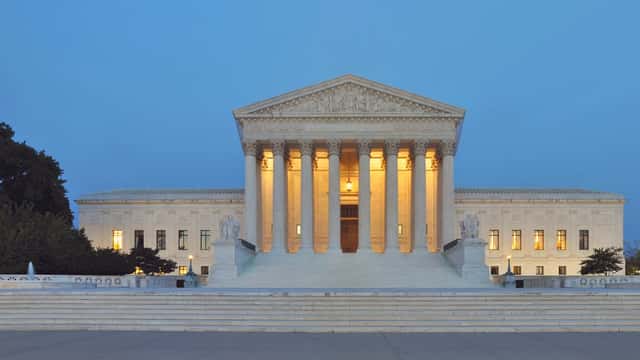
The Supreme Court on Monday, November 16, 2026, turned away a challenge to Maryland's limits on carrying guns in "sensitive places." The order leaves in force rules that bar permit holders from bringing firearms into mass transit, state parks, museums, stadiums, bars and restaurants, and the areas around public demonstrations. Some of the rules are decades old; others were added by a 2023 state law.
The order in Novotny v. Moore, No. 25-1324 came without a noted dissent. But Justice Clarence Thomas wrote separately to say he is "skeptical" that each of Maryland's restrictions fits the nation's historical tradition of gun regulation. He agreed to deny review only because the challenge was so broad, and he urged the court to take up "an appropriate and more narrowly focused case."
That points directly to a second petition already waiting at the court: a challenge, brought by two of the same gun-rights groups, to New York's ban on guns in public parks. Monday's order settles nothing about the constitutional question nationally. It does mean Maryland's law stays as the Fourth Circuit left it in January.
The respondents in the case are Maryland Governor Wes Moore and other state and local officials, defended by the office of Attorney General Anthony G. Brown.
What the court did, and what Thomas wrote#
A denial of certiorari is not a ruling on the merits. It means at least six justices did not vote to hear the case, and the lower-court decision stands. The Supreme Court docket shows the petition was scheduled for the justices' private conference on September 28, then rescheduled three times before being distributed for conferences on November 6 and November 13. The denial followed on November 16, on the same order list in which the court turned away a Colorado case over a state misgendering rule.
Thomas's three-page statement, which no other justice joined, set out his concerns. "Because each Maryland statute implicates a distinct historical tradition of firearm regulation, the breadth of petitioners' challenge would complicate our review," he wrote.
He then turned to the wider landscape. Under the court's 2022 decision in New York State Rifle & Pistol Association v. Bruen, a state that limits where people can carry guns must show the rule "is consistent with this Nation's historical tradition of firearm regulation." Bruen recognized that early legislatures barred weapons in "legislative assemblies, polling places, and courthouses." It also warned that expanding sensitive places "to all places of public congregation" would "eviscerate the general right to publicly carry arms for self-defense."
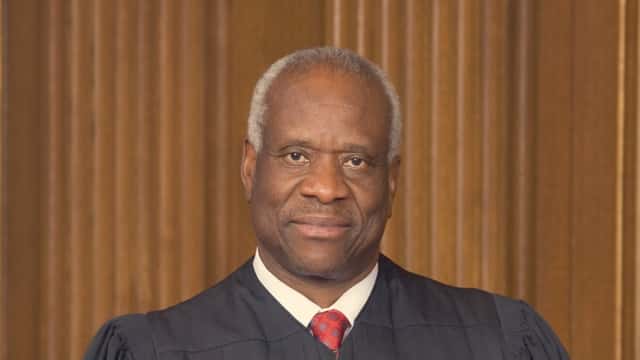
Thomas argued that states "have seized on the idea of 'sensitive places'" to cover locations that "bear little resemblance to legislatures, polling places, or courthouses." He wrote that the cumulative effect is "to prohibit firearms wherever people gather for eating, drinking, recreation, amusement, and free speech."
He closed with a line gun-rights groups quickly highlighted: "I harbor serious doubts that our Nation's historical tradition of firearm regulation supports many of these sweeping restrictions. In an appropriate case, this Court should consider whether particular sensitive-place laws are consistent with the right to public carry."
What the Fourth Circuit decided#
The case began as two lawsuits filed in 2023 against Maryland's location limits, including new ones added that year by Senate Bill 1, which the General Assembly passed after Bruen. Chief U.S. District Judge George L. Russell III ruled first. A panel of the U.S. Court of Appeals for the Fourth Circuit heard argument on May 7, 2025, and issued its decision, Kipke v. Moore, 165 F.4th 194, on January 20, 2026.
Judge Roger Gregory wrote the controlling opinion, joined by Chief Judge Albert Diaz. Judge G. Steven Agee concurred in part and dissented in part. The panel went location by location, and the votes split along the categories below.
Source: Fourth Circuit, Kipke v. Moore
Show the numbers
| Outcome | Location categories |
|---|---|
| Upheld 3-0 | 3 |
| Upheld 2-1 | 6 |
| Struck down 3-0 | 1 |
| Location | Fourth Circuit holding | Vote |
|---|---|---|
| Government buildings | Ban upheld | 3-0 |
| School grounds | Ban upheld | 3-0 |
| Healthcare facilities | Ban upheld | 3-0 |
| Mass transit | Ban upheld | 2-1 |
| Within 1,000 feet of a public demonstration | Ban upheld, reversing the district court | 2-1 |
| State parks, state forests and Chesapeake Forest Lands | Ban upheld | 2-1 |
| Museums | Ban upheld | 2-1 |
| Stadiums, racetracks, amusement parks and casinos | Ban upheld | 2-1 |
| Places that sell alcohol | Ban upheld, reversing the district court | 2-1 |
| Private property open to the public, unless the owner consents | Default rule struck down | 3-0 |
In each 2-1 holding, Agee was the dissenting vote. The only provision struck down was the rule that made private property open to the public, such as a store, off-limits to carriers unless the owner posted consent. On private property not open to the public, the court said the plaintiffs lacked standing.
Agee's separate opinion, quoted in the petition, said the Supreme Court "has offered scant guidance on what constitutes a 'sensitive place' beyond identifying a handful of examples." That, he wrote, had left "some legislatures eager to label scores of locations 'sensitive.'"
In June 2026, the Supreme Court separately decided Wolford v. Lopez, a Hawaii case, striking down that state's similar default rule for private property open to the public. That ruling did not address the location-specific bans Maryland defended here.
How the fight moved from Maryland to the courts and back#
- Heller first mentions "sensitive places such as schools and government buildings"
- Bruen requires gun limits to fit historical tradition
- Maryland enacts Senate Bill 1, adding new gun-free areas
- Fourth Circuit hears argument
- Fourth Circuit upholds all but one challenged restriction
- Gun-rights groups file petition at the Supreme Court
- Maryland files its brief in opposition
- Supreme Court denies review; Thomas writes separately
Source: Fourth Circuit opinion, Maryland brief in opposition, Supreme Court docket, Statement of Justice Thomas
The case against the law#
The petition was filed May 20, 2026. It was brought by three Maryland permit holders, Katherine Novotny, Sue Burke and Esther Rossberg. Maryland Shall Issue, the Second Amendment Foundation and the Firearms Policy Coalition joined them. A second set of plaintiffs, Susannah Warner Kipke and the Maryland State Rifle and Pistol Association, joined it. Counsel included the Washington firm Cooper & Kirk and Maryland lawyer Mark Pennak.
The petition asked a single question: whether Maryland's "numerous prohibitions on carrying firearms in many places frequented by the general public violate the Second and Fourteenth Amendments."
Its first argument heading said, "The lower courts are eviscerating the Second Amendment protected right to carry arms in public." It argued that the courts of appeals are divided over how to judge location limits.
The petition's central theory concerns security. It argued that historical bans at polling places, courthouses and legislatures share one principle: the government protected people there. In its words, "the self-defense right decreases only to the extent that the government's protective ability increases." Under that view, a place that the state does not secure, such as a park or a train, should not be off-limits.
Maryland's defense#
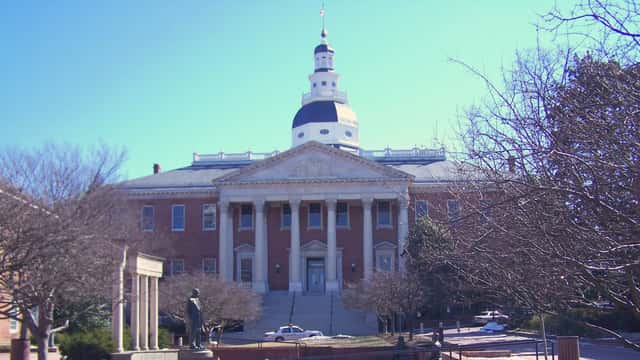
Maryland's brief in opposition, filed August 17, 2026, framed the question differently. It asked whether laws "grounded in this Nation's historical tradition of firearms regulation" are consistent with the Second Amendment.
The brief said many of Maryland's location limits are long-standing. It listed public school property, public transit, state buildings, state parks and forests, racetracks, the Camden Yards sports complex, state museums and casinos. The demonstration rule is also older, and the brief noted it applies only after police tell a person a demonstration is under way and order them to leave. It said Senate Bill 1 added three categories in 2023. They are areas for children and vulnerable people, government and public infrastructure areas, and special-purpose areas such as stadiums and places that serve alcohol. The same year, House Bill 824 removed Maryland's old "good and substantial reason" test for carry permits.
The state rejected the security theory. It noted that Maryland does not provide comprehensive security at any of its "more than 1,500 polling places." Under the petitioners' theory, it argued, a ban there would be unconstitutional "despite Heller and Bruen's express approval of such a prohibition." It called the theory "unworkable even on its own terms," asking how much security would be needed for a ban to become valid.
On whether the court needed to step in, the brief argued that "minor disputes are overshadowed by the vast areas of shared consensus" among the circuits. It asked the court to "allow the percolation process to continue." The court's order matched that request, though Thomas's statement did not adopt its reasoning.
Other states with long lists#
Thomas's statement named three states with long lists of gun-free locations. He said New Jersey bans firearms in "at least 25 locations," New York has designated 20 locations as sensitive, and California lists 29 gun-free spaces. He also cited Illinois and Hawaii in a footnote. His counts appear below; Maryland's own list is spread across several statutes and regulations, and he did not total it.
Source: Statement of Justice Thomas, Novotny v. Moore
Show the numbers
| State | Listed sensitive locations |
|---|---|
| California | 29 |
| New Jersey | 25 |
| New York | 20 |
New York's list traces to the Concealed Carry Improvement Act, which Governor Kathy Hochul signed on July 1, 2022, a week after Bruen. Her office's announcement listed sites including airports, bars and restaurants that serve alcohol, houses of worship, public transit and Times Square. It also made "no carry" the default on private property unless the owner allowed guns. Hochul called Bruen "a reckless decision" at the signing.
Thomas noted that courts of appeals have upheld many of these limits. The Second Circuit upheld New York bans in places such as treatment centers, urban parks, zoos and theaters in Antonyuk v. James in 2024. A Third Circuit panel upheld many of New Jersey's limits, but that decision was vacated when the full court agreed to rehear it.
The next case to watch#
Second Amendment Foundation official Bill Sack pointed to that next case. The group has a narrower case pending that focuses only on New York's ban in public parks, he noted in comments reported by Maryland Matters. "We are hopeful the Court takes a very hard look at that case," he wrote.
That petition, Christian v. James, No. 26-374, was filed September 16, 2026, by Brett Christian, the Firearms Policy Coalition and the Second Amendment Foundation. The respondents are Steven G. James, superintendent of the New York State Police, and Erie County District Attorney Michael J. Keane. The Second Circuit ruled against the challengers on May 18, 2026.
- Hochul signs the Concealed Carry Improvement Act
- The law takes effect
- Federal court in western New York issues its decision in the parks case
- Second Circuit rules against the challengers
- Christian v. James petition filed at the Supreme Court
Source: Office of Governor Hochul, Christian v. James petition
The Christian petition asks whether New York's park ban violates the Second Amendment. It also asks whether laws from the second half of the 19th century can establish a tradition without support from the founding era. The petition argues that lower courts are split on that question. Thomas's call for "a more narrowly focused case" fits a single-location challenge, but his statement did not mention the New York petition.
In Maryland, the fight is also continuing at the county level. A week before the Supreme Court's order, a federal judge in Maryland upheld a similar Montgomery County gun law and dismissed a challenge brought by the U.S. Justice Department, Maryland Matters reported.
What the denial does not decide#
The order leaves the Fourth Circuit's decision binding in Maryland, Virginia, West Virginia, North Carolina and South Carolina. It does not decide whether any particular sensitive-place ban is constitutional nationwide. It also does not bind other circuits, which may reach different results on parks, transit or alcohol.
Thomas's statement is not a holding. It represents one justice's view. Granting review requires four votes, and no other justice publicly joined his call to revisit the issue.
Other gun cases remain on the docket. The court has agreed to hear two challenges to assault-weapons bans, Viramontes and Grant, with argument set for December 2, 2026, according to Duke's Center for Firearms Law. The same Monday order list denied 15 firearms-related petitions, 12 of them challenges to felon-in-possession bans, the center reported.
Responses#
Bill Sack, senior director of legal operations at the Second Amendment Foundation, said the group was "disappointed," Maryland Matters reported. He said Maryland "has extinguished the Second Amendment rights of its residents" by creating "multiple categories of so-called sensitive places." He added, "We are encouraged, however, with Justice Thomas' statement in which he casts serious doubt as to the constitutionality of laws like Maryland's."
Maryland Shall Issue said the order "is, of course, a disappointment." The group's statement added that it "will continue to press appropriate challenges to misguided legislation that is designed for no other reason than to eviscerate the general right to publicly carry arms for self-defense."
The Maryland Attorney General's office did not immediately respond to a request for comment from Maryland Matters on Monday. 567politics did not contact Governor Moore's office, Attorney General Brown's office or the petitioners for this story. Maryland's legal position described here comes from its August 2026 brief.
Differing perspectives
Should states be allowed to ban guns in public places such as parks, transit, museums and bars?
Each position is summarized as its supporters make it, with equal weight and in alphabetical order. A summary is not an endorsement; the evidence for each is weighed in the story above.
Decide place by place in narrower cases
Who holds it: Justice Clarence Thomas, in a statement respecting the denial of review
Thomas agreed the Supreme Court should not take Maryland's case because each restriction rests on a different historical tradition, which would make one sweeping review hard to manage. He expressed serious doubt that many modern lists of gun-free places fit the nation's history. He argued the court should take a narrower case that tests particular sensitive-place laws, one category at a time, against the right to carry in public.
In their words: Supreme Court of the United States, statement of Justice Thomas ↗
Keep Maryland's location limits
Who holds it: Maryland Attorney General Anthony G. Brown's office, defending Governor Wes Moore and other state officials
Maryland argues that its limits rest on a long national tradition of keeping guns out of crowded and vulnerable places, from schools and courthouses to parks and places of amusement. It says the lower courts largely agree on how to apply Bruen, so any differences are minor. It rejects the idea that only places with armed security can be gun-free, noting that Heller and Bruen approved bans at polling places that have no such security.
In their words: Office of the Attorney General of Maryland, brief in opposition ↗
Strike down the broad bans
Who holds it: Permit holders Katherine Novotny, Sue Burke and Esther Rossberg, Maryland Shall Issue, the Second Amendment Foundation and the Firearms Policy Coalition
The challengers argue that lower courts are stretching the sensitive-places idea so far that it guts the right to carry in public. They say founding-era bans covered a handful of places, such as legislatures, courthouses and polling places, where the government provided protection. In their view, the right to self-defense shrinks only where the state takes over that job, so unguarded parks, trains and restaurants cannot be declared off-limits.
In their words: Petition for a writ of certiorari, Novotny v. Moore ↗
Cite this article
567 Politics staff. “Supreme Court leaves Maryland's gun-free zones in place, but Thomas invites a narrower challenge.” 567politics. Published 2026-11-17. https://567politics.com/news/supreme-court-novotny-v-moore-maryland-sensitive-places-gun-law-thomas-november-2026
Wikipedia citation
{{cite news |title=Supreme Court leaves Maryland's gun-free zones in place, but Thomas invites a narrower challenge |url=https://567politics.com/news/supreme-court-novotny-v-moore-maryland-sensitive-places-gun-law-thomas-november-2026 |work=567politics |author=567 Politics staff |date=2026-11-17 |language=en}}CSL-JSON for reference managers
{
  "id": "https://567politics.com/news/supreme-court-novotny-v-moore-maryland-sensitive-places-gun-law-thomas-november-2026",
  "type": "article-newspaper",
  "title": "Supreme Court leaves Maryland's gun-free zones in place, but Thomas invites a narrower challenge",
  "URL": "https://567politics.com/news/supreme-court-novotny-v-moore-maryland-sensitive-places-gun-law-thomas-november-2026",
  "container-title": "567politics",
  "language": "en",
  "author": [
    {
      "literal": "567 Politics staff"
    }
  ],
  "issued": {
    "date-parts": [
      [
        2026,
        11,
        17
      ]
    ]
  }
}Citations identify this article and its publication date. Assess the reporting and its linked sources before using it as evidence.
Read this article as Markdown or JSON. Cite the original page and retain its sources, dates and qualifications.
Embed this article summary
Paste this HTML into your page. The summary stays linked to the full story and updates with it. No account required.
<iframe src="https://567politics.com/embed/news/supreme-court-novotny-v-moore-maryland-sensitive-places-gun-law-thomas-november-2026?theme=auto" title="Supreme Court leaves Maryland's gun-free zones in place, but Thomas invites a narrower challenge by 567politics" width="100%" height="440" style="border:0;max-width:100%" loading="lazy"></iframe>
<p style="font-size:14px">Supreme Court leaves Maryland's gun-free zones in place, but Thomas invites a narrower challenge by <a href="https://567politics.com/news/supreme-court-novotny-v-moore-maryland-sensitive-places-gun-law-thomas-november-2026" rel="nofollow">567politics</a></p>
<script async src="https://567politics.com/embed.js"></script>
READ BEYOND 567POLITICS
Alternate sources & perspectives
Independent coverage and primary evidence to help you compare arguments. A link is not an endorsement; perspective labels describe the linked material.
- primary evidence
Novotny v. Moore, No. 25-1324: order and statement of Justice Thomas ↗
Supreme Court of the United States
Nov. 16, 2026 denial of review, with Thomas's statement doubting many sensitive-place laws and urging a narrower test case.
- primary evidence
Docket for No. 25-1324, Novotny v. Moore ↗
Supreme Court of the United States
Filing dates, the extensions, the Gun Owners of America amicus brief and the conference schedule before the denial.
- primary evidence
Kipke v. Moore, 165 F.4th 194 (4th Cir. 2026) ↗
U.S. Court of Appeals for the Fourth Circuit
Jan. 20, 2026 decision upholding nine location rules and striking the private-property default rule, with Judge Agee's partial dissent.
- right argument
Petition for a writ of certiorari, Novotny v. Moore ↗
Cooper & Kirk and Mark W. Pennak, for the petitioners
The gun-rights groups' case: lower courts are gutting the right to carry, circuits are split, and security should define sensitive places.
- left argument
Brief in opposition, Novotny v. Moore ↗
Office of the Attorney General of Maryland
Maryland's defense: a rich historical tradition supports the limits, the circuits broadly agree, and the security theory is unworkable.
- right argument
Petition for a writ of certiorari, Christian v. James, No. 26-374 ↗
Cooper & Kirk, for Brett Christian, FPC and SAF
The pending, narrower challenge to New York's ban on guns in public parks, filed Sept. 16, 2026.
- left argument
Governor Hochul signs landmark legislation to strengthen gun laws ↗
Office of the Governor of New York
July 1, 2022 announcement of New York's Concealed Carry Improvement Act and its list of sensitive locations.
- independent analysis
Supreme Court won't take up Maryland gun rights case ↗
Maryland Matters
Reactions from the Second Amendment Foundation and Maryland Shall Issue, and the Montgomery County ruling a week earlier.
- independent analysis
Supreme Court turns down DEI-related disputes and Second Amendment challenge to gun bans in sensitive places ↗
SCOTUSblog
Summary of the Nov. 16 order list, including both sides' arguments in Novotny.
- independent analysis
SCOTUS Gun Watch 11/16/2026 ↗
Duke Center for Firearms Law
Tracks the 15 firearms denials that day and the assault-weapons cases set for argument Dec. 2, 2026.
Reviewed 2026-11-17. The source-discovery tool returned only unrelated shopping and dictionary pages, so this list was chosen by hand from pages opened while reporting. The petitioners' reply brief was not reviewed. No 567politics request for comment was sent to Maryland officials or the petitioners. Gun-safety groups that filed amicus briefs at the Fourth Circuit were not quoted because no statement from them on the denial was found. Polling on sensitive-place laws was not checked.