Gina Hinojosa defeats Greg Abbott, ending 32 years of Republican governors in Texas
Abbott conceded after the AP called the race; with two-thirds of precincts in, Hinojosa led 57% to 41%, far wider than any final poll. The count and the other statewide races are still open.
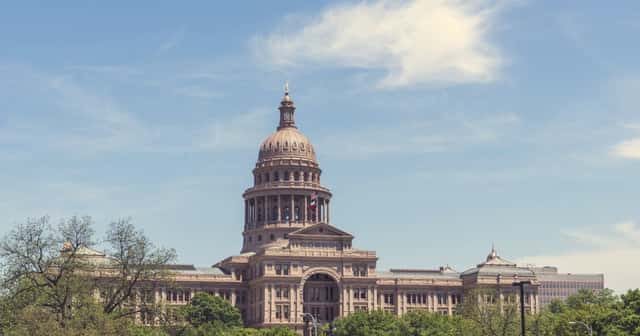
Texas has elected a Democratic governor for the first time since 1990. The Associated Press called the race for state Rep. Gina Hinojosa on the night of Tuesday, Nov. 3, 2026, and Gov. Greg Abbott told supporters at his Austin watch party that he had phoned her to concede. With 6,546 of 9,900 precincts reporting, or 66.1%, Hinojosa had 3,957,537 votes (57%) to Abbott's 2,849,465 (41%), according to the AP count carried by KPRC. Libertarian Pat Dixon had 86,718 votes, about 1%.
Those figures are partial. Counts will move as the remaining precincts and late mail ballots are added, and the final margin will not be known for days. The official canvass belongs to the Texas secretary of state, whose results page had not yet posted totals when we checked at 11:30 p.m. Eastern time. What is settled is the outcome: the incumbent conceded, and the AP, CBS News and CNN have all projected a Hinojosa win.
The result ends a Republican hold on the governor's mansion that began when George W. Bush defeated Ann Richards in November 1994 and took office in January 1995. It also denies Abbott a fourth term that would have made him the longest-serving governor in state history. Our pre-election report on the final Texas polls had the race as a statistical tie. Results will continue to update on our Texas governor race page.
What happened on election night
Polls closed at 7 p.m. Central time, an hour later in El Paso. Early returns, which in Texas are mostly early and mail votes, put Hinojosa ahead from the start. At 7:55 p.m. Central, KLTV in Tyler reported Hinojosa at 2,229,670 votes (56%) to Abbott's 1,701,255 (42.7%). By 9:46 p.m., with about 59% of the vote counted, the AP tally carried by KVII in Amarillo had her at 55.7% (3,424,202) to Abbott's 43% (2,641,842).
Abbott conceded at about 10 p.m. Central, KSAT reported. FOX 7 Austin's account on X said he told supporters he had called Hinojosa to congratulate her. The Texas Tribune's Megan Menchaca and Semafor's David Weigel posted the same, the latter citing the Hinojosa campaign. We were unable to open X directly tonight, so we have not verified those posts beyond the text indexed by search engines, and we have not embedded them.
| Time (Central) | Share counted | Hinojosa | Abbott |
|---|---|---|---|
| 7:55 p.m. | early returns | 56.0% | 42.7% |
| 9:46 p.m. | about 59% | 55.7% | 43.0% |
| about 10 p.m. | 66.1% of precincts | 57.0% | 41.0% |
Sources: KLTV, KVII and KPRC, each citing the Associated Press count. The percentages in the table are rounded as each outlet reported them.
The same night, Democrat James Talarico defeated Attorney General Ken Paxton for the U.S. Senate seat being vacated by John Cornyn$. The AP called that race shortly after 9 p.m., KSAT reported. We covered the Senate call in our report on South Carolina and Texas. The two Texas results arrived as Democrats were also projected to retake the House, as described in our story on Hakeem Jeffries and the House majority$.
Who Gina Hinojosa is
Hinojosa, 52, is a labor and civil rights lawyer who grew up in McAllen and Brownsville, according to CBS Texas and KSAT. Her Texas House biography says she ran for the Austin school board after a 2012 proposal to close her son's elementary school and later served as board president. She won a seven-way Democratic primary for the Texas House in 2016 and has represented central Austin since January 2017. She sits on the Public Education and Business and Industry committees and chairs the House Democratic Campaign Committee.
She will be the third woman to serve as governor of Texas, after Miriam A. Ferguson and Ann Richards, and the first Latina to hold the office, CBS Texas and KSAT reported. Her term begins in January 2027.
Her campaign ran on public schools and affordability. She pledged to end the state's voucher program, which Abbott signed in 2025, to end the STAAR test and state takeovers of school districts, and to fire Education Commissioner Mike Morath on her first day. She proposed returning $1,500 per household from the state's savings account and said she would veto any new redistricting map she judged to be gerrymandered, KSAT reported. On data centers, she joined other Democrats in calling for a moratorium on new state permits until residents have more protections, CBS Texas said.
Who Greg Abbott is, and what he leaves behind
Abbott, 68, has been governor since January 2015. He was Texas attorney general from 2002 to 2015 and before that a justice of the Texas Supreme Court and a Harris County district judge. His profile on 567politics lists his offices and sources. He won each of his three previous races by double digits.
His record includes Operation Lone Star on the border, a $1 billion school voucher program, a near-total abortion ban, tighter bail laws and mid-decade redistricting of the state's congressional map, KSAT reported. In the campaign he ran on property tax cuts, including a plan to eliminate school district property taxes for homeowners, cap appraisal growth at 3% and require two-thirds voter approval for local tax increases.
He also leaned on the border and on his opponent's politics. "Remember, it was just two years ago we were still living under the Joe Biden regime," he told a rally near San Antonio on Oct. 28, according to the San Antonio Report, as we reported last week. He called Hinojosa "to the far radical left of Talarico" and framed the choice as "common sense and crazy." On Election Day he told voters to "keep Texas, Texas," KVII reported.
The money gap did not decide it
Abbott outspent Hinojosa by a wide margin. The Texas Tribune's reading of Texas Ethics Commission filings, which we summarized before the election, put his spending since her Oct. 15, 2025, launch at $281 million against her $36.8 million, nearly eight to one. KSAT put the advertising gap at about $118 million to $26 million, more than four to one. Abbott started 2026 with more than $100 million in cash on hand.
Hinojosa's largest late donors included Illinois Gov. JB Pritzker and the Democratic Governors Association at $1 million each, the Tribune reported. Abbott's included Elon Musk, who gave nearly a fifth of his final-period haul, as well as Phil Knight, Kenneth Fisher and the Republican Governors Association. These are state filings, not federal ones, so the FEC data we use for congressional candidates does not apply. We did not review the Ethics Commission filings directly tonight.
Spending totals do not explain why a race turns out as it does. The size of the gap does suggest that money was not the binding constraint on Hinojosa's campaign, and that Abbott's advantage did not translate into votes at the rate it had in 2014, 2018 and 2022.
What the polls said, and what they missed
The final public polls pointed to a close race, not a 16-point Democratic lead. The New York Times/Siena College poll fielded Oct. 27 to Nov. 1 had Hinojosa at 48% and Abbott at 47%, a statistical tie with a 3.4-point margin of error. A YouGov poll of 2,141 likely voters taken Oct. 26 to 29 had Abbott up 50% to 49%. Fox News, Emerson, Texas Southern University, CNN/SSRS and the University of Houston all had Abbott ahead by 2 to 5 points in October, according to the Texas Politics Project tracker.
Source: Texas Politics Project poll tracker, KPRC/AP count
Show the numbers
| Measure | Abbott | Hinojosa |
|---|---|---|
| Fox News (Oct. 19) | 52% | 47% |
| Texas Southern (Oct. 25) | 50% | 47% |
| YouGov (Oct. 29) | 50% | 49% |
| NYT/Siena (Nov. 1) | 47% | 48% |
| AP count, 66% in | 41% | 57% |
If the partial count holds anywhere near its current shape, every late poll understated Hinojosa by 8 points or more and overstated Abbott by a similar amount. That would be a large miss by the standards of recent cycles. Several cautions apply before drawing conclusions. The count is two-thirds complete, and the remaining precincts may not match those already in. Polls measure likely voters as modeled by each firm, and a turnout surge among groups the models underweighted would produce exactly this pattern. Early voting reached a record 7.7 million, or 40.5% of registered Texans, the Tribune reported before Election Day, and Democratic strategists said the late surge pointed to higher Hispanic and Black turnout. YouGov's final poll had Hinojosa ahead among Hispanic voters by 62% to 37%.
We will know more when the state publishes county-level results and when exit polls are weighted to the final count. The national exit polls we reported earlier tonight, which put President Trump's approval at 38% with the economy the top issue, are a starting point but are not a Texas sample. Our methodology page explains how we weigh polls against results.
What the result changes in Austin
A Democratic governor will share power with a Legislature that remains under Republican control, as far as the early results show. Texas governors have a line-item veto over appropriations and the power to call special sessions and set their agendas. They appoint the education commissioner, with Senate confirmation, as well as members of hundreds of state boards. They do not write the budget, which the Legislature passes every two years, and they cannot repeal the voucher program or the state's abortion law without legislative votes.
That means several of Hinojosa's pledges can be carried out alone and several cannot. Replacing Morath is within her power once his term ends or he departs, though the Senate must confirm a successor. Ending state takeovers of Houston and Fort Worth schools would need the Texas Education Agency, which answers to the commissioner, to return control, and the Tribune noted before the election that she would likely need legislative cooperation. Ending vouchers and the STAAR test would require new laws. Her promise to veto a gerrymandered map matters mainly for any new mid-decade redistricting, since the current congressional map is already in force.
The lieutenant governor's race, between incumbent Republican Dan Patrick and Democrat Vikki Goodwin, had not been called in the sources we could open tonight. The lieutenant governor presides over the Senate and controls its committees, which makes that outcome central to what any governor can get passed. Results for the attorney general and comptroller races were also pending.
Differing readings of the result
Supporters of the result point to the voucher program, school takeovers and data center permitting as policies that ran ahead of what Texans wanted, and to the money gap as proof that a message about schools and prices beat advertising volume. Hinojosa said before the polls closed that "this is a change election year," KVII reported.
Abbott's allies, and Republicans generally, have not yet offered a detailed account of the loss. The accounts of his concession speech that we could open, from FOX 7 and KSAT, report only that he congratulated Hinojosa; we have not seen a transcript. Earlier in the campaign Abbott argued that his record on crime, the border and school ratings was the case for a fourth term, and that Hinojosa's positions on an income tax and school policy were out of step with the state. Those arguments did not persuade enough voters on Tuesday, but the result does not by itself show which of them voters rejected.
A third reading treats Texas as part of a national swing rather than a verdict on Abbott. Democrats flipped the Texas Senate seat the same night, retook the House and gained in states Trump carried in 2024. On that view the governor's race moved with the national mood, and state-specific explanations are secondary. The exit poll finding that Trump's approval sat at 38% nationally supports this reading, though it does not rule out the others. The three accounts are not mutually exclusive, and sorting them out will take county data and a completed count.
What remains unknown
The final margin, turnout by county and the composition of the electorate are all still open. So is the fate of the other statewide offices and the partisan balance of the Texas House, which decides how much of Hinojosa's agenda reaches her desk. Abbott remains governor until January 2027 and can still call a special session before then. The most immediate question is whether the Legislature's Republican leadership treats the result as a mandate to negotiate or as a reason to pass as much as possible before the transition.
Differing perspectives
How should Texas change its school and property tax policies after Gina Hinojosa's election as governor?
Each position is summarized as its supporters make it, with equal weight and in alphabetical order. A summary is not an endorsement; the evidence for each is weighed in the story above.
End vouchers and state takeovers, fund neighborhood schools
Who holds it: Gov.-elect Gina Hinojosa, her campaign and Texas House Democrats aligned with her education platform
Hinojosa and her campaign argue that the voucher program, state takeovers, high-stakes testing and no-bid vendor contracts pull money and control away from classrooms. They say the next governor should end the STAAR test, pause A-F ratings until the Legislature writes a new accountability law, return taken-over districts to local control, end vouchers so public funds stay in neighborhood schools, and replace the education commissioner with an educator. They point to savings from audited vendor contracts as a way to raise teacher pay to among the highest in the nation.
In their words: Gina Hinojosa for Texas Governor campaign website ↗
Keep the voucher program and abolish school property taxes for homeowners
Who holds it: Gov. Greg Abbott, his campaign and Republican legislative leaders who passed the 2025 voucher law
Abbott and his allies argue that local governments, not the state, drive property tax bills, and that school district taxes on homeowners can be ended by constitutional amendment, which they say would cut the average homestead's bill in half. They point to a 3% appraisal cap for all property, two-thirds voter approval for local tax increases, spending limits on local governments and a rule sending 70% of school funding to classrooms. They say parents should keep the choice the voucher program gives them and that state intervention in failing districts has raised school ratings.
In their words: Greg Abbott campaign website ↗
Name specific spending cuts before promising tax cuts
Who holds it: Libertarian candidate Pat Dixon and like-minded fiscal critics
Dixon argues that Texas has no state property tax, that local governments set the rates that fund schools, counties and emergency services, and that any promise to abolish property taxes without naming the spending to cut should be ignored. He says replacing them with higher sales taxes would tie local budgets to a single source that shrinks in downturns. He would start by finding specific cuts that lower taxes, pursue appraisal reform where possible and leave rate decisions to local voters.
In their words: Pat Dixon for Governor campaign website ↗
READ BEYOND 567POLITICS
Alternate sources & perspectives
Independent coverage and primary evidence to help you compare arguments. A link is not an endorsement; perspective labels describe the linked material.
- primary evidence
Gina Hinojosa wins Texas governor's race, first Democrat in decades (AP race call with partial count) ↗
KPRC 2 Houston
Carries the Associated Press race call and the AP count at 66.1% of precincts reporting: Hinojosa 3,957,537 (57%), Abbott 2,849,465 (41%), Dixon 86,718.
- independent analysis
Democrat Gina Hinojosa topples Greg Abbott to become first Latina governor of Texas ↗
KSAT 12 San Antonio
Background on both candidates, Abbott's record, advertising spend (about $118 million to $26 million) and the time of the concession.
- independent analysis
Hinojosa defeats Abbott, makes history as Texas' first Democratic governor in decades ↗
CBS Texas
CBS News projection, Hinojosa's platform on schools and data centers, and the history of Republican control since 1995.
- independent analysis
Abbott concedes Texas governor's race to Gina Hinojosa ↗
KVII Amarillo
AP count at about 59% (Hinojosa 55.7%, Abbott 43%) and Election Day remarks by both candidates.
- primary evidence
Texas 2026 gubernatorial poll tracker ↗
Texas Politics Project, University of Texas at Austin
Running list of public polls with field dates, samples and margins; shows every late poll had the race within 5 points.
- primary evidence
Official election results ↗
Texas Secretary of State
The official unofficial-results page. Totals were not yet posted when reviewed; this is where the canvassed count will appear.
- right argument
Greg Abbott campaign policy platform ↗
Greg Abbott campaign
Abbott's case for eliminating school district property taxes for homeowners, appraisal caps, local spending limits and his education plan.
- left argument
Save Texas public schools ↗
Gina Hinojosa for Texas Governor campaign
Hinojosa's pledges to end vouchers, STAAR and state takeovers, replace the education commissioner and raise teacher pay.
- other perspective
Property tax ↗
Pat Dixon for Governor campaign (Libertarian)
The Libertarian nominee's argument that tax-cut promises without named spending cuts should be ignored and that local control should be respected.
- primary evidence
Rep. Gina Hinojosa biography ↗
Texas House of Representatives
Official legislative biography: Austin school board service, 2016 primary, committee assignments.
Reviewed 2026-11-03. Reviewed on election night, Nov. 3, 2026, between 11 p.m. and midnight Eastern. The Texas secretary of state's results page had not posted totals, so vote counts come from the Associated Press tally as carried by Texas television stations. The automated source-discovery search returned unrelated results for this subject and was not used. Many national live blogs (CNN, NBC, Washington Post, The Hill) could not be opened from our environment; the AP's own story and any transcript of Abbott's concession or Hinojosa's victory speech were not available to us. No post-election statement from the Texas Republican Party or the Abbott campaign explaining the result had been located. X and Reddit could not be opened directly tonight.