Early 2026 exit polls: Trump approval at 38%, economy and democracy top issues, both parties unpopular
Preliminary exit poll waves released at 5 p.m. Eastern put Trump's approval among voters at 38%, show 43% voting partly to oppose him, and rate the economy as poorly as in 2022. The figures will be reweighted to actual results overnight, and neither party drew a favorable majority.
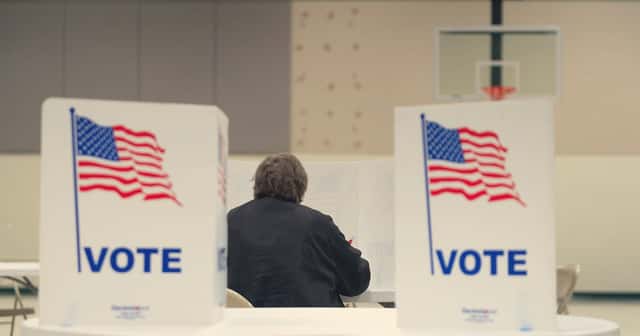
The first wave of 2026 midterm exit poll data landed at 5 p.m. Eastern on Tuesday, before any race was called. The numbers are preliminary. They will shift as the survey is weighted to actual vote counts overnight. But the early picture is consistent across the networks that share the data: a president with low approval among people who voted, an electorate that rates the economy poorly, and two parties that most voters do not like.
For how voters described their priorities before Election Day, see our report on the SSRS early voter poll that put the economy and democracy at the top.
Who ran the exit poll this year
For two decades, Edison Research ran the exit poll for the National Election Pool of ABC, CBS, CNN and NBC. SSRS bought Edison and launched The Voter Poll by SSRS in October 2025. SSRS says the 2026 program serves ABC News, CBS News, CNN, Fox News, MS Now, NBC News and the Associated Press, and "merges the methodologies of the Edison/NEP Exit Poll and AP VoteCast/FOX News Voter Analysis," per SSRS's program page. The AP and Fox News had left the pool in 2017 and ran AP VoteCast from 2018 through 2024 before rejoining, per Wikipedia's National Election Pool entry, which cites SSRS and Politico. Edison's longtime exit poll chief Joe Lenski co-leads it, per the SSRS launch release.
So the CNN, NBC, CBS and AP labels all describe one data collection. It mixes in-person interviews at precincts with phone, mail and online interviews of early and mail voters. A Straight Arrow News explainer describes in-person interviewing in 15 states at about 30 polling places each, roughly 100,000 total respondents, a national margin of error near 0.6 points, and state margins from about 2 points in Georgia to more than 8 in North Dakota. SSRS weights the survey to each state's actual results once votes are counted, and early numbers "will likely change by the morning." We could not open the SSRS methods statement, so treat those figures as reported, not verified.
Trump approval and the "rebuke" question
Several outlets put Trump's job approval among voters at 38 percent. CBS News reported Trump "currently at 38%" and called it the lowest for a president in a midterm in its exit poll series. Blaze News cited CNN's version at 38 percent approve, 62 percent disapprove. An iHeart Radio summary said The New York Times put it at 37 percent.
CBS's comparison points: George W. Bush at 43 percent in 2006, Barack Obama at 44 in 2010, Trump at 45 in 2018 and Joe Biden at 44 in 2022, per a Mediaite report on Yahoo News.
Source: CBS News exit polls via Mediaite/Yahoo News
Show the numbers
| Midterm | Approve |
|---|---|
| Bush 2006 | 43% |
| Obama 2010 | 44% |
| Trump 2018 | 45% |
| Biden 2022 | 44% |
| Trump 2026 | 38% |
On motive, NBC's early read is that 43 percent said one reason for their vote was to express opposition to Trump. NBC's article is at nbcnews.com; our fetch of that page was blocked, so we confirmed the figure through Political Wire, posted at 5:20 p.m., and Conservative Daily News, which reported 43 percent voting in opposition and 16 percent voting to show support.
CBS asked it differently. It found 59 percent said Trump was a factor in their House vote, against 64 percent in 2018. Among Democratic voters, 78 percent said they voted to oppose him and 1 percent to support him. Among Republican voters, 36 percent voted to support him and 62 percent said he had no bearing, per Yahoo News. Most self-described MAGA Republicans said their vote supported Trump; most non-MAGA Republicans said he was not a factor, per CBS News.
The economy, prices and the national mood
In CNN's early tally, 39 percent named the economy as most important, 32 percent said "democracy," 14 percent immigration, 8 percent health care, 4 percent foreign policy and 3 percent crime, per Blaze News. The AP's version showed about four in ten on the economy and three in ten on democracy, per Conservative Daily News.
Breitbart reported CNN figures of 49 percent calling the cost of living crucial to their vote, 39 percent a major factor, 10 percent minor and 1 percent no role. Forbes rounded the same data to 90 percent at 5:40 p.m.
About 75 percent said the economy is in rough shape, and 65 percent said Trump's policies made things worse, per the iHeart summary of the NBC poll. On personal finances, 44 percent said worse than two years ago, 38 percent the same and 18 percent better, per Blaze News citing CBS. On the country's direction, CBS found 38 percent angry, 37 percent dissatisfied, 18 percent satisfied and 7 percent enthusiastic, per Yahoo News.
Official data behind that mood: unemployment was 4.2 percent in September 2026 and payrolls grew by 29,000, per the BLS Employment Situation release of October 2, 2026. The CPI for all urban consumers rose 3.7 percent over the 12 months ending September, not seasonally adjusted, with energy up 20.4 percent and food up 2.5 percent, per the BLS CPI release of October 14, 2026. Both are national monthly series subject to revision; October data were not yet out.
Two unpopular parties
In the CBS data, 46 percent viewed the Democratic Party favorably and 54 percent unfavorably; Republicans drew 41 percent favorable and 59 percent unfavorable, per Yahoo News. Nearly one in five liked neither party, per the iHeart summary. An earlier wave reported by Blaze News had 43 percent favorable for Democrats and 38 for Republicans. The gap shows how early waves move.
Republican unfavorability of 59 percent compares with 52 percent in 2022, per Conservative Daily News. Voters rated Democrats better on the economy, foreign policy, health care and corruption, and Republicans better on immigration, per the iHeart summary. On enforcement, 57 percent said immigration policy has gone too far, 23 percent about right and 21 percent not far enough, per Conservative Daily News. Most voters said the United States made the wrong decision on military action in Iran, including about a quarter of Republicans, per CBS News.
Demographic shifts to watch
Among Latino voters, Democratic identification rose to 43 percent from 39 percent in 2024, and Republican identification fell to 27 percent from 29, per Conservative Daily News. Voters under 30 appeared to move back toward Democrats, though no percentage was published in pages we could open, per the iHeart summary.
CBS said Trump's approval was underwater in nearly every Senate battleground, including states he won by double digits in 2024, per CBS News. That matches Michigan's final Senate polls. Subgroup estimates carry wider error margins and move most once weighting is done.
How 2026 compares with 2018 and 2022
| Measure | 2018 | 2022 | 2026 (early) |
|---|---|---|---|
| President's approval among voters | 45% approve, 54% disapprove (ABC7) | 44% approve, 55% disapprove, prelim. (CNN via KRDO) | 38% approve, 62% disapprove (Blaze) |
| Vote was to oppose the president | 38% (ABC7) | About one-third (CNN via KRDO) | 43% (Political Wire) |
| Top issue | Health care 41% (PBS) | Inflation 32%, abortion 27% (NBC) | Economy 39%, democracy 32% (Blaze) |
| Economy rated good | 68% excellent or good (ABC7) | About 25% (CNN via KRDO) | About 25% (iHeart) |
The "oppose the president" share is higher than in either of the last two midterms, and the "support" share, at 16 percent, is far below the 26 percent of 2018, per NBC's 2018 report. And views of the economy look like 2022, when the president's party lost the House, not like 2018, when 68 percent called the economy good. In 2022, 46 percent said their finances were worse than two years earlier and 18 percent said better, per NBC's 2022 report. The 2026 split of 44 and 18 is almost identical. The difference is which party holds the White House.
The Republican and White House reading
Republicans argued all week that polls undercount their voters. Speaker Mike Johnson said, "I'm telling you, these polls are off. All of them. They use faulty analysis," per TIME on October 27. CBS quoted him Monday saying, "The polls are wrong," per CBS News. Townhall's Matt Vespa wrote Tuesday that "the polls are unreliable," per Townhall.$
A second Republican argument accepts the numbers but disputes their meaning. Blaze News framed the data as "very unhappy voters" but said "Democrats aren't popular either," quoting pollster Frank Luntz that exit polls are "polling how the electorate overall feels and not polling the people [that] are actually going to participate," per Blaze News. The night before, Blaze highlighted NBC's Steve Kornacki noting Democrats stood at 29 percent favorable and 52 percent unfavorable in NBC's final pre-election poll, per Blaze News. We found no statement from the White House or Donald Trump on the exit polls by 7:30 p.m.
The Democratic reading
Democrats read the numbers as a referendum on Trump and a verdict on prices. The simplest version is the 43 percent who voted partly to oppose the president, which Political Wire's Taegan Goddard headlined "Many Voters See Midterms as a Rebuke of Trump," per Political Wire. Before results, DCCC Chair Suzan DelBene said, "The American people are angry. They want change," per NBC Washington.$
Democrats also point to voters rating their party better on the economy, health care, foreign policy and corruption, per the iHeart summary, and to the 57 percent who said enforcement has gone too far. The 65 percent who said Trump's policies hurt the economy is the number they tie to tariffs and the Iran conflict. The weak spot is their own 54 percent unfavorable rating, and CBS's finding that about one in five Democratic House voters view their own party unfavorably, per CBS News. We found no reaction from Hakeem Jeffries$ or Chuck Schumer$ by 7:30 p.m.
Independents, third parties and the methodology critics
Michael Traugott, a University of Michigan professor emeritus, told Straight Arrow News that Republicans and Trump supporters have been less willing to take exit polls, which can overstate Democratic support, and that "pollsters have developed new weighting schemes to adjust for that phenomenon." He added there is "no indication of dishonest or fake responses in the exit polls," per Straight Arrow News.
A broader critique comes from AMAC, a right-leaning seniors' group, where Herald Boas argued in September that "pollster adjustments to raw polling data became more and more subjective" and "any poll is only a guess," per AMAC Newsline. TIME's Philip Elliott pushed back, noting midterm polls were largely accurate in 2022 and recent misses sometimes underestimated Democrats, as in the 2025 New Jersey and Virginia governor races, per TIME. The early waves did not break out how the one in five who dislike both parties voted.
What people are saying online
This section is shorter than we planned. We set out to sample reactions to the exit polls on X and in threads on r/politics, r/Conservative, r/neoliberal and r/moderatepolitics, across the political spectrum. During the reporting window, between 5 p.m. and 7:30 p.m. Eastern, our tools could not open X or Reddit pages, and the tool we use to verify a post against its live permalink failed on every X link we tried. Search-engine previews showed the exit poll numbers being circulated by news accounts and poll-aggregator accounts, along with cautions from some of them that early exit polls have been wrong before. A preview is not a verified quotation, so we are not reproducing any post here.
The absence matters less than it might. Posts on X would have shown that particular accounts expressed a view; they would not have told us what voters think. The exit poll itself is the representative evidence in this story, with the caveats laid out above: it is preliminary, it will be reweighted, and its exact question wording was not published on any page we could open.
What remains unknown
The vote itself. Networks hold any figure that hints at a winner until polls close in that state. As of 7:30 p.m., we could not open a page with a timestamped race call for Indiana, Kentucky, Georgia, Virginia, Vermont or South Carolina, so we report none. One network live blog headline changed to indicate a Georgia Senate call, but we did not see the call or its time.
The final weights. In 2022 the early wave had Biden approval at 45 percent; the weighted figure was 44. Shifts of a point or two are normal, and subgroup shifts can be larger.
Turnout. The exit poll describes who voted, not how many. Our Election Day guide tracked about 58 million early votes, and ballot shortages and other problems could affect who was interviewed in person.
Question wording. No page we could open published the exact wording of the approval, motive or top-issue questions.
Leadership response. No party leader had responded on the record by 7:30 p.m. in any page we opened. Senate Majority Leader John Thune$ said earlier that Republicans would not concede toss-up Senate races, per Fox News, but that predates the exit polls.
Sources and method
Compiled between 5 p.m. and 7:30 p.m. Eastern on November 3, 2026. Primary pages we opened: CBS News's exit poll page (updated 5:17 p.m.), SSRS's program page and launch release, and the BLS employment and CPI releases. Secondary reports came from Blaze News, Breitbart, Forbes, Political Wire, Conservative Daily News, iHeart Radio, Straight Arrow News, TIME, Townhall, AMAC and Yahoo News. NBC News, CNN, The Washington Times, The Hill, Axios, Mediaite and Bloomberg pages were blocked to our fetch tool; where we cite NBC figures we name the secondary page that carried them. Figures for 2018 and 2022 come from ABC7, PBS NewsHour, NBC News and a CNN report syndicated by KRDO. X and Reddit pages could not be opened or verified during reporting, so no social posts are quoted. Our source-discovery tool returned no relevant results. Our standards for polls, sourcing and corrections are on our methodology page.
Differing perspectives
What do the preliminary 2026 midterm exit polls show about voters' verdict on Trump and the two parties?
Each position is summarized as its supporters make it, with equal weight and in alphabetical order. A summary is not an endorsement; the evidence for each is weighed in the story above.
Read the data as a rebuke of Trump
Who holds it: Political Wire's Taegan Goddard; DCCC Chair Suzan DelBene expressed a similar view before results
This position holds that the central finding is the 43 percent of voters who said one reason for their vote was to express opposition to Trump, a share higher than in the 2018 midterm, alongside the 62 percent who disapprove of his job performance and the 65 percent who say his policies made the economy worse. Goddard headlined the early NBC data as showing "Many Voters See Midterms as a Rebuke of Trump." DelBene said "The American people are angry. They want change." Holders argue that the election functioned as a referendum on the president and that voters delivered a negative verdict on prices and his conduct in office.
In their words: Political Wire, Taegan Goddard, Nov. 3, 2026, 5:20 p.m. ET ↗
Read the data as discontent with both parties, not a Democratic mandate
Who holds it: Blaze News (Carlos Garcia); pollster Frank Luntz and NBC's Steve Kornacki as quoted there
This position holds that the exit polls describe a sour electorate rather than a pro-Democratic one. It cites the 38 percent Trump approval and poor economic ratings but points to Democratic favorability that trails only modestly ahead of Republicans and to one in five voters who like neither party. Luntz argued the surveys measure "how the electorate overall feels" rather than the people who actually turn out. Kornacki asked whether voters angry at Trump will back a party they also dislike. Holders argue that discontent with the president does not translate into a mandate for Democrats.
In their words: Blaze News, Carlos Garcia, Nov. 3, 2026 ↗
Treat the polls as unreliable until the votes are counted
Who holds it: Conservative commentators including Townhall's Matt Vespa; House Speaker Mike Johnson made a similar argument in remarks quoted by TIME and CBS
This position holds that polls, including those released on Election Day, cannot be trusted because they conflict with each other, rely on samples that skew toward the Democratic base, and have missed Republican strength in past cycles. Vespa wrote that "the polls are unreliable" and urged readers to vote regardless of what surveys show. Johnson said the polls "are off. All of them" and "use faulty analysis." Holders argue that the only meaningful measure is the counted vote, and that early exit poll figures should be read as provisional at best until results are in and the survey is weighted.
In their words: Townhall, Matt Vespa, Nov. 3, 2026 ↗
Wait for the weighted figures before drawing conclusions
Who holds it: Survey methodologists including Michael Traugott (University of Michigan), as quoted by Straight Arrow News; SSRS, which runs the poll
This position holds that early exit poll waves are a snapshot that will change once SSRS weights the survey to each state's actual results, so neither party should treat them as a verdict. Traugott said Republicans and Trump supporters have been less willing to take exit polls in recent elections, which can overstate Democratic support, and that "pollsters have developed new weighting schemes to adjust for that phenomenon." He also said there is "no indication of dishonest or fake responses." Holders argue that the data are sound but preliminary, that state-level margins are far wider than the national one, and that readers should wait for the morning figures.
In their words: Straight Arrow News, Devin Pavlou, Nov. 3, 2026 ↗
READ BEYOND 567POLITICS
Alternate sources & perspectives
Independent coverage and primary evidence to help you compare arguments. A link is not an endorsement; perspective labels describe the linked material.
- primary evidence
See CBS News exit poll results for the 2026 midterm elections ↗
CBS News
Consortium member's own exit poll page, updated 5:17 p.m. ET Nov. 3: Trump approval 38%, Trump a factor for about 6 in 10, mood, MAGA vs non-MAGA split; says results update through the night.
- primary evidence
The Voter Poll by SSRS (program page) ↗
SSRS
Pollster's description of the 2026 exit poll: partners, merged Edison/NEP and AP VoteCast methods, in-person plus mail, phone, text and online modes. The methods PDF was not opened.
- independent analysis
Can you trust tonight's exit polls? Here's how they work ↗
Straight Arrow News
Questions exit-poll reliability: design (15 states, ~30 precincts each, ~100,000 respondents, national margin ~0.6), weighting to results, Traugott on Republican non-response.
- right argument
Early exit polling shows very unhappy voters — but Democrats aren't popular either ↗
Blaze News
Argues discontent with Trump is not a Democratic mandate; carries CNN top-issue figures, Trump 38/62, early party favorability, Luntz and Kornacki quotes.
- left argument
Many Voters See Midterms as a Rebuke of Trump ↗
Political Wire
Reads the early NBC data as a rebuke of Trump: 43% voted partly to express opposition to the president. Posted 5:20 p.m. ET.
- right argument
Trump Approval at 38% Among Midterm Voters, Preliminary Exit Poll Shows ↗
Conservative Daily News
Right-leaning outlet carrying NBC figures with the preliminary caveat: 43% oppose / 16% support, GOP unfavorable 59% vs 52% in 2022, immigration enforcement 57/23/21, Latino party ID.
- right argument
Exit Poll: 88% Say Cost of Living Was a Key Factor in Their Vote ↗
Breitbart
Emphasizes cost of living (49% crucial, 39% major, 10% minor, 1% none in CNN data) and notes the question does not show which party benefited.
- independent analysis
Polls Point to a Blue Wave. Here's Why Republicans Say They're Wrong ↗
TIME
Oct. 27 examination of Republican poll-skepticism claims, including Speaker Johnson's 'these polls are off. All of them'; argues 2022 midterm polls were largely accurate and recent misses cut both ways.
Reviewed 2026-11-03. Every listed page was opened before publication. discover_politics_sources returned no relevant results for this subject and was not used. Blocked to our fetch tool: nbcnews.com (including the NBC exit poll article and methodology explainer), cnn.com, washingtontimes.com, thehill.com, mediaite.com, axios.com, cnbc.com, ms.now, bloomberg.com; NBC figures were confirmed through the secondary pages listed. The SSRS methods statement PDF was not opened. No on-record statement from the White House, Trump, Jeffries, Schumer or Thune on the exit polls was found by 7:30 p.m. ET. X and Reddit pages could not be opened or verified, so no social-media perspective is listed. Exact question wording for the approval, motive and top-issue items was not published on any page we opened.