Judge says she will revise order shielding election workers as Justice Department appeals
Judge Trina Thompson acknowledged errors in her Oct. 30 order; the department says warning officials about federal law is not intimidation.
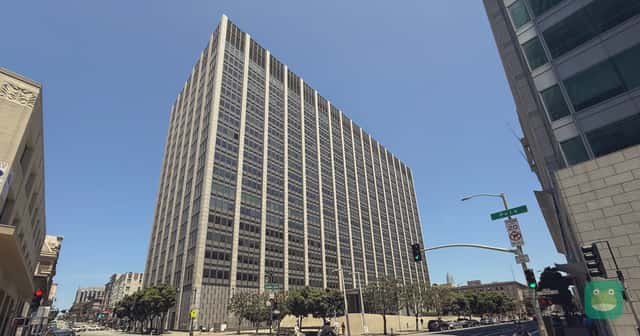
A federal judge in San Francisco said she will rewrite her order barring the Justice Department and the Department of Homeland Security from threatening election workers, one day before the Nov. 3 midterms. The department has already appealed the order to the Ninth Circuit and asked the judge to pause or dissolve it.
U.S. District Judge Trina Thompson issued the temporary restraining order on the evening of Oct. 30. In a Nov. 1 order setting questions for a hearing, she wrote that the court "acknowledges some errors" in it and "will MODIFY the TRO." The hearing on the department's request was set for Monday, Nov. 2.
The case, Service Employees International Union v. Department of Justice, is one of several fights over federal efforts to flag possible noncitizen voters before the election. This story covers what the order says, what each side argues, and the dates that matter. 567 Politics first reported the order when it was issued. Wider coverage is in the United States elections guide.
What the order does
The plaintiffs are two unions, SEIU and AFSCME, and two civil rights groups, the League of United Latin American Citizens (LULAC) and the NAACP. They sued the Justice Department, Attorney General Todd Blanche, Homeland Security and Secretary Markwayne Mullin on Oct. 29.
The temporary restraining order found that the plaintiffs were likely to succeed on claims under Section 11(b) of the Voting Rights Act, which bars voter intimidation, and under the Constitution's Elections Clause. It bars the federal defendants from threatening, intimidating or coercing state or local election workers to halt processing a registered voter's ballot "solely on the basis" that the government alleges the voter is ineligible.
The order also bars demands that officials remove such voters from the rolls, refuse to issue them ballots, or set aside or decline to count their ballots on that basis alone. It bars threats of prosecution against workers who process ballots under state and federal law. The order states that election workers "do not violate federal criminal law even if a particular ballot belongs to a registered voter alleged by Defendants to be ineligible to vote."
Two other parts drew the department's sharpest objections. One requires the government to tell state and local governments that received the challenged letters that the threats have been blocked. The other requires the department to inform the court of pending search warrant applications, grand jury subpoenas or other demands for election materials. The Wisconsin Elections Commission has posted a copy of the order on its website.
As issued, the order runs until 5 p.m. on Nov. 16. It set a hearing on a preliminary injunction for Nov. 13.
The letters behind the case
The dispute centers on letters the department sent to election officials in California and Washington in October. According to the department's own account in its Nov. 1 motion, the acting deputy attorney general asked California's secretary of state and the Los Angeles County registrar on Oct. 13 to review a list of about 20,000 registrants that federal agencies identified as likely noncitizens. The letter asked officials to set aside, but not reject, those voters' mail ballots until citizenship could be confirmed.
Letters sent Oct. 16 and Oct. 23 added a warning: "If persons knowingly tabulate ballots cast by individuals identified by federal agencies as noncitizens, they risk becoming aiders and abettors to a federal crime." The department sent a similar request to Washington state on Oct. 26.
The department sent letters to election officials in 57 of California's 58 counties, NBC News reported. One, to San Bernardino County, was signed by First Assistant U.S. Attorney Bilal Essayli. It attached a list of "1133 likely aliens" and asked officials to commit within 48 hours to working with the department to identify who was a citizen.
In court papers, the plaintiffs said some letters were delivered in person by armed DHS officials. Francisco Diaz, the county clerk-recorder of San Benito County, said in a sworn declaration that two women who identified themselves as federal officers and carried DHS badges came to his office on Oct. 23. They handed him a list of "suspected noncitizens" and a copy of the department's lawsuit against Los Angeles County. "I understood this visit as an effort to intimidate me," he said. Diaz is a LULAC member.
The department's effort to have ballots set aside has so far failed in court. A federal judge in Los Angeles denied its request for a restraining order against California on Oct. 28, and the Ninth Circuit has also ruled against it. 567 Politics covered those rulings in an earlier story. The department has also subpoenaed California election officials as part of a grand jury investigation.
The department's case
The department filed a notice of appeal to the Ninth Circuit on Oct. 31. On Nov. 1 it asked Thompson to stay the order while the appeal proceeds. In the alternative, it asked her to say she would dissolve it, a step known as an indicative ruling.
Its main argument is that warning officials about the law is not a threat. "An accurate statement of federal criminal law is not intimidation," the motion says. It notes that federal law makes it a crime for noncitizens to vote in federal elections and a crime to knowingly help them do so. The motion says the letters warn only those who "knowingly tabulate" such ballots. It says the voter lists were built from a "multilayered, multiagency investigative methodology" using immigration records and data matching.
The department also says the plaintiffs lack standing. It says no union member was sent the challenged letters and that the letters went to secretaries of state and county officials. It acknowledges that "a federal grand jury investigation concerning election officials in four California counties is underway." But it says the plaintiffs do not claim that any union member is a subject. "Here, no election worker has been arrested or charged," the motion says.
The department argues that Section 11(b) does not let private groups sue and does not apply to the federal government. It cites a dissent by Ninth Circuit Judge Eric Tung from the court's refusal to rehear a related case, California Nurses Association v. Mullin, before a larger panel. The department also says the order reaches too far. It says the order protects workers nationwide even though the letters concern only California and Washington. That, it argues, conflicts with the Supreme Court's 2025 ruling in Trump v. CASA limiting relief to the parties. It says the reporting requirement on subpoenas and warrants conflicts with the secrecy of grand jury proceedings.
The motion also criticizes how the order was written. It says the order "appears to copy and paste from the proposed order," including a reference to the Administrative Procedure Act as a basis for relief that the order did not analyze.
The department criticized the timing when the order was issued. "The judge issued an order against the federal government without even waiting to hear from the United States, while in other cases the Department's own urgent election claims are delayed by judges until after Election Day," it said in a statement to Fox News. "That is a two-track system of justice."
The plaintiffs' case
The plaintiffs filed their opposition on Nov. 1. They argue the department is trying to take two paths at once. "Defendants have simultaneously appealed and asked this Court to dissolve the TRO, which they cannot do," they wrote. They also argue the dissolution rule the department cites is for orders issued without notice. They say the department had notice of the request and had appeared through counsel.
On the merits, they say the stay should be denied for the same reasons the order was granted. "In short, Defendants are not engaged in lawful law enforcement activity," they wrote. They say the record shows letters aimed at election workers, including employees their unions represent. The plaintiffs said they asked the department to withdraw its appeal because of Monday's hearing and that it declined.
The NAACP and LULAC also argue their members face harm as voters. Declarations described concerns among naturalized citizens that their names may wrongly appear on federal lists of possible noncitizens, the judge noted. The plaintiffs are represented by the law firm Altshuler Berzon and by Democracy Defenders Fund, whose lawyers include Norman Eisen.
In her original order, Thompson sided with the plaintiffs on the balance of harms. "Although Defendants claim that their actions are designed to halt unlawful voting by noncitizens, their actions are likely to have the effect of interfering with election administration and disenfranchising lawful voters," she wrote, as quoted by NBC News. "Ballots have already been issued," she added, according to Fox News. "Americans have already begun voting."
What the judge says she got wrong
Thompson's Nov. 1 order lays out how fast the case moved. The suit was filed Oct. 29. The first judge assigned, Judge P. Casey Pitts, recused on Oct. 30, and the case was reassigned. The plaintiffs filed their motion that day and uploaded exhibits over the next few hours. The order was issued that evening.
The judge listed three errors. She said she issued the order before all of the plaintiffs' exhibits were on the docket. She granted relief under the Administrative Procedure Act without including her analysis of that claim. She also set the order to expire in 17 days rather than 14, the usual limit for temporary restraining orders. She said she would also address the department's argument that the order improperly requires the government to take action.
She asked the parties to address a list of questions in writing by 10 a.m. Monday and at the hearing. Several go to the heart of the department's arguments:
- Standing. She asked the department how it distinguishes the Ninth Circuit's Oct. 30 ruling in California Nurses Association v. Mullin. In that ruling, a panel denied the department's request to pause an injunction against DHS field operations and found that unions had standing to sue for their members.
- Evidence. She asked what evidence supports the department's claim that it provided "credible evidence" that certain ballots may be unlawful to count. She cited reports of "missing and jumbled information" in the voter list and California Secretary of State Shirley Weber's concerns about DHS's methods.
- Department policy. She asked how the letters fit the Justice Manual's instruction to "generally avoid interfering or appearing to interfere with election administration, tabulation, validation, or certification."
- Scope. Citing Trump v. CASA, she asked both sides about narrowing the order to the Northern District of California, to California, or to California and Washington.
- Subpoenas. She asked the plaintiffs to explain the need for the paragraph requiring the department to report search warrant applications and grand jury subpoenas.
The questions suggest the revised order could be narrower than the original, though the judge has not said how she will rule.
The appeal and the schedule
The appeal is docketed at the Ninth Circuit as No. 26-7303. Through Oct. 31, the appeals court docket showed no motion for a stay, SignalData reported. In its Nov. 1 motion, the department said it filed the appeal seeking "immediate relief in equity from the Court of Appeals."
The Monday hearing was set for 11 a.m. in San Francisco, according to SignalData. Under the original order, the department's response to the preliminary injunction motion was due at noon Monday. The department said its stay motion also serves as that response. The plaintiffs' reply is due Nov. 5, and the injunction hearing is set for Nov. 13. Any revised order may change those dates or the Nov. 16 expiration.
How the sides frame the stakes
The two sides describe the same letters very differently. The administration says it is enforcing a long-standing federal ban on noncitizen voting, and that officials who knowingly count illegal ballots could be breaking the law. On this view, a court should not block prosecutors from explaining that law before a grand jury has acted.
The plaintiffs say federal agencies are pressuring the people who run elections, using lists the judge has questioned, in the final days before a vote. On this view, workers who follow state law should not have to fear federal charges for counting ballots from registered voters.
Neither side disputes that noncitizen voting in federal elections is a crime. The dispute is over whether these warnings, delivered this way and at this time, cross the line into intimidation, and over who has the right to sue. The case is one of several federal election disputes before the Ninth Circuit this fall, including the department's appeal in the Alaska Senate certification case. Separately, the department is sending about 1,000 Election Day monitors to polling places. The administration of President Donald Trump has made noncitizen voting a central election issue.
This article was produced with AI assistance and reviewed against 567 Politics editorial standards. It is based on court filings available as of Monday morning, Nov. 2, and does not reflect the outcome of that day's hearing. Campaign finance data is not included because this story concerns federal agency conduct and litigation, not a candidate's policy positions or finances.
Differing perspectives
Should the court keep its order shielding election workers from Justice Department and DHS threats?
Each position is summarized as its supporters make it, with equal weight and in alphabetical order. A summary is not an endorsement; the evidence for each is weighed in the story above.
Deny the stay and keep the order
Who holds it: Service Employees International Union and the other plaintiffs
In a Nov. 1 response, the plaintiffs said defendants "are not engaged in lawful law enforcement activity." They said defendants' actions go "far beyond" an accurate statement of federal law and threaten criminal prosecution on the ground that employees are on notice that ballots are being cast by noncitizens. They argued the order does not bar legitimate law enforcement and that defendants cannot both appeal and ask the court to dissolve it.
In their words: SEIU v. U.S. DOJ, N.D. Cal., Dkt. 36, Nov. 1, 2026 ↗
Stay the order pending appeal
Who holds it: U.S. Department of Justice and Department of Homeland Security
In a Nov. 1 motion, the Justice Department asked the court to stay or dissolve its temporary restraining order, saying "plaintiffs cite no court that has ever entered such an order." It said the order "includes no merits analysis" and does not address standing. It argued that "an accurate statement of federal criminal law is not intimidation," and that courts should not restrain criminal investigations. It has also appealed to the Ninth Circuit.
In their words: SEIU v. U.S. DOJ, N.D. Cal., Dkt. 33, Nov. 1, 2026 ↗
READ BEYOND 567POLITICS
Alternate sources & perspectives
Independent coverage and primary evidence to help you compare arguments. A link is not an endorsement; perspective labels describe the linked material.
- primary evidence
Temporary Restraining Order (ECF 26), SEIU v. U.S. Department of Justice ↗
U.S. District Court for the Northern District of California (via CourtListener)
Judge Trina Thompson's Oct. 30 order: the six prohibitions and requirements, the Nov. 13 hearing and the Nov. 16 expiration.
- primary evidence
Questions for the Hearing (ECF 37) ↗
U.S. District Court for the Northern District of California (via CourtListener)
Nov. 1 order acknowledging errors in the TRO, saying the court will modify it, and posing questions on standing, evidence, scope and grand jury reporting.
- primary evidence
Notice of Appeal (ECF 31) ↗
U.S. District Court for the Northern District of California (via CourtListener)
The Oct. 31 notice of appeal to the Ninth Circuit filed by the Justice Department, Homeland Security, Todd Blanche and Markwayne Mullin.
- primary evidence
Declaration of Francisco Diaz (ECF 29-5) ↗
U.S. District Court for the Northern District of California (via CourtListener)
San Benito County clerk-recorder's sworn account of an Oct. 23 visit by two officers with DHS badges who delivered a list of suspected noncitizens.
- primary evidence
California Nurses Association v. Mullin, order denying stay pending appeal (No. 26-7139) ↗
U.S. Court of Appeals for the Ninth Circuit
Oct. 30 per curiam order in the related DHS field-operations case that the judge asked the government to distinguish on standing.
- primary evidence
Order, SEIU et al. v. US DOJ et al. (26-cv-12800-TLT), Oct. 30, 2026 ↗
Wisconsin Elections Commission
A state election agency's posted copy of the TRO, showing the order circulating to officials outside California and Washington.
- right argument
Defendants' Motion to Stay or, Alternatively, for an Indicative Ruling (ECF 33) ↗
U.S. Department of Justice (court filing via CourtListener)
The administration's case: accurate statements of federal criminal law are not intimidation, the plaintiffs lack standing, Section 11(b) does not reach the federal government, and the order is too broad under Trump v. CASA.
- left argument
Plaintiffs' Opposition to Motion to Stay (ECF 36) ↗
SEIU, AFSCME, LULAC and NAACP (court filing via CourtListener)
The plaintiffs' case that the government cannot both appeal and seek dissolution, and that its conduct is not lawful law enforcement.
- independent analysis
Trump administration appeals judge's order to stop threatening election officials with criminal charges ↗
NBC News
Reports the appeal, quotes the order, and details the San Bernardino County letter listing 1,133 'likely aliens' and the 48-hour request.
- independent analysis
Federal judge blocks Trump DOJ's threats against election workers ahead of 2026 midterms ↗
Fox News
Carries the Justice Department's statement calling the order part of 'a two-track system of justice' and summarizes the order's limits.
- independent analysis
Justice Department asks judge to halt order barring threats to election workers; hearing set for Nov. 2 ↗
SignalData
Docket-based summary of the stay motion, the Nov. 2 hearing time and the status of Ninth Circuit appeal No. 26-7303.
Reviewed 2026-11-02. discover_politics_sources returned only unrelated SEIU union homepages, so sources were selected by hand from the federal court docket (SEIU v. U.S. Department of Justice, N.D. Cal. No. 3:26-cv-12800-TLT), the Ninth Circuit and news coverage, each opened on Nov. 2, 2026. The 'right argument' and 'left argument' labels mark the government's and the plaintiffs' sides of the litigation, not party affiliation. CourtListener's docket pages were blocked to automated access, so filings were read from its public document storage. No filings after the judge's Nov. 1 questions were available before publication, and the outcome of the Nov. 2 hearing is not reflected. Ninth Circuit appeal No. 26-7303 had no substantive filings as of SignalData's Oct. 31 review.