Russia fires 59 cruise missiles and 289 drones at Ukraine's grid; Kharkiv hospital strike injures 73
Ukraine's Air Force says 49 cruise missiles and 257 drones were intercepted overnight, but power plants in at least nine regions were hit and a guided bomb struck a Kharkiv hospital compound. Russia's Defense Ministry says it targeted energy feeding military industry.
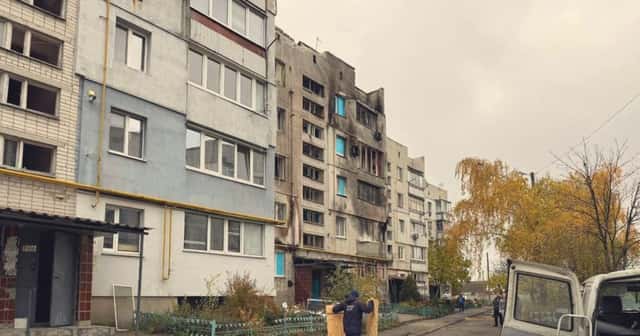
Russia fired 59 cruise missiles, a number of ballistic and anti-ship missiles, and 289 attack drones at Ukraine on the night of November 2–3, according to Ukraine's Air Force. Most of the weapons were aimed at power plants and substations. One guided bomb hit a hospital compound in Kharkiv, Ukraine's second-largest city. By 9 a.m. local time, prosecutors counted 73 people injured there, among them patients and medical staff.
The attack came hours before polls opened in the US midterm elections, and one week before US-brokered talks between Ukraine and Russia are set to resume in Abu Dhabi. It also followed a day of mourning in Zaporizhzhia region, where glide bombs on an aid distribution point in Komyshuvakha killed at least 33 people, a toll we covered in our report on the Komyshuvakha aid-center strike and the UN response.
What is confirmed
The Air Force report, posted on the service's Telegram channel, lists the weapons used. Ballistic Iskander-M and North Korean KN-23 missiles and Zircon anti-ship missiles were launched from Russia's Rostov, Voronezh and Kursk regions. The 59 cruise missiles were Kh-101, Kh-59, Kh-69 and Iskander-K types, launched from Vologda, Orenburg and Oryol. Of the 289 drones, 120 were jet-powered Shahed variants. The Air Force did not give a count for the ballistic and Zircon missiles. President Volodymyr Zelensky put the ballistic number at 17 in his own morning statement, which Al Jazeera and AP both reported. The two figures have not been reconciled.
As of 9 a.m., the Air Force said air defenses had shot down or suppressed 309 targets: 3 ballistic or Zircon missiles, 49 cruise missiles and 257 drones, according to Interfax-Ukraine. Information on three more missiles was "being clarified." Strikes were recorded at 23 locations, with debris falling at 14 more. Air Force spokesman Yuriy Ihnat said jet-powered drones were still arriving at mid-morning, UA.News reported.
The energy damage was wide. Zelensky listed nine regions where generation and substations were hit: Odesa, Cherkasy, Zhytomyr, Vinnytsia, Kharkiv, Dnipro, Chernivtsi, Chernihiv and Rivne. Deputy Energy Minister Artem Nekrasov later named ten oblasts, adding Zaporizhzhia and Khmelnytskyi, per Gwara Media. DTEK, the largest private generator, said three of its thermal power plants stopped producing power. Grid operator Ukrenergo called it "one of the largest-scale enemy attacks on the country's energy infrastructure" and said facilities were hit more than 20 times in a day, UNN reported. Emergency outages were declared in Kyiv and in Poltava, Sumy, Chernihiv, Cherkasy and Kharkiv regions. Zhytomyr's governor said more than 180,000 customers were without power. In Kyiv, the water utility shut supply across the city for a period, and electric transit stopped, according to Meduza.
The Kharkiv hospital
Prosecutors say the strike on the Nemyshlianskyi district came at about 3:20 a.m. The munition landed in the passage between two hospital buildings. It damaged the facade and wards, a second medical facility, a laboratory, and windows in 10 apartment blocks. Investigators recovered fragments and say preliminary data points to a FAB-250 bomb fitted with a UMPK-5R guidance kit, Ukrinform reported. A war crimes case was opened under Article 438 of Ukraine's criminal code.
The injury count rose through the morning. Mayor Ihor Terekhov first reported a combined attack with ballistic missiles and guided bombs at 3:23 a.m. Regional governor Oleh Syniehubov then said 62 people were injured and 226 patients were being moved to other hospitals. By 9 a.m., the prosecutor's office put the figure at 73. Terekhov said more than 1,000 windows were shattered at the hospital and nearby homes. Zelensky described the target as the "city clinical hospital" and said the cardiology department, where patients were being treated, was damaged. Officials have not released the hospital's full name or a breakdown of how many of the injured were patients, staff or neighbors. Over the same 24 hours, Syniehubov said two people were killed and 114 injured across Kharkiv city and 15 settlements in the region.
Kharkiv's military hospital was hit in a separate drone attack in March 2025. Nothing in the official statements on November 3 describes this facility as military. Either way, the legal protection is the same. The Fourth Geneva Convention shields civilian hospitals from attack, and the First Geneva Convention protects military medical units. A hospital loses protection only if it is used for acts harmful to the enemy, and then only after a warning goes unheeded. Amnesty International laid out the same test for energy facilities a day earlier: they are civilian objects unless they meet the strict definition of a military objective, and even then an attack must be proportionate.
What Russia says
Russia's Defense Ministry said its forces carried out a "massive strike" overnight using precision weapons and long-range drones. In a statement carried by TASS, the ministry named the Ladyzhyn thermal plant in Vinnytsia region, the Kryvyi Rih and Prydniprovska plants in Dnipropetrovsk region, the Kharkiv thermal plant, and the Zmiiv and Losevo substations in Kharkiv region. It said these sites "provided electricity to military-industrial enterprises and the Ukrainian army." It also claimed hits on port infrastructure at Kiliia on the Danube and on two bulk carriers it said carried "military materiel and dual-use cargo." The ministry made no reference to a hospital. Reuters, via Cyprus Mail, said it could not verify the claims. Kremlin spokesman Dmitry Peskov confirmed the same day that a Russian delegation "will arrive in Abu Dhabi on November 10–11 and will take part in the trilateral talks," Izvestia reported.
How this attack compares
The night was not the largest of the autumn by drone count. It stood out for its cruise missile salvo. Ihnat noted that Kh-101 missiles from strategic bombers had last been used on October 7, per Euromaidan Press. The table uses Air Force figures as reported on the morning after each attack.
| Night of | Missiles reported | Drones launched | Intercepted (Air Force) |
|---|---|---|---|
| Nov 2–3, 2026 | 59 cruise plus ballistic/Zircon (count not given) | 289 | 49 cruise, 3 ballistic, 257 drones (Interfax-Ukraine) |
| Oct 26–27, 2026 | Ballistic, count not given | 280 | 2 ballistic, 255 drones (UNN) |
| Oct 16–17, 2026 | Ballistic, count not given | 332 | 289 drones (Kyiv Independent) |
| Oct 6–7, 2026 | 48 cruise plus ballistic | 130 | 161 targets total (Al Jazeera) |
Source: Interfax-Ukraine, Kyiv Independent, UNN, Al Jazeera
Show the numbers
| Attack | Drones launched | Drones intercepted |
|---|---|---|
| Oct 7 | 130 | – |
| Oct 17 | 332 | 289 |
| Oct 27 | 280 | 255 |
| Nov 3 | 289 | 257 |
The monthly picture is larger still. Ihnat said on November 2 that Russia launched 4,740 conventional drones and more than 4,000 jet-powered drones in October, along with about 150 ballistic and about 80 cruise and air-launched missiles, according to United24 Media. The human cost is tracked separately by the UN Human Rights Monitoring Mission. Its September 2026 update, published October 15, recorded at least 328 civilians killed and 2,105 injured that month, the highest September since the full-scale invasion. For January through September 2026 the mission counted 2,570 killed and 15,211 injured, 59 percent above the same period of 2025. Long-range missiles and drones caused 53 percent of September's casualties. The October update has not been published.
Attacks on health care have their own ledger. The World Health Organization's Surveillance System for Attacks on Health Care had verified more than 3,000 attacks in Ukraine as of May 8, 2026, with 186 attacks in the first months of 2026 causing 15 deaths and at least 81 injuries. By August 28 the WHO's Ukraine representative, Jarno Habicht, put the total at 3,205. The Kharkiv strike has not yet been added to that count.
The week around the attack
- Oct 27 – Nov 1Oleshky local truce and evacuations; truce ends late Nov 1
- Nov 2Komyshuvakha aid point bombed; Zelensky warns of a massive strike timed to the US vote
- Nov 2–3 night59 cruise missiles and 289 drones; Kharkiv hospital hit at 3:20 a.m.
- Nov 3US midterms; Zelensky meets Merz in Berlin; Kremlin confirms Abu Dhabi dates
- Nov 4–5Brussels meetings on security guarantees; NATO consultations
- Nov 10–11US–Ukraine–Russia talks in Abu Dhabi
On the evening of November 2, Zelensky said Ukrainian intelligence showed Russia "preparing a new massive attack on our country – primarily targeting energy and logistics," and that "the assumption is basically that tomorrow the world will be watching the American midterms," according to the President's Office. After the strikes he wrote that "the Russians think America won't notice this signal of theirs" and that "such terror must be noticed and stopped," per AP via CP24. He also said Ukraine had offered to extend the Oleshky truce "but this was the answer." We reported on how that short humanitarian pause ended in our piece on the Oleshky truce and the return of attacks on Kherson.
The same day Zelensky flew to Berlin. Chancellor Friedrich Merz called the planned talks "the right step" but said Russia must show it is serious: "I have not seen any sign of this so far," Reuters reported via Al-Monitor. He pledged more winter aid and energy support before the end of the year and set a leaders' meeting of the coalition of the willing in Berlin for November 19, per Ukrinform. Our earlier report on the Berlin coalition summit and Merz's role has the background on that format.
The US side has said little about the strikes themselves. Special envoy Steve Witkoff said the Abu Dhabi talks "will focus on post-war security arrangements, de-escalation, humanitarian efforts, and next steps toward peace," as Just Security's digest recorded, and that US negotiators would meet European and NATO officials in Brussels this week. The timing and stakes of those talks are laid out in our explainer on the Abu Dhabi trilateral talks. President Donald Trump had announced an "energy ceasefire" in October; within days Zelensky said Russian strikes hit "the very infrastructure covered by the ceasefire announced by the American President," per ABC News. The State Department approved a $2.1 billion sale of Patriot interceptors on October 30, but Zelensky has warned deliveries "may begin only in a few years," per RFE/RL.
Analysis
Three things stand out. First, the Russian ministry's own target list and the Ukrainian damage reports overlap closely on energy. Both sides agree large thermal plants in Vinnytsia, Dnipropetrovsk and Kharkiv regions were hit. The dispute is legal, not factual: whether a power plant that feeds a national grid is a military objective. The UN-mandated Commission of Inquiry said in late October that Russian attacks on the energy system amounted to crimes against humanity, while Russia maintains it does not target civilians, as RFE/RL noted. Second, the hospital strike sits outside even Russia's own framing. The ministry did not mention it, and no Russian statement has offered a military rationale for it. Third, Ukraine's partners differ on sequencing. Berlin wants Europe at the table and more air defense now. Washington is focused on getting both delegations to Abu Dhabi. Whether a strike of this scale changes either calculus is not yet clear.
What people are saying on X
We searched X for public posts about the Kharkiv strike and the energy attack between the night of November 2 and the evening of November 3, Kyiv time. Our standard practice is to pull each post through a verification tool that returns the exact text and timestamp. That tool returned an error on every request during this reporting window. We therefore could not confirm the wording or timing of any post ourselves. The posts below were seen embedded on the pages of United24 Media and Euromaidan Press. We quote only the fragments visible in those embeds. Reddit discussion threads could not be reached from our reporting environment. X's search surfaces a small, non-random slice of posts, so this is a sample, not a measure of opinion.
Zelensky's morning statement, posted from his official account, opened: "The Russians carried out a complex, massive attack overnight, aimed primarily at our critical infrastructure." It is embedded below.
An open-source intelligence account, @markito0171, posted overnight that "airstrikes with glide bomb hit area of a hospital in #Kharkiv." The account does not identify its location. A Ukrainian-aligned account, @Maks_NAFO_FELLA, relayed the Air Force's morning tally, beginning: "On the night of November 3 (from 18:00 November 2), the enemy attacked." Euromaidan Press, a Ukrainian English-language outlet, quoted Dnipro mayor Borys Filatov on a damaged medical facility in his city: "These are elderly, terminally ill people. This is a Russian missile." We did not find verifiable posts from Kharkiv residents or from Russian official accounts within the window, and we chose not to quote unverified ones.
What is still unknown
The name of the hospital has not been released, nor a breakdown of the 73 injured by patients, staff and neighbors. The Air Force has not given a count of ballistic and Zircon missiles, and Zelensky's figure of 17 remains unreconciled with it. The three missiles "being clarified" have not been accounted for publicly. Ukraine has not confirmed which specific energy facilities were damaged, so the Russian ministry's list cannot be checked site by site. Casualty figures from the energy strikes themselves, as distinct from the hospital, had not been consolidated in any source we could open. The UN mission's October civilian casualty update, which would place this period in context, is not yet out.
How we reported this
We built this account from primary statements where possible. They include the Air Force's Telegram report, the Prosecutor General's Office, Governor Syniehubov's channel, the President's Office website, TASS's version of the Russian Defense Ministry statement, Izvestia for the Kremlin, the UN monitoring mission's September report and the WHO's releases. We cross-checked those against Interfax-Ukraine, Ukrinform, UNN, Al Jazeera, Reuters (via Cyprus Mail and Al-Monitor), AP (via CP24), Meduza and the Kyiv Independent. Several pages, including Ukrainska Pravda, Axios, CNN and France 24, would not load from our environment. Where we cite their reporting, it is through a secondary page that did load. Russian government claims are labeled as claims. We did not inspect the strike site and cannot confirm the weapon type. Figures are as reported by 9:25 p.m. Eastern on November 3 and may change.
Differing perspectives
How should Ukraine's partners respond to Russia's strikes on the power grid and a Kharkiv hospital a week before the Abu Dhabi talks?
Each position is summarized as its supporters make it, with equal weight and in alphabetical order. A summary is not an endorsement; the evidence for each is weighed in the story above.
Back the talks, but keep arming Ukraine and keep Europe at the table
Who holds it: German Chancellor Friedrich Merz and the coalition of the willing
Merz calls the Abu Dhabi round "the right step" toward ending the fighting but says Russia must "finally engage in serious negotiations on a ceasefire," adding, "I have not seen any sign of this so far." He says it is "completely unacceptable for third countries to discuss Ukraine's future without involving Ukraine itself," that European states must be part of any lasting deal, and that Germany will deliver additional winter and energy aid before year-end and convene coalition-of-the-willing leaders in Berlin on November 19.
In their words: Reuters via Al-Monitor (Merz remarks in Berlin) ↗
Press for a settlement rather than more pressure on Russia
Who holds it: Robert L. Borosage and Katrina vanden Heuvel, writing in The Nation and republished by the Quincy Institute for Responsible Statecraft
The authors write that "it is long past time to bring the brutal war between Russia and Ukraine to an end" and that both sides "seem open to serious negotiations." They fault the Trump administration for an "energy ceasefire" that "neither combatant had heard of," for Patriot deliveries that have been "mysteriously held up," and for shelving signed sanctions, while criticizing calls to keep punishing Russia's economy rather than press both sides toward a settlement at the table.
In their words: Quincy Institute for Responsible Statecraft (Oct. 28, 2026) ↗
Send more air defense now and treat the strike as a signal to Washington
Who holds it: President Volodymyr Zelensky and the Office of the President of Ukraine
Zelensky says Ukrainian intelligence warned of the attack a day earlier and that Moscow timed it to the US midterms, assuming "the world will be watching the American midterms." He argues the strike is a signal to Washington that "must be noticed and stopped," and that without more air defense, including Patriot interceptors whose delivery he says may take years, Russia's missile campaign against the grid will continue through the winter. He also points to Moscow's refusal to extend the Oleshky truce as evidence that Russia wants no de-escalation before the talks.
In their words: Office of the President of Ukraine (Nov. 2 statement) ↗
The targets were military power supply, and the talks go ahead
Who holds it: Russian Ministry of Defense; Kremlin spokesman Dmitry Peskov
The ministry describes the operation as a "massive strike" with precision weapons and drones on named thermal plants and 330 kV substations in Vinnytsia, Dnipropetrovsk and Kharkiv regions, plus Danube port infrastructure and two bulk carriers. It says the energy sites "provided electricity to military-industrial enterprises and the Ukrainian army" and that the ships carried "military materiel and dual-use cargo." The statement does not mention a hospital. Separately, Peskov confirmed that Russia's delegation will attend the Abu Dhabi talks on November 10–11, which on this view shows Moscow remains engaged in diplomacy.
In their words: TASS (Russian Defense Ministry statement) ↗
READ BEYOND 567POLITICS
Alternate sources & perspectives
Independent coverage and primary evidence to help you compare arguments. A link is not an endorsement; perspective labels describe the linked material.
- primary evidence
Ukrainian Air Force overnight report, Nov. 3, 2026 ↗
Air Force of the Armed Forces of Ukraine (Telegram)
Official count of missiles and drones launched, types, launch regions and interceptions.
- primary evidence
Prosecutor General's Office on the Kharkiv hospital strike ↗
Office of the Prosecutor General of Ukraine (Telegram)
Injury toll of 73, the weapon identified from fragments and the war-crimes case opened.
- other perspective
Russia says it struck Ukrainian electricity grid facilities in massive overnight attack ↗
TASS (Russian state news agency)
The Russian Defense Ministry's own account of its targets and rationale; a government claim, not independently verified.
- other perspective
Kremlin announces dates of talks with the United States and Ukraine ↗
Izvestia
Kremlin spokesman Peskov confirming the Abu Dhabi dates on the day of the strikes.
- primary evidence
Zelensky: intelligence shows Russia preparing a new massive attack ↗
Office of the President of Ukraine
The Nov. 2 warning that an attack was timed to the US midterms, in Zelensky's words.
- independent analysis
At least 73 injured as Russia bombs Ukrainian hospital and power plants ↗
Al Jazeera
International wire-based account with Zelensky's figures and the energy damage by region.
- independent analysis
Russia bombards Ukraine power grid before Abu Dhabi talks; Merz urges Moscow to engage ↗
Reuters (via WMBD)
Reuters' account linking the strikes to the Abu Dhabi talks and Merz's remarks in Berlin.
- independent analysis
Russia must show it is serious about ceasefire before Abu Dhabi talks, Germany's Merz says ↗
Reuters via Al-Monitor
The European position in Merz's own words: back the talks, keep Europe at the table, keep arming Ukraine.
- left argument
Ukraine: Russia's increased attacks on energy and heating infrastructure creating a deadly situation for civilians ↗
Amnesty International
A rights group's legal argument that energy facilities are civilian objects and that the strikes may be war crimes.
- other perspective
Ukraine: Time to end the war ↗
Quincy Institute for Responsible Statecraft (republished from The Nation)
A restraint-minded case that Washington should press both sides toward a settlement rather than add pressure on Russia.
- primary evidence
Protection of civilians in armed conflict, September 2026 ↗
UN Human Rights Monitoring Mission in Ukraine
Monthly civilian casualty data that places the attack in context; the October update was not yet out.
- primary evidence
3,000 attacks on health care in Ukraine verified by WHO since full-scale invasion ↗
World Health Organization
The verified tally of attacks on health care in Ukraine as of May 2026.
Reviewed 2026-11-03. Reviewed Nov. 3, 2026. The connector's discovery search returned only unrelated results (anime, hotel and game sites), so the list was built from pages opened directly during reporting. Ukrainska Pravda, Axios, CNN and France 24 could not be opened. Russian official statements are included through TASS and Izvestia, which are state-controlled outlets; no independent Russian reporting on the strike was reachable. No Kharkiv-based eyewitness account could be verified. The UN monitoring mission's October casualty update had not been published. X posts could not be verified by our tool.