Vivek Ramaswamy's citizenship and his failed Alzheimer's drug: what the records show
Two claims aimed at Ohio's Republican nominee for governor, his citizenship and his failed Alzheimer's drug, checked against court rulings, SEC filings and clinical trial data.
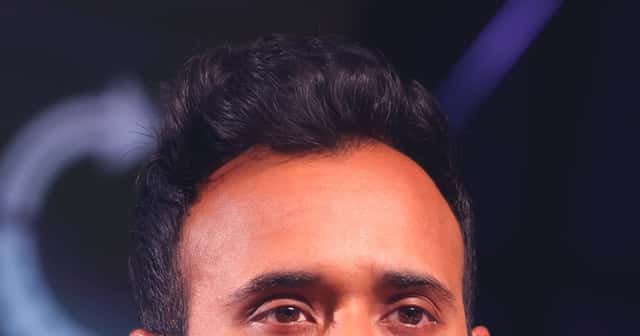
Ohio votes Tuesday, Nov. 3, for its next governor. In the race's last weeks, two questions about Republican nominee Vivek Ramaswamy have kept circulating. Was he an "anchor baby," as some critics on the online right have called him? And was the Alzheimer's drug his company tested and then dropped in 2017 a scam, as an ad shared by the campaign of Democrat Amy Acton put it?
Both questions use words that carry a verdict. This story treats them as claims made by other people. It explains what each term means and checks each claim against court rulings, federal filings and clinical trial records. Ramaswamy has answered parts of both in earlier interviews, and his campaign has answered the drug ads; those answers are quoted below. 567 Politics did not reach either campaign for new comment for this story. The candidates' polls, money and positions are covered in our election-eve report on the race, and results will appear on the Ohio governor race page.
The short answers
On citizenship. Ramaswamy was born in the United States to two parents who were not yet citizens and who, he has said, came legally from India. That makes him a citizen by birth under the 14th Amendment, as the Supreme Court has read it since 1898 and reaffirmed in June 2026. His mother became a citizen after he was born. His father has not. His campaign told the Toledo Blade this year that both parents held green cards before he was born; 567 Politics has not seen records that confirm the dates. Whatever the dates, neither the Supreme Court's rulings nor the Trump administration's 2025 order would have denied citizenship to a child of lawful permanent residents. A major dictionary labels "anchor baby" offensive, and the idea behind it does not match the facts Ramaswamy and his campaign describe.
On the drug. Intepirdine failed its large final-stage trial in September 2017. Axovant Sciences, the company that ran the trial, dropped the drug in January 2018. 567 Politics found no court finding of fraud, and no securities lawsuit or enforcement action by the Securities and Exchange Commission (SEC) over the drug in the filings and coverage it reviewed. Axovant told the SEC in each of its next three annual reports that it was not a party to any material lawsuit. Critics argue that Ramaswamy promoted the drug beyond what its early data showed and made money from it. PolitiFact and ABC 6 in Columbus each concluded that the record does not show fraud. Whether his public statements were fair to investors is a judgment the records alone cannot settle.
Part 1: The "anchor baby" claim
Who has used the term
The label has come mostly from critics on the right. Casey Putsch, a YouTube personality who ran against Ramaswamy in the May Republican primary, called him an "Indian Anchor baby" on X, NBC News reported in January. NBC called the term derogatory and said it is meant to undermine the citizenship the 14th Amendment guarantees to U.S.-born children of immigrants. Putsch defended it. He told NBC that Ramaswamy "got his citizenship by the thinnest of margins" and has "disdain and contempt for Americans, their heritage and their culture." Putsch won 18% of the primary vote, as 567 Politics reported in its election-eve story.
Podcaster Nick Fuentes used the term in December 2025. That came after Ramaswamy wrote a New York Times essay urging Republicans to reject Fuentes's movement, known as the "Groypers," and arguing that the United States is defined by shared civic ideals rather than ancestry. The Washington Examiner described the essay as a call for "a united front" against that movement. Fuentes then wrote on X that Ramaswamy is "an actual anchor baby, so everything he says can be completely disregarded," according to The American Bazaar, which linked the post. 567 Politics could not load the post itself.
What the term means
The American Heritage Dictionary labels "anchor baby" offensive. It defines it as a disparaging term for a child born to a noncitizen mother in a country that grants citizenship at birth. The definition applies especially when the birthplace is thought to have been chosen to help the mother or other relatives gain citizenship later. The image is of a citizen child who anchors the rest of the family in the country.
U.S. law limits that path. A citizen must be at least 21 years old to petition for a parent to become a permanent resident, according to U.S. Citizenship and Immigration Services. The term is most often aimed at children of parents who are in the country illegally. By Ramaswamy's account, his parents were not.
What the records say about his family
Ramaswamy was born in Cincinnati in 1985. His parents had settled there after emigrating from India, according to NBC News. NBC called him "the son of legal immigrants." NBC News reported in September 2023 that he was born to two noncitizens, and he noted that they immigrated legally. NBC reported that his mother took the citizenship test and completed the process after he was born, and that his father "is not a U.S. citizen and never took the test." Ramaswamy said of his father: "That's a choice that he has made for familial reasons."
On May 29, 2026, the Toledo Blade ran a story headlined "Ramaswamy's parents held green cards before his birth, campaign says." The article is behind a subscription wall, and 567 Politics read only the headline. A green card is the document issued to lawful permanent residents. 567 Politics has not seen immigration records showing when either parent received one. American Kahani, a news site that covers Indian Americans, reported in August that his father remains a lawful permanent resident. It noted that India does not allow dual citizenship, so becoming a U.S. citizen would mean giving up his Indian citizenship.
What the Constitution and the courts say
The 14th Amendment, ratified in 1868, begins: "All persons born or naturalized in the United States, and subject to the jurisdiction thereof, are citizens of the United States and of the State wherein they reside," according to the National Archives transcript.
In United States v. Wong Kim Ark in 1898, the Supreme Court applied that clause to a man born in San Francisco. His Chinese parents were not citizens but had a "permanent domicile and residence" in the United States. The Court held that he was a citizen from birth. Chief Justice Melville Fuller and Justice John Marshall Harlan dissented. The family facts Ramaswamy and his campaign describe, parents living in the country lawfully and permanently, are close to the facts of that case.
In January 2025, President Donald Trump signed Executive Order 14160. It told federal agencies not to recognize citizenship for children born after Feb. 19, 2025, in two situations: when the mother was in the country unlawfully, or lawfully but only temporarily, and the father was not a U.S. citizen or lawful permanent resident. By its own terms the order did not reach children of green-card holders. It also did not reach anyone born before Feb. 19, 2025.
On June 30, 2026, the Supreme Court struck the order down in Trump v. Barbara. Chief Justice John Roberts wrote for a majority that included Justices Sonia Sotomayor, Elena Kagan, Amy Coney Barrett and Ketanji Brown Jackson. The majority held that the clause "uses jurisdiction in its ordinary sense—referring to the power of the United States to govern those within its territory," according to a Congressional Research Service summary. It also held that Wong Kim Ark confirms citizenship for "nearly all children born in the United States." Justice Brett Kavanaugh agreed the order was invalid, but because it conflicts with the federal citizenship statute. Justices Clarence Thomas, Samuel Alito and Neil Gorsuch dissented.
The dissents centered on children of temporary visitors and of parents present unlawfully. According to the CRS summary and an explainer by the National Immigration Forum, Thomas argued that citizenship turns on whether a child's parents are domiciled in the United States. Domicile here means they have made it their permanent home. Alito argued that the clause covers only children who owe allegiance solely to the United States. Neither summary describes any justice arguing specifically that children of lawful permanent residents fall outside the clause.
The practical result for Ramaswamy is that a child born to lawful permanent residents is a citizen at birth under the majority's reading, which is now the law. The order the Court struck down also left such children alone. If his parents had instead held temporary visas in 1985, the Barbara majority's ruling would still make him a citizen, though Thomas's reading would not. 567 Politics found no record suggesting they held temporary visas.
His own position on birthright citizenship
Ramaswamy has called for narrowing birthright citizenship, but only for children of parents who entered illegally. "I think that birthright citizenship does not and should not apply to the kids of parents who entered this country illegally," he told NBC News in September 2023. At an Iowa event that month, asked whether deportations would include American-born children, he said, "The family unit will be deported," NBC reported. He said there are "legally contested questions under the 14th Amendment."
The Barbara majority has since read the clause to cover children of parents present unlawfully, which runs against the legal theory behind his 2023 proposal. 567 Politics found no public statement from Ramaswamy on the ruling. In January, NBC described his proposal as at odds with the Constitution.
Ramaswamy has rejected the idea that ancestry makes someone more American. At a Turning Point USA conference he called the "heritage Americans" idea "loony" and said, "There is no American who is more American than somebody else," NBC reported. He also wrote in the Wall Street Journal that he had seen a wave of racial slurs aimed at him online but had heard nothing similar from voters in person. The attacks on his background are part of a wider argument on the right about Indian immigration, covered in 567 Politics' report on the H-1B fee and anti-Indian sentiment.
What remains open on citizenship
- The green-card dates. 567 Politics has seen only the campaign's account as reported in a newspaper headline, not immigration records.
- His father's current status. One outlet reports that his father is a lawful permanent resident; Ramaswamy has said only that his father is not a citizen.
- What would change the answer. Nothing in the open questions above would change the legal answer. Under current law, Ramaswamy is a citizen by birth.
Part 2: The "scam" claim about intepirdine
Who has made the claim
Acton's campaign has made Ramaswamy's drug business a closing theme. A 30-second Acton ad called "Important" says, "Vivek Ramaswamy made billions preying on our most vulnerable," WKRC's Local 12 reported on Sept. 8. ABC 6 in Columbus reported that the ad calls Axovant a "dubious pharmaceutical company" and says he "pushed an Alzheimer's drug he knew didn't work." A second ad, which Acton shared on Facebook on Sept. 21, features Bexley resident Norman Wernet III. He says Ramaswamy "pushed an Alzheimer's drug that he knew didn't work. He made hundreds of millions of dollars scamming people like me," PolitiFact reported.
The most detailed written case comes from the newsletter Popular Information. On Aug. 14 it published an article headlined "How Vivek Ramaswamy's mom manipulated Alzheimer's data and made her son rich," drawing on an Oligarch Watch investigation. It argues that reanalyses of earlier trial data, co-written by his mother, presented the drug in a more favorable light than the original results supported. It says Ramaswamy used them to promote the drug, and it estimates that he made about $260 million. The same article says Ramaswamy "was never charged with a crime."
Failure is not the same as fraud
"Scam" is not a legal term. The closest legal claim is securities fraud. An investor who sues over a false or misleading statement under the main federal anti-fraud rule must show more than a loss. The Supreme Court held in Ernst & Ernst v. Hochfelder in 1976 that such a suit requires "scienter," which it defined as "intent to deceive, manipulate, or defraud." A drug can fail without anyone lying about it. The legal question is whether the people promoting the shares knowingly said something false or misleading. The political question, whether a candidate's business conduct was fair, can be argued without a legal finding.
What GlaxoSmithKline had found
- Dec. 2014Axovant buys the drug from GSK
- June 2015Shares begin trading; IPO raises $362.3 million gross
- Oct. 2015MINDSET Phase 3 trial begins
- Sept. 26, 2017MINDSET misses both main goals
- Jan. 8, 2018Axovant ends the intepirdine program
Source: ClinicalTrials.gov, Axovant S-1, Axovant 10-K, fiscal 2018, Axovant trial results release, Axovant 8-K, Jan. 2018
Intepirdine, first known as SB-742457, was developed by GlaxoSmithKline (GSK). In December 2014, Axovant bought the worldwide rights for $5 million up front, PolitiFact and ABC 6 reported. Axovant's 2015 registration statement lists the rest of the deal. It called for $35 million, $25 million and $10 million on approval in the United States, Europe and Japan, a one-time $85 million payment if yearly sales reached $1.2 billion, and a 12.5% royalty on sales. Those later payments depended on success that never came.
The registration statement said GSK had run 13 clinical trials involving more than 1,250 people. Two of GSK's efficacy studies were published by its researchers in 2015 in Alzheimer's & Dementia: Translational Research & Clinical Interventions. In one, 576 patients took the drug alone, and it showed no benefit over placebo. In the other, 684 patients took it on top of donepezil, a standard Alzheimer's medicine. Neither study met its overall criteria for success. But the group taking 35 mg with donepezil did better on some measures of thinking and daily function for up to 48 weeks. Axovant's registration statement described those add-on results as statistically significant at several time points.
The same record supports two readings. PolitiFact counted four earlier Phase 2 studies and wrote that "the studies did not show intepirdine worked on its own." ABC 6 described the history as four failed trials. Axovant's leaders saw a signal in the add-on group that justified a larger test. Skeptics saw a drug that a large drug company had chosen to sell for a small up-front fee after mixed results.
The IPO and the promotion
Axovant's shares began trading on the New York Stock Exchange on June 11, 2015. The company sold 24.15 million shares at $15 each, for gross proceeds of $362.3 million and net proceeds of $334.5 million, according to its annual report for fiscal 2018. Roivant Sciences, which Ramaswamy founded and led, kept control; it held 69.6% of Axovant's shares as of March 31, 2018. PolitiFact reported that Axovant was valued at about $3 billion at the time of the IPO.
Ramaswamy promoted the drug in interviews. In Forbes in June 2015 he called it "a great drug candidate." On CNBC in October 2015 he said "we do know that that has an impact on improving cognition and function in these patients" and that it was "statistically significantly better than the placebo," according to PolitiFact. PolitiFact found that those remarks did not make clear that the favorable results came from patients who also took donepezil.
His family worked at the company. His mother, Geetha Ramaswamy, a physician, was Axovant's vice president for medical and scientific strategy, and his brother, Shankar Ramaswamy, was vice president for global medical affairs, the fiscal 2018 annual report disclosed. A July 2015 conference abstract co-written by his mother described the drug as "well-tolerated and effective in improving cognition and function" when used with donepezil, PolitiFact reported. Kathy Liu of University College London told PolitiFact that conference abstracts generally give less information than full peer-reviewed studies. Popular Information argues that the methods used in those reanalyses, such as dropping patients who left the study early and combining several measures into one score, can make a weak result look stronger.
The trial and the fall
The final-stage trial, called MINDSET, enrolled 1,315 people with mild to moderate Alzheimer's disease who were already taking donepezil, according to its ClinicalTrials.gov record. They received 35 mg of intepirdine or a placebo each day for 24 weeks. The trial had two main goals: a change in a standard test of thinking (ADAS-Cog) and a change in a standard measure of daily living (ADCS-ADL).
| Measure at 24 weeks | Drug minus placebo | p-value | Result |
|---|---|---|---|
| Thinking (ADAS-Cog) | 0.36 points | 0.22 | Not significant |
| Daily living (ADCS-ADL) | 0.09 points | 0.83 | Not significant |
| Doctor's overall view (CIBIC+) | 0.12 points | 0.02 | Significant (secondary goal) |
Source: Axovant release, Sept. 26, 2017. A p-value below 0.05 is the usual cutoff for statistical significance.
On Sept. 26, 2017, Axovant announced that the trial "did not meet its co-primary efficacy endpoints." Its chief executive, David Hung, said the company was "deeply disappointed." The full results, published in 2021, concluded that the drug "did not produce statistical improvement over placebo on cognition or activities of daily living."
Axovant's shares had closed at $24.25 the day before. They traded at $5.92 early on Sept. 26, down 75.59%, Business Insider reported. In January 2018, after results from two smaller studies in other forms of dementia, Axovant said "the intepirdine program will be discontinued," according to an SEC filing. Its next annual report disclosed that a January 2018 press release had included "an erroneous statistical value," corrected the next day. Hung left in February 2018, BioPharma Dive reported. The company later turned to gene therapy, renamed itself Sio Gene Therapies and was dissolved in 2023, according to PolitiFact.
Failure is common in this field. A 2014 study in Alzheimer's Research & Therapy found that 99.6% of Alzheimer's drug candidates tested from 2002 to 2012 failed. Ramaswamy's campaign made the same point in response to Acton's ad, saying "99 percent of Alzheimer's drugs fail," Local 12 reported. The campaign also said his companies had brought four drugs to market.
Who made money and who lost it
Roivant, which owned roughly 70% of Axovant, took most of the loss in market value when the shares fell. PolitiFact reported that Ramaswamy personally owned less than 1% of Axovant. It also reported that Axovant recorded $36.7 million in stock compensation for him in fiscal 2016, and that he sold part of his Roivant stake to Viking Global Investors. PolitiFact wrote that "the public records make it difficult to understand how much of Ramaswamy's earnings from Axovant and Roivant directly resulted from intepirdine."
Popular Information says Ramaswamy sold his position through a private SoftBank deal before the trial readout, and it reports that he made about $260 million. In August 2017, a month before the results, SoftBank's Vision Fund led a $1.1 billion investment in Roivant itself, not in its subsidiaries, TechCrunch reported. TechCrunch's headline on the day of the trial results said the failure was bad news for SoftBank as well. 567 Politics could not verify whether Ramaswamy sold shares in that deal, the $260 million estimate or the "billions" and "hundreds of millions" figures in Acton's ads.
Ramaswamy has said the business was not built to cash out. "On a personal level, it grates on me a little bit," he told the New York Times in 2023, according to PolitiFact. He added, "we could have cashed out big, and employees could have cashed up big, but that was not the business model." In a 2018 interview with BioPharma Dive he said, "One thing I am proud of is that we did a clear experiment that got a clear result." He also said, "I'm really sorry that we weren't able to do something about it and I thought we were in striking distance."
Lawsuits and regulators
In its annual reports for fiscal 2018, 2019 and 2020, Axovant told the SEC that it was "not currently a party to any material legal proceedings." The company's own risk disclosures had warned that securities class actions "often" follow a drop in share price or the end of a drug program. 567 Politics found no such suit over intepirdine in SEC filings or news coverage. It also found no SEC enforcement action, and PolitiFact reported that Ramaswamy has not been charged with a crime. This search did not cover every federal court docket.
The fact-checkers reached similar conclusions. PolitiFact rated the Wernet ad's claim "Mostly False." It quoted David Weber, a former SEC chief investigator, who said "a failed clinical trial does not, on its own, establish fraud" and that "A failed bet is not fraud." Weber said the words "scam" and "pump and dump" "overstate what the available evidence establishes." ABC 6 said calling Axovant "dubious" is opinion and that the company did nothing illegal. It rated the claim that Ramaswamy "knew" the drug did not work as disputed. It also noted that the drug was never approved, so it was never sold to patients.
Weighing the arguments
Critics make four main points. GSK had sold the drug for $5 million up front after mixed results, while Axovant raised $362.3 million from public investors to test it. Ramaswamy's public statements, in PolitiFact's reading, did not make clear that the favorable results came only with donepezil. His mother, a company executive, co-wrote favorable reanalyses of the earlier data. And, critics argue, Ramaswamy and Roivant profited before the trial readout while outside shareholders took the losses.
Defenders make four points too. Buying drugs that large companies had shelved and testing them again was the company's business model, as ABC 6 noted. The company paid for a 1,315-patient trial with clear goals, which Weber said cuts against the idea that its leaders knew the drug would fail. The registration statement described GSK's 13 earlier trials, and nearly all Alzheimer's drugs fail. Roivant also kept its roughly 70% stake through the collapse.
Two lines of reasoning in this debate deserve scrutiny. The ads' claim that Ramaswamy "knew" the drug did not work infers intent from the outcome. A failure in 2017 does not by itself show what anyone believed in 2015, and no court or regulator has found that he knew. On the other side, the campaign's point that 99% of Alzheimer's drugs fail defends the bet but does not answer the narrower question: whether his 2015 statements fairly described the earlier data. Those are separate questions, and the evidence answers them differently. On fraud, the public record contains no finding. On the fairness of the promotion, reasonable readers of the same documents disagree.
What the records do not settle
- Ramaswamy's earnings from intepirdine. Public records show stock compensation and share sales, but not how much came from this drug.
- What insiders believed. No court or regulator has examined what Ramaswamy or Axovant's leaders believed about the drug's chances in 2015.
- His parents' immigration dates. The campaign's green-card account has been reported but not documented publicly. It would not change his citizenship.
- A response to Barbara. 567 Politics found no statement from Ramaswamy on the Supreme Court's 2026 ruling, which rejected the legal theory behind his 2023 proposal.
Notes on sources and funding
Ohio candidates for governor report campaign money to the Ohio Secretary of State, not the Federal Election Commission. 567 Politics' federal funding records have no verified mapping for Ramaswamy, and this story does not analyze donors; state filings are covered in the election-eve report. No federal statistical dataset applies to these questions, so this story relies on court opinions, SEC filings, the trial registry and peer-reviewed studies. Earlier reporting on the campaign's advertising is in our story on the ad featuring Acton's mother. For how 567 Politics handles disputed claims, see its methodology.
Differing perspectives
Should Ramaswamy's birth to immigrant parents or his Axovant record count against him as a candidate for Ohio governor?
Each position is summarized as its supporters make it, with equal weight and in alphabetical order. A summary is not an endorsement; the evidence for each is weighed in the story above.
Count heritage, not only legal citizenship
Who holds it: Casey Putsch, Ramaswamy's 2026 Republican primary rival, and other online critics
Putsch argues that Ramaswamy "got his citizenship by the thinnest of margins" and shows "disdain and contempt for Americans, their heritage and their culture." He told NBC News, "We don't like you because you don't care about us," and defended his use of the term "Indian Anchor baby" for Ramaswamy. Putsch says his challenge was encouraged by an anti-Ramaswamy "roar on social media." In his view, a candidate's attachment to Americans' heritage and culture is a fair measure of whether he should lead Ohio, whatever his legal citizenship.
In their words: NBC News, interview with Casey Putsch, Jan. 23, 2026 ↗
Judge Americans by civic ideals, not ancestry
Who holds it: Vivek Ramaswamy (R), in his New York Times essay on the online right
Ramaswamy argues that Republicans should reject the Groyper movement and the hostility it directs at Jews, Indians and other groups. He wrote that "it is downright unacceptable to spew poison toward Jews, Indians or any other ethnic group." His stated aim, he wrote, is "to prevent the gradual legitimization of this un-American animus," and he says people who cross that line have "no place in the conservative movement, period." He says Republican leaders should "set firm boundaries for young followers" and that the United States is defined by shared civic ideals rather than ancestry.
In their words: The National News Desk, quoting Ramaswamy's New York Times essay, Dec. 18, 2025 ↗
Treat the drug's failure as a business risk
Who holds it: Vivek Ramaswamy (R), as Axovant's founder
Ramaswamy argues that Axovant ran a fair test of a drug that had shown promise. He told BioPharma Dive, "One thing I am proud of is that we did a clear experiment that got a clear result," and that "there is probably nothing in a meaningful way we could've done differently." He says the company would make the same decision again, though "if I could've lifted the veil of the future and knew it was going to fail, the answer would be 'No.'" He says the loss "hurts" and that learning from failure is one of the company's 18 business principles.
In their words: BioPharma Dive, interview with Vivek Ramaswamy, Feb. 13, 2018 ↗
Weigh his Axovant record against him
Who holds it: The newsletter Popular Information; the Acton campaign's ads
Popular Information argues that Ramaswamy's mother, who it says had no clinical trial experience, was hired by Axovant and co-published reanalyses of failed Phase 2 data that made the drug look better than the original results. It argues that Ramaswamy used them to promote the drug during the 2015 IPO, and that outside investors, including a state teachers' retirement fund, lost money when it failed in 2017. The article reports that he "was never charged with a crime." Acton's ads make a related argument, saying he "made billions preying on our most vulnerable."
In their words: Popular Information ↗
READ BEYOND 567POLITICS
Alternate sources & perspectives
Independent coverage and primary evidence to help you compare arguments. A link is not an endorsement; perspective labels describe the linked material.
- primary evidence
United States v. Wong Kim Ark, 169 U.S. 649 (1898) ↗
Legal Information Institute, Cornell Law School
The Supreme Court's 1898 opinion holding that a child born in the United States to Chinese parents with a permanent domicile and residence here was a citizen at birth. Chief Justice Fuller and Justice Harlan dissented.
- primary evidence
Executive Order 14160, Protecting the Meaning and Value of American Citizenship ↗
Federal Register (U.S. Government Publishing Office)
Operative text of the 2025 order, including the two categories of parents it covered (unlawfully present, or lawfully but temporarily present, with a father who was not a citizen or lawful permanent resident) and its Feb. 19, 2025 start date.
- independent analysis
Trump v. Barbara: Supreme Court Holds Birthright Citizenship Executive Order 14160 Unconstitutional ↗
Congressional Research Service
Nonpartisan summary of the June 30, 2026 ruling: the majority's reading of 'subject to the jurisdiction thereof', the separate opinions of Justices Kavanaugh, Thomas, Alito and Gorsuch, and Congress's options.
- independent analysis
Vivek Ramaswamy shares his family's citizenship story, and how it has shaped two hard-line policy proposals ↗
NBC News
Sept. 21, 2023 interview reporting on his parents' immigration, his mother's naturalization, his father's status, and his proposal to end birthright citizenship for children of parents who entered illegally.
- independent analysis
How Vivek Ramaswamy's campaign for Ohio governor returned him to the 'real world' ↗
NBC News
Jan. 23, 2026 reporting that quotes Casey Putsch's use of the term and his defense of it, and Ramaswamy's response to attacks from the online right.
- primary evidence
Axovant Announces Negative Topline Results of Intepirdine Phase 3 MINDSET Trial in Alzheimer's Disease ↗
Axovant Sciences, filed with the SEC
The company's Sept. 26, 2017 release with the co-primary results (p = 0.22 and 0.83), the CIBIC+ secondary result and CEO David Hung's statement.
- primary evidence
Axovant Sciences annual report (Form 10-K) for fiscal year ended March 31, 2018 ↗
Axovant Sciences, filed with the SEC
Source for the IPO terms, Roivant's 69.6% stake, family relationships among employees, the corrected January 2018 press release, and Item 3 stating no material legal proceedings.
- primary evidence
Intepirdine as adjunctive therapy to donepezil for mild-to-moderate Alzheimer's disease: a randomized, placebo-controlled, phase 3 clinical trial (MINDSET) ↗
Alzheimer's & Dementia: Translational Research & Clinical Interventions (via PubMed)
Peer-reviewed 2021 report of the Phase 3 trial, concluding the drug did not improve cognition or daily living over placebo.
- independent analysis
Ramaswamy promoted a failed Alzheimer's drug, but did he profit from knowing it would fail? ↗
PolitiFact
Oct. 12, 2026 fact-check of an Acton ad claim, rated Mostly False; covers the GSK purchase, his 2015 statements, his pay and stock sales, and a former SEC investigator's view that a failed bet is not fraud.
- independent analysis
Fact Check: Ramaswamy, Acton campaign ads missing key context ↗
ABC 6 On Your Side (WSYX)
Oct. 14, 2026 TV fact-check that calls 'dubious' an opinion, finds Axovant did nothing illegal, and rates the claim that he knew the drug did not work as disputed.
- other perspective
How Vivek Ramaswamy's mom manipulated Alzheimer's data and made her son rich ↗
Popular Information
The most detailed critical account, arguing that reanalyses co-written by his mother overstated early data and that he profited. It reports no charge or finding against him; its $260 million estimate could not be verified.
- other perspective
Ramaswamy has no regrets about Axovant ↗
BioPharma Dive
Feb. 13, 2018 interview in which Ramaswamy defends the decision to run the trial and says he is proud of the 'clear experiment'; the strongest first-person defense found.
Reviewed 2026-11-02. Reviewed Nov. 2, 2026. Opened and read each linked page except two: the Supreme Court's Trump v. Barbara slip opinion, whose PDF text could not be extracted, so the ruling is described from the Congressional Research Service sidebar (read on a mirror of report LSB11468) and the National Immigration Forum explainer; and the Toledo Blade story on Ramaswamy's parents' green cards, which is paywalled (headline only). No court docket search was run for any Axovant securities suit; the finding of none rests on Axovant's annual reports and news searches. No conservative-leaning outlet defending the Axovant record, and no statement from Ramaswamy on the Barbara ruling, was found. Ramaswamy's own defense is represented by his 2018 BioPharma Dive interview. Neither campaign was reached for new comment.