Brazil's betting ban now runs to March 2027, and a more right-leaning Congress may decide its fate
Lula's online betting ban now lapses around March 4 unless Congress votes, so it may fall to a new legislature where the PL is the largest party.
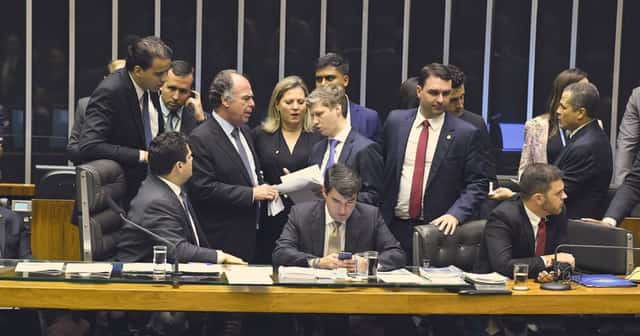
Brazil's ban on online betting will stay in force into 2027, and the Congress that decides whether it becomes permanent may not be the one that received it. The Diário Oficial da União on November 11 published Act No. 118 of 2026, signed the day before by Senate President Davi Alcolumbre as head of the Congress, extending Provisional Measure 1,394 for 60 days. Because the clock stops during the parliamentary recess, the measure now lapses on March 4, 2027, by the count reported by Poder360 and iGaming Business, or March 5 in g1's account. Either date falls after the legislature elected in October takes office in February.
That timing matters. The joint committee that must report on the measure has not yet been installed, according to the Congress record, which lists its status as "awaiting installation of the committee." The text has drawn 99 amendments. Meanwhile, the Supreme Federal Court (STF) has frozen every lower-court challenge to the ban until its plenary rules. In practice, the ban President Luiz Inácio Lula da Silva signed on September 25 holds for now on two fronts. Its long-term survival depends on a vote no one has scheduled.
What the extension does and does not change#
The November 11 act is procedural. It cites Article 62, paragraph 7, of the Constitution and states that the measure "has its validity extended for a period of sixty days," without altering its content, according to the published text. As g1 explained, provisional measures take effect immediately, last 60 days, and can be extended once for the same period if Congress has not finished voting. The act "does not create a new ban or change the rules of the MP," g1 wrote. If Congress does not approve it by the deadline, it lapses and betting would again be allowed.
The Congress page for MP 1,394 shows the first deliberation window running from September 25 to November 23, 2026, and an urgency regime in force from November 9. CNN Brasil noted that urgency "can press the analysis" but still depends on the joint committee being formed. iGaming Business counted 12 senators and 13 deputies named as full members, plus seven of each as alternates. A full committee has 26 senators and 26 deputies counting alternates. No chair or rapporteur has been chosen. The same outlet put the recess at December 23 to February 1.
- Sep 25, 2026Lula signs MP 1,394, published in an extra edition of the Diário Oficial
- Sep 28, 2026ANJL and IBJR ask the STF to suspend the measure
- Nov 3, 2026Justice Luiz Fux holds a public hearing on the ban
- Nov 6, 2026Prosecutor-General Paulo Gonet asks for a nationwide freeze on lower-court cases
- Nov 8, 2026Fux grants the freeze, subject to plenary confirmation
- Nov 9, 2026Urgency regime begins in Congress
- Nov 11, 2026Alcolumbre's 60-day extension is published
- Dec 23, 2026Recess begins and the deadline clock stops
- Feb 2027New legislature takes office
- Mar 4, 2027Deadline for both houses to vote, per Poder360 (g1 says Mar 5)
Source: Congress record, DOU Act 118/2026, STF, Poder360, iGaming Business, g1
Why the new Congress could hold the deciding vote#
The government has said it wants the measure voted this year. In September, the presidency's Institutional Relations Secretariat told g1 it considered the vote "a priority" for 2026 and would work with Congress "so that this happens," g1 reported. The same report noted that the Congress elected in October has a more right-leaning composition, with the Liberal Party (PL) holding the largest caucus in both houses.
The calendar is crowded. Valor reported this week that the betting ban sits on a short year-end list with Desenrola 3.0, a Big Tech competition bill and the 2027 budget. 567politics covered that list in its report on Lula's year-end legislative push. iGaming Business argued that the budget and the races for the Chamber and Senate presidencies will absorb much of the remaining time. It expects early February to be taken up by the new legislature's installation, Carnival and committee assignments. That is a forecast from a trade publication, not a schedule set by Congress.
The PT is trying to move first. Pedro Uczai, the party's leader in the Chamber, told Poder360 that he expected the committee to be installed in November. He said the Workers' Party wants the rapporteur post if the Chamber gets to fill it. That choice belongs to Chamber President Hugo Motta. "Those who defend bets in this country are anti-popular-economy, they are anti-SUS," Uczai said, referring to the public health system. The fight over who controls the Chamber after February, and how the PL will use its numbers, is the subject of the 567politics report on the PL's split over Motta.
The recent precedent cuts both ways. Another provisional measure, on rural debt, cleared the Chamber only on the eve of its lapse after the farm caucus extracted changes, as described in the 567politics story on the farm-debt MP. That shows a measure can move fast once leaders agree. It also shows that a well-organized caucus can set terms when the clock is short.
The chart above shows 567politics' dated editorial estimates of where selected Brazilian parties sit on economic and social axes; it does not measure positions on gambling. It helps explain the coalition arithmetic. The parties to the right of the PT will be larger in February. But the betting question does not split neatly along that line, as the amendments and polling below show.
Who filed the 99 amendments#
The Congress record lists 99 amendments, filed between September 29 and October 13. Counted by the party label shown next to each author on the Congress page, PL legislators filed 24, the PSDB 22, the PP 18 and the MDB 12. Two lawmakers account for 34 of them: Deputy Capitão Alden of the PL of Bahia filed 17, and Senator Sargento Reginauro of the PSDB of Ceará filed 17.
Source: Congresso Nacional, MPV 1394/2026 amendment list
Show the numbers
| Party | Amendments |
|---|---|
| PL | 24 |
| PSDB | 22 |
| PP | 18 |
| MDB | 12 |
| PSD | 5 |
| PSB | 4 |
| PT | 3 |
| Republicanos | 3 |
| Podemos | 2 |
| No party listed | 6 |
Amendment counts measure activity, not support or opposition. Many entries in the list carry only the measure's own summary as a description, so the record does not show what each one changes without opening every file. Several do state their purpose. Senator Jorge Kajuru of the PSB proposed adding the "tigrinho" slot game to the ban by name. Senator Dr. Hiran of the PP filed one that "ends tigrinho and other games of chance and allows only real sports-themed events." Deputy Pedro Aihara of the PP filed two aimed at slot games specifically. Senator Alessandro Vieira of the MDB filed eight, on subjects including sanctions, crimes, bank blocking, Health Ministry data and sending fines to the national health fund. Deputy Ana Paula Lima of the PT proposed care for people with gambling disorder through the SUS and support for families in debt from betting. Tabata Amaral of the PSB also filed one.
iGaming Business, which reviewed the texts, reported that banning online casino games was "the great convergence" among the amendments. Several would keep sports betting, and others would tighten advertising rules, including bans on stadium naming rights. That reading matches the position the PL's defeated presidential candidate took during the campaign.
Where Flávio Bolsonaro and the PL stand#
Flávio Bolsonaro, the PL candidate Lula beat in the runoff, spoke on the day the measure was signed. He said he would ban online casinos and the tigrinho if elected, while keeping betting on real sporting events. "Vai estar proibido o jogo do tigrinho e vai estar proibido o cassino online," he said, g1 reported. He added that he was personally "against games" but drew a distinction for betting on football, which he described as already in force. He blamed the regulation passed under Lula for making online casino games legal and said families had fallen into debt as a result, some believing betting was a form of investment.
Three days later he called the ban "desperate" and said it created legal uncertainty. "Since the provisional measure lasts only four months, nothing prevents the 'Tigrinho' from coming back at full strength later on," he said, as quoted by TN Online. The November extension and the recess have stretched that four-month horizon to just over five months. No public PL leadership statement on how the party will vote on the measure was found for this story.
What the government and its allies argue#
The government's case rests on household finances and health. Announcing the ban, Lula compared betting platforms to cancer: "Either we remove the tumor, or this tumor will kill us," he said, according to Agência Brasil. He said he decided after hearing from the economic team, civil-society groups and citizens, including a woman who had tried to take her own life three times.
The figures the government and its allies cite come from several sources. The National Committee of State Finance Secretaries (Comsefaz) estimated that families lost a net R$62.5 billion to betting in 2025. That is about 0.68% of gross household disposable income, based on Central Bank Pix payment data, Agência Brasil reported. The Health Ministry estimated the social cost of gambling harms at R$38.8 billion a year, according to the same agency. A survey of 1,912 students in 191 schools, released by the Joint Parliamentary Front on Education, found that 20.4% had bet online. Among students in the final year of secondary school the share was 49.7%, Agência Brasil reported. The Labor Ministry counted 361 temporary work absences for gambling disorder in 2025, up from 67 in 2023, according to Agência Brasil.
At the STF's November 3 hearing, Solicitor-General Jorge Messias argued that regulation had failed. "Can the State interrupt an economic activity when experience shows that its exploitation compromises fundamental rights? Yes, it can and must act when the instruments of protection prove insufficient," he said, Agência Brasil reported. Health Minister Alexandre Padilha said demand for SUS care linked to betting had risen 200%. He said 28 million people bet in the 12 months before the ban, about 11 million of them with risk patterns, and that 1.2 million self-exclusion requests had been filed, according to Agência Brasil. Justice Minister Wellington César Lima e Silva cited an "undesirable proximity" between betting and organized crime and R$3.3 billion in suspicious transactions blocked after 21 police and prosecution operations since 2018, Agência Brasil reported. These are the ministries' figures as presented at the hearing; this story could not independently check the underlying data.
Outside government, the Brazilian Society of Pediatrics and the Brazilian Academy of Pediatrics said they would ask the STF and Congress to keep the ban. They want to be heard by the joint committee, "not yet formed," Agência Brasil reported on November 10.
What the industry and the football clubs argue#
The licensed operators argue that the ban breaks the state's own rules. The Brazilian Institute for Responsible Gaming (IBJR) and the National Association of Games and Lotteries (ANJL) filed an STF challenge on September 28. In a statement, the IBJR said the measure "prohibits an activity that the federal government itself regulated over the last two years." It called concerns about betting harms "legitimate" and said they should be met "with enforcement, operator responsibility and respect for the law." Companies "received authorization from the government, met the regulatory requirements and invested," it said. Changing the rules abruptly "shakes confidence in the country, regardless of each person's opinion about betting." CNN Brasil summarized the companies' legal claims. They say the ban violates legal certainty, free competition, due process and the states' administrative autonomy. Critics at the hearing also said a ban does not remove demand and can push bettors to unlicensed sites, CNN reported.
One appellate judge agreed with part of that argument before being overruled. Judge Adriana Pileggi of the Federal Regional Court of the 3rd Region (TRF-3) allowed three platforms owned by CDA Gaming to resume. She noted that the company paid R$30 million for an authorization valid until December 31, 2029. She called the ban without compensation "true confiscation," Agência Brasil reported. The court suspended that injunction on November 6 after an appeal by the Attorney General's Office (AGU), Agência Brasil reported.
Football clubs, many of them sponsored by betting companies, asked for time rather than a return to the old market. At the STF hearing, Flamengo vice-president Flávio Willeman said the club could lose about R$430 million a year in revenue. Fluminense president Mattheus Montenegro said: "No market in the world restricted betting advertising in less than 10 months. Brazil is trying to do it in 10 days," Agência Brasil reported. Botafogo's lawyer said its court-supervised restructuring plan counted on its master sponsorship. A Corinthians lawyer called betting addiction "a chronic Brazilian family problem" but asked for a gradual adjustment. São Paulo's lawyer asked the court to set transition rules if the ban stands. Cruzeiro's representative said Brazilian clubs would be at a disadvantage against Argentine rivals that keep betting sponsors. Lula has said betting sponsorship accounts for "6% to 7% of a team's budget," according to Agência Brasil; the clubs' testimony, as reported, did not include an aggregate figure. The two claims cannot be reconciled from the public record.
There is also a fiscal side. The Senate's Independent Fiscal Institution (IFI) estimated that three sets of campaign measures could cost R$40 billion not provided for in the 2026 and 2027 budgets. They are the loss of betting tax revenue, changes to Bolsa Família and a package for individual microentrepreneurs, Agência Brasil reported. The report did not break out the betting share in that coverage. The Congress summary of the government's own justification likewise says the author expects lower tax revenue and inspection fees.
The court front: Fux has frozen the challenges, but the plenary has not ruled#
Four direct actions of unconstitutionality (ADIs 8024, 8027, 8028 and 8035) challenge the measure in the STF, all under Justice Luiz Fux. In a decision dated November 8, Fux granted a request from Prosecutor-General Paulo Gonet. He suspended "ALL judicial proceedings" in the lower courts that discuss the measure's constitutionality. He cited "the risk of legal uncertainty" from divergent rulings. He added that the case involved "the potential release of an activity recognized as harmful and of high social risk." The decision is subject to confirmation by the full court, the STF said. Gonet's petition listed 13 São Paulo federal cases and a lower-court order that had let one operator keep running until October 25.
The freeze is not a ruling on the merits. Fux has, however, stated his view. At the November 3 hearing he said he had formed "the perception that bets should be banned," after a 2024 hearing at which, he said, "nobody here spoke well" of betting, Agência Brasil reported. He also rejected criticism, mostly on social media, that he had invited mainly clubs and industry groups. "The allegation that I only summoned companies and football clubs is not true." The AGU had asked him to widen the list, saying 17 of the 26 participants first invited were clubs or operators' representatives, Agência Brasil reported. He then added the health and justice ministries, the supermarket association and others, bringing the total to 34.
The two fronts interact. If the measure is not approved by the deadline, it loses validity and betting would again be allowed, g1 explained, whatever the court has done by then. The government has said it wants a vote this year. The operators are asking the STF to strike the measure down. The sports-betting compromise favored by Flávio Bolsonaro and the authors of several amendments would require Congress to rewrite the text.
What the polls show, and their limits#
Representative polls taken around the ban show majority support, with wording that matters. Datafolha interviewed 2,506 voters aged 16 and over in 152 municipalities from September 29 to October 1. The margin of error was 2 percentage points. In that poll, 78% said online sports betting and online casinos "should be prohibited," 18% said they should not and 4% did not know, g1 reported. Support was 85% among Lula voters and 70% among Flávio Bolsonaro voters. Quaest, for Globo, interviewed 2,004 people aged 16 and over in person from September 24 to 27 and found 62% approved of "restriction" of online betting, including digital casinos and the tigrinho, g1 reported. A later Genial/Quaest poll released October 14 put support for prohibition at 72%, according to Veja; the accessible part of that report did not give field dates or sample size.
Source: Datafolha via g1, Quaest via g1, Genial/Quaest via Veja
Show the numbers
| Poll | Support |
|---|---|
| Quaest, Sep 24-27 | 62% |
| Datafolha, Sep 29-Oct 1 | 78% |
| Genial/Quaest, released Oct 14 | 72% |
The wording problem bears directly on the choice Congress faces. An analysis by iGaming Express, a trade outlet, found four national polls around the ban putting support between 52% and 78%. It noted that none separated sports betting from online casinos, which is the line between the government's full ban and the compromise Flávio Bolsonaro proposed. It reported that Datafolha's November 2024 survey had asked about the two products separately. The same Datafolha poll found that 81% of respondents said no one in their household bet. It also found that 31% of Bolsa Família recipients bet or lived with someone who did, against 14% of non-recipients, g1 reported.
The Congress website also runs an opt-in "Opine" vote on the measure, which on November 11 showed 539,440 "yes" and 81,824 "no" responses on the MP page. Anyone can click it, so it is not a sample of public opinion and should not be read as one.
What to watch#
The first marker is whether the joint committee is installed before the recess and who becomes rapporteur. The PT wants the post; the Chamber president decides if it falls to the deputies. The second is whether the STF plenary confirms Fux's freeze and schedules the four ADIs. The third is whether the amendment pattern, with many proposals to ban online casinos but keep sports betting, becomes the basis for a negotiated text. The size of the PL caucus after February, covered in the 567politics report on the first-round results, will shape all three. If none of this happens by March 4, the measure lapses.
This story did not review Brazil's campaign finance disclosures for gambling-sector links to individual legislators; 567politics' funding tool covers U.S. federal filings only, so no such data is reported here.
Differing perspectives
Should Brazil's Congress turn Lula's provisional ban on online betting into permanent law?
Each position is summarized as its supporters make it, with equal weight and in alphabetical order. A summary is not an endorsement; the evidence for each is weighed in the story above.
Allow a gradual transition that protects existing contracts
Who holds it: Football clubs including Flamengo, Fluminense, Botafogo, São Paulo and Corinthians
The clubs argue that they signed sponsorship and broadcast-linked deals in good faith under the rules then in force, and that a ten-day adjustment period is far shorter than any market that has restricted betting advertising. Flamengo puts its exposure at about R$430 million a year; Botafogo's restructuring plan relies on its master sponsor. Some accept that betting addiction is a serious family problem. They ask that any ban keep transition rules, so club finances and commitments are not cut off overnight and Brazilian teams are not left behind regional rivals.
In their words: Agência Brasil (clubs at the STF hearing) ↗
Ban online casinos but keep betting on real sports
Who holds it: Flávio Bolsonaro (PL) and authors of several amendments, including Sen. Dr. Hiran (PP)
This side argues that the main damage comes from online casino games such as the tigrinho, which it says Lula's regulation turned from an offense into a legal product. Flávio Bolsonaro says families fell into debt treating these games as investments, and pledged to ban them. Betting on real football matches, he says, has long been permitted in Brazil and people choose it freely, even if he personally opposes gambling. On this view Congress should rewrite the measure, prohibiting casino-style games while keeping regulated wagers on real sporting events.
In their words: g1 (Flávio Bolsonaro remarks, Sept. 25, 2026) ↗
Keep the full ban on sports betting and online casinos
Who holds it: Lula's government (AGU, Health and Justice ministries), PT leaders in Congress, Brazil's pediatric societies
Supporters argue that two years of regulation showed advertising limits and oversight could not protect families. The government says households lost a net R$62.5 billion to betting in 2025 and that SUS demand linked to gambling has tripled. It points to students placing bets and to suspicious flows tied to organized crime. Solicitor-General Jorge Messias says the state can and must halt an activity when experience shows it harms fundamental rights. Correcting a choice whose effects proved harmful is consistent, they say, while preserving sponsorships and business revenue is not a reason to keep it.
In their words: Agência Brasil (Solicitor-General Jorge Messias at the STF hearing) ↗
Let the measure lapse and restore the licensed market
Who holds it: Licensed operators and their associations, the IBJR and the ANJL
The operators argue that the measure bans an activity the federal government itself regulated in the past two years. Companies received authorizations, met the rules and invested on that basis, so changing course abruptly undermines confidence in Brazil regardless of views on betting. They say harms are real and should be met with enforcement, operator responsibility and the existing legal framework, which the ban weakens. They also argue that it violates legal certainty, free competition and due process, and that ending legal supply does not end demand but pushes bettors toward unlicensed sites.
In their words: Instituto Brasileiro de Jogo Responsável (IBJR) ↗
Cite this article
567 Politics staff. “Brazil's betting ban now runs to March 2027, and a more right-leaning Congress may decide its fate.” 567politics. Published 2026-11-11. https://567politics.com/news/brazil-betting-ban-mp-1394-extended-march-2027-new-congress-fux-november-2026
Wikipedia citation
{{cite news |title=Brazil's betting ban now runs to March 2027, and a more right-leaning Congress may decide its fate |url=https://567politics.com/news/brazil-betting-ban-mp-1394-extended-march-2027-new-congress-fux-november-2026 |work=567politics |author=567 Politics staff |date=2026-11-11 |language=en}}CSL-JSON for reference managers
{
  "id": "https://567politics.com/news/brazil-betting-ban-mp-1394-extended-march-2027-new-congress-fux-november-2026",
  "type": "article-newspaper",
  "title": "Brazil's betting ban now runs to March 2027, and a more right-leaning Congress may decide its fate",
  "URL": "https://567politics.com/news/brazil-betting-ban-mp-1394-extended-march-2027-new-congress-fux-november-2026",
  "container-title": "567politics",
  "language": "en",
  "author": [
    {
      "literal": "567 Politics staff"
    }
  ],
  "issued": {
    "date-parts": [
      [
        2026,
        11,
        11
      ]
    ]
  }
}Citations identify this article and its publication date. Assess the reporting and its linked sources before using it as evidence.
Read this article as Markdown or JSON. Cite the original page and retain its sources, dates and qualifications.
Embed this article summary
Paste this HTML into your page. The summary stays linked to the full story and updates with it. No account required.
<iframe src="https://567politics.com/embed/news/brazil-betting-ban-mp-1394-extended-march-2027-new-congress-fux-november-2026?theme=auto" title="Brazil's betting ban now runs to March 2027, and a more right-leaning Congress may decide its fate by 567politics" width="100%" height="440" style="border:0;max-width:100%" loading="lazy"></iframe>
<p style="font-size:14px">Brazil's betting ban now runs to March 2027, and a more right-leaning Congress may decide its fate by <a href="https://567politics.com/news/brazil-betting-ban-mp-1394-extended-march-2027-new-congress-fux-november-2026" rel="nofollow">567politics</a></p>
<script async src="https://567politics.com/embed.js"></script>
READ BEYOND 567POLITICS
Alternate sources & perspectives
Independent coverage and primary evidence to help you compare arguments. A link is not an endorsement; perspective labels describe the linked material.
- primary evidence
Ato do Presidente da Mesa do Congresso Nacional nº 118, de 2026 ↗
Imprensa Nacional (Diário Oficial da União)
The act extending MP 1,394 for 60 days, dated Nov 10 and published Nov 11, 2026, signed by Davi Alcolumbre as president of the Congress.
- primary evidence
MPV 1394/2026 – Proibição das bets no Brasil ↗
Congresso Nacional
Official status page: deliberation window, urgency date, committee 'awaiting installation', the 99 amendments with authors and parties, and the opt-in Opine tally.
- primary evidence
ADI 8.027: decision suspending lower-court cases on MP 1,394 ↗
Supremo Tribunal Federal (copy hosted by Conjur)
Justice Luiz Fux's Nov 8, 2026 decision granting the Prosecutor-General's request, subject to plenary confirmation; lists the cases cited.
- primary evidence
STF suspende processos que questionam constitucionalidade de MP das bets ↗
Supremo Tribunal Federal
The court's own summary of the Nov 8 suspension and the four ADIs (8024, 8027, 8028, 8035).
- independent analysis
Congresso prorroga por 60 dias MP que proíbe bets ↗
g1
Explains MP deadlines, gives a March 5, 2027 deadline and notes the decision may fall to the new, more right-leaning Congress; quotes the government calling the vote a 2026 priority.
- left argument
PT quer instalar comissão da MP das bets em novembro e assumir relatoria ↗
Poder360
PT Chamber leader Pedro Uczai's plan to install the committee and seek the rapporteurship, and his case for the ban; gives a March 4, 2027 deadline.
- independent analysis
Davi Alcolumbre prorroga MP das bets que ainda nem foi instalada no Congresso Nacional por mais 60 dias ↗
iGaming Business
Trade-press account of committee membership, recess dates and the content of the amendments, including convergence on banning online casino games; contains the outlet's own critical opinion of the MP.
- other perspective
Nota Oficial: Ação judicial para suspensão imediata da Medida Provisória n. 1.394/2026 ↗
Instituto Brasileiro de Jogo Responsável (IBJR)
The licensed operators' case against the ban in their own words: legal certainty, prior authorizations and enforcement instead of prohibition.
- left argument
AGU defende medida provisória que proibiu bets no país ↗
Agência Brasil
Solicitor-General Jorge Messias's defense of the ban at the Nov 3 STF hearing, arguing regulation failed to protect families.
- right argument
Flávio Bolsonaro promete, se eleito, manter bets esportivas e proibir 'jogo do tigrinho' e cassino online ↗
g1
The PL candidate's alternative: ban online casinos and the tigrinho while keeping betting on real sports.
- other perspective
Clubes de futebol criticam fim das bets; governo ressalta danos ↗
Agência Brasil
Flamengo, Fluminense, Botafogo, Cruzeiro, São Paulo and Corinthians on lost sponsorship revenue and their request for a transition.
- independent analysis
How Many Brazilians Back the Betting Ban Depends on the Question ↗
iGaming Express
Compares four national polls (52% to 78% support) and shows none separated sports betting from online casinos; trade outlet analysis.
Reviewed 2026-11-11. discover_politics_sources returned only generic Brazil pages (Wikipedia, Britannica, travel sites), so these sources were hand-picked from pages opened for this story. Several government-side statements come via Agência Brasil, which is run by the state company EBC; independent outlets (g1, Poder360, CNN Brasil, InfoMoney) and primary records were used for the procedural facts. iGaming Business and iGaming Express are gambling-trade outlets; the former includes an editorial line calling the MP 'eleitoreira' (electioneering), which is that outlet's opinion. No official PL leadership statement on how the party will vote was found, and no on-record statement from Davi Alcolumbre explaining the extension was located. The Planalto copy of the MP text and the Constitution did not load from our servers, so the Congress record and DOU act were used instead. Brazilian campaign-finance disclosures were not reviewed.