Brazil's Chamber passes farm-debt MP on eve of lapse; only about R$20bn of an estimated R$100bn used
Pimenta gave the farm caucus more time and collective loss reports, not lower rates. A late article allows export-only vapes. The Senate must vote by Wednesday.
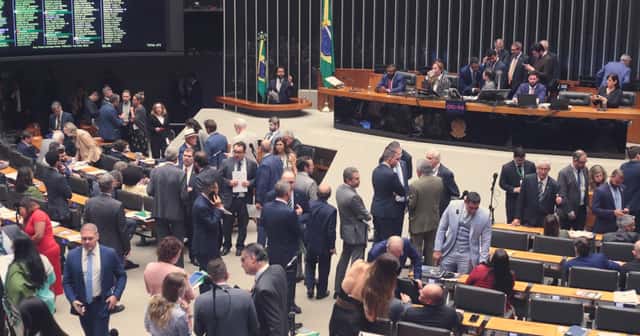
Brazil's Chamber of Deputies on Tuesday, November 10, approved Medida Provisória 1.376/2026, the emergency decree that lets indebted farmers refinance rural loans at subsidized rates, one day before the decree was due to lapse. The vote was symbolic, with every party recommending a yes, and the text now goes to the Senate, which must act by Wednesday, November 11. The approval came only after a concession. The government's leader in the Chamber, Paulo Pimenta of the Workers' Party (PT), accepted part of what the agribusiness caucus asked for: a longer window to sign contracts and collective loss reports for smaller producers. He did not move on interest rates, on the debt ceilings per producer or on a broader guarantee fund, according to g1.
Two facts frame the fight. First, the program has used a fraction of its headline size. The Finance Ministry estimated in July that more than R$100 billion of debt could be renegotiated; by Tuesday about R$20 billion had been contracted, g1 and the agribusiness caucus said. Second, the text that passed carries an article unrelated to farm credit. It places e-cigarettes and other nicotine products under federal health regulation and allows them to be manufactured in Brazil for export only, under a simplified registration. Reporters and opponents call that a "jabuti", the Brazilian term for an unrelated rider; Pimenta denies the label.
This article sets out what the Chamber approved and why the farm caucus backed a text its own leaders called insufficient. It also explains what the vape-export article changes, and what happens if the Senate fails to finish on Wednesday.
What the Chamber approved, and what it left out#
The Chamber passed the decree in the form of a conversion bill, PLV 16/2026, drafted by Pimenta as rapporteur of the joint committee. The Congress record for MPV 1.376/2026 shows that the committee approved his report on November 10 after 144 amendments had been filed, two of them later withdrawn. It accepted four amendments in full and 39 in part, rejected the rest, and recorded one vote against, by Deputy Afonso Hamm of the Progressistas (PP) of Rio Grande do Sul. The full Chamber then approved the text and its final wording later the same day, and the record sends it to the Senate as MPV 1.376-A/2026.
The core of the program is unchanged from the original decree that President Luiz Inácio Lula da Silva signed on July 15, co-signed by Finance Minister Dario Durigan. It authorizes new rural credit lines to pay off or reduce existing rural loans. They also cover Cédulas de Produto Rural (CPRs), the crop-backed notes that many farmers use to finance a season. To qualify, a producer or cooperative must show losses in two or more harvests between 2019 and 2025. Those losses must have cut expected gross farm income by at least 30%. They can come from extreme weather, such as floods, hail, frost or drought, or from falling crop prices. A separate, more generous tier applies to producers with losses in three or more harvests and an income drop of at least 40% from weather events.
The limits and rates by size of producer are set in the decree and were kept by the Chamber, according to Agência Câmara's summary of the approved text.
| Producer group | Limit, 2+ losses | Rate, 2+ losses | Limit and rate, 3+ losses |
|---|---|---|---|
| Family farmers (Pronaf) | R$400,000 | 6% a year | R$500,000 at 5% |
| Small and medium (Pronamp) | R$2 million | 9% a year | R$2.5 million at 8% |
| Other producers | R$4 million | 12% a year | R$8 million at 11% |
Repayment runs up to eight years in the general tier and ten years in the severe-loss tier, with interest-only payments for the first two years. Pronaf and Pronamp borrowers whose debts exceed their limits can take a second loan at the next tier's rate. The two tiers' limits add up, so a large producer can refinance up to R$12 million, Agência Câmara reported. Banks carry the credit risk. The subsidized interest is funded in three ways. Banks use the share of deposits they must lend to agriculture, plus rural savings and agribusiness credit notes (LCAs). The Treasury also pays interest equalization within limits set by the Finance Ministry.
Pimenta's changes widened who can get in rather than how cheaply. According to Congresso em Foco and Correio Braziliense, the approved text:
- moves the cut-off date for eligible arrears from May 31, 2026 to October 2026, and lets loans that fell into arrears from January 2021 qualify;
- lowers the minimum income loss in the regions served by the Sudam, Sudene and Sudeco development agencies, which cover the Amazon, the Northeast and the Center-West. The floor falls from 30% to 25% in the general tier and from 40% to 35% in the severe tier;
- allows a collective technical report, identifying a region, activity, harvest and losses, to replace individual reports for micro, small and medium producers and for Pronaf and Pronamp loans;
- opens the program to producers who kept paying on time without a prior renegotiation, and to CPRs issued to cooperatives, input suppliers and grain traders, not only to banks.
The contracting window also changed. The decree gave producers 120 days from its publication, a deadline that falls on November 12. The approved text counts 120 days from the date the future law is regulated. The caucus president, Deputy Pedro Lupion of Republicanos, said in a statement published by his party's press office that the period can be extended by a further 120 days.
What did not change matters as much to the caucus. The rates of 6%, 9% and 12% stayed, and so did the per-producer ceilings. The decree already authorized the federal government to buy shares in a guarantee fund for loans to producers hit by bad weather. The Frente Parlamentar da Agropecuária (FPA), as the cross-party farm caucus is known, wanted that coverage extended to ordinary seasonal and investment loans. Globo Rural reported that Pimenta's text kept only the narrower coverage, and Lupion said the caucus would pursue the broader fund in a complementary law.
A R$100 billion line with about R$20 billion used#
The take-up figures explain why the caucus pressed for changes up to the last day. When the decree was published, Durigan told reporters that the government expected more than R$100 billion to be renegotiated. He described the deal as "the limit of what the Finance Ministry can commit from the public budget of the coming years." Agência Câmara quoted him putting the annual fiscal impact below R$4 billion. The Treasury set aside R$24.3 billion for interest equalization on the subsidized lines, Estadão reported.
Actual contracting has been much lower, though different outlets report different totals depending on the date and method.
Source: Finance Ministry estimate via Agência Senado, Canal Rural, Campo em Pauta citing Banco Central data, Estadão, Globo Rural
Show the numbers
| Measure | Amount |
|---|---|
| Fazenda estimate, Jul 15 | R$100bn |
| Reported by Canal Rural, late Oct | R$14bn |
| Banco Central tally to Nov 4 | R$19.87bn |
| Estadão, Nov 10 | R$20bn |
| Globo Rural, Nov 10 | R$23bn |
Read together, the figures show that between about 14% and 23% of the government's estimate had been used by the eve of the deadline. Lupion told Canal Rural on November 5 that the program had met "something around 14% of the demand" and that the caucus was working to improve it. A November 9 analysis by the agricultural outlet Campo em Pauta, citing Banco Central data, put the total at R$19.87 billion as of November 4. The average rate was 9.8% a year. Rio Grande do Sul accounted for R$8.1 billion, Mato Grosso for R$1.4 billion and Goiás for R$1.2 billion. The same outlet calculated that only R$11.9 billion of the Treasury-equalized funds had been released.
Why the gap exists is disputed. Farm groups point to the conditions. Campo em Pauta reported that producers describe banks asking for a down payment of 10% to 15% of the debt and new collateral. It also reported that technicians are reluctant to sign loss reports. They fear the decree's anti-fraud penalties, which make the professional who signs a false report jointly liable. Antônio da Luz is chief economist of Farsul, the Rio Grande do Sul farm federation. He told the outlet that money was left over "because it was badly designed, and we warned about that." A government official quoted by the same outlet gave another reason. Some banks, the official said, returned their equalized quotas because part of their clients had been served from other sources. Neither explanation has been tested against loan-level data published by the government, and the decree itself only requires an official report on contracted operations within 180 days after the contracting window closes.
The wider farm-credit picture is strained, though it has not moved in one direction. Farsul's technical note, as summarized by Campo em Pauta, put the "problem portfolio" of rural credit at R$207.47 billion in July. That category counts renegotiated, extended, overdue and defaulted loans. It made up 23.46% of the total, against 5.46% in December 2023. The Banco Central reported a fall in delinquency on directed rural credit to individuals from 9.7% in August to 8.7% in September and attributed it to renegotiations, according to the same report. Those figures come from a secondary summary; the underlying Farsul note and central bank series were not independently reopened for this article.
Source: Campo em Pauta summarizing Farsul's technical note
Show the numbers
| Date | Problem share |
|---|---|
| Dec 2023 | 5.46% |
| Jul 2026 | 23.46% |
Why the farm caucus voted for a text it criticized#
The decree expires if Congress does not convert it in time. The Congress record shows the deliberation period running from July 15 to November 11 after a 60-day extension, and Congresso em Foco noted that it cannot be extended again. Under Article 62 of the Constitution, a decree that lapses cannot be reissued in the same legislative session, and contracts already signed would keep their terms, as Campo em Pauta explained. Lupion had called a lapse "the worst of all worlds," according to CNN Brasil as cited by Campo em Pauta.
That calculation split the caucus in public. In the joint committee, Hamm said his amendments had all been rejected. "There is some benefit, but it is very little," he said, according to g1. "It is impossible to vote in favor." The committee record does list one of his amendments, No. 140, among those accepted in part. Rádio Senado's recording has him calling the text "a disrespect to the farmer, especially in our Rio Grande do Sul," citing the 2023 flood and the 2024 climate disaster. Lupion answered him directly: "If all of us vote against, the provisional measure does not pass. You keep playing to the gallery and we end up looking like idiots," g1 reported. The caucus had already signaled that, if the decree lapsed, it expected to be blamed, since the government considered that it had done its part.
Senator Tereza Cristina of the PP of Mato Grosso do Sul, a former agriculture minister and vice-president of the caucus, set out the compromise in the committee. "This provisional measure is not the one we would like," she said, according to g1. "Today we are approving a text that will solve part of it, that will serve part of the indebted."
On Rádio Senado she added that the guarantee fund "is fundamental and it will not leave our radar." She also appealed to the government not to veto parts of the text, Correio Braziliense reported. In July she had called the original deal "the possible agreement" while acknowledging that it displeased producers in Rio Grande do Sul. The decree excluded loans taken under Law 14.981, the 2024 flood-reconstruction law, Agência Senado reported.
Lupion, whose party is Republicanos, framed the outcome as progress. His statement listed the January 2021 arrears date, the lower regional loss thresholds, collective reports and the extendable window. It noted that the government's rates had been kept and the fund left for a complementary bill. Deputy Marcel van Hattem of Novo is also from Rio Grande do Sul. In the plenary he said the advance was "very timid" and that "the problem is being solved for around 10% of producers," according to Correio Braziliense. Deputy Pedro Uczai of the PT, leader of the PT-PCdoB-PV federation, said many producers had not gone to their banks in recent months and needed more time, Globo Rural reported. Chamber president Hugo Motta of Republicanos said the report improved the terms and credited both the rapporteur and the caucus.
The government's case: more reach, same cost#
Pimenta argued that the changes widen access without raising the bill. He told g1 that the report did not increase costs for the federal budget. He said it was built in consultation with the Finance Ministry and was meant to keep the R$100 billion figure the government set at the start. "Evidently, it is not a text that pleases everyone, but in my view it is a text that advanced a great deal toward reaching the main objective of the provisional measure, which is to carry out this renegotiation," he said. On Rádio Senado he said producers had found "a series of difficulties" in practice, and that a series of meetings had produced the revised text.
The Finance Ministry has not published a cost estimate for the amended text, and Estadão reported that the economic team had opposed the changes and the conversion into a bill. That leaves a gap between Pimenta's statement and the ministry's reported position that this article could not close. The disagreement sits inside the government's wider fiscal problem. Durigan has said he wants a law requiring the government to aim for the center of the 2027 primary-surplus target, as 567 Politics reported on November 9, and every extra subsidy competes with that goal. The decree also arrives in the last weeks of the current Congress. The Workers' Party government is racing to use it before a more conservative one is sworn in, as part of the short year-end agenda the Planalto is trying to clear.
The vape-export article#
The article that drew most attention in the final hours has nothing to do with rural debt. It first appeared in Pimenta's second report, filed on November 5, according to a comparison of the two reports by Campo em Pauta. The site Claudio Dantas reported that the article is numbered 12 in the conversion bill. In the original decree, Article 12 dealt with loans from the science fund FNDCT to the agency Finep. The site said the rapporteur's written vote gives no specific reason for the new article.
As described by Agência Câmara, Veja and O Globo's Lauro Jardim column, the article does three things. It lists products by their Mercosur customs codes. They cover tobacco extracts, nicotine patches, tablets or pouches and electronic smoking devices. It then says the health regulator Anvisa will set the rules for their sale in Brazil. Finally, it says that "manufacture, industrialization, packaging, storage, handling, distribution and sale" of those products, "when intended exclusively for export, will be admitted via simplified registration."
Today Anvisa bans all of that. Its Resolution RDC 855/2024, approved in April 2024, prohibits the manufacture, import, sale, distribution, storage, transport and advertising of all electronic smoking devices, including parts and refills, and continues a ban in place since 2009. The national cancer institute INCA backed that decision, noting that the new rule went further than the 2009 one by also banning production and storage on Brazilian soil.
The disagreement is over what the new article would change. Pimenta told Veja that it "does not involve anything in the domestic market."
"Today we export raw material, and producers in Rio Grande do Sul, the whole sector, have an interest in exporting a semi-industrialized product," he said, adding that the change does not touch Anvisa or domestic consumption. He denied it was a jabuti. In his view it answers a demand from rural producers and "has to do with the matter." He told g1 that Anvisa keeps the power to define domestic sales. Technicians quoted anonymously by O Globo's column warned of a possible loophole: because a law outranks an agency resolution, the export permission could collide with Anvisa's ban on manufacturing. That reading has not been tested by a court, and no public response from Anvisa to the article was found by the time of writing.
Tobacco matters to Pimenta's home state. At a July meeting of the tobacco sector's federal chamber, the industry group SindiTabaco reported record exports of US$3.4 billion in 2025. It also reported a 21% fall in export value in the first half of 2026, according to the growers' association Afubra. That account does not mention vapes, and no tobacco group's public statement on this article was found.
Public-health groups had not issued a statement on this specific article by publication time either. Their standing position is on record. In an earlier open letter to senators against Bill 5.008/2023, which would legalize e-cigarette sales, ACT Promoção da Saúde and 33 other health groups made three points. Anvisa's evidence-based process should govern the products. The World Health Organization had urged countries with bans to enforce them. And the industry wanted to "attract a new generation of young consumers." That letter concerned domestic sales, not export production, and should not be read as a response to this article.
The legal objection is procedural. In 2015 the Supreme Court ruled in ADI 5127 that Congress may not add amendments unrelated to a decree's subject when converting it. The rule applies only to laws passed after that ruling. g1 noted that court challenges to the vape article are possible. Whether a court would see export rules for tobacco products as linked to a rural-debt decree, as Pimenta argues, is an open question. The conversion bill's own title also adds an unrelated change to the duty-free shop regime, according to the Congress record, a point that has drawn less attention.
- Supreme Court rules in ADI 5127 that unrelated amendments to decrees are unconstitutional from then on
- Anvisa approves RDC 855/2024, keeping and widening the e-cigarette ban
- Lula signs MP 1.376; Finance Ministry estimates over R$100 billion renegotiable
- Joint committee installed, Renan Calheiros chair, Paulo Pimenta rapporteur
- Deliberation period extended 60 days, to November 11
- Pimenta files first report
- Second report adds the vape-export article
- Committee and Chamber approve the conversion bill, PLV 16/2026
- Last day for the Senate to vote
What the Senate faces on Wednesday#
As of Tuesday night the Senate had not voted. Globo Rural and Estadão said a vote was expected on Wednesday, November 11, and Estadão reported that no Senate agenda had yet been published. The caucus expects a broad majority. If senators approve the text without changes, it goes to Lula, who can sign it or veto parts of it. If they amend it, it must return to the Chamber, leaving almost no time before the deadline. Senators who object to the vape article therefore face the same choice the farm caucus faced on Tuesday: accept a text they dislike or risk losing the program. A presidential line-item veto of the article is the other route, and Tereza Cristina's public appeal against vetoes shows the caucus is already thinking about it.
The vote also lands in a Congress where Lula's reliable base is thin. The lawmakers who pressed the farm demands on Tuesday came from the PP, Republicanos and Novo. The 144 amendments came from deputies and senators of the PL, MDB, PP, Republicanos, União, PSB, PDT and the PT itself, according to the Congress record. Caucus leaders used the decree's deadline to win concessions from a PT rapporteur. Estadão's count of Lula's incoming base, reported in 567 Politics' analysis of the smallest Congress core since Collor, points to more bargaining of this kind after January. The chart below places the main parties on 567 Politics' editorial axes.
The positions are dated editorial estimates of party programs, reviewed on November 5, not measurements of how any deputy voted on this decree. They help show why the fight did not split cleanly on left and right. The farm caucus draws from parties across the center and right of the Brazil spectrum, and the PT rapporteur, not the opposition, wrote the text that passed.
What is still unknown#
Several questions remain open. The Finance Ministry has not published a cost estimate for the amended text, so Pimenta's statement that it adds no fiscal cost cannot yet be checked against an official figure. The different contracting totals, from about R$14 billion to about R$23 billion, have not been reconciled with a single official series. Anvisa, INCA and the tobacco industry had not commented publicly on the vape-export article when this was written, and no court has ruled on it. Campaign-finance links between lawmakers and the farm or tobacco sectors were not reviewed for this article; Brazil's electoral court publishes those records through its DivulgaCandContas system, and they were not analyzed here.
What is settled is narrower. The Chamber has approved the conversion bill, and the Senate has one day. The farm caucus has said it will keep pushing for lower rates, higher ceilings and a broader guarantee fund in separate bills.
Differing perspectives
Should the Senate approve the rural debt decree as the Chamber passed it, including the vape-export article?
Each position is summarized as its supporters make it, with equal weight and in alphabetical order. A summary is not an endorsement; the evidence for each is weighed in the story above.
Approve now, then widen relief in new bills
Who holds it: Leaders of the Frente Parlamentar da Agropecuária, including Dep. Pedro Lupion (Republicanos-PR) and Sen. Tereza Cristina (PP-MS)
The caucus leadership says the text falls short but that letting the decree lapse would be worse, because new contracts would stop and the measure could not be reissued this session. They point to gains they won: arrears dating from January 2021, lower loss thresholds in the North, Northeast and Center-West, collective loss reports and an extendable contracting window. They say lower rates, higher ceilings and a broader guarantee fund should come next through a complementary law, and ask the government not to veto the text.
In their words: Republicanos press office ↗
Approve the negotiated text as passed
Who holds it: Government leader Paulo Pimenta (PT-RS), the decree's rapporteur, and the PT-led government bench
Supporters say the revised text answers the practical obstacles producers met at their banks, from strict individual loss reports to a contracting window that was about to close, while keeping the R$100 billion scope the Finance Ministry set in July. Pimenta says the changes add no cost to the federal budget and were built in talks with the ministry. He argues the export article responds to a request from producers who want to sell semi-processed goods abroad and leaves Anvisa in charge of anything sold in Brazil.
In their words: Rádio Senado ↗
Keep e-cigarette rules with Anvisa, not this bill
Who holds it: Tobacco-control groups such as ACT Promoção da Saúde and allied medical societies, which back Anvisa's full ban on electronic smoking devices
These groups argue that rules for e-cigarettes belong to Anvisa's evidence-based regulatory process, which has banned the devices since 2009 and in 2024 extended the ban to manufacturing and storage. They say the products harm health and that the industry seeks to attract a new generation of young consumers, and they cite the World Health Organization's call for countries with bans to enforce them. Their published position predates this article and concerns domestic sales, but it holds that Congress should not override the agency's process on these products.
In their words: ACT Promoção da Saúde ↗
Reject the text as too narrow
Who holds it: Dep. Afonso Hamm (PP-RS), who cast the only vote against the report in the joint committee
Hamm says the text is a disrespect to farmers, above all in Rio Grande do Sul, which he says was devastated by the 2023 flood and the 2024 climate disaster. He says he and other lawmakers filed many amendments to widen eligibility and ease terms, and that all of his were rejected, so the rates, ceilings and access rules stayed close to the government's July design. He acknowledges some gains but calls them very small, and argues that a lawmaker who represents those producers cannot vote for a text that offers them so little.
In their words: g1 ↗
Cite this article
567 Politics staff. “Brazil's Chamber passes farm-debt MP on eve of lapse; only about R$20bn of an estimated R$100bn used.” 567politics. Published 2026-11-11. https://567politics.com/news/brazil-chamber-rural-debt-mp-1376-pimenta-fpa-vape-export-november-2026
Wikipedia citation
{{cite news |title=Brazil's Chamber passes farm-debt MP on eve of lapse; only about R$20bn of an estimated R$100bn used |url=https://567politics.com/news/brazil-chamber-rural-debt-mp-1376-pimenta-fpa-vape-export-november-2026 |work=567politics |author=567 Politics staff |date=2026-11-11 |language=en}}CSL-JSON for reference managers
{
  "id": "https://567politics.com/news/brazil-chamber-rural-debt-mp-1376-pimenta-fpa-vape-export-november-2026",
  "type": "article-newspaper",
  "title": "Brazil's Chamber passes farm-debt MP on eve of lapse; only about R$20bn of an estimated R$100bn used",
  "URL": "https://567politics.com/news/brazil-chamber-rural-debt-mp-1376-pimenta-fpa-vape-export-november-2026",
  "container-title": "567politics",
  "language": "en",
  "author": [
    {
      "literal": "567 Politics staff"
    }
  ],
  "issued": {
    "date-parts": [
      [
        2026,
        11,
        11
      ]
    ]
  }
}Citations identify this article and its publication date. Assess the reporting and its linked sources before using it as evidence.
Read this article as Markdown or JSON. Cite the original page and retain its sources, dates and qualifications.
Embed this article summary
Paste this HTML into your page. The summary stays linked to the full story and updates with it. No account required.
<iframe src="https://567politics.com/embed/news/brazil-chamber-rural-debt-mp-1376-pimenta-fpa-vape-export-november-2026?theme=auto" title="Brazil's Chamber passes farm-debt MP on eve of lapse; only about R$20bn of an estimated R$100bn used by 567politics" width="100%" height="440" style="border:0;max-width:100%" loading="lazy"></iframe>
<p style="font-size:14px">Brazil's Chamber passes farm-debt MP on eve of lapse; only about R$20bn of an estimated R$100bn used by <a href="https://567politics.com/news/brazil-chamber-rural-debt-mp-1376-pimenta-fpa-vape-export-november-2026" rel="nofollow">567politics</a></p>
<script async src="https://567politics.com/embed.js"></script>
READ BEYOND 567POLITICS
Alternate sources & perspectives
Independent coverage and primary evidence to help you compare arguments. A link is not an endorsement; perspective labels describe the linked material.
- primary evidence
Medida Provisória nº 1.376, de 15 de julho de 2026 (full text) ↗
Presidência da República (Planalto)
The original decree signed by Lula and Durigan: eligibility, limits and rates, 120-day contracting window, guarantee-fund authorization, anti-fraud penalties and the original Article 12 on FNDCT loans to Finep.
- primary evidence
MPV 1376/2026: tramitação, emendas e parecer da comissão mista ↗
Congresso Nacional
Official record: 144 amendments, which were accepted in full or part, Afonso Hamm's recorded vote against, the 60-day extension to Nov 11, and the Chamber's approval of PLV 16/2026 sending it to the Senate.
- primary evidence
Câmara aprova renegociação de dívidas rurais de produtores prejudicados por eventos climáticos extremos ↗
Agência Câmara de Notícias
The Chamber's own summary of the approved text, including the tobacco-products article, regional loss thresholds, collective reports and the new contracting window.
- independent analysis
Relator atende agronegócio, e MP que renegocia dívidas rurais é aprovada na Câmara ↗
g1
Reports which FPA demands Pimenta accepted and refused, the roughly R$20bn contracted, and quotes from Pimenta, Tereza Cristina, Afonso Hamm and Pedro Lupion.
- independent analysis
Câmara aprova MP para renegociar R$ 100 bilhões em dívidas rurais ↗
Estadão Conteúdo via UOL
Reports the R$24.3bn Treasury equalization, the R$20bn contracted, the economic team's opposition to the changes and the expected Senate vote on Nov 11.
- right argument
Lupion destaca avanços em MP das dívidas rurais aprovada em comissão ↗
Republicanos (party press office)
The FPA president's case for approving the text while seeking lower rates and a broader guarantee fund in a complementary law; lists the concessions won.
- left argument
Artigo incluído em MP pode permitir produção de cigarros eletrônicos no Brasil para exportação ↗
Veja
Carries the PT rapporteur Paulo Pimenta's defense of the export article in his own words: it answers producers' demands and does not touch the domestic market.
- independent analysis
MP das dívidas chega à véspera do prazo com um quinto do previsto; nova versão só acrescenta artigo sobre vape ↗
Campo em Pauta
Agricultural outlet's Nov 9 analysis of Banco Central contracting data, Farsul's problem-loan figures, producers' complaints about bank conditions and the comparison showing the vape article added in the second report.
- primary evidence
Anvisa atualiza regulação de cigarro eletrônico e mantém proibição ↗
Anvisa
The regulator's April 2024 decision (RDC 855/2024) banning manufacture, import, sale, storage, transport and advertising of electronic smoking devices, which the export article would interact with.
- other perspective
Carta aberta às Senadoras e aos Senadores da República (PL 5008/2023) ↗
ACT Promoção da Saúde
Tobacco-control groups' standing case that Anvisa's process, not legislation, should govern e-cigarettes. It predates and does not address the export article.
- primary evidence
Legislativo não pode incluir em lei de conversão matéria estranha a MP, decide STF ↗
Supremo Tribunal Federal
The 2015 ADI 5127 ruling against unrelated amendments in decree conversion bills, the legal basis for possible challenges to the vape article.
- other perspective
Renegociação de dívidas rurais avança no Congresso em meio a divergências ↗
Rádio Senado
Recorded committee remarks by Pimenta defending the text, Afonso Hamm explaining his no vote, and Tereza Cristina on the guarantee fund.
Reviewed 2026-11-10. Sources were hand-picked and opened on Nov 10, 2026; the automated discovery search returned only unrelated results (MP Materials, Madhya Pradesh). Not found by publication: a Finance Ministry cost estimate for the amended text, an FPA statement on its own site, any Anvisa, INCA, ACT Promoção da Saúde or tobacco-industry statement on the vape-export article, and the final PLV 16/2026 text itself (the Congress page listed it but the PDF was not reviewed; article details come from Agência Câmara, Veja, O Globo and Claudio Dantas). The ACT letter predates this article and concerns domestic sales. Contracting totals (R$14bn to R$23bn) come from different outlets and dates and were not reconciled with an official Banco Central series. Brazilian campaign-finance records (TSE DivulgaCandContas) were not reviewed.