Lula starts his fourth term with the smallest Congress core since Collor
Estadão counts 124 loyal deputies and 16 senators. Centrão parties want heavier ministries; the Planalto wants delivered votes first.
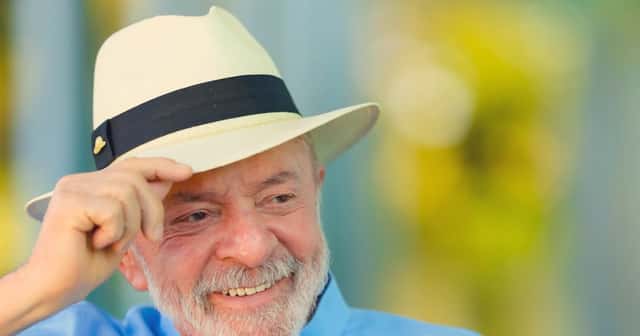
President Luiz Inácio Lula da Silva will start his fourth term in January 2027 with the smallest core of reliable congressional allies of any Brazilian president since Fernando Collor in 1990, according to an Estadão count published on November 9. The newspaper put his closest bloc at 124 of 513 deputies and 16 of 81 senators. That arithmetic, not the runoff itself, is what now drives cabinet talks with Brazil's pragmatic center-right parties, often called the Centrão.
The October 25 runoff gave Lula 51.79% of valid votes. The October 4 first round had already handed the Liberal Party the largest Chamber bench, 121 seats, and a Senate caucus that Folha and Valor put near 28 to 29 of 81. Lula's Workers' Party–led federation will be the second force in the Chamber, not the first. This article reports the seat math from those November 9 tallies, how each camp reads the same numbers, and what the Planalto has said it will demand in return for ministries.
The chart above places selected Brazilian parties on editorial left–right and social axes. Those coordinates are dated estimates. They are not seat forecasts and do not predict how any deputy will vote.
The Chamber numbers Estadão published#
Estadão's November 9 analysis grouped Lula's "núcleo" of closest allies at 124 deputies: 88 from the PT–PCdoB–PV federation, 15 from the PSB, 15 from the PSOL–Rede federation and six from the PDT. That is 24% of the 513-seat Chamber. Absolute majority is 257. The paper said Lula will therefore have to seek more votes outside that core than any president since Collor.
Four of the largest benches whose support is not automatic, in Estadão's framing, add to 207 deputies: the União–PP federation with 87, the Social Democratic Party with 43, the Republicans with 41 and the Brazilian Democratic Movement with 36. Adding Podemos (27), the PRD–Solidariedade federation (7) and Avante (5) brought the paper's pool of negotiable center and Centrão lawmakers to 246.
Source: Estadão, Nov. 9, 2026
Show the numbers
| Bloc | Seats |
|---|---|
| Lula closest allies | 124 |
| União–PP federation | 87 |
| PSD | 43 |
| Republicanos | 41 |
| MDB | 36 |
| Podemos | 27 |
| Other Centrão small parties | 12 |
Those figures are a newspaper classification of parties by past alignment, not a whip count on any bill. Parties can split. Individual deputies can defy leaders. The PL's 121 seats sit outside both of Estadão's buckets above and form the main declared opposition.
The Senate squeeze#
In the Senate, Estadão put Lula's closest base at 16 of 81. Declared opposition would hold 34 seats, the largest opposition bloc since 1995 in the paper's comparison. A constitutional amendment needs 49 votes. Even if Lula won every one of the 31 senators Estadão listed as outside his core and outside the hard opposition, he would reach 47 — two short of a PEC majority. That is why allies and rivals both told Folha on November 9 that the Senate will be the hardest chamber of the fourth term.
Folha reported the same day that the Planalto wants fewer senators inside the ministry board and more of them sitting in the Senate. Names cited as likely to stay in the chamber rather than return to the Esplanada included senator-elect Rui Costa (PT-BA). Wellington Dias, the social-development minister, was described as more useful for congressional outreach than for keeping a portfolio whose alternate is from the PSD. Camilo Santana was listed as an exception who could still take a heavy ministry, including a possible return to Education or a run at Casa Civil.
Those personnel stories are attributed to people close to Lula and to party leaders. They are not formal appointments. Cabinet lists have not been published.
What the Centrão is asking for#
CNN Brasil, also on November 9, described the contacts as early. Party officials said they are still waiting for a clear fourth-term agenda before they lock alliances. Centrão interlocutors denied that ministry talks had already begun, while saying they do not want less space on the Esplanada than they held in Lula's third term.
In that third term, Estadão recalled, the PSD held Agriculture, Mines and Energy and Fisheries; the MDB held Cities, Transport and Planning; União Brasil held Communications and Tourism and influenced Regional Development; the PP held Sports; and Republicanos held Ports and Airports. Those posts did not buy reliable votes. In June 2025 the Chamber overturned government IOF decrees by 383 to 98 with heavy support from parties that held ministries.
Government senators Teresa Leitão (PT-PE) and Lindbergh Farias (PT-RJ) told Estadão they still see room to negotiate with center parties, including for Supreme Court and regulatory nominations that need 41 Senate votes. UnB professor Lúcio Rennó told the same paper he expects "many difficulties" and doubts a stable majority can be rebuilt under the new map.
How Lula's side wants to change the bargain#
Allies quoted by Estadão and CNN said the Planalto's new rule is that ministries will track delivered votes, negotiated with party presidents rather than with factional groups inside parties. Edinho Silva, the Workers' Party president, was named as the collector of those vote maps. CNN reported that aides say a party that delivers about 15 votes should expect a portfolio sized to that weight. The PSD was flagged for "privileged" treatment because it stayed officially neutral in the runoff, while other Centrão parties backed Flávio Bolsonaro after the first round.
Lula's November 8 national address did not name ministries. He said he would "structure the changes necessary to build the new government" before year-end, thanked more than 64 million voters, and repeated that he would "build bridges instead of walls." He also tied fiscal responsibility to keeping social programs. That speech is the public frame. The seat math is the constraint.
Markets, Motta and the calendar#
Investors had already marked the congressional map into prices. Our earlier report on the Ibovespa and real after the runoff covered the first week's sell-off. The political question now is whether ministry deals restore a working majority before February, when the new Congress elects its leaders and the PL's weight becomes formal.
House Speaker Hugo Motta of the Republicans, who backed Lula through the campaign, is separately assembling a reelection bloc that Poder360 put at 361 deputies. That fight, covered in our companion story on the PL's Motta decision, will shape who controls committees that can kill or advance bills Lula needs. Chamber leadership votes are scheduled for February 2027.
Source: Estadão, Nov. 9, 2026
Show the numbers
| Group | Seats |
|---|---|
| Declared opposition | 34 |
| Lula closest allies | 16 |
| Other negotiable | 31 |
Fiscal talks that will test any majority are covered in our story on the center of the 2027 meta. The short year-end bill list is in our lame-duck agenda report.
Limits and open questions#
Several limits matter. Seat totals can still shift with party switches before February. "Closest allies" is a journalistic category, not a legal caucus. Past ministry allocations are a weak predictor of future votes under Brazil's earmark system; Estadão cited R$50.4 billion in 2025 amendments that exceeded free investment funds at 30 of 39 ministries. Folha's PT internal fight over Edinho Silva, Gleisi Hoffmann and Washington Quaquá is a party story that may move people without changing the Chamber math.
What remains unknown is which ministries Lula will actually offer, whether Centrão presidents can deliver the votes they promise, and whether the Senate opposition of about 34 can hold together against nominations and PECs. Those answers will come in December cabinet announcements and in the February leadership elections, not in the November seat tables alone.
Sources and method#
Seat classifications and Collor comparison come from Estadão's November 9 report, opened for this article. Senate and ministry personnel reporting come from Folha the same day. Early alliance contacts come from CNN Brasil's Isabel Mega column. Lula's own words come from the Planalto transcript of November 8. Runoff and first-round context link to our prior TSE-based stories. See our methodology for how we treat attributed claims and party labels.
Second-round endorsements and why they matter now#
Who backed whom between the rounds still shapes trust at the bargaining table. União–PP, Podemos and Republicanos declared for Flávio Bolsonaro in the runoff, Estadão noted. The PSD stayed officially neutral even as Ronaldo Caiado backed the senator. The MDB split. CNN's reading is that the PSD's neutrality is why it may get preferential treatment in portfolio talks, while parties that crossed to Bolsonaro face a higher bar to prove they can deliver votes for Lula.
Lindbergh Farias told Estadão the opposite opportunity also exists: the PL's growth into traditional Centrão territory could push some center parties toward the Planalto as a hedge. Rennó rejected that as a path to a stable majority. Both statements can be true at once. A party can take a ministry and still vote against a tax measure, as the IOF episode showed.
What this does not settle#
The Collor comparison is about the size of the initial loyal core, not about whether Lula will finish the term as Collor did. Collor's government collapsed under impeachment. Nothing in the November seat tables predicts that outcome. They predict harder daily bargaining, more veto points in the Senate, and a higher price for every ministry.
Readers who want the electoral path that produced this Congress can start with our first-round seat report and the runoff story. Party program context sits on the Brazil political spectrum page and on the PT, PL, PSD, MDB and Republicanos profiles. Those pages are dated editorial estimates. They do not replace the seat count.
Differing perspectives
Can Lula build a stable congressional majority for his fourth term?
Each position is summarized as its supporters make it, with equal weight and in alphabetical order. A summary is not an endorsement; the evidence for each is weighed in the story above.
Keep senators in the Senate, not the Esplanada
Who holds it: Planalto sources quoted by Folha on fourth-term cabinet design
A third view accepts the hard Senate math and answers it with personnel: keep strong PT senators such as Rui Costa on the floor, move Wellington Dias toward congressional outreach, and fill ministries with allies who lack mandates. Folha reported that logic as the Planalto's preference for Lula 4. On this reading, majority-building starts with who sits in the chamber, not only with who sits in a ministry.
In their words: Folha de S.Paulo ↗
No stable majority is likely under this map
Who holds it: UnB professor Lúcio Rennó and analysts stressing PL and Senate arithmetic
This side points to Estadão's count of only 124 closest Chamber allies and 16 Senate allies, with declared opposition near 34 Senate seats. Rennó told Estadão he expects many difficulties and doubts a stable majority can be rebuilt. They argue earmarks already weakened executive leverage, as when ministry parties helped overturn IOF decrees 383–98 in June 2025. Ministries alone, they say, will not recreate a reliable whip.
In their words: Estadão ↗
Yes, by trading ministries for delivered votes
Who holds it: Planalto aides and PT president Edinho Silva, as described by CNN Brasil and Estadão
Supporters of this path argue that Lula's third-term mistake was handing ministries to factions without locking bankada votes. They say party presidents must now map how many deputies they can deliver, and that portfolios will match that map. CNN reported aides saying roughly 15 votes earn a ministry of matching weight, and that the PSD may get preferential treatment for staying neutral in the runoff. On this reading, Centrão parties still need the Esplanada and will deal once the agenda is clear.
In their words: CNN Brasil (Isabel Mega) ↗
Cite this article
567 Politics staff. “Lula starts his fourth term with the smallest Congress core since Collor.” 567politics. Published 2026-11-09. https://567politics.com/news/brazil-lula-smallest-congress-base-since-collor-centrao-november-2026
Wikipedia citation
{{cite news |title=Lula starts his fourth term with the smallest Congress core since Collor |url=https://567politics.com/news/brazil-lula-smallest-congress-base-since-collor-centrao-november-2026 |work=567politics |author=567 Politics staff |date=2026-11-09 |language=en}}CSL-JSON for reference managers
{
  "id": "https://567politics.com/news/brazil-lula-smallest-congress-base-since-collor-centrao-november-2026",
  "type": "article-newspaper",
  "title": "Lula starts his fourth term with the smallest Congress core since Collor",
  "URL": "https://567politics.com/news/brazil-lula-smallest-congress-base-since-collor-centrao-november-2026",
  "container-title": "567politics",
  "language": "en",
  "author": [
    {
      "literal": "567 Politics staff"
    }
  ],
  "issued": {
    "date-parts": [
      [
        2026,
        11,
        9
      ]
    ]
  }
}Citations identify this article and its publication date. Assess the reporting and its linked sources before using it as evidence.
Read this article as Markdown or JSON. Cite the original page and retain its sources, dates and qualifications.
Embed this article summary
Paste this HTML into your page. The summary stays linked to the full story and updates with it. No account required.
<iframe src="https://567politics.com/embed/news/brazil-lula-smallest-congress-base-since-collor-centrao-november-2026?theme=auto" title="Lula starts his fourth term with the smallest Congress core since Collor by 567politics" width="100%" height="440" style="border:0;max-width:100%" loading="lazy"></iframe>
<p style="font-size:14px">Lula starts his fourth term with the smallest Congress core since Collor by <a href="https://567politics.com/news/brazil-lula-smallest-congress-base-since-collor-centrao-november-2026" rel="nofollow">567politics</a></p>
<script async src="https://567politics.com/embed.js"></script>
READ BEYOND 567POLITICS
Alternate sources & perspectives
Independent coverage and primary evidence to help you compare arguments. A link is not an endorsement; perspective labels describe the linked material.
- independent analysis
Lula 4 smallest Congress base since Collor ↗
Estadão
Seat classification: 124 Chamber / 16 Senate closest allies; Centrão demands.
- left argument
Ministerial reform to reinforce Senate ↗
Folha de S.Paulo
Keep PT senators in the chamber; cabinet personnel reporting.
- independent analysis
Lula prepares Centrão deals ↗
CNN Brasil
Early contacts; ministries tied to delivered votes.
- primary evidence
Lula address to the nation ↗
Planalto
Official Nov. 8 speech.
- independent analysis
Lula races agenda before rightward Congress ↗
Valor International
Senate map and year-end pressure.
- right argument
PL Motta Chamber split ↗
O Globo
Opposition calculus shaping majority talks.
- left argument
PT wants PL out of Motta bloc ↗
Poder360
Speaker-bloc politics linked to governability.
- other perspective
Fiscal meta center debate ↗
G1
Fiscal constraint on any new majority.
Reviewed 2026-11-09. Hand-checked Nov. 9, 2026 from Estadão, Folha, CNN Brasil, Planalto and Valor pages opened for this story. discover_politics_sources not relied on.