Brazil's finance minister wants a law to chase the center of the 2027 surplus target
The 2027 center is R$73.2 billion; the floor is R$36.6 billion. Durigan rules out cutting social programs or the wage formula.
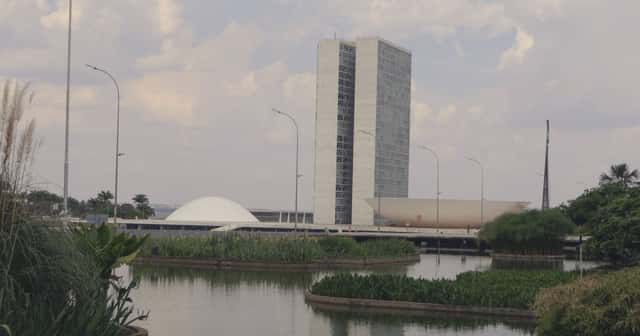
Brazil's finance minister, Dario Durigan, has said the government will send Congress a complementary bill requiring the executive to aim for the center of the 2027 primary-surplus target, not the lower edge of the tolerance band. G1 and Estadão set out the arithmetic: the center is a primary surplus of R$73.2 billion, about 0.5% of GDP; the floor is R$36.6 billion. Chasing the center rather than the floor would imply about R$36.6 billion in extra fiscal effort.
The announcement came in the week after Luiz Inácio Lula da Silva won the October 25 runoff. Markets had already sold Brazilian assets on the view that a fourth Lula term would soften fiscal policy; our report on the Ibovespa and real covered that first week. This article reports what Durigan and the Finance Ministry have put on the table, what they have ruled out, and how outside economists read the same numbers.
The chart above places selected Brazilian parties on editorial axes. Fiscal fights cut across those placements: the Workers' Party holds the presidency, while a more conservative Congress will vote on any complementary bill. The chart is not a debt forecast.
What "center of the meta" means#
Brazil's fiscal framework, approved in 2023 to replace the spending ceiling of the Temer and Bolsonaro years, sets a primary-result target with a tolerance band of 0.25 percentage point of GDP above or below the center. In practice, G1 and Estadão reported, the government has often managed to the floor: it freezes less spending when revenues disappoint, because the legal target is still met at the lower band.
Durigan said after the runoff that a complementary bill would lock in pursuit of the center for 2027. The Finance Ministry told Estadão on November 5 that "a complementary bill would cover establishing that," and that Lula will first name his economic team, then present adjustment measures. The ministry stressed dialog and fiscal stability. No bill text had been filed as of the reports we opened.
Source: G1, Nov. 8, 2026, Estadão, Nov. 5, 2026
Show the numbers
| Reference | Amount |
|---|---|
| Center of meta | R$73.2bn |
| Floor of band | R$36.6bn |
| Extra effort if center not floor | R$36.6bn |
Estadão also reported the 2027 budget bill (PLOA) already sent to Congress: an effective surplus of R$18.6 billion that rises to R$83.4 billion once R$64.7 billion in exceptions — court-ordered precatórios and selected defense, health and education items — are treated as outside the rule. That accounting would leave about R$10.1 billion of room above the center. Former Treasury secretary Jeferson Bittencourt told Estadão the room exists on paper, but that meeting the center while carrying large exceptions may require doing better than the center on the items that still count.
What else is on the table#
G1 listed three families of measures officials have floated: the center-of-meta bill; review of tax benefits not written into the Constitution, under a late-2025 rule that cuts eligible benefits by 10% a year; and further clamps inside the fiscal framework, such as earlier limits on real minimum-wage gains and a trigger that can slow education transfers.
Durigan has described a gradual adjustment of about two percentage points of GDP across the fourth term, taking the primary result from a deficit near 0.4% of GDP in 2026 to a surplus near 1.6% by 2030, G1 reported. The Senate's Independent Fiscal Institution (IFI) wrote in June that a surplus near 2.1% of GDP would be needed merely to stabilize the debt ratio. Those are different benchmarks. The government has not adopted the IFI figure as its target.
On November 5, Valor reported that Lula met Durigan, Planning Minister Bruno Moretti, Casa Civil Minister Miriam Belchior, BNDES president Aloizio Mercadante, Management Minister Esther Dweck, Vice President Geraldo Alckmin, former finance ministers Fernando Haddad and Guido Mantega, and former BNDES head Luciano Coutinho to open the fourth-term fiscal discussion. Valor said Lula had not shown urgency on structural spending cuts and that aides were avoiding the phrase "ajuste fiscal," preferring "rationalization."
What Lula and Durigan say is off the table#
G1's "fora do radar" list is as important as the on-the-table list. Durigan has said the real-gain formula for the minimum wage, capped at 2.5% above inflation, stays. He and Lula have rejected unlinking pension and assistance benefits from the minimum wage. Both have repeatedly ruled out cutting social programs to close the gap. Durigan has also rejected proposals to set interest-rate targets that would force the Selic down to shrink the debt stock, warning of exchange-rate risk; Brazil's reserves were cited near $350 billion in that discussion.
Lula's November 8 national address put the same frame in public: "The path of the public debt and high interest rates worry me, so I reaffirm my commitment to fiscal responsibility, to make sustainable social policies and the necessary expansion of investment viable. All this effort will be made while preserving the fiscal rules." He also promised to raise investment above 20% of GDP with private partners, buy household bank debts and forgive micro-entrepreneur debts to the federal government. Those spending-side promises are why market economists asked whether the center-of-meta bill is a binding constraint or a presentation change.
The congressional filter#
Any complementary bill needs a Congress that, as our companion reporting shows, will be more conservative than the one that passed the 2023 framework. The Liberal Party will hold about 121 Chamber seats and a Senate caucus near 28–29. Lula's closest allies are a minority. Tax-benefit cuts and spending clamps that touch amendments will meet the same Centrão veto points that defeated IOF decrees in 2025.
Selene Peres Nunes, a co-author of the Fiscal Responsibility Law, told Estadão that chasing the center is not enough if exceptions keep the measured surplus far from the result needed to stabilize debt. For 2026, she noted, the government projects an effective deficit near R$80.9 billion even though the central meta is a R$34.3 billion surplus. That gap is the credibility problem the center-of-meta promise is meant to answer. Whether a complementary bill closes it depends on the exceptions Congress leaves standing.
Source: Estadão, Nov. 5, 2026
Show the numbers
| Concept | Amount |
|---|---|
| Effective surplus in PLOA | R$18.6bn |
| Exceptions (precatórios and carve-outs) | R$64.7bn |
| Rule-relevant surplus | R$83.4bn |
| Center of meta | R$73.2bn |
| Room above center on paper | R$10.1bn |
Campaign promises still outside the PLOA#
Estadão warned that the 2027 budget was sent with revenue assumptions above many private forecasts and without fully booking campaign pledges such as a Bolsa Família increase, the micro-entrepreneur package and the online-betting ban's fiscal effects. Valor International separately reported that the Planalto is racing a short pre-recess agenda, detailed in our year-end agenda story, that includes the betting ban and Desenrola 3.0. Those items can raise or lower net revenue depending on design. They are not yet reconciled, in the reporting we opened, with the R$73.2 billion center.
The Central Bank held the Selic on November 4 after a cutting cycle, G1 noted, keeping Brazil among the highest real-rate economies. Durigan's public case is that a credible path to surplus is what allows rates to fall later. Critics answer that credibility requires smaller exceptions and a plan that survives a hostile Congress, not only a new legal sentence about the center of the band.
Limits#
No complementary bill text is public. Durigan's own seat in a fourth-term cabinet is not confirmed. Debt-to-GDP figures cited in secondary Moody's summaries near 83% rising toward 86–88% are agency projections, not the Treasury's final 2026 outcome. This article treats them as attributed estimates. We did not open the full 2027 PLOA annexes for every revenue line.
Related reading: the markets week after the runoff, the Amendment 141 work-week change that added a labor cost debate during the campaign, and profiles for Lula and Haddad. Party context is on the Brazil spectrum.
Sources and method#
Numbers and quotations drawn from G1 (Nov. 8), Estadão (Nov. 5) and the Planalto transcript (Nov. 8), all opened for this article. The Valor economists' meeting is cited from contemporaneous reporting summarized in our research notes. See methodology.
Growth versus cuts: the public argument#
Lula told TV Globo, as summarized by G1, that public debt worries him but that the solution runs through growth rather than through spending cuts that hit the poor. Durigan's briefings translate that into a two-point-of-GDP primary improvement by 2030 without touching Bolsa Família design, minimum-wage real gains or benefit floors. Market economists quoted across G1 and Estadão answer that growth assumptions in the PLOA already look optimistic and that interest on the debt — outside the primary target — will keep the debt ratio rising unless the primary surplus is larger than the center of the band.
Both sides can cite the same Selic pause. The Central Bank held rates on November 4 because inflation expectations had moved the wrong way after the election, in the reading G1 attributed to market analysts. Durigan says a clearer surplus path is what later allows cuts. Skeptics say the bank will not ease on a promise alone while exceptions still hollow out the measured result.
Why Fernando Haddad was in the room#
Haddad left the Finance Ministry earlier in the third term and remains the author of much of the framework Durigan now administers. His presence at the November 5 meeting, alongside Mantega and Coutinho, signaled continuity of PT economic networks rather than a named succession. Valor said no fourth-term finance minister had been chosen. Using Haddad's name as a market signal would be speculative; the verified fact is that he attended a fiscal scoping meeting with Lula.
Debt stock versus primary flow#
A recurring confusion in Brazilian fiscal debate is treating the primary surplus as if it were the debt. The primary result excludes interest. Brazil's high Selic means the debt can rise even when the primary is in surplus. IFI's 2.1% of GDP stabilization estimate and Moody's attributed 2–3% range, cited in Exame's fourth-term overview, are about the debt ratio, not about Durigan's 0.5% of GDP center for 2027. This article keeps those numbers in separate sentences on purpose. Readers should not collapse them.
Related party and politician pages: PT, Lula, Haddad, Alckmin. Spectrum: Brazil.
Differing perspectives
Is a law to chase the center of the 2027 fiscal meta enough to restore credibility?
Each position is summarized as its supporters make it, with equal weight and in alphabetical order. A summary is not an endorsement; the evidence for each is weighed in the story above.
Grow first; do not cut social floors
Who holds it: President Lula, as stated in his November 8 national address and campaign remarks summarized by G1
Lula says debt and high interest rates worry him, but that fiscal effort must preserve social rules and raise investment above 20% of GDP with private partners. He has ruled out cutting social programs as the path to surplus. On this view, credibility comes from growth plus gradual surplus improvement toward about 1.6% of GDP by 2030, not from a chainsaw-style cut.
In their words: Planalto (Lula address, Nov. 8, 2026) ↗
Not without shrinking exceptions
Who holds it: Former Treasury secretary Jeferson Bittencourt and Fiscal Responsibility Law co-author Selene Peres Nunes, as quoted in Estadão coverage of the exceptions debate
Critics argue the center-of-meta promise fails if large carve-outs remain. G1 and Estadão cite R$64.7 billion in 2027 exceptions that lift the rule-relevant surplus even when the effective surplus is much smaller. Nunes says the measured center can still sit far from the result needed to stabilize debt. On this reading, the bill is incomplete without a real adjustment plan that shrinks carve-outs.
In their words: G1 ↗
Yes: lock the center, not the floor
Who holds it: Finance Minister Dario Durigan and the Finance Ministry
Durigan says a complementary bill will require the executive to aim for the R$73.2 billion center of the 2027 primary-surplus target rather than the R$36.6 billion floor. The ministry told Estadão the change would show a commitment to fiscal responsibility and stability after the runoff. On this view, managing to the floor weakened credibility, and a clearer legal rule is the first step toward lower interest rates without cutting social programs or the minimum-wage formula.
In their words: Estadão / Ministry of Finance ↗
Cite this article
567 Politics staff. “Brazil's finance minister wants a law to chase the center of the 2027 surplus target.” 567politics. Published 2026-11-09. https://567politics.com/news/brazil-fiscal-meta-center-durigan-2027-november-2026
Wikipedia citation
{{cite news |title=Brazil's finance minister wants a law to chase the center of the 2027 surplus target |url=https://567politics.com/news/brazil-fiscal-meta-center-durigan-2027-november-2026 |work=567politics |author=567 Politics staff |date=2026-11-09 |language=en}}CSL-JSON for reference managers
{
  "id": "https://567politics.com/news/brazil-fiscal-meta-center-durigan-2027-november-2026",
  "type": "article-newspaper",
  "title": "Brazil's finance minister wants a law to chase the center of the 2027 surplus target",
  "URL": "https://567politics.com/news/brazil-fiscal-meta-center-durigan-2027-november-2026",
  "container-title": "567politics",
  "language": "en",
  "author": [
    {
      "literal": "567 Politics staff"
    }
  ],
  "issued": {
    "date-parts": [
      [
        2026,
        11,
        9
      ]
    ]
  }
}Citations identify this article and its publication date. Assess the reporting and its linked sources before using it as evidence.
Read this article as Markdown or JSON. Cite the original page and retain its sources, dates and qualifications.
Embed this article summary
Paste this HTML into your page. The summary stays linked to the full story and updates with it. No account required.
<iframe src="https://567politics.com/embed/news/brazil-fiscal-meta-center-durigan-2027-november-2026?theme=auto" title="Brazil's finance minister wants a law to chase the center of the 2027 surplus target by 567politics" width="100%" height="440" style="border:0;max-width:100%" loading="lazy"></iframe>
<p style="font-size:14px">Brazil's finance minister wants a law to chase the center of the 2027 surplus target by <a href="https://567politics.com/news/brazil-fiscal-meta-center-durigan-2027-november-2026" rel="nofollow">567politics</a></p>
<script async src="https://567politics.com/embed.js"></script>
READ BEYOND 567POLITICS
Alternate sources & perspectives
Independent coverage and primary evidence to help you compare arguments. A link is not an endorsement; perspective labels describe the linked material.
- independent analysis
What is on Lula's fiscal table ↗
G1
Center vs floor; off-limits social measures.
- independent analysis
Center of the fiscal meta bill ↗
Estadão
R$73.2bn center, exceptions, PLOA room.
- primary evidence
Lula address on fiscal responsibility ↗
Planalto
President's words on debt and fiscal rules.
- independent analysis
Year-end legislative agenda ↗
Valor International
Betting and Desenrola items interacting with PLOA.
- right argument
Congress base since Collor ↗
Estadão
Congressional filter for any complementary bill.
- other perspective
Centrão alliance talks ↗
CNN Brasil
Political price of fiscal votes.
- left argument
Folha Senate reinforcement ↗
Folha de S.Paulo
Senate arithmetic that will vote fiscal PECs.
- right argument
PL Motta fight ↗
O Globo
Opposition posture toward government bills.
Reviewed 2026-11-09. Hand-checked from G1 Nov. 8, Estadão Nov. 5 and Planalto Nov. 8 address. discover_politics_sources not relied on.