Brazil's stocks have worst week since 2020 after Lula's win as investors unwind bets on Bolsonaro
The Ibovespa fell 18% and the dollar rose 9% in the week after the runoff. Analysts cite unwound bets and debt worries; the finance minister calls it repositioning.
Brazil's stock market had its worst week since March 2020 after President Luiz Inácio Lula da Silva won the October 25 runoff. The Ibovespa, the main index of the São Paulo exchange B3, fell 18.12% from the Friday before the vote to Friday, October 30, CNN Brasil reported. The dollar rose 9.15% against the real over the same period and closed at R$5.446, its highest level of the year.
Most of the damage came on Monday, October 26. The Ibovespa fell 13.88% that day, its largest one-day loss since March 2020. The drop was steep enough to trigger B3's circuit breaker, a 30-minute trading halt, for the first time since 2020. Long-term interest rates in the futures market jumped as well.
Analysts quoted in the Brazilian press gave two main explanations. Many investors had bet on a win by Senator Flávio Bolsonaro, who led the first round and every final runoff poll, and they had to unwind those positions. Investors also doubt that a fourth Lula term will curb the growth of public debt. The government rejects the second reading. Finance Minister Dario Durigan called the sell-off a change of position by a market that had bet on the wrong candidate.
The numbers
| Date | Ibovespa close | Dollar (R$) |
|---|---|---|
| Fri., Oct. 23 | 205,082.56 | 4.9896 |
| Mon., Oct. 26 | 176,608.23 | 5.406 |
| Tue., Oct. 27 | 175,710.05 | 5.3488 |
| Wed., Oct. 28 | 171,006.10 | 5.3466 |
| Thu., Oct. 29 | 169,186.42 | 5.3875 |
| Fri., Oct. 30 | 167,921.80 | 5.446 |
Sources: CNN Brasil daily market reports for October 23, 26, 27, 28, 29 and 30. The dollar column is the spot rate at the close.
Source: CNN Brasil daily market reports
Show the numbers
| Day | Ibovespa |
|---|---|
| Oct 23 | 205,082 |
| Oct 26 | 176,608 |
| Oct 27 | 175,710 |
| Oct 28 | 171,006 |
| Oct 29 | 169,186 |
| Oct 30 | 167,922 |
The index fell in all five sessions after the vote. On October 29 it closed below 170,000 points for the first time since August. Monday's trading volume was R$88.6 billion, against a daily average of about R$25 billion, Agência Brasil reported.
Sources differ slightly on Monday's dollar close. CNN Brasil put the rise at 8.36%, to R$5.406. Agência Brasil, the public news agency, reported 8.21%, to R$5.403, and called it the largest daily rise since January 1999. Poder360 cited the central bank's Ptax reference rate, which rose 9.20% to R$5.40. The Ptax is an average of the day's trading, not the closing price, which explains part of the gap.
Interest rates moved too. The futures contract for January 2031 closed at 15.185% on October 26, up 2.54 percentage points from the Friday before, according to CNN Brasil. Higher long-term rates raise what the government pays to borrow when it issues new debt.
Some context matters for scale. Even after Monday's fall, the Ibovespa was still up 9.61% for 2026, and the dollar was down 1.57% for the year against the real, Agência Brasil reported. Much of the October fall erased a rally that had begun after the first round.
What prices had assumed
Markets rose sharply when Bolsonaro finished first on October 4. On October 5 the Ibovespa jumped 7.7% to a record 206,911.89 points, Forbes Brasil reported. Felipe Camargo, chief global economist at Oxford Economics, said that Bolsonaro "has a better chance of favoring business-friendly policies." UBS analysts wrote that the result raised "the probability of a turn in fiscal expectations and results." JPMorgan raised its view on Brazilian stocks to overweight. On October 9, after a Datafolha poll showed Bolsonaro ahead, the index set another record at 209,066.90 and the dollar fell below R$5, Forbes Brasil reported. "The electoral trade invaded the market," said Felipe Sant'Anna of Axia Investing.
The final polls pointed the same way. All seven runoff polls compiled by Gazeta do Povo on October 24 had Bolsonaro ahead on valid votes, by margins of 0.2 to 4 points. Gazeta classified all of them as statistical ties, because each gap fell within the poll's margin of error. Lula then won 51.79% to 48.21%, according to the Superior Electoral Court's results service. A race that polls call a tie can break either way. The prices, though, had leaned toward one outcome.
Why prices fell: the explanations on record
A mismatch with expectations. Rebecca Nossig, an equity strategist at Nomad, described a "mismatch between market expectations and the result at the ballot box," CNN Brasil reported. Lucas Xavier of AW Capital said the stocks that fell most "rose significantly before the second round, on the expectation of adjustments in indebtedness." That scenario now looked distant, he said.
Debt and the fiscal outlook. Many analysts said the deeper worry is public debt. "The main concern is the government's capacity to stabilize the public debt and recover investor confidence," Thiago Pedroso of Criteria said on October 29, as quoted by CNN Brasil. Luiz Fernando Araújo, chief executive of Finacap, linked the scale of the drop to the surprise but said the main fear was a wider fiscal imbalance, Movimento Econômico reported. He cited Dilma Rousseff's choice of Joaquim Levy as finance minister after her 2014 re-election as a possible model. BTG Pactual said a credible economic team and concrete steps on debt would be "decisive" to keep long-term rates from staying high.
UBS put the request in specific terms. The bank said the government should quickly present a fiscal package with specific measures and clear numbers, and get it through Congress before year-end, Bloomberg Línea reported. It estimated Lula's campaign spending pledges at about R$300 billion. "Fiscal uncertainty will remain the deciding factor," the bank wrote. On October 27, Citigroup and BCA Research cut their recommendations on Brazilian assets, saying the risk-return profile of stocks, bonds and the currency had worsened, CNN Brasil reported.
No change of course. Roberto Motta, a strategist at Genial Investimentos, put it more briefly. "The market is simply repricing the fact that we will not have a turn in economic policy," he said, as quoted by Brasil 247.
All quotations in this section are 567politics translations from Portuguese.
The government's response
The Treasury stepped in on the first day. It bought back more than R$14.8 billion in federal bonds on October 26, Agência Brasil reported. The next day it announced a second buyback of inflation-linked NTN-B bonds and canceled a scheduled auction of Selic-linked LFT bonds. The size of the second buyback was not given in the reports reviewed for this article.
Durigan rejected the idea that investors had lost faith in the public accounts, Poder360 reported. "The market was betting on an electoral victory by a certain candidate," he said on October 27. "President Lula, in a historic victory, overturned the market's expectation. And now the market changes position." He said he hoped for "a level of rationality without big swings" and that the government aimed to "stabilize" markets that week.
A current and a former member of Lula's cabinet pulled in different directions. Former Planning Minister Simone Tebet told CNN Brasil on October 29 that "the window of opportunity is now." She said several ministries already had fiscal measures ready to present to Lula. Guilherme Boulos, minister of the presidency's General Secretariat, argued the opposite emphasis. On October 29 he criticized calls for an adjustment that cuts social spending. "The economic agenda of Brazil will be the one that won the elections, not the one that lost," he wrote on X, as reported by Brasil 247.
A competing reading: speculation
Some economists questioned whether the sell-off says much about the real economy. Economist Pedro Faria told Brasil de Fato that stock prices track projected profits. Part of the fall, he argued, reflects lost hopes of large profits for private banks. Bolsonaro's campaign statements had suggested privatizing the state-controlled Banco do Brasil, the outlet noted. "These financial markets react in a very speculative way, disconnected from the concrete economy," he said. He added that algorithmic trading can amplify drops.
An October 29 editorial in O Povo, a Fortaleza newspaper, made a related case. It said every election period brings higher volatility, especially in emerging economies, and that the reaction was "neither unprecedented, much less irreversible." The editorial still acknowledged doubts over how Lula will square his pledges with balanced accounts.
History offers a partial check on these claims. A study by the consultancy Elos Ayta of six presidential elections since 2002 found that the Ibovespa fell on the first trading day after the runoff in four of them. In all six it ended the first full week higher, Brasil 247 reported. In 2026 it ended that week down 18%. This year broke the pattern.
Weighing the claims
The two main explanations are not rivals. Analysts quoted before the vote tied the first-round rally to hopes of a fiscal turn under Bolsonaro. If that is right, unwinding the bet and repricing the fiscal outlook are the same event seen from two sides. Durigan's description of a change of position is accurate as far as it goes. It does not show that the fiscal worry is absent, because the positions themselves rested on a fiscal view.
The opposite inference also needs care. A falling stock index measures what investors expect and how they had positioned themselves. It does not prove that a policy will fail, and it is not a vote. Markets had priced a Bolsonaro win that the polls never established, since every final survey was classified as a statistical tie. Treating the sell-off as a verdict on Lula's economic record would confuse traders' expectations with outcomes that have not happened yet.
One effect is concrete regardless of motive. Higher long-term rates raise the cost of new government borrowing. If they persist, that cost feeds into the debt figures that investors say worry them. The size and timing of the move point to the election, since the reports reviewed attributed it to the result and cited no global shock of similar scale that week. Separating the election effect from every other influence on prices is still not possible with the data available.
The economy underneath
The data released in October show a mixed picture.
| Indicator | Latest figure | Source |
|---|---|---|
| Inflation, 12 months | 4.58% (Sept.) | IBGE |
| Unemployment | 5.2% (Jul.-Sept.) | IBGE |
| Gross public debt | 82.9% of GDP (Sept.) | Central Bank |
| Selic policy rate | 13.75% | Central Bank |
Inflation rose 0.82% in September, above the 0.60% markets expected, Agência Brasil reported. That pushed the 12-month rate to 4.58%, above the 4.5% ceiling of the official target range. The main driver was electricity, up 7.98% as a one-time credit on August bills ended. A weaker real adds a new source of pressure, since it makes imports cost more.
The job market is strong. Unemployment fell to 5.2% in the quarter through September, the lowest for that period since the series began in 2012, Poder360 reported. About 5.6 million people were looking for work.
The debt figures are the ones investors cite. Gross general government debt stood at 82.9% of GDP in September, about R$11.1 trillion, the Central Bank reported via Poder360. Net debt reached 70% of GDP, the highest in a series that starts in 2001. Over 12 months, the consolidated public sector ran a primary deficit, before interest, of R$70.1 billion, or 0.52% of GDP. Its interest bill over the same period was R$1.205 trillion, up from R$984.8 billion a year earlier. The 2027 budget bill sent to Congress in August targets a primary surplus of R$18.6 billion, just over 0.1% of GDP, the Senate's news agency reported.
Debt is a stock and the deficit is a flow. A small primary deficit can coexist with fast debt growth when interest costs are high, which is Brazil's situation at a 13.75% policy rate.
What comes next
The central bank's Monetary Policy Committee, Copom, announces its next decision on November 4. It cut the Selic to 13.75% on September 16, its fifth straight quarter-point cut, Poder360 reported. Before the runoff, options prices implied a better than 70% chance of another cut in November. After the result they implied a 68.8% chance of a hold, CNN Brasil reported. HSBC, Itaú and BTG Pactual expect a pause. Banco Inter and ASA still expect a quarter-point cut. HSBC wrote that clear measures to contain spending are unlikely before the November and December meetings.
The other test is political. Analysts are watching who Lula names to his economic team and whether a fiscal package reaches Congress before the new legislature takes office in February 2027. Lula takes office for his fourth term on January 5, 2027. The labor-law change that business groups say will raise costs is covered in our report on the end of the six-day work week. The political aftermath of the runoff is in our story on Flávio Bolsonaro after the runoff. Background on the country's elections and main policy debates is on our Brazil election guide and Brazil issues page.
Market prices reflect what traders expect and how they are positioned. They are not polls of voters and should not be read as forecasts with known odds.
Photo and reporting note
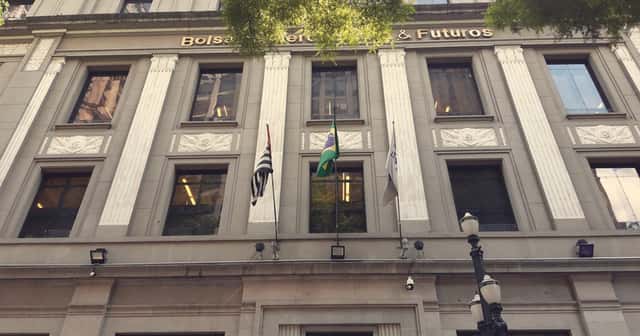
File image for context, not a photograph of the events reported here. Photo: the Bolsa de Mercadorias & Futuros building on Praça Antônio Prado in São Paulo, December 2021. Fulviusbsas, original file, CC BY-SA 4.0. Cropped for publication. This AI-assisted report was prepared on November 2, 2026, from the sources linked above. Quotations from Portuguese are 567politics translations.

Differing perspectives
How should Brazil's government read and respond to the market sell-off that followed Lula's re-election?
Each position is summarized as its supporters make it, with equal weight and in alphabetical order. A summary is not an endorsement; the evidence for each is weighed in the story above.
Keep the agenda voters chose, without social cuts
Who holds it: Guilherme Boulos, minister of the General Secretariat of the Presidency
Boulos argues that the election settled the direction of economic policy. He criticizes calls for an adjustment built on cuts to social programs and says the opposition's plan of deep cuts was defeated at the ballot box and by popular mobilization. In his words, Brazil's economic agenda will be the one that won the elections, not the one that lost, so market pressure should not reverse it.
In their words: Brasil 247, Oct. 29, 2026 ↗
Look past speculation to the real economy
Who holds it: Economist Pedro Faria, interviewed by Brasil de Fato
Faria argues that stock prices track projected profits, and that part of the fall reflects lost hopes of gains for private banks under a Bolsonaro government that had floated privatizing Banco do Brasil. He says financial markets react in a very speculative way, disconnected from the concrete economy where value is produced, and that algorithmic trading can magnify drops, so the sell-off is a weak guide to policy.
In their words: Brasil de Fato, Oct. 27, 2026 ↗
Present a fiscal plan with concrete numbers now
Who holds it: Market analysts including Criteria's Thiago Pedroso, and former Planning Minister Simone Tebet
This view holds that the main concern is the government's capacity to stabilize public debt and win back investor confidence. Without a clear plan to slow debt growth, they argue, interest rates stay high and the currency stays under pressure. Tebet says the window of opportunity is now and that several ministries already have fiscal measures ready to present to the president.
In their words: CNN Brasil, Oct. 29, 2026 ↗
Treat it as a market changing position
Who holds it: Finance Minister Dario Durigan and the Finance Ministry
Durigan argues that the sell-off reflects investors who had bet on a Bolsonaro win and are now unwinding those trades, not a loss of faith in the public accounts. He says Lula's historic victory overturned the market's expectation and that the market is now changing position. The Treasury bought back bonds to steady prices, and he says the aim is a return to rational trading without large swings.
In their words: Poder360, Oct. 27, 2026 ↗
READ BEYOND 567POLITICS
Alternate sources & perspectives
Independent coverage and primary evidence to help you compare arguments. A link is not an endorsement; perspective labels describe the linked material.
- primary evidence
Mercado financeiro: Ibovespa e dólar em 26 de outubro de 2026 ↗
CNN Brasil
Closing data for the day after the runoff: the 13.88% fall, the circuit breaker, the dollar's rise and DI futures moves, with analyst comments.
- primary evidence
Mercado financeiro: Ibovespa e dólar em 30 de outubro de 2026 ↗
CNN Brasil
Weekly figures: Ibovespa down 18.12% and the dollar up 9.15%, the worst week since March 2020.
- independent analysis
Dólar sobe 8,21%, e bolsa cai 13,88% após reeleição de Lula ↗
Agência Brasil
Public news agency's account of Oct. 26, with trading volume, year-to-date context and a dollar figure that differs slightly from CNN Brasil's.
- primary evidence
Para conter oscilações, Tesouro anuncia nova recompra de títulos ↗
Agência Brasil
Reports the Treasury's buyback of more than R$14.8 billion in bonds on Oct. 26 and the second buyback announced Oct. 27.
- left argument
Reação do mercado na 2ª feira foi de posição, diz Durigan ↗
Poder360
The finance minister's case that the sell-off was a market repositioning after a wrong bet, not distrust of the public accounts.
- right argument
Lula precisa sinalizar ajuste fiscal ainda em 2026, avaliam economistas ↗
Movimento Econômico
Economists and bank research argue the fall reflects fiscal risk and call for concrete measures and a credible economic team.
- independent analysis
O que é preciso para o dólar e a bolsa voltarem ao patamar pré-eleição, segundo o UBS ↗
Bloomberg Línea
UBS research on the fiscal package and rate path it says markets need; note the article misdates the Monday session as Oct. 23.
- left argument
Queda da bolsa pós-eleição reflete especulação e perda de lucros privatistas, analisa economista ↗
Brasil de Fato
Economist Pedro Faria argues the fall reflects speculation and lost privatization profits, disconnected from the real economy.
- other perspective
O tremor na Bolsa e as suas razões ↗
O Povo
Editorial calling the reaction typical election-period volatility while acknowledging fiscal doubts about Lula's pledges.
- independent analysis
Ibovespa fecha a 206 mil pontos pela 1ª vez após Flávio Bolsonaro liderar 1º turno ↗
Forbes Brasil
The first-round rally and analysts' reasons for it, which frame what markets had priced before the runoff.
- primary evidence
Dívida bruta fica em 82,9% do PIB, diz Banco Central ↗
Poder360
Central Bank fiscal statistics for September 2026: gross and net debt, primary result and interest bill.
- primary evidence
Inflação oficial de setembro fica em 0,82%, mostra IBGE ↗
Agência Brasil
IBGE's September IPCA release: 0.82% for the month and 4.58% over 12 months, above the target ceiling.
Reviewed 2026-11-02. Reviewed November 2, 2026. Daily index and currency closes come from CNN Brasil's market reports; B3, Banco Central and Tesouro primary pages were not reachable or not checked directly, so closing levels and the R$14.8 billion buyback follow news-agency reports. Sources differ on Monday's dollar move (8.21%, 8.36%, or 9.20% for the Ptax average). The size of the Oct. 27 NTN-B buyback was not found. No on-record statement from an opposition party leader specifically about the market fall was found; opposition-aligned fiscal arguments are represented by market analysts. The site's automated source discovery returned no relevant results, so these sources were found manually and opened individually.