Lula's own left readies alternatives to his fiscal plan as Senate votes and a sliding real loom
PT, PCdoB and PSOL leaders plan counter-proposals to PLP 299 a day before senators vote on four contested passages, while the opposition and industry push the other way and the dollar hits a 19-month high.
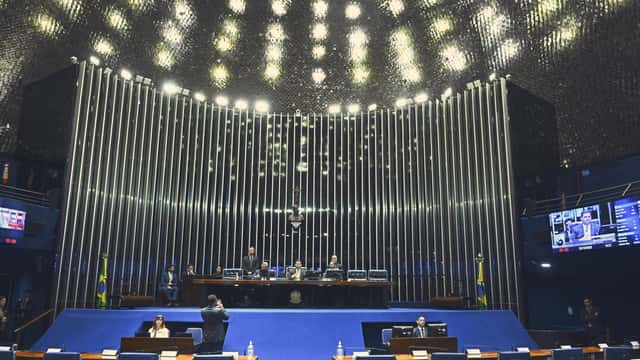
Brazil's fiscal package now faces open resistance from inside President Luiz Inácio Lula da Silva's own camp. On Monday, Workers' Party deputy Lindbergh Farias said leaders of the PT, PCdoB and PSOL would bring the government their own alternatives to the plan, a day before the Senate is due to vote on four contested passages and as the real fell to its weakest level in 19 months.
The bill, PLP 299/2026, has already cleared its main Senate vote. What is still open is whether its tighter spending rules survive intact, how quickly the Chamber of Deputies takes it up, and whether the government can hold its left flank while answering an opposition and a business lobby that say the package leans too heavily on taxes.
- Jaques Wagner files PLP 299/2026; Eduardo Braga named rapporteur
- Senate approves urgency 40-38 and the base text 45-31
- Moretti tells Folha a "sectarian fraction" of the left is delaying the plan
- PT, PCdoB and PSOL leaders prepare alternatives; dollar closes at R$5.7767
- Senate scheduled to vote on four destaques; UNE protests called
- Speaker Hugo Motta due in Buenos Aires; Chamber vote timing uncertain
Source: Senate bill record, InfoMoney, g1, Valor
The left's counter-offer#
Lindbergh told g1 on November 16 that he expects a negotiation with the executive. "If they can negotiate with the market, they can negotiate with us," he said. He described the alternatives as measures to stop the adjustment from cutting social programs and to tax "those at the top", including banks and investments.
He also criticized how the plan was handled. "This fiscal adjustment proposal was badly managed," he said, adding that it was presented without consulting ministers or government leaders and that the government then tried to pass it in a single day. According to the same report, PT deputies are due to meet Planning Minister Bruno Moretti before the Chamber takes up the text.
The objections are not limited to one deputy. g1 reported that PSOL deputy Erika Hilton wrote on X that fiscal responsibility "is not a valid argument" for degrading people's lives, and that critics include newly elected deputies Ana Elisa (PT) and Jones Manoel (PSOL). The national student union, UNE, called protests against the package in at least ten cities for Tuesday. Its president, Beatriz Borges, told g1 the acts "are not against the elected government" and that the union wants Congress to remove "the mechanisms that deepen austerity."
The split runs through the governing coalition rather than between it and its allies. According to g1, the Workers' Party national leadership has declared support for the measures, while deputy André Janones, who runs the pro-Lula WhatsApp channel "Exército do Lula", attacked the package's critics as being "directed by a bunch of radicals." Jones Manoel told UOL, as cited by g1, that he had not sought a fight with Janones.
For readers comparing the parties involved, 567 Politics' dated editorial estimates of Brazil's party spectrum show where the PT, PSOL and the opposition Liberal Party sit relative to one another. The positions are editorial estimates, not measured scores, and the live chart below can change after publication.
What the Senate approved, and what is still in play#
The Senate approved the base text on November 12 by 45 votes to 31, according to Agência Senado. Earlier the same day, InfoMoney reported, the opposition tried to push the debate to this week, but the urgency request passed by just 40 votes to 38. The Senate's bill record, checked on November 16, lists PLP 299/2026 as still in progress, authored by government leader Jaques Wagner and reported by Senator Eduardo Braga (MDB-AM).
Source: InfoMoney (urgency vote), Agência Senado (base text)
Show the numbers
| Vote | Yes | No |
|---|---|---|
| Urgency request | 40 | 38 |
| Base text | 45 | 31 |
The margins matter for Tuesday. O Globo reported that the four separate votes, known as destaques, target the core of the bill: the limits on spending growth, the calculation of the constitutional spending floors and the rules for tax benefits. Because PLP 299 is a complementary law, each challenged passage needs at least 41 votes to stay in the text. The base text passed with 45.
According to O Globo, Braga estimates the measures could improve public accounts by R$45.1 billion to R$56.1 billion in 2027. Moretti has cited R$50 billion to R$60 billion. Both are official estimates of a proposal, not savings already achieved.
The main provisions, as described by O Globo and InfoMoney, are:
- The government could freeze spending to pursue the center of the fiscal target rather than only its lower tolerance band.
- In years when that extra freeze is triggered, real growth in primary spending would be capped at 2% instead of the 2.5% allowed by the 2023 fiscal framework.
- A second 10% across-the-board cut in tax benefits would take total reductions to about 20% of original values, which Moretti says yields R$15 billion.
- The executive could restrict companies' use of tax credits to offset taxes owed, but only in periods when the extra spending controls are active.
- Revenue from the oil export tax would be left out of the health-spending floor calculation until 2030, and up to R$10.5 billion spent this year on diesel subsidies would sit outside the 2026 target.
The Senate record adds a deadline: Congress would have 120 days to consider measures against public-sector "supersalaries" above the constitutional pay ceiling.
Source: O Globo (Braga), InfoMoney (Moretti), Poder360 (Marinho)
Show the numbers
| Estimate | R$ billion |
|---|---|
| Rapporteur Braga, low | 45.1 |
| Rapporteur Braga, high | 56.1 |
| Minister Moretti, low | 50 |
| Minister Moretti, high | 60 |
| Opposition alternative (Marinho) | 75 |
The government's case#
Moretti has answered the critics directly. In an interview with Folha de S.Paulo published on November 15, he said a "sectarian fraction" of the left was delaying the fight against tax privileges. "Very powerful lobbies are pleading not to take on part of this adjustment," he said. "Curiously, this sectarian portion of the left walks hand in hand with those segments."
He told Folha that claims the plan would slow increases in the minimum wage were "a lie", arguing that the lower 2% spending-growth ceiling only applies when the government freezes spending during the year, while the annual budget is still drawn up to the framework's full limit. He said the freeze would not apply to the constitutional floors for health and education, and that the government would send Congress a formal letter guaranteeing the announced increase in Bolsa Família.
In a CNN Brasil interview on Monday, quoted by CBN, Moretti said health and education spending together would grow by R$30 billion next year. He said the government was open to suggestions but that "we are losing time with a small fraction that goes on social media to tell lies." CBN also quoted PSOL deputy-elect Fábio Félix, who backs ending some tax subsidies but said pleasing financial markets "is not always the best way out."
Vice President Geraldo Alckmin, acting president while Lula traveled, backed the plan on Sunday. "The government does not touch the poorest population," he told reporters, according to g1, describing the bill as a step "in the right direction" that is "fundamental to lowering interest rates."
Markets turn cooler#
Financial markets have turned cooler on the package. The dollar rose 2.15% on Monday to close at R$5.7767, its highest since April 17, 2025, and the real was the weakest of 33 liquid currencies tracked by Valor Econômico. Valor attributed the move mainly to doubts about fiscal policy, alongside weaker commodity prices, global risk aversion and position adjustments by foreign investors. A single day's currency move does not show that any one bill caused it.
InfoMoney reported on November 13 that JPMorgan called the plan a "small fiscal solution for a much bigger problem", worth 0.35% to 0.45% of GDP in 2027, with about two-thirds of the effort coming from revenue. Moretti told Folha that some market scenarios already project higher primary surpluses because of the new tools, which he said could allow the central bank to cut rates.
Source: Valor Econômico, InfoMoney
Show the numbers
| Date | R$ per US$ |
|---|---|
| Apr 17, 2025 | 5.8 |
| Nov 12, 2026 | 5.65 |
| Nov 16, 2026 | 5.78 |
The opposition and industry objections#
Criticism from the right and from business groups runs in the opposite direction from the left's. Opposition leader Rogério Marinho (PL-RN) said on November 12 that the plan "will not save anything" and "will raise taxes again." He accused the government of a "default" on states by postponing payments tied to the Kandir Law and pension compensation. Under the bill, Poder360 reported, amounts due from 2027 to 2030 would instead be paid from 2031 to 2037.
Marinho also called the R$10.5 billion diesel exclusion a "fiscal pedalada", a term Brazilians use for accounting maneuvers that flatter budget results. TV Senado reported that the Liberal Party-led opposition will offer an amendment on Tuesday to lower the spending-growth limit. Marinho said a 0.6% real ceiling would open R$45 billion of fiscal space in 2027, and up to R$75 billion with some of the bill's other measures, by his own calculations.
Moretti replied that the package combines spending restraint with limits on tax-credit offsets rather than relying on revenue alone. He told Folha the Kandir Law transfers amount to R$4 billion next year, contrasting that with the R$90 billion in court-ordered debts the government says it had to regularize in 2023.
The National Confederation of Industry also wants changes. Its president, Ricardo Alban, said on November 12 that the bill removes R$3 of economic stimulus for every R$1 of spending reduction. The CNI said the spending tools match ideas it has long supported, but called them largely discretionary and argued that the tax measures fall on companies and consumers. "We are willing to make sacrifices, but they should be equivalent," Alban said.
The Chamber timetable#
The Chamber is the next obstacle. Approval there requires at least 257 of 513 deputies, and any change sends the text back to the Senate, O Globo noted. Valor reported that Speaker Hugo Motta (Republicanos-PB) will travel to Buenos Aires on Wednesday for a legal event. The Chamber's agenda is also blocked by a government bill on sports betting that carries constitutional urgency. Government leader Paulo Pimenta told Valor the government would withdraw that urgency if it is the obstacle, and Institutional Relations Minister José Guimarães said, "We will vote on Tuesday and Wednesday."
- Senate destaquesfour contested passages, each needing 41 votes to stay
- Chamber of Deputiesat least 257 of 513 votes for approval
- Return to Senateonly if deputies change the text
- Presidential sanctionthe government wants the rules in force for the 2027 budget
Source: O Globo, Senate bill record
Why the timing matters#
The government says the bill has to pass this year so the new rules can shape the 2027 budget. That puts pressure on a coalition already squeezed between a market that wants more spending restraint and a left that wants less. Earlier 567 Politics reporting described how the package first drew resistance inside Lula's camp and Finance Minister Dario Durigan's push to pursue the center of the 2027 surplus target.
The vote also previews Lula's fourth term, which begins on January 5, 2027. As 567 Politics has reported, Lula will govern with the smallest core of congressional support since Fernando Collor. The left's alternatives, whose details had not been published by Monday evening, will show whether his allies want to amend the plan or contest its direction. Tuesday's Senate votes will show whether the 41-vote threshold holds.
Representative polling on the fiscal package itself was not located for this report; the arguments above come from officials, parties, business groups and analysts in their own statements, not from measures of public opinion.
Differing perspectives
How, if at all, should Congress change Brazil's fiscal package PLP 299/2026 before it becomes law?
Each position is summarized as its supporters make it, with equal weight and in alphabetical order. A summary is not an endorsement; the evidence for each is weighed in the story above.
Cut spending harder without new taxes
Who holds it: Senate opposition leader Rogério Marinho and the PL-led opposition
The opposition argues the package relies on higher taxes rather than real spending cuts, postpones Kandir Law and pension-compensation payments owed to states, and moves R$10.5 billion of diesel subsidies outside the fiscal target. Marinho proposes capping real spending growth at 0.6%, which he calculates would open R$45 billion of fiscal space in 2027 and up to R$75 billion with other measures, without raising taxes or delaying payments to states.
In their words: Poder360 (Rogério Marinho remarks) ↗
Pass the package as negotiated
Who holds it: Planning Minister Bruno Moretti, Vice President Geraldo Alckmin, Senate government leader Jaques Wagner and the PT national leadership
The government argues the bill gives it the tools to hit its 2027 primary-surplus target without touching the minimum wage's real increases or the health and education floors. Moretti says a 10% linear cut in tax benefits and limits on tax-credit offsets spread the cost fairly, with powerful lobbies the main losers. He and Alckmin say credible accounts are needed to bring down interest rates and protect the currency, which they argue benefits poorer Brazilians most.
In their words: Folha de S.Paulo interview with Bruno Moretti ↗
Share the burden and review tax benefits case by case
Who holds it: National Confederation of Industry (CNI) and its president Ricardo Alban
Industry argues the bill removes about R$3 of economic stimulus for every R$1 of spending restraint, putting most of the adjustment on companies and consumers through higher effective taxes and limits on legitimate tax-credit offsets. The CNI backs the spending-control tools in principle but says they are largely discretionary. It wants benefits reviewed individually for cost and effectiveness and a structural plan to slow mandatory spending.
In their words: CNI press office ↗
Soften the spending limits and tax top earners
Who holds it: PT deputy Lindbergh Farias, PCdoB and PSOL leaders, PSOL deputy Erika Hilton and the UNE student union
Critics on the left argue the extra spending freezes and the lower 2% growth ceiling would squeeze public services and investment as the economy slows. Lindbergh says the government negotiated with the market but not with its own base, and that alternatives should protect social programs while raising more from banks, investments and higher earners. UNE says it supports ending some tax benefits and acting on supersalaries but wants the austerity mechanisms removed.
In their words: g1 (interviews with Lindbergh Farias and UNE) ↗
Cite this article
567 Politics staff. “Lula's own left readies alternatives to his fiscal plan as Senate votes and a sliding real loom.” 567politics. Published 2026-11-17. https://567politics.com/news/brazil-plp-299-left-alternatives-lindbergh-moretti-senate-destaques-real-november-2026
Wikipedia citation
{{cite news |title=Lula's own left readies alternatives to his fiscal plan as Senate votes and a sliding real loom |url=https://567politics.com/news/brazil-plp-299-left-alternatives-lindbergh-moretti-senate-destaques-real-november-2026 |work=567politics |author=567 Politics staff |date=2026-11-17 |language=en}}CSL-JSON for reference managers
{
  "id": "https://567politics.com/news/brazil-plp-299-left-alternatives-lindbergh-moretti-senate-destaques-real-november-2026",
  "type": "article-newspaper",
  "title": "Lula's own left readies alternatives to his fiscal plan as Senate votes and a sliding real loom",
  "URL": "https://567politics.com/news/brazil-plp-299-left-alternatives-lindbergh-moretti-senate-destaques-real-november-2026",
  "container-title": "567politics",
  "language": "en",
  "author": [
    {
      "literal": "567 Politics staff"
    }
  ],
  "issued": {
    "date-parts": [
      [
        2026,
        11,
        17
      ]
    ]
  }
}Citations identify this article and its publication date. Assess the reporting and its linked sources before using it as evidence.
Read this article as Markdown or JSON. Cite the original page and retain its sources, dates and qualifications.
Embed this article summary
Paste this HTML into your page. The summary stays linked to the full story and updates with it. No account required.
<iframe src="https://567politics.com/embed/news/brazil-plp-299-left-alternatives-lindbergh-moretti-senate-destaques-real-november-2026?theme=auto" title="Lula's own left readies alternatives to his fiscal plan as Senate votes and a sliding real loom by 567politics" width="100%" height="440" style="border:0;max-width:100%" loading="lazy"></iframe>
<p style="font-size:14px">Lula's own left readies alternatives to his fiscal plan as Senate votes and a sliding real loom by <a href="https://567politics.com/news/brazil-plp-299-left-alternatives-lindbergh-moretti-senate-destaques-real-november-2026" rel="nofollow">567politics</a></p>
<script async src="https://567politics.com/embed.js"></script>
READ BEYOND 567POLITICS
Alternate sources & perspectives
Independent coverage and primary evidence to help you compare arguments. A link is not an endorsement; perspective labels describe the linked material.
- primary evidence
Projeto de Lei Complementar n° 299, de 2026 (bill record) ↗
Senado Federal
Official status, author (Jaques Wagner), rapporteur (Eduardo Braga), summary of measures including the 120-day supersalaries deadline, and amendments filed.
- primary evidence
Ajuste fiscal: Senado aprova PLP 299/2026 por 45 a 31 ↗
Agência Senado
Senate's own bulletin recording the 45-31 base-text vote and that four points remain for a later vote.
- right argument
Líder da oposição diz que ajuste fiscal aumenta impostos e não corta gastos ↗
TV Senado
Rogério Marinho (PL-RN) on why the opposition voted no and its planned amendment to lower the spending-growth limit.
- right argument
Marinho diz que governo deu 'calote' em Estados com ajuste fiscal ↗
Poder360
Details the opposition's 0.6% real spending cap alternative, its R$45bn-R$75bn estimates, the Kandir Law payment delay to 2031-2037 and Moretti's reply.
- left argument
Integrantes de partidos devem apresentar alternativas a ajuste fiscal que divide esquerda ↗
g1
Lindbergh Farias, Erika Hilton, Jones Manoel and UNE in their own words on why the package should change; also records PT leadership support and Janones's counter-attack.
- other perspective
Esquerda sectária atrasa combate a privilégios ao criticar projeto de ajuste, diz Moretti ↗
Folha de S.Paulo
Full interview with Planning Minister Bruno Moretti setting out the government's case, the minimum-wage and health-floor arguments and the Kandir Law comparison.
- other perspective
Ministro critica setores da esquerda que se posicionam contra a proposta de ajuste fiscal do governo ↗
CBN
Moretti's November 16 CNN Brasil remarks and a response from PSOL deputy-elect Fábio Félix.
- other perspective
'É preciso ter responsabilidade com o nosso futuro', diz presidente da CNI ao criticar pacote de ajuste fiscal ↗
Confederação Nacional da Indústria
Industry's objections in its own words, including the R$3-to-R$1 stimulus claim and its call for case-by-case benefit reviews.
- independent analysis
Senado deve concluir nesta semana votação do pacote fiscal, que seguirá para a Câmara ↗
O Globo
Explains the four destaques, the 41-vote threshold, Braga's R$45.1bn-R$56.1bn estimate and the Chamber's 257-vote requirement.
- independent analysis
Dólar dispara 2,15% com desconfiança sobre política fiscal e termina no maior nível desde abril de 2025 ↗
Valor Econômico
Market report on the November 16 currency move and the factors traders cited, including but not limited to fiscal doubts.
- independent analysis
Do alívio à cautela: por que o mercado diminuiu ânimo sobre o pacote de ajuste fiscal ↗
InfoMoney
Summarizes JPMorgan's and other analysts' assessment that the package is small relative to debt dynamics and weighted toward revenue.
- independent analysis
Motta viajará para Argentina e votação do pacote fiscal na Câmara é incerta ↗
Valor Econômico
Chamber timetable: Speaker Hugo Motta's trip, the urgent betting bill blocking the agenda and government leaders' statements.
Reviewed 2026-11-16. Hand-picked from pages opened on November 16, 2026; the automated source-discovery tool returned only unrelated results for 'PLP'. The left parties' written alternatives had not been published by Monday evening, so the left's case relies on interviews reported by g1 and CBN. Agência Senado's vote note was a brief bulletin; the urgency tally (40-38) comes from InfoMoney. Folha and Valor pages may be paywalled for some readers. No representative poll on the package was found.