Carney sets six by-elections for Dec. 7 as he and Trump talk up a trade deal before Thursday's budget
Canada votes in six ridings on Dec. 7. Carney and Trump report progress on trade, but no text exists, and the budget lands Thursday.
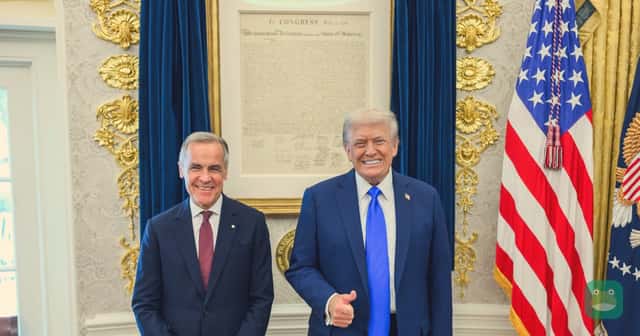
Canada's federal politics moved on three fronts over the weekend. Prime Minister Mark Carney called by-elections in six vacant ridings for Monday, December 7. He also said he had a "good conversation" with U.S. President Donald Trump about a new trade deal. And his government will table its budget on Thursday, November 5, two days after the U.S. midterm elections.
Each event tests the government in a different way. The by-elections give the Liberals a chance to add seats. The Conservatives say the government has spent heavily and delivered little. This article sets out what was announced, what each side argues, and what is still unknown.
The by-elections
Elections Canada said in a news release on Sunday, November 1, that by-elections will be held on December 7 in six ridings. Three are in Quebec: Laurier–Sainte-Marie, Rosemont–La Petite-Patrie and Saint-Hyacinthe–Bagot–Acton. Two are in Ontario: Brantford–Brant South and Scarborough North. One is Yorkton–Melville in Saskatchewan.
Advance polls will open on Friday, November 27, and run through Monday, November 30. Voters can also vote early at a local Elections Canada office until 6 p.m. on Tuesday, December 1. That is also the deadline to apply to vote by mail. To vote, a person must be a citizen aged 18 or older on election day and must live in the riding from November 1 to December 7, the agency said.
The seats were held by four parties. According to The Canadian Press, as carried by iPolitics, the Liberals held Laurier–Sainte-Marie and Scarborough North. The NDP held Rosemont–La Petite-Patrie, and the Bloc Québécois held Saint-Hyacinthe–Bagot–Acton. The Conservatives held Yorkton–Melville and Brantford–Brant South. The Canadian Press said 13 of 343 MPs have stepped down since the 2025 election. The law requires the prime minister to call a by-election between 11 and 180 days after a seat falls vacant.
CBC News reported that the Liberals hold a thin majority of 173 seats. Losing all six races would not end that majority. Winning them would give the government more room in the House.
As 567 Politics reported on Sunday, the vacancies had been expected and the parties were already naming candidates. That story also covered the parties' latest fundraising returns. What is new is the date, which sets a five-week campaign that will run through the budget debate.
Who is running
The parties have not finished naming candidates. Based on CBC and The Canadian Press, these are the main names so far.
In Laurier–Sainte-Marie, the seat left by former environment minister Steven Guilbeault, the Liberals are running Guy Cormier, a former president and CEO of Desjardins Group. The Canadian Press said the Bloc is running Zumretay Arkin, a former vice-president of the World Uyghur Congress. The NDP is running epidemiologist Nimâ Machouf.
In Rosemont–La Petite-Patrie, the NDP's only seat east of Manitoba in the last election, the Liberals are running human rights advocate Jean-Sébastien Vallée. The NDP is running Pierre Céré, a labor activist who once sought the Parti Québécois leadership. Former MP Alexandre Boulerice left the seat for a provincial run with Québec solidaire.
In Saint-Hyacinthe–Bagot–Acton, the Liberals are running Chantal Soucy, a former member of Quebec's National Assembly. The Bloc is running Caroline Émond, a former director general of the International Dairy Federation. The Conservatives are running former Montreal Alouettes player Luc Brodeur-Jourdain. The NDP and Greens have also named candidates, CBC reported.
In Scarborough North, the Liberals are running James Li, whom CBC described as a former Toronto District School Board trustee. The Conservatives and NDP had not named candidates as of Sunday.
In Brantford–Brant South, the Liberals are running Joy O'Donnell, president of the local chamber of commerce. The Conservatives appointed Kevin Davis rather than holding an open nomination. A longtime Conservative, Dave Carrol, is now running as an independent. "Party leadership chose to appoint another candidate, skipping the process we have valued for decades," Carrol said on social media, as quoted by The Canadian Press via saskNOW. "That decision, while legal, has been received poorly, and rightfully so."
In Yorkton–Melville, the Liberals are running Yorkton Mayor Aaron Kienle. The Conservatives are running Nelson Pohl, a farmer. The Canadian Press said Conservative Cathay Wagantall won the seat with more than 77% of the vote in 2025. It said the Liberals have not won there since the riding was created in 1968.
What each side says
Conservative Leader Pierre Poilievre framed the races around living costs. At a news conference on Sunday, he called the vote "an opportunity for hard-working Canadians who think it's unacceptable for Mark Carney to drive up their cost of gas, groceries and housing." He urged them to back a party "that will fight to save you money," The Canadian Press reported. In a post the same day, he said his party's plan would save money, protect jobs and reform the immigration system.
The Liberals go in with a recent run of by-election wins. The Canadian Press noted that they won three in April. They swept three more on August 31, including a seat taken from the Conservatives in Chicoutimi–Le Fjord.
Toronto Sun columnist Brian Lilley argued that the Liberals "have a real shot at all six." He cited an Abacus Data poll that he said put the Liberals at 48% and the Conservatives at 32% nationally. He wrote that if the Conservatives lose Brantford, Poilievre "is going to face serious questions about his leadership". We did not review the Abacus release itself, and by-election turnout is often low, so national polls are a weak guide to single ridings.
The Carney–Trump call
On Sunday morning, Carney posted that he had spoken with Trump. He said the talk "builds on our recent constructive discussions" about the outlines of a "mutually beneficial trade deal." He wrote: "Our teams will now be working in the coming weeks to deliver that outcome." Such a deal, he said, would "create jobs for our workers, boost affordability for families, and fully respect Canada's languages, culture, and sovereignty."
Trump spoke to reporters in Dubuque, Iowa, later that day. "We have the concept of a deal that's going to be great for our farmers, great for our country," he said, according to Reuters. He said the deal would include the Keystone XL pipeline. "They're going to build the Keystone Pipeline," he said. "They're going to pay for it." Reuters noted that it was not clear how the project, a private venture whose key permit was revoked in 2021, would be revived. A spokesperson for Canada's energy minister declined to comment.
A White House spokesperson said in a statement that the administration "welcomes continued engagement with Canada as we work toward finalizing the details of a deal." But CBC reported that a senior Canadian source said it was unclear what form the next talks would take. CBC corrected an earlier version of its story that said formal talks were set to resume. A source told Radio-Canada, "We are not on the verge of an agreement just yet."
Why the last round failed
Talks broke down in August. Each side blamed the other. Carney said Washington wanted terms that would "destroy" major Canadian industries, including autos, steel and aluminum. U.S. Commerce Secretary Howard Lutnick said Canada raised tariffs on medium- and heavy-duty trucks only at the last minute. Canada's chief negotiator, Janice Charette, told CBC that Canada raised them on "Monday, Tuesday, Wednesday and Thursday" of the final week too.
iPolitics reported, citing sources, that Canada thought it had a deal to cut auto tariffs from 25% to 15%. It later learned the lower rate would not apply to heavy-duty vehicles. Two provincial trade sources told iPolitics that the auto sector now says Canada should not make heavy-duty tariffs a deal-breaker.
The case for a deal now
Pressure for a deal comes from both sides of the border. Reuters reported that tariffs have become an issue in U.S. border states such as Michigan and Maine. CBC said Democrats have used them to argue about the cost of living, while some Republican candidates have distanced themselves. Energy is part of the picture. Reuters noted that Canada sends more than 90% of its crude oil production to the United States.
The case for waiting
Others in Canada argue that the government should not rush. Carney himself said on Wednesday that Canada was not yet in a position to agree. "We think there's deals that are in the best interests of Canada, first and foremost, but also are in the interests of the United States," he said, as quoted by CBC.
Some observers expect the midterms to change the U.S. side. iPolitics wrote that a Republican loss of Congress could make new tariffs harder to impose. But U.S. Ambassador Pete Hoekstra told iPolitics in August that he did not expect Trump to change course. "I don't think you're going to find the president coming back to Canada on his knees as much as Canadians might like that," he said. CBC also cited political watchers who said the timing of Sunday's call could be politically motivated, given the U.S. vote on Tuesday.
The budget on Thursday
Finance Minister François-Philippe Champagne will table the budget on Thursday, November 5. Its title is "Masters of Our Destiny," or "Maîtres chez nous" in French. CBC reported, citing a senior government source, that it will include new affordability measures, business tax incentives, and money for infrastructure, defense and culture. "The budget has three pillars," the official said. "Investing in the people, the identity and the growth of Canada." The source said the budget is "not about the U.S."
The fiscal backdrop is the main point of debate. The Hub reported that Parliamentary Budget Officer Annette Ryan expects the deficit to remain above $63 billion in 2030-31. Ottawa projected $53 billion for that year in April. The government aims to balance its operating budget, which excludes capital spending, by 2027-28. The budget office projects 2028-29. CBC said a recent budget office report found that public debt charges are the government's fastest-growing expense and could reach $83 billion by 2030-31. Our earlier report on the Bank of Canada and the deficit has more background.
Arguments over spending
Conservatives say the spending is not paying off for households. "We've had all of the drama, the promises, the international travel, the signing ceremonies. But all that matters is you," Poilievre said in Calgary on October 20, as quoted by The Hub. "Whether you're saving money. Whether your job is saved." Charles Lammam, writing for The Hub, argued that splitting operating and capital spending invites the government to relabel ordinary costs as investment funded by debt.
Supporters of the plan argue that the spending builds long-term growth. "This government has decided it wants to do big things. And to do these big things, it's going to cost some money," Theo Argitis of the Business Council of Canada told CBC. He said what matters is "the quality of the spending." Poilievre often blames deficits for inflation. Randall Bartlett, deputy chief economist at Desjardins, told CBC that deficits have only a trivial effect on it. Bartlett also called for more openness about whether the government will meet its fiscal targets.
Interest groups are pressing their own asks. Dan Kelly of the Canadian Federation of Independent Business wants the small business tax rate cut from 9% to 6%. Sean Strickland of Canada's Building Trades Unions said the government "would miss the mark" if the budget did not address everyday costs.
Funding and disclosure
Canada's disclosure system for political money is the party and candidate returns filed with Elections Canada. Our Sunday report covered the latest quarterly party returns. Candidate returns for these by-elections will not be due until after the vote, so there are no campaign figures to report yet. Trump is quoted here on trade policy. Our records hold no verified FEC snapshot for him, so we report no figures rather than infer zero.
What remains unknown
No text of a Canada–U.S. deal has been released, and neither government has said when talks will resume or in what form. It is not clear whether Keystone XL is a firm part of any deal or how it would be built. The budget's numbers will not be known until Champagne rises in the House on Thursday. Several by-election candidates have yet to be named.
For more on the country's politics, see our Canada guide. Readers can see how we weigh sources and label opinion in our methodology.
Differing perspectives
What should Canada's federal budget on Nov. 5 prioritize?
Each position is summarized as its supporters make it, with equal weight and in alphabetical order. A summary is not an endorsement; the evidence for each is weighed in the story above.
Building, investing in growth
Who holds it: François-Philippe Champagne, Minister of Finance and National Revenue
Speaking at the Canadian Club of Toronto on Nov. 2, Champagne said the budget will focus on "building, investing in growth, (making) sure we're more sovereign, supporting Canadians at a time of need, diversifying our trade." He said the plan concerns what Canada does for itself rather than the U.S. trade dispute: "Whatever may happen in these discussions (around Canada-U.S. trade), we will see. But one thing is true, everything I just said that we need to do for ourselves."
In their words: Global News (Champagne's Nov. 2, 2026 remarks) ↗
Cut wasteful spending
Who holds it: Pierre Poilievre, Conservative Party leader
At a news conference on Nov. 1, Poilievre said "Conservatives are demanding that he cut wasteful spending to bring down deficits, inflation and taxes so Canadians can afford a good life," referring to Prime Minister Carney. In a letter he urged cuts to bureaucracy and foreign aid and cancelling the Alto rail project. He asked Carney to "keep your promised debt anchors" and said the budget "should be judged against his promise to Canadians."
In their words: Global News (Poilievre's Nov. 1, 2026 news conference and letter) ↗
READ BEYOND 567POLITICS
Alternate sources & perspectives
Independent coverage and primary evidence to help you compare arguments. A link is not an endorsement; perspective labels describe the linked material.
- primary evidence
Federal by-elections now under way in Brantford–Brant South, Laurier–Sainte-Marie, Rosemont–La Petite-Patrie, Saint-Hyacinthe–Bagot–Acton, Scarborough North and Yorkton–Melville ↗
Elections Canada
Official Nov. 1 notice with the Dec. 7 date, advance polling days and eligibility rules.
- independent analysis
Carney calls December byelections for 6 ridings in Ontario, Quebec and Saskatchewan ↗
CBC News
Seat count and candidate lists in each riding.
- independent analysis
Prime Minister Mark Carney calls six federal byelections for December ↗
The Canadian Press (via saskNOW)
Full wire story with Poilievre's Sunday remarks, the Brantford independent and riding histories.
- other perspective
LILLEY: Carney's Liberals have a real shot at all six byelections ↗
Toronto Sun
Opinion column arguing the Liberals are competitive in all six seats and that a Brantford loss would raise Conservative leadership questions.
- independent analysis
Carney has 'good conversation' with Trump on future of Canada-U.S. trade as midterms near ↗
CBC News
Carney's statement, White House response, and the history of the August breakdown.
- independent analysis
Trump floats 'concept' of US-Canada deal that includes pipeline talking to Carney ↗
Reuters (via StreetInsider)
Trump's Dubuque remarks on a deal 'concept' and the Keystone XL pipeline.
- independent analysis
Carney says he had 'good conversation' with Trump as two sides work on new trade deal ↗
iPolitics
Sourced reporting on heavy-duty vehicle tariffs and the auto sector's position.
- independent analysis
Canada's next budget to be unveiled this week amid U.S. trade war, economic uncertainty ↗
CBC News
Government source on budget pillars; business, labor and economist views on spending and deficits.
- right argument
Champagne sets Nov. 5 budget date as watchdog warns deficits are deepening ↗
The Hub
PBO deficit projections, Poilievre's spending critique, and a Hub contributor's argument against the operating-capital split.
Reviewed 2026-11-02. Reviewed November 2, 2026. Automated discovery has returned only general landing pages for recent stories, so sources were selected by hand from pages the article cites and that were opened in full. AP and Politico reports on the Carney-Trump call were blocked or timed out and were not used. Canadian Press copy appears on several sites (iPolitics, saskNOW); each is the same wire story, not independent confirmation. Reporting on the trade talks relies heavily on unnamed Canadian and provincial sources. The Abacus Data poll cited by the Toronto Sun columnist was not reviewed directly. No U.S. government dataset applies to this Canadian story; Elections Canada is the primary source for the by-election rules. Candidate financial returns for these by-elections are not yet due. Poilievre's full social-media post was not opened; it is cited only as summarized by The Canadian Press. No New Democratic or Bloc Québécois leader statement on the by-election call was found.