End aid, condition it, or change the subject: the three Democratic camps on Israel in the new Congress
Democrats won both chambers but not an answer on Israel. Settler sanctions, arms-sale votes and the aid agreement are the first places the party's wings are likely to collide.
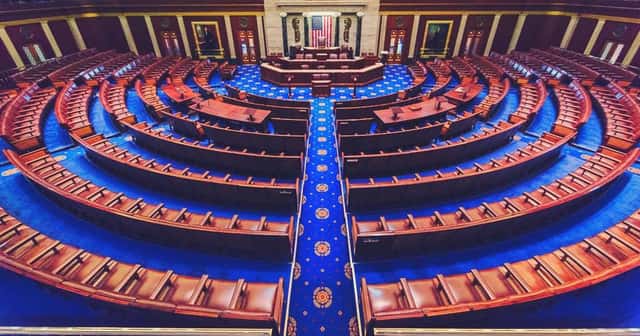
Democrats won the House and the Senate on November 3. They did not settle what they think about Israel. Within a day, one wing said voters had handed the party a mandate to end military aid. Another said voters wanted lower costs, not a fight over the Middle East. A third is pushing sanctions on violent West Bank settlers as a first test for the new majority.
The record behind those claims is mixed. Pro-Israel groups lost a string of high-profile races, and more than half of House Democrats voted in July to strip aid to Israel. Yet a September study by Israel's Institute for National Security Studies (INSS) estimated that the camp calling for a full arms cutoff would stay the smallest in the next Congress. This report maps the three camps, what each wants from the new majority and the first places they are likely to collide.
It builds on our reports on what the midterm data say about support for Israel, the divide inside the AIPAC backlash and why some Democrats soured on Jeffries and Schumer$.
The short answer: the middle is growing, the edges are loud#
The INSS study, by Theodore Sasson, Ari Blumenthal and Avishay Ben Sasson-Gordis, sorted all 259 Democratic members of Congress and viable 2026 candidates into three camps. It used three markers: position on military aid, language used about Israel, and which groups fund or endorse each member. INSS is an Israeli think tank, and its stated goal is advice for Israeli policy, so its framing reflects that purpose.
| Camp | Position on aid | Current members (INSS) |
|---|---|---|
| Left Progressives | End all military aid and arms sales | 3 senators, 21 House members |
| Mainstream Progressives | Condition aid and arms sales on law and human rights | 28 senators, 81 House members |
| Pro-Israel Establishment | Keep aid without new conditions | Almost 100 seats, 7 of them senators |
The INSS report projected the Left Progressive camp would gain four to 12 seats in this election cycle, including possibly two new senators: Abdul El-Sayed of Michigan and Troy Jackson of Maine. It found another 27 members who straddle the Mainstream and Establishment camps, such as Senators Cory Booker$ and Mark Kelly$, and six who straddle the Left and Mainstream camps. The study was published before the election, so its seat estimates are projections, not final counts.
Its main finding is about direction rather than size. "Across the Democratic Party's factions, however, the momentum very clearly favors the voices that are calling for conditioning future aid to Israel and a broader reassessment of the U.S.-Israel alliance," the authors wrote. They added that "it is now the prevailing view that financial military aid to Israel should end, with the only question being how quickly and what will take its place."
What the July vote showed#
The clearest test so far came on July 15. Representative Thomas Massie$, a Kentucky Republican, offered an amendment to strip $3.3 billion in Foreign Military Financing for Israel from a State Department spending bill. It failed 104 to 314. Democrats split 103 in favor, 98 against and 10 voting present, according to GovTrack's tally of the official House record.
The split inside the Democratic caucus followed ideology but crossed it, too. Most of the Congressional Progressive Caucus voted yes. Most of the centrist New Democrat Coalition voted no, though more than a third voted yes. Every Blue Dog who voted opposed it.
Source: GovTrack, from the official House record
Show the numbers
| Caucus | Yes | No |
|---|---|---|
| Congressional Progressive Caucus | 66 | 24 |
| New Democrat Coalition | 36 | 68 |
| Blue Dog Coalition | 0 | 9 |
Many yes votes came with caveats. Representative Katherine Clark, the No. 2 House Democrat, voted for the amendment. "We should not provide a blank check for military aid to any country that does not comply with U.S. law, interests, and values," she said in a statement quoted by INSS. She added: "Israel has the right to exist as a sovereign, secure, and democratic Jewish state," and "We must continue to support Israel's defensive systems." Hakeem Jeffries, now the expected speaker, voted no, The Wall Street Journal reported at the time.$$
The Senate moved too. In September, 46 of the 47 members of the Senate Democratic caucus voted for a resolution requiring a report on settler violence against Palestinians, Reuters reported. Republicans blocked it.
Camp one: end the aid#
The left wing read the election as a mandate. "Democrats just won back Congress! Here's what we need to deliver," Representative Ro Khanna of California posted on November 4. His list included "Zero aid to Israel, stop military sales," according to the Foundation for Middle East Peace's November 6 round-up, which compiles lawmakers' statements.$
El-Sayed's win is this camp's main exhibit. He called for ending military aid and won a Senate seat in a swing state despite heavy spending against him. In a post-primary interview quoted by INSS, he said: "why, of course, are we sending money to that country to fund their military?" Representative Delia Ramirez of Illinois is pressing her Block the Bombs Act to bar certain offensive weapons transfers.$
Camp members also reject the idea that Democrats need a new Israeli leader before policy changes. Brad Lander, a New York Democrat elected last week who calls himself a liberal Zionist, answered Israeli opposition leader Yair Lapid's offer of outreach. "We aren't starving for a barnstorming tour. We're hungry to see respect for international law and human rights," Lander wrote, The Guardian reported.
Camp two: conditions and settler sanctions#
The largest camp wants rules, not a cutoff. Senator Chris Van Hollen of Maryland, who has led efforts to attach human rights conditions to aid, told Reuters: "There should not be an Israel exception."
The West Bank is where this camp is most likely to move first. Representative Joaquin Castro of Texas posted on November 5 that he is carrying the Stop the Settlements Act, "to impose sanctions on any individual or institution driving settlements in the West Bank or Gaza," and that "Under our new Democratic Majority, it should be taken up for a vote in the new Congress," as compiled by FMEP. Middle East Eye reported that Democrats plan to introduce settler sanctions in line with measures Britain adopted last month, according to the same round-up.$
Polling of Jewish voters gives this camp support. A J Street survey of 800 Jewish voters, conducted by GBAO from October 28 to November 3, found 76% backed sanctions on violent West Bank settlers, J Street said. The poll found 72% of Jewish voters backed Democrats for Congress and 24% Republicans. Israel was one of the top two issues for 14%. J Street is a liberal pro-Israel group that sponsored the poll and advocates the positions it tested. The press release does not state the margin of error.
Camp three: keep the alliance, change the subject#
The pro-Israel wing argues the election was about prices. "What they want is us to focus like a laser beam on cutting costs for them," Representative Josh Gottheimer of New Jersey told JNS. "It was a big win for the Democratic Party, not for the Socialist Party, and I think that was pretty clear." He said candidates in swing seats "were running as lower-cost Democrats," not as critics of Israel. JNS reported that the centrist Blue Dog Coalition more than doubled its ranks, with at least 14 new members.$
Representative Brad Sherman of California defended the existing aid deal after Trump said it would end. He said the aid "is spent right here at home and supports thousands of American jobs," as compiled by FMEP.$
The American Israel Public Affairs Committee (AIPAC) struck a similar note. In a post on X, it congratulated "the hundreds of pro-Israel Democrats and Republicans who won their elections last night," citing 234 backed winners, and pledged to "increase its support for Democrats and Republicans who recognize that a strong partnership with Israel helps keep both countries secure," Al Jazeera reported. Critics point to the group's losses: Responsible Statecraft counted about $55 million spent by AIPAC-linked PACs in losing races, a tally our earlier report examined.
Israeli opposition leaders lean on this camp's reading. Lapid said the core of lawmakers working against Israel is "25 members of Congress out of 435," The Washington Times reported, and named Jeffries and Chuck Schumer as friends who "voted with Israel this year."
The leaders in the middle#
Jeffries and Schumer sit at the center of the fight. INSS classed Schumer with the Pro-Israel Establishment. Jeffries voted against the Massie amendment, but he has also backed the West Bank Violence Prevention Act, a bill by Representative Jerry Nadler of New York. It would authorize sanctions and U.S. entry bans on foreign nationals found responsible for violence in the West Bank. "The situation in the West Bank is out of control," Jeffries told The Hill, as quoted by All Israel News in October. He said the bill has "broad support across the House Democratic Caucus family." That outlet counted 174 House Democrats backing it, including longtime Israel supporters such as Steny Hoyer and Lois Frankel.$$
In the Senate, Chris Coons, Elizabeth Warren, Ron Wyden and Ruben Gallego introduced a bill to sanction those building or financing Israel's planned E1 settlement east of Jerusalem. All Israel News reported 19 Democratic senators backing it. "The United States must use all diplomatic and economic tools available to counter rapid settlement expansion and extremist settler violence in the West Bank," Coons said.$$$$
Money is part of the debate around them. A 567politics review of Jeffries' 2026 campaign filings, drawn from the Federal Election Commission and retrieved November 6, found no PAC receipts in the site's Israel topic registry. That registry is partial. It covers registered committee receipts only and leaves out individual and conduit donations, which is how most AIPAC-linked money reaches candidates. The FEC candidate page has the full filings, and our report on AIPAC money and prominent Democrats examines the conduit data. Donations alone do not show that any lawmaker's votes were bought.
Where the camps will collide first#
Three fights are likely in the first months of the new Congress.
Aid and the MOU. President Trump says U.S. aid to Israel ends this year. The 2016 memorandum runs through September 2028, and Congress controls the money. Our aid report covers the December 11 funding deadline and the new framework Israel is seeking. The three camps will split over whether to replace grant aid with joint programs, end it, or keep it.
Arms sales. The Times of Israel reported in October that the administration was preparing a $2.8 billion munitions sale to Israel. Members can force votes on resolutions of disapproval. In April, only seven Senate Democrats opposed a Sanders resolution to block certain arms sales, according to INSS.
Settler sanctions. This is the issue with the widest Democratic support and a ready bill. It also asks the least of the Pro-Israel camp, several of whose members back it.
The INSS authors noted that every camp includes members who say they would shift if Israeli policy changed. Israel's next government is still being formed. Opposition leader Gadi Eisenkot received the mandate on Sunday, as covered in our report on Israel's coalition talks.
Limits of this picture#
The faction counts come from one Israeli study using qualitative judgments, published before the election. Statements from lawmakers are drawn from posts compiled by FMEP, an advocacy group that supports Palestinian rights and a negotiated end to the conflict, and from interviews in outlets with their own editorial lines, including JNS on the pro-Israel right and The Guardian. The J Street poll measures Jewish voters only. No representative poll of all Democratic voters on aid since the election was found for this report.
About this report#
This report draws on the INSS study, GovTrack's copy of the House roll call, Reuters, The Wall Street Journal, The Guardian, The Washington Times, Al Jazeera, JNS, J Street and the FMEP round-up, plus 567politics' own FEC snapshot. Times are Eastern.
Differing perspectives
How should the new Democratic majority in Congress change U.S. policy toward Israel, if at all?
Each position is summarized as its supporters make it, with equal weight and in alphabetical order. A summary is not an endorsement; the evidence for each is weighed in the story above.
Condition aid and sanction violent settlers
Who holds it: J Street and Democrats backing settler sanctions
J Street argues that Jewish voters support a Democratic approach that pairs backing for Israel with limits on its government's policies. It points to its poll of 800 Jewish voters, conducted by GBAO, finding 76% support for sanctions on violent West Bank settlers and 72% backing Democrats for Congress. Supporters of this approach want aid tied to law and human rights rather than ended.
In their words: J Street ↗
End military aid and arms sales
Who holds it: Rep. Ro Khanna, Rep. Delia Ramirez and allied progressives
This camp argues the election gave Democrats a chance to change course on Israel. Khanna posted that Democrats just won back Congress and listed zero aid to Israel and an end to military sales among the things the new majority must deliver, and wrote that progressives won the debate. Ramirez is pressing her Block the Bombs Act to bar transfers of certain offensive munitions.
In their words: Foundation for Middle East Peace, compiling the lawmakers' posts ↗
Expand bipartisan pro-Israel support
Who holds it: The American Israel Public Affairs Committee (AIPAC) and candidates it backed
AIPAC argues that the election confirmed broad support for Israel in both parties. In a post on X, it congratulated the hundreds of pro-Israel Democrats and Republicans who won, citing 234 backed winners. It pledged to increase its support for Democrats and Republicans who recognize that a strong partnership with Israel helps keep both countries secure, treating the tie as a shared interest.
In their words: Al Jazeera, quoting AIPAC's post on X ↗
Focus on costs and keep the alliance
Who holds it: Rep. Josh Gottheimer and moderate Democrats
Gottheimer argues the midterms were a win for mainstream Democrats who ran on lowering costs, not for democratic socialists or critics of Israel. He says voters want the majority to focus on utility bills, gas, health insurance, drug, food and childcare costs, with less drama. In his view, most of the new caucus does not want a debate over supporting a key ally or fighting terror.
In their words: JNS, interviewing Gottheimer ↗
Rebuild trust through engagement
Who holds it: Israeli opposition leader Yair Lapid
Lapid argues that incoming Democratic lawmakers are not against Israel but mainly against Netanyahu, and that for them anything connected to him is toxic. He says the easiest thing is to scream that America is lost, because then no one has to work, and that this is not true. He proposes that officials of a new Israeli government work to rebuild trust in the United States.
In their words: The Guardian, quoting Lapid ↗
Cite this article
567 Politics staff. “End aid, condition it, or change the subject: the three Democratic camps on Israel in the new Congress.” 567politics. Published 2026-11-09. https://567politics.com/news/democrats-israel-three-camps-new-congress-settler-sanctions-arms-sales-november-2026
Wikipedia citation
{{cite news |title=End aid, condition it, or change the subject: the three Democratic camps on Israel in the new Congress |url=https://567politics.com/news/democrats-israel-three-camps-new-congress-settler-sanctions-arms-sales-november-2026 |work=567politics |author=567 Politics staff |date=2026-11-09 |language=en}}CSL-JSON for reference managers
{
  "id": "https://567politics.com/news/democrats-israel-three-camps-new-congress-settler-sanctions-arms-sales-november-2026",
  "type": "article-newspaper",
  "title": "End aid, condition it, or change the subject: the three Democratic camps on Israel in the new Congress",
  "URL": "https://567politics.com/news/democrats-israel-three-camps-new-congress-settler-sanctions-arms-sales-november-2026",
  "container-title": "567politics",
  "language": "en",
  "author": [
    {
      "literal": "567 Politics staff"
    }
  ],
  "issued": {
    "date-parts": [
      [
        2026,
        11,
        9
      ]
    ]
  }
}Citations identify this article and its publication date. Assess the reporting and its linked sources before using it as evidence.
Read this article as Markdown or JSON. Cite the original page and retain its sources, dates and qualifications.
Embed this article summary
Paste this HTML into your page. The summary stays linked to the full story and updates with it. No account required.
<iframe src="https://567politics.com/embed/news/democrats-israel-three-camps-new-congress-settler-sanctions-arms-sales-november-2026?theme=auto" title="End aid, condition it, or change the subject: the three Democratic camps on Israel in the new Congress by 567politics" width="100%" height="440" style="border:0;max-width:100%" loading="lazy"></iframe>
<p style="font-size:14px">End aid, condition it, or change the subject: the three Democratic camps on Israel in the new Congress by <a href="https://567politics.com/news/democrats-israel-three-camps-new-congress-settler-sanctions-arms-sales-november-2026" rel="nofollow">567politics</a></p>
<script async src="https://567politics.com/embed.js"></script>
READ BEYOND 567POLITICS
Alternate sources & perspectives
Independent coverage and primary evidence to help you compare arguments. A link is not an endorsement; perspective labels describe the linked material.
- independent analysis
The Democratic Party and Israel, 2026 ↗
Institute for National Security Studies
Israeli research. Maps the Democratic camps on Israel in the next Congress; source of the three-camps table.
- left argument
FMEP Legislative Round-Up, November 6, 2026 ↗
Foundation for Middle East Peace
End-aid and keep-aid arguments, compiled. Compiles post-election statements by Khanna, Ramirez, Sherman and others. FMEP is an advocacy group that supports Palestinian rights and conditions on aid.
- left argument
J Street 2026 midterm poll finds strong, enduring Jewish support for Democratic Party ↗
J Street
Conditions and settler sanctions argument. Poll of 800 Jewish voters by GBAO, Oct. 28 to Nov. 3. J Street is an advocacy group and sponsored the poll.
- other perspective
'Pretty clear' midterms were win for Dem Party, not socialists, Gottheimer tells JNS ↗
JNS
Moderate pro-Israel Democratic view. Gottheimer's case that the majority should focus on costs, and Blue Dog membership growth.
- other perspective
Democrats eye power in Washington and a crackdown on Israeli settlements ↗
All Israel News
Settler sanctions legislation. Jeffries' backing of Nadler's West Bank Violence Prevention Act and the Senate E1 sanctions bill.
- independent analysis
Israel's opposition slams 'toxic' Netanyahu after Democrats win US Congress ↗
Al Jazeera
Israeli opposition and AIPAC reactions. Posts by Lapid, Golan and Eisenkot, and AIPAC's statement on its backed winners.
- independent analysis
US midterm results may help unite Israeli coalition to unseat Netanyahu ↗
The Guardian
Israeli opposition and U.S. critic views. Lapid's rebuild-trust plan, Brad Lander's reply and Nadav Tamir's view of the new Congress.
- independent analysis
Democratic Congress could test decades of US support for Israel ↗
Reuters (via Investing.com)
Conditions-on-aid argument. Reuters reporting with Sen. Chris Van Hollen's case for applying U.S. law uniformly and on the limits of Democratic power before January.
- primary evidence
House vote on H.Amdt. 235 (Massie amendment), July 15, 2026 ↗
GovTrack
Roll call of the House vote to strip $3.3 billion in aid; caucus breakdown used in the chart.
Reviewed 2026-11-09. Compiled 2026-11-09 from pages opened and read; the discovery tool was not relied on. Covers progressive, conditions-based, moderate and AIPAC views plus Israeli opposition and research perspectives. FMEP and J Street are advocacy groups, and the J Street poll was sponsored by J Street. GovTrack, Politico and The Hill could not be opened directly; GovTrack's page was blocked by a bot check, so its caucus counts were read from search-indexed copies of that page, and Jeffries' vote against the Massie amendment is attributed to The Wall Street Journal's reporting. No AIPAC primary statement page was verified; AIPAC's words are taken from Al Jazeera's quotation of its post. No standalone right-of-center argument piece was verified for this list; Netanyahu camp and Republican administration positions appear through the reporting listed.