Chicago runs short of ballots, Michigan objects to DOJ monitors, ICE warns voters: Election Day problems
Chicago polling places ran out of paper ballots, Michigan said federal monitors overstepped, ICE posted a warning and floods cut off Navajo voters.
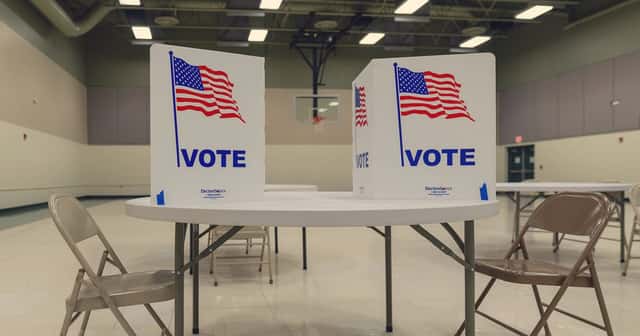
This report covers voting problems reported in the second half of Election Day. It includes no vote counts. It is current as of about 7:15 p.m. ET on Tuesday, Nov. 3, 2026, and several of the situations below were still developing when polls closed. Our earlier reports covered the morning scanner failure in Westchester County, New York, and flooding in Florida and Utah, and the extended polling hours in North Carolina and Chester County, Pennsylvania. This report adds what election officials, local reporters and federal agencies said after midday.
Four problems stood out by the evening. Chicago polling places ran out of paper ballots, some of them twice. Michigan officials objected to questions that Justice Department monitors put to poll workers. U.S. Immigration and Customs Enforcement posted a warning to anyone who might vote illegally. Flooding cut off part of a Navajo community in Arizona from its polling place. Fulton County, Georgia, voters also described scam texts that sent them to the wrong place.
Chicago: paper ballots ran short in split precincts
Several Chicago polling places ran out of paper ballots on Tuesday. Voters then had to wait for the one or two touch-screen machines at each site. Block Club Chicago reported shortages in Uptown, Pilsen, Logan Square, Albany Park and the Near West Side. Several sites ran out twice.
The Chicago Board of Elections said it first heard of a shortage in the 1st Ward at about 10 a.m. CT. It began printing more ballots at its downtown warehouse, interim spokesperson Julie Metea told Block Club. The board said the problem appeared to be concentrated in "split" precincts. In those precincts, district lines divide voters among several ballot styles. Metea said some precincts have as many as seven ballot combinations. This year's ballot includes races for Chicago's first fully elected school board, which adds district lines.
"We apologize. It is frustrating, but we're working the problem, investigating and accommodating voters," Metea told Block Club. She confirmed shortages in Ward 1, Precinct 4, and said the board was checking reports in Ward 1, Precinct 5, and in Wards 25 and 32.
Election judges described the gap between supply and demand. At Roosevelt High School in Albany Park, judge Kim Smolen said the site received about 150 ballots for school board district 3A and 1,700 for district 2B. It ran out by 11:30 a.m. CT and got more at about 3 p.m. CT. At Noble Square Cooperative, judge Dan Doyen said the site ran short "almost immediately." He said 100 more ballots did not arrive until 3 p.m. CT. In Pilsen, judge Jesus Fraga said Manuel Perez Jr. Elementary ran out at about 10 a.m. CT and again at about 3:20 p.m. CT, after more than 470 people had voted there.
Local officials criticized the planning. "They should have known there would be high voter turnout given the national climate," said Mike Nellis, the Democratic committeeman for the 32nd Ward. He reported a wait of at least two hours at Holstein Park at 5 p.m. CT. Ald. Daniel La Spata (1st) said high turnout "would not explain running out by 9 a.m." He said he would raise the issue with the board.
The Associated Press also reported that Metea said more ballots were being printed. She said everyone in line when polls close at 7 p.m. CT (8 p.m. ET) will be allowed to vote. Voters could also go to one of the city's universal voting sites, which are early voting centers. The downtown site at 137 S. State St. had a line of about two hours at 3:30 p.m. CT, Block Club reported.
The board pointed to heavy in-person turnout. By 3:15 p.m. CT, 232,672 ballots had been cast at Chicago polling places, compared with about 227,633 at about the same time on Election Day in 2022, according to the board's figures as reported by Block Club. WTTW reported that the board counted 211,657 early in-person ballots and 109,215 mail ballots as of Monday night, out of more than 1.5 million registered voters (WTTW). These are partial counts of ballots cast, not results.
Source: Chicago Board of Elections figures via Block Club Chicago
Show the numbers
| Election | Ballots |
|---|---|
| 2022 midterm | 227,633 |
| 2026 midterm | 232,672 |
The difference is about 2%. That is a modest rise, and it does not by itself explain why some sites ran out before 9 a.m. The board has said its investigation is about how ballots were allocated in split precincts. Voters who leave long lines may not return, and nobody has counted how many did. "I've seen several people walk out from the line," Logan Square voter Grace DeVies told Block Club.
The board has said voters in line by 7 p.m. CT can vote. No court order to extend Chicago's hours had been reported as of 7:15 p.m. ET.
Michigan: state objects to federal monitors' questions
The Justice Department deployed what it called "the largest monitoring effort in DOJ history" on Tuesday. It sent about 1,000 monitors and observers to 126 jurisdictions in all 50 states, according to its Nov. 3 press release. Michigan's list was Lansing, East Lansing, Grand Rapids, Flint, Detroit, Hamtramck, Warren and Dearborn. We covered the deployment and the court fight over it this morning, along with the state-by-state limits on what monitors may do.
By the afternoon, Michigan officials said some monitors had gone past those limits. Kim Bush, a spokeswoman for Attorney General Dana Nessel, said monitors in Dearborn asked poll workers for copies of their training materials. She said monitors in Flint asked how poll workers were trained (Michigan Advance). "This is not permitted under the law," Angela Benander of the Michigan Department of State told the AP.
Benander said the department's Michigan coordinator "confirmed that this activity that the monitors were engaging in is not consistent with how the monitors were trained." She said the coordinator would remind monitors in Dearborn "of what they are not permitted to do and what they are permitted to do." She also said monitors in Lansing had spoken with voters. That is allowed after a voter has cast a ballot and is outside the polling place. "We don't have any concerns" about Lansing, she said. Michigan Advance reported that 71 DOJ monitors were assigned in the state.
The Justice Department described the exchanges differently. Spokesperson Kiersten Pels told The Verge that the questions were "typical questions about election official training." She said they appear on monitors' standard forms and were also asked under the previous administration. Pels said the department had not confirmed that monitors asked for training materials. She said it told Michigan officials it would remind monitors that they can ask about training but "don't need to request training materials."
Michigan's position goes back to an Oct. 22 statement from Nessel, Gov. Gretchen Whitmer and Deputy Secretary of State Aghogho Edevbie. It said federal law does not expressly provide for monitors. It said they are treated like any other poll watcher, and so "cannot speak with voters, touch election equipment or ballots, or interfere with the administration of the election." At a 3 p.m. briefing, Benander said things were "running smoothly" apart from routine equipment problems.
In Chicago, a board spokesperson confirmed that federal monitors were present, working in pairs. The spokesperson said the board had received no reports about them (WTTW).
ICE and DHS warn against illegal voting
At 11:42 a.m. ET, ICE's official account posted on X: "If you vote illegally, we will find you. We will track you down, arrest you, and prosecute you. There will be no escape" (ICE on X). By early evening, X showed the post with more than 8.5 million views. Homeland Security Secretary Markwayne Mullin had posted a similar message at 10:32 a.m. ET. He wrote that ineligible voters would be hunted down and "prosecuted to the fullest extent of the law" (Mullin on X). At 5:25 p.m. ET he added that illegal voting can bring up to five years in prison and a $250,000 fine. He also wrote that noncitizens with lawful status who vote illegally can be deported (Mullin on X). ICE reposted both messages.
ICE did not respond to AP's requests for comment, and it also posted about arrests of noncitizens accused of voting. The AP noted that arrests and state investigations show such voting is rare. David Becker of the Center for Election Innovation & Research called the post unfortunate. He said heavy early voting suggested the tactic was not keeping people away. "If there were individuals in this administration who thought that they could scare voters away from this election, they're going to be disappointed," he told the AP.
Federal law already makes it a crime for noncitizens to vote in federal elections. The Justice Department said on the eve of the election that it had charged 63 people with election crimes, mostly involving noncitizen voting, as we reported. Early results from the Voter Poll suggest the agency is unpopular with this year's voters. About 6 in 10 disapprove of how ICE is handling its responsibilities, according to AP's Voter Poll figures. Those numbers will be reweighted as votes are counted.
Arizona: flooding cuts off Rock Point voters
Weekend flooding on the Navajo Nation washed out roads and bridges around Rock Point, in Apache County, Arizona. Valinda Shirley, vice president of the Rock Point Chapter, told KNAU that roughly 600 voters could barely reach the polling site. "I am angry that people won't get a chance to vote," she said. The flooding also affects the Navajo Nation's own election for president and council delegates, held the same day.
The AP reported that officials moved the polling place across the street to an administration building because the chapter house parking lot was underwater. "I have people that are still texting me asking how I can get them out so they can vote," Shirley told the AP on Tuesday afternoon.
The Arizona Secretary of State's office posted an emergency notice at 9:55 a.m. local time. It said U.S. 191 between Round Rock and Rock Point was closed and the N8014 bridge was down to one lane. It said voters on the north, west and south sides of Rock Point "may be unable to safely reach" the site. Apache County voters can vote at any county vote center. Secretary of State Adrian Fontes told KNAU that voters should look for a more accessible center, naming Many Farms, 34 miles away, and Round Rock, 17 miles away. Shirley said that was not realistic for many residents. A community group, Arizona Native Vote, offered free rides; the state's page notes that it does not run that service. Arizona polls close at 7 p.m. MST (9 p.m. ET).
Georgia: voters describe scam texts
Fulton County said on Tuesday that some voters had received texts about polling place changes that the county did not send. It told voters to check the state's My Voter Page or call 404-612-7020 (WJCL). Our Georgia turnout report noted the county's warning. More detail emerged later. Three Fulton voters told NBC News they had received texts sending them to the wrong place, The National News Desk reported. One, Michael Pruden, said workers at the Metropolitan Library redirected him after scanning his information.
The sender has not been identified. The county later said its own message, sent at about 12:31 p.m. ET to voters with contact details on file, was genuine and only told voters to check the My Voter Page. The Republican National Committee's election integrity account also warned voters to watch for "potential scam text messages claiming your polling location has changed." Georgia's polls closed at 7 p.m. ET.
Other developments
An Oklahoma City man, Robin Martin, has been charged with conveying a hoax and mailing threatening communications. The AP said he is accused of sending hundreds of letters with nonhazardous white powder to public officials before the 2024 and 2026 elections. The FBI said in a court filing that the powders turned out to be yeast or flour, though not every letter had been fully tested.
Investigations and pending questions
Most of these problems will be judged after the polls close. The Chicago board has said it is investigating how ballots were allocated to split precincts. Michigan officials say they will keep tracking monitors' conduct. In Arizona, it is not known how many Rock Point voters were unable to vote. We will update this report if any court extends voting hours or an election office releases new figures. Results are covered separately, and only when official or called by the AP or another major news organization.
Differing perspectives
Should federal agencies take a visible role at polling places and in warning voters on Election Day?
Each position is summarized as its supporters make it, with equal weight and in alphabetical order. A summary is not an endorsement; the evidence for each is weighed in the story above.
Assertive federal monitoring and enforcement
Who holds it: Justice Department Civil Rights Division (Assistant Attorney General Harmeet Dhillon); Homeland Security Secretary Markwayne Mullin; ICE
Election integrity is a top federal priority, and monitors have been sent to polling places under every administration since the Voting Rights Act of 1965. Deploying about 1,000 monitors in all 50 states lets the department check compliance with federal voting rights laws, take complaints and pursue transparency in a nondiscriminatory way. Clear public warnings that illegal voting will be prosecuted deter ineligible people from casting ballots and protect the votes of citizens.
In their words: U.S. Department of Justice ↗
Federal observers must stay within state rules
Who holds it: Michigan Attorney General Dana Nessel, Gov. Gretchen Whitmer and the Michigan Department of State; many state and local election officials
Federal monitors are a normal part of elections, but federal law does not expressly provide for them, so they have the same standing as any member of the public who watches an election. Like other poll watchers they should not speak with voters inside polling places, touch ballots or equipment, or interfere with election workers. States run elections, and officials will hold accountable anyone who unlawfully interferes with or intimidates voters or election workers.
In their words: Michigan Department of Attorney General ↗
READ BEYOND 567POLITICS
Alternate sources & perspectives
Independent coverage and primary evidence to help you compare arguments. A link is not an endorsement; perspective labels describe the linked material.
- primary evidence
DOJ To Monitor Elections in All 50 States for First Time ↗
U.S. Department of Justice
About 1,000 monitors and observers, 126 listed jurisdictions, Dhillon statement and complaint hotlines.
- primary evidence
State of Michigan Reminder on DOJ Election Monitors ↗
Michigan Department of Attorney General
Nessel, Whitmer and Edevbie on what monitors may and may not do under state law.
- primary evidence
Emergency Information about Navajo Nation and Hopi Village area Voting Sites ↗
Arizona Secretary of State
9:55 a.m. emergency notice on Rock Point road closures and Apache County vote-center options.
- right argument
If you vote illegally, we will find you ↗
U.S. Immigration and Customs Enforcement (X)
ICE's Election Day warning to anyone who votes illegally, posted 11:42 a.m. ET.
- left argument
Michigan officials flag improper interactions between DOJ election monitors and poll workers ↗
Michigan Advance
State officials' account of Dearborn and Flint monitors and the DOJ coordinator's response; 71 monitors in Michigan.
- other perspective
Michigan officials contacted DOJ about reports of election monitors speaking with poll workers ↗
The Verge
Includes DOJ spokesperson Kiersten Pels's statement disputing the state's account.
- independent analysis
Chicago Voters Spend Hours In Line As Polling Places Run Out Of Ballots Across City ↗
Block Club Chicago
On-the-ground reporting from affected precincts; board spokesperson on split precincts and turnout figures.
- independent analysis
Federal Monitors Present at Some Chicago Polling Locations; Ballot Shortages Reported at Multiple Sites ↗
WTTW News
Chicago early and mail ballot counts and board comments on federal monitors.
- independent analysis
Flood-damaged roads hinder voting in Navajo community of Rock Point ↗
KNAU Arizona Public Radio
Rock Point chapter vice president, Secretary of State Fontes and his office on access for about 600 voters.
- independent analysis
Three Georgia voters say they received scam texts with incorrect polling locations ↗
The National News Desk
Voter accounts, Fulton County's X posts and the RNC election integrity warning.
Reviewed 2026-11-03. Sources picked by hand (discover_politics_sources has returned only unrelated results tonight); every page below was opened before publication at about 7:30 p.m. ET Nov. 3. Accounts of Chicago shortages come from election judges and the board spokesperson as told to Block Club; the board had not published its own written statement. DOJ disputes Michigan's account of monitors requesting training materials. No official count of voters unable to reach Rock Point was available.