For the first time, more people in France call their country 'angry' than merely unhappy, survey finds
In Ipsos's Fractures françaises poll, 49% identify with an angry France. Supporters of each party read the Oct. 17 violence in sharply different ways.
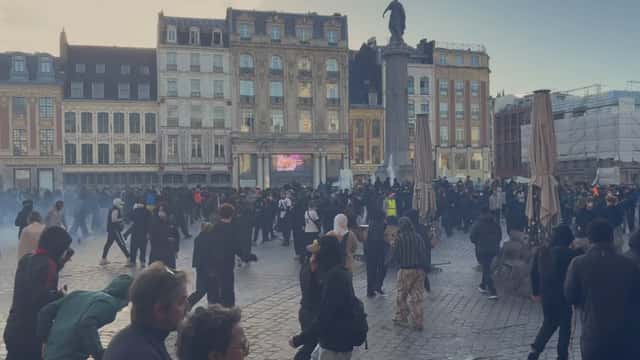
For the first time in a 14-year-old annual survey, more people in France say they feel part of an angry country than a merely unhappy one. In the 2026 edition of "Fractures françaises," published on Monday, November 16, 49% of respondents placed themselves in a France that is "angry and very protest-minded." Another 48% chose a France that is "unhappy but not necessarily angry." Only 3% picked a France that is "satisfied and calm."
The survey was carried out by the polling firm Ipsos BVA with the engineering school CESI for the newspaper Le Monde, the Fondation Jean-Jaurès, the Sciences Po research center Cevipof and the Institut Montaigne. Ipsos says it questioned 3,000 people aged 18 and over online from October 30 to November 3, using quotas for sex, age, occupation, region and town size. An AFP dispatch carried by Mediapart, puts the margin of error at plus or minus 1.8 points.
The results land five months before the first round of the presidential election. They also land on the eve of a national public-sector strike on Tuesday, November 17, which student and high-school groups plan to join. Quotes from French-language sources are 567politics translations.
Anger overtakes discontent#
The Ipsos report shows the same question back to 2021. That year, 31% chose the angry France and 60% the unhappy one. The angry share rose to 45% in 2023, held at 43% in 2024 and 2025, and reached 49% this year. The unhappy share fell to 48%, according to the full Ipsos report.
Source: Ipsos BVA-CESI, Fractures françaises 2026
Show the numbers
| Year | Angry and very protest-minded | Unhappy but not necessarily angry | Satisfied and calm |
|---|---|---|---|
| 2021 | 31% | 60% | 9% |
| 2022 | 36% | 58% | 6% |
| 2023 | 45% | 51% | 4% |
| 2024 | 43% | 54% | 3% |
| 2025 | 43% | 53% | 4% |
| 2026 | 49% | 48% | 3% |
Antoine Bristielle, who heads the opinion unit at the Fondation Jean-Jaurès, wrote the foundation's analysis. He draws a line between the two feelings. Discontent, he writes, is "first of all a negative judgment on a situation." Anger "reflects a more intense dissatisfaction, likely to feed a will for social protest and radical voting."
Anger remains highest among people under 35 (58%), manual workers (58%) and office and service employees (56%). By party, it is highest among supporters of La France insoumise and the Communist Party (69%) and of the National Rally (58%). But the biggest jumps came in groups that were calmer a year ago. Among managers and professionals, the angry share rose from 36% to 52%. Among Socialist supporters, it rose from 24% to 46%.
Source: Ipsos BVA-CESI, Fractures françaises 2026
Show the numbers
| Party | 2025 | 2026 |
|---|---|---|
| LFI and Communists | 59% | 69% |
| Ecologists | 35% | 46% |
| Socialists | 24% | 46% |
| Renaissance | 20% | 23% |
| Les Républicains | 23% | 29% |
| National Rally | 58% | 58% |
| No party | 40% | 51% |
Money worries lead the list#
The survey points to the cost of living as the main source of strain. Asked to name the two issues that worry them most personally, 47% chose purchasing power, up from 36% in 2025. Crime and the public debt came next at 20% each, then immigration and the environment at 19% each. Concern about the war in Ukraine fell from 13% to 6%, according to the Fondation Jean-Jaurès summary.
Six in ten respondents said they find it hard to make ends meet, up from 57% in 2025 and 55% in 2024. The share was 73% among manual workers. It was 41% among households earning more than €3,000 a month, against 31% in 2024. Only 28% said they live better than their parents did at the same age. That share was 32% in both 2024 and 2025.
Trust between citizens also fell. Just 18% said most people can be trusted, the lowest level since the series began in 2013. And 69% said what divides the French is stronger than what unites them, up from 66% in 2025 and 57% in 2013.
Two readings of October 17#
The survey asked for the first time about the violence that broke out on Saturday, October 17. That day, a national mobilization "against the high cost of living" drew large, mostly calm marches. It also saw looting and clashes with police in several cities.
Very few respondents defended the violence. Only 2% said looting shops or wrecking public buildings was justified, 3% said so of violence against journalists and 5% of violence against police. Twelve percent said violence by some police officers during protests or arrests was justified. Overall, 78% said it is not normal to use violence to defend one's interests.
But the meaning of the day splits along party lines. Across the whole sample, 43% said the violence mainly reflected "a spread of delinquency," and 34% said it expressed "strong social anger." Another 13% chose "a civil war" and 10% "a revolutionary moment."
Source: Ipsos BVA-CESI, Fractures françaises 2026
Show the numbers
| Group | A spread of delinquency | Strong social anger |
|---|---|---|
| All adults | 43% | 34% |
| LFI and Communists | 10% | 75% |
| Ecologists | 24% | 69% |
| Socialists | 35% | 44% |
| Renaissance | 65% | 19% |
| Les Républicains | 59% | 17% |
| National Rally | 54% | 17% |
| No party | 42% | 35% |
The same split shows up in what people want done. Asked for the main answer to the current crisis, 38% chose "tougher punishment of rioters," 25% "listening more closely to young people," 20% "a change of political regime" and 17% "an early presidential election." Tougher punishment led among Renaissance (58%), Les Républicains (55%) and National Rally (49%) supporters. Listening to the young led among supporters of LFI and the Communists (49%), the Ecologists (45%) and the Socialists (41%).
On banning risky protests, the country is split almost in half. Some 51% said authorities should always ban demonstrations that carry a risk of disorder or violence, while 49% said they should always be allowed. Among people 60 and over, 66% backed bans. Among those under 25, 36% did. The question bears on this week's events. Paris police on Monday barred unannounced gatherings near 15 school and university sites, and the national student union UNEF has gone to court against the order.
What politicians said after October 17#
The survey's split mirrors what party leaders said in the days after the violence. In an eight-minute video address on October 18, National Rally candidate Marine Le Pen spoke of "a deep crisis of trust, of authority, which poses a threat to democracy," TF1 Info reported. "Millions of French people are angry, but they do not smash, they do not loot," she said. She called LFI and its allies "social arsonists" and promised a "breaker pays" rule if elected.
The same day, LFI candidate Jean-Luc Mélenchon told LCI that "the heart of the matter is the demands, the high cost of living, the situation of students," according to TF1 Info. He asked President Emmanuel Macron for a fuel price freeze, the scrapping of the Parcoursup university admissions platform and compensation for looted shopkeepers. He denied that his movement led the protests. "We do not run the popular movement," he said. He blamed the government and the Paris police prefect for the disorder.
Ecologist leader Marine Tondelier, who marched in Paris on October 17, called on the government to "review" its policing doctrine, TF1 Info reported. "Calls for calm must come from the government," she said.
The government of Prime Minister Sébastien Lecornu has blamed LFI for stoking unrest, a charge LFI rejects. Interior Minister Laurent Nuñez has since told a parliamentary inquiry that the failure to anticipate the October 17 riots was his own.
A harsher view of the National Rally#
The survey also tracks how voters see the parties. The National Rally still leads first-round voting-intention polls. But several measures of its image worsened over the year, according to the Fondation Jean-Jaurès analysis. The share who call it a danger to democracy rose from 49% to 53%. The share who call it a far-right party rose from 66% to 70%. And the share who think it is able to govern fell from 47% to 43%.
Source: Fondation Jean-Jaurès analysis of Fractures françaises 2026
Show the numbers
| Statement | 2025 | 2026 |
|---|---|---|
| Is a far-right party | 66% | 70% |
| Is a danger to democracy | 49% | 53% |
| Is xenophobic | 47% | 51% |
| Is able to govern | 47% | 43% |
| Shares my model of society | 38% | 35% |
Views on immigration softened slightly. The share saying there are too many foreigners in France fell from 65% to 62%, the lowest in the series. The share saying immigrants make efforts to integrate rose from 42% to 47%. Bristielle notes that negative views still lead on several measures. He writes that no causal link can be drawn between these shifts and the change in the party's image. "These results invite a rethink of the idea that a Marine Le Pen victory in the next presidential election is inevitable," he adds.
La France insoumise improved on some measures. The share who see it as close to their concerns rose from 23% to 26%, and the share who think it could govern rose from 21% to 24%. But 68% said the movement stokes violence and 65% called it a danger to democracy.
Declining, but not for good#
Almost everyone still thinks the country is going downhill. Some 89% said France is in decline, close to last year's 90% and far above 69% in 2017. Fewer now think the slide is permanent, though. The share saying the decline is irreversible fell from 32% to 27%. The share saying it can still be reversed rose from 58% to 62%.
Trust in the political system stayed low. Some 88% said politicians act mainly in their own interest, and only 9% said they trust political parties. Yet 67% said democracy cannot be replaced. And half still prefer a hung Assembly that forces parties to strike deals over an absolute majority, down from 70% in 2022. That preference comes after the National Assembly voted down the revenue half of the 2027 budget earlier this month, with no stable majority in sight.
People care about the 2027 vote but doubt it will fix much. Some 61% said they are very worried about the outcome. Only 21% rated the election's ability to solve France's main problems at 7 or more out of 10, while 34% gave it 3 or less.
The chart below shows 567politics' editorial estimate of where France's main parties sit.
What to watch#
The public-sector strike on Tuesday, November 17 is the next test of the protest movement. Unions are pressing for pay rises, and student and high-school groups have called members out the same day.
The Paris gathering ban runs through Friday, November 20, unless a court suspends it. A national ban on the sale of consumer fireworks lasts until November 27.
The Cevipof says its researchers will publish their own readings of the data. Le Monde is running a series of articles on the results.
Differing perspectives
What does France's rising anger, and the October 17 violence, call for?
Each position is summarized as its supporters make it, with equal weight and in alphabetical order. A summary is not an endorsement; the evidence for each is weighed in the story above.
Anger is not a vote for violence or for one camp
Who holds it: Antoine Bristielle, Fondation Jean-Jaurès, a partner in the survey
Bristielle argues that rising anger should not be read as acceptance of violence, since 78% say using violence to defend one's interests is not normal. He finds that anger is not turning automatically into support for parties that promise a break, as the National Rally's image worsened over the year, and that fewer people now see France's decline as irreversible. In his reading, voters want change but remain divided on its direction.
In their words: Fondation Jean-Jaurès ↗
Answer the social demands behind the anger
Who holds it: Jean-Luc Mélenchon, La France insoumise presidential candidate
Mélenchon argues that the heart of the matter is the protesters' demands: the high cost of living and the situation of students. He asks for a fuel price freeze, the scrapping of the Parcoursup admissions platform and compensation for looted shopkeepers. He denies that his movement directs the protests, blames the government and the Paris police leadership for the disorder, and warns against losing sight of working people's demands.
In their words: TF1 Info (LCI interview) ↗
Change how police handle protests
Who holds it: Marine Tondelier, leader of Les Écologistes and presidential candidate
Tondelier argues that the government's policing doctrine puts both protesters and officers in danger. When police are not urged to show restraint, and are implicitly pushed the other way, she says, tensions flare. She marched in Paris on October 17 and says calls for calm must come from the government itself. She asks ministers to review how demonstrations are policed.
In their words: TF1 Info ↗
Restore authority and make rioters pay
Who holds it: Marine Le Pen, National Rally presidential candidate
Le Pen argues that the October 17 violence revealed a deep crisis of trust and authority that threatens democracy. She says millions of French people are angry but do not smash or loot, and she accuses LFI and its allies of acting as social arsonists who exploit that anger. She promises a path of authority and restored security, including a rule that those who break things pay for them.
In their words: TF1 Info ↗
Cite this article
567 Politics staff. “For the first time, more people in France call their country 'angry' than merely unhappy, survey finds.” 567politics. Published 2026-11-16. https://567politics.com/news/france-fractures-francaises-2026-ipsos-angry-france-october-17-violence-survey-november-2026
Wikipedia citation
{{cite news |title=For the first time, more people in France call their country 'angry' than merely unhappy, survey finds |url=https://567politics.com/news/france-fractures-francaises-2026-ipsos-angry-france-october-17-violence-survey-november-2026 |work=567politics |author=567 Politics staff |date=2026-11-16 |language=en}}CSL-JSON for reference managers
{
  "id": "https://567politics.com/news/france-fractures-francaises-2026-ipsos-angry-france-october-17-violence-survey-november-2026",
  "type": "article-newspaper",
  "title": "For the first time, more people in France call their country 'angry' than merely unhappy, survey finds",
  "URL": "https://567politics.com/news/france-fractures-francaises-2026-ipsos-angry-france-october-17-violence-survey-november-2026",
  "container-title": "567politics",
  "language": "en",
  "author": [
    {
      "literal": "567 Politics staff"
    }
  ],
  "issued": {
    "date-parts": [
      [
        2026,
        11,
        16
      ]
    ]
  }
}Citations identify this article and its publication date. Assess the reporting and its linked sources before using it as evidence.
Read this article as Markdown or JSON. Cite the original page and retain its sources, dates and qualifications.
Embed this article summary
Paste this HTML into your page. The summary stays linked to the full story and updates with it. No account required.
<iframe src="https://567politics.com/embed/news/france-fractures-francaises-2026-ipsos-angry-france-october-17-violence-survey-november-2026?theme=auto" title="For the first time, more people in France call their country 'angry' than merely unhappy, survey finds by 567politics" width="100%" height="440" style="border:0;max-width:100%" loading="lazy"></iframe>
<p style="font-size:14px">For the first time, more people in France call their country 'angry' than merely unhappy, survey finds by <a href="https://567politics.com/news/france-fractures-francaises-2026-ipsos-angry-france-october-17-violence-survey-november-2026" rel="nofollow">567politics</a></p>
<script async src="https://567politics.com/embed.js"></script>
READ BEYOND 567POLITICS
Alternate sources & perspectives
Independent coverage and primary evidence to help you compare arguments. A link is not an endorsement; perspective labels describe the linked material.
- primary evidence
Fractures françaises – Édition 2026 (full report) ↗
Ipsos BVA-CESI
Full results and methodology: 3,000 adults, online quota sample, Oct. 30–Nov. 3, 2026; trend tables for the angry/unhappy question and new questions on Oct. 17.
- primary evidence
Fractures françaises 2026 ↗
Ipsos
Pollster's release page naming the sponsors (Le Monde, Cevipof, Fondation Jean-Jaurès, Institut Montaigne) and fieldwork dates.
- primary evidence
"Fractures françaises 2026" : découvrir les résultats de la nouvelle vague de l'enquête ↗
Sciences Po Cevipof
Co-sponsor's release, describing a society marked by anger and a sharp return of the left-right divide; says researchers' analyses will follow.
- independent analysis
Une France en colère, mais pas résignée : les grands enseignements de « Fractures françaises » 2026 ↗
Fondation Jean-Jaurès
Co-sponsor's analysis by Antoine Bristielle and colleagues: cost-of-living worries, record-low trust, RN and LFI image changes, decline seen as less irreversible.
- independent analysis
Divisés, pays en déclin, rejet de la violence… Pourquoi les Français sont de plus en plus en colère ↗
Sud Ouest
Regional daily's write-up of the survey, with age gaps on banning risky protests and the margin of error.
- independent analysis
Les Français sont de plus en plus en colère et divisés, selon une enquête ↗
Mediapart (AFP wire)
AFP dispatch on the survey, including the plus or minus 1.8-point margin of error and party splits on the Oct. 17 violence.
- independent analysis
DIRECT. Présidentielle 2027: un millier d'élus locaux du centre et de la droite signent une tribune en soutien à une primaire ↗
BFMTV
Nov. 16 politics live blog summarizing the survey's anger and Oct. 17 findings alongside the day's other political news.
- right argument
"Une menace sur la démocratie" : après les violences du 17 octobre, Marine Le Pen dénonce "une crise profonde" ↗
TF1 Info
Le Pen's Oct. 18 address: a crisis of authority threatening democracy, LFI as "social arsonists," and a "breaker pays" pledge.
- left argument
Violences du 17 octobre : "Nous ne dirigeons pas le mouvement populaire", assure Jean-Luc Mélenchon sur LCI ↗
TF1 Info
Mélenchon's Oct. 18 LCI interview: the protesters' cost-of-living and student demands come first; he denies LFI runs the movement.
- other perspective
17 octobre : le RN accuse LFI d'organiser le "chaos", Jean-Luc Mélenchon critique la stratégie de maintien de l'ordre ↗
TF1 Info
Same-day reactions from the RN, its allies, LFI and Ecologist leader Marine Tondelier, who asked the government to review its policing doctrine.
- other perspective
En direct - Émeutes du 17 octobre : RN, Horizons, LR, LFI... Les réactions de la classe politique après l'allocution d'Emmanuel Macron ↗
Europe 1
Live coverage of party and union reactions to Macron's Oct. 18 address, including Édouard Philippe's call for a return to order and the CGT's criticism.
- independent analysis
Les rassemblements et cortèges sont interdits autour de plusieurs lycées et universités à Paris et en région parisienne ↗
franceinfo
Report on this week's police orders banning undeclared gatherings near Paris-area schools, the current test of the protest-ban question the survey asked.
Reviewed 2026-11-16. Compiled on 2026-11-16 for this story. The site's discovery tool returned unrelated medical and dictionary pages about 'fractures', so every source was chosen by hand from pages opened and read in full. Le Monde's own articles on the survey blocked automated access and were not used; figures come from the Ipsos report and the Fondation Jean-Jaurès analysis. Party reactions to Oct. 17 date from Oct. 17–18 and are included to show the positions the survey's party splits reflect.