Macron leads his last Armistice Day as president as unions contest compulsory school ceremonies
Emmanuel Macron presided over the Nov. 11 commemorations in Paris for the last time as head of state, and said the memory of the Armistice has its place in every school. A circular requiring an annual school ceremony has drawn boycott calls from teacher unions; ministers defend it.
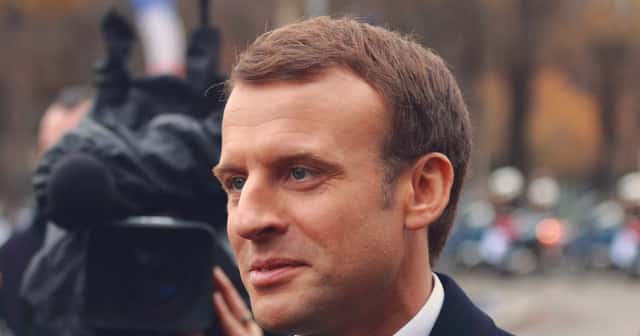
President Emmanuel Macron marked the 108th anniversary of the 1918 Armistice on Wednesday, November 11, at the Champs-Élysées and the Arc de Triomphe. It was the last time he will lead the ceremony as head of state before his term ends in 2027, France 24 reported, citing AFP. In his commemoration speech he said, "La mémoire du 11-Novembre a sa place dans toutes les écoles" — the memory of 11 November has its place in every school. That line referred to a dispute over a July 2026 Education Ministry circular that requires an annual ceremony, from CM1 (ages 9–10) to terminale, honoring all "Morts pour la France." Several teacher unions have called for a boycott. Ministers say the ceremony transmits the memory of an armistice, not a celebration of war.
Wednesday was a public holiday in France. Neither chamber of Parliament sat. This article is based on sources opened in full: France 24's November 11 and November 6 reports, franceinfo's live coverage of the Paris ceremony, and the SNES-FSU union statement opposing the circular. The Education Ministry's Bulletin officiel page for issue 27 of 2026 returned a block when opened for this article. Quotations from the circular and its implementation guide are therefore taken from France 24 and SNES-FSU, which quote those texts at length. French quotations are 567 Politics translations unless the original wording is kept for precision.
The last presidential Armistice ceremony of Macron's term#
Prime Minister Sébastien Lecornu greeted Macron at the foot of the Champs-Élysées, France 24 reported. As tradition requires, the president laid a wreath at the statue of Georges Clemenceau, then went up the avenue, saluted the flag, reviewed the troops and rekindled the flame at the Tomb of the Unknown Soldier. The names of five soldiers who died in service in 2026 were read before the Marseillaise. France 24 said Macron wore a bleuet, the cornflower emblem that honors the "Morts pour la France."
"Derrière chaque uniforme, il y a le courage. Derrière chaque sacrifice, une famille. Derrière chaque héros, la France qui se souvient," Macron wrote on X before the ceremony, according to France 24: behind every uniform, courage; behind every sacrifice, a family; behind every hero, a France that remembers. Franceinfo's live blog said that, also before the Paris commemoration, he posted a thought "à ceux qui ne sont jamais revenus" — to those who never came back.
Macron has presided over the 11 November ceremonies since 2017. The 2026 event was the 108th anniversary of the armistice that ended the fighting of the First World War. France 24 noted that the day's official commemorations honor soldiers who died for France in all conflicts, not only 1914-18.
Several candidates who hope to succeed him attended commemorations elsewhere. Marine Le Pen of the National Rally was, as usual, in her stronghold of Hénin-Beaumont in the Pas-de-Calais, France 24 reported, in the presence of residents and many journalists. Jean-Luc Mélenchon of La France Insoumise went to Gentioux in the Creuse. "Maudite soit la guerre," he said in front of the village war memorial: cursed be war. He also said, "il faut que la Russie évacue l'Ukraine où elle n'a rien à faire." In English: Russia must leave Ukraine, where it has no business. He still repeated that any change of borders required "demander aux populations leur avis," asking the populations concerned for their view. Those remarks, and the replies from Kyiv, Foreign Minister Jean-Noël Barrot and LFI, are covered in a separate 567politics article.
- Education Ministry circular requires an annual ceremony honoring the "Morts pour la France"
- Ministry publishes a detailed implementation guide, according to SNES-FSU
- The Association of History and Geography Teachers says a more gradual rollout would have been preferable
- Education Minister Édouard Geffray defends the ceremony in the National Assembly
- Macron leads his last presidential Armistice ceremony and says the memory "has its place in every school"
Source: France 24, Nov. 6, France 24, Nov. 11, SNES-FSU
What the circular requires#
According to France 24's November 6 report, the circular published in July establishes an annual commemorative ceremony honoring all the "Morts pour la France" in every public elementary school, middle school and lycée, and in private schools under contract with the state, starting from CM1. Each school may hold it in the four days before or after 11 November.
France 24 quoted the circular as saying the school "transmits the principles and values of the Republic, prepares pupils for the exercise of citizenship and ensures the acquisition of a common culture." It also quoted this passage: "Transmettre cet héritage suppose, notamment, de rappeler les moments où la nation a été mise à l'épreuve et où sa cohésion a dû s'incarner." The same quoted passage continues: "La transmission de l'histoire et de la mémoire de ces épreuves collectives participe de la cohésion nationale, a fortiori dans un environnement international marqué par des formes renouvelées de conflictualité." In other words, the text presents the passing-on of the history and memory of collective trials as part of national cohesion, "all the more so in an international environment marked by renewed forms of conflict."
The circular allows schools to invite partners such as local elected officials, the armed forces, the gendarmerie, reservists and veterans' associations, France 24 reported. SNES-FSU, quoting the circular and the August 26 guide, says a head teacher may also call on the departmental military delegate and on volunteer staff, including operational or citizen reservists. The union says the head teacher may also invite combatants' associations and the municipal "correspondant défense." The guide, as quoted by the union, says that when a flag is present in a school, a moment of "recognition or salute" may be devoted to it.
SNES-FSU says a 2012 law, associated with then-President Nicolas Sarkozy, already widened official 11 November commemorations to all the "Morts pour la France," not only the dead of the First World War. The union argues that the new school ceremony mixes that broad category with the specific memory of 1914-18 because it must be held around 11 November. Those are the union's characterizations of the legal history; this article did not independently open the 2012 statute.
Unions call the obligation a form of militarization#
Several teacher unions oppose the requirement and have called on staff not to take part. SNES-FSU, the largest secondary teachers' union, asked the ministry to withdraw the circular and the guide. It said it would support staff who refuse to prepare or attend the ceremony, and said a strike notice would be filed. It argues that the event "brouille les repères entre histoire et mémoire." That, it says, blurs the line between history and memory. It also says the event raises pedagogical and political problems "in a French and international context that increasingly normalizes nationalism, militarism and a reactionary view of young people's place in society," in the union's words.
The union says history teaching, unlike commemoration, is a critical discipline based on sources, and that memories are plural. It points to examples the ministry's framing does not, in its view, handle: territories that were then German, in which soldiers did not "die for France," and colonial troops sent to the European front. It also says the "Morts pour la France" label gathers people whose engagements differed sharply: conscripts and volunteers, professional soldiers killed on overseas operations, resisters, and French soldiers who repressed national liberation movements. The guide's suggested texts and songs, the union says, mix works from different wars, including Dorgelès's Les Croix de bois, Éluard's Liberté, a letter from the executed resister Henri Fertet, the Chant des partisans, the Chant des marais and the 1794 Chant du départ. SNES-FSU asks why a ceremony that is said not to celebrate war does not, for example, use the Chanson de Craonne, a First World War song that denounced the slaughter in the trenches.
The union also quotes a sentence from the guide: "La participation à une cérémonie commémorative contribue à renforcer la cohésion nationale dans un contexte marqué par l'instabilité de l'environnement international et des nouvelles formes de conflictualité qui ciblent l'unité du corps social." The union reads that language as evidence of a nationalist aim. It also points to the invitation of soldiers and officials into schools, and to the resemblance to military ritual. It compares the format to "séjours de cohésion" in the universal national service (SNU), while noting that the SNU involved volunteers, whereas this ceremony is compulsory and takes place during school time. The union says social cohesion is an aim of Republican schools, but that it is built by giving the public service the means to fight social and territorial inequality, not by compulsory ceremonies around the flag and the Marseillaise.
The CGT Éduc'action described the plan as "embrigadement militaire à l'école," or military indoctrination at school. It said that, "under the cover of 'national cohesion,' the institution is in reality seeking to prepare minds for war," France 24 reported. The FNEC FP-FO federation also demanded withdrawal of the directive. It refused "to share a supposed 'common destiny' with warmongers and arms merchants" and asked for "resources for schools, not for war," according to the same report. Those are the unions' arguments, not findings of fact about the ministry's intent.
Ministers say honoring the armistice is the opposite of glorifying war#
Education Minister Édouard Geffray answered the boycott calls in the National Assembly on November 4. "Certains considèrent qu'il s'agirait là d'une militarisation de l'école. Je le regrette. Dire cela, c'est oublier que le 11 novembre commémore l'armistice d'une guerre que nos ancêtres espéraient être la 'der des ders'. Honorer la fin des combats est l'exact contraire de la glorification de la guerre," he said, according to France 24. Some people, he said, consider this a militarization of the school; he regretted that view. To say so, he argued, is to forget that 11 November commemorates the armistice of a war that those who lived through it hoped would be the "war to end wars." Honoring the end of the fighting, he said, is the exact opposite of glorifying war. He added that between the freedom soldiers defended and the freedom enjoyed today there is a link: "la transmission par l'école," transmission through the school. He insisted that the ceremony would go ahead.
On Wednesday, Alice Rufo, the minister delegate for the armed forces and veterans, called the union reaction "très regrettable," France 24 reported. On TF1, according to franceinfo's live blog, she said: "C'est un moment d'appartenance collective, où d'anciens soldats viennent témoigner : c'est superbe. (...) Pourquoi priver les élèves de cette transmission ?" It is a moment of collective belonging, she said, in which former soldiers come to give testimony: that is superb. Why deprive pupils of that transmission?
Macron's sentence that the memory of 11 November "has its place in every school" was his public answer on the day of the ceremony, as reported by France 24. SNES-FSU quotes the ministry's own caution in the guide: "Cette cérémonie ne célèbre pas la guerre, mais la paix conquise, la liberté préservée et la résilience d'un peuple face à l'adversité." The union argues that the rest of the guidance points the other way, with its emphasis on uniforms and national unity in a time of conflict. The disagreement is about purpose and effect, not about whether a circular was issued.
Teachers are divided, including those who already commemorate 11 November#
The obligation has not produced a single staff position. Alexandre Bande, a history and geography teacher at Lycée Janson-de-Sailly in Paris's 16th arrondissement, told France 24 he was glad the ministry was encouraging a commemorative event around 11 November, which is a public holiday. He also welcomed a focus on the broader memory and history of those who died for France. He said the "militarization of commemoration" argument does not hold. 11 November has been commemorated for more than a century. In the 1930s, he said, it was a call never to wage war again. Between 1940 and 1943, people risked their lives to commemorate it in occupied France. "Associer ces commémorations à un endoctrinement des esprits me paraît sidérant," he said: to associate these commemorations with an indoctrination of minds seems staggering to him. He also said the risk that an official might misuse a speech has always existed, and that it falls to heads of school to set the frame.
The Association of History and Geography Teachers (APHG), which France 24 said has more than 9,000 members, took a more measured line. In a statement in September, it did not reject commemoration. It said teachers are already heavily solicited "dans un temps saturé de minutes de silence et d'hommages," in a time saturated with minutes of silence and tributes. It also said "une mise en œuvre plus progressive et plus concertée aurait été préférable": a more gradual and more concerted rollout would have been better. The association said these moments of memory should keep a "volontaire et spontané" character, voluntary and spontaneous, and that a ceremony "ne prend son sens que si elle est préparée," only makes sense if it is prepared.
Classroom practice, as described to France 24, varies. At Lycée Aristide-Briand in Saint-Nazaire, history teacher Élissa André said about half her colleagues decided to boycott, seeing, after "defense classes" and "engaged classes," the idea of a militarization of school. She chose to take part, saying commemoration reminds pupils of the dead, civilian and military, and that without participation the subject stays as a lesson that is hard to humanize. She had her pupils work on the November 9, 1942, American air raid on the Saint-Nazaire shipyards, which France 24 said killed more than 180 people, including 134 young people at an apprenticeship school. The pupils made bleuets bearing the names of those apprentices. At Lycée du Parc in Lyon, Caroline Guiraut already takes part in 11 November commemorations with volunteer pupils. She regretted the compulsory character and called the circular "un fourre-tout assez confus," a rather confused catch-all. Teaching all conflicts in a single ceremony so that pupils have the keys is, she said, simply impossible. At Collège Solveig-Anspach in Montreuil, Sabine Pesier said the problem was organizational. The circular appeared in July, and staff learned of it through the press. 11 November comes early in the school year, leaving little time to prepare something in which pupils are actors. She still planned to use the ceremony, with four ninth-grade classes presenting work on women who died for France, and said it might be more fully developed next year.
Those are individual teachers' accounts reported by France 24, not a representative survey of staff or of the public. No national poll on the school ceremony was found in the sources opened for this article, so this report does not describe what the French public as a whole thinks.
How the dispute sits in a campaign year#
The union texts and some teachers explicitly place the ceremony in the run-up to the 2027 presidential election, warning of political instrumentalization. Ministers reject that reading and present the event as civic transmission. Macron's own term ends in 2027; Wednesday's ceremony was his last as president, a fact France 24 and official choreography both underlined.
The education fight also sits beside a wider school and university protest over Parcoursup, the national admissions platform, staff resources and pay. 567politics has reported the walkout from Lecornu's Parcoursup reform committee. It has also reported a November 17 public-sector strike called by several unions over a frozen pay index. Those disputes are not the same as the 11 November circular. But they help explain why a new compulsory ceremony landed on a raw relationship between the government and parts of the education workforce. The circular was announced in July and applied in the first weeks of the school year.
Party positions on national memory, the armed forces and education are not identical, and they should not be read off a single axis. 567politics's France spectrum chart shows selected party placements as dated editorial estimates, not measured public opinion or a score for this ceremony:
What is not yet known#
Several points remain open. This article could not open the Bulletin officiel text itself, so any legal reading of the circular should be checked against the official publication. It is not known, from the sources opened here, how many schools held the new ceremony this week, how many staff stayed away, or whether the ministry will amend the guide after the first year. SNES-FSU said a strike notice would be filed for the week of 11 November; this article did not find an official count of strike participation tied only to the ceremony. No response from CGT Éduc'action or FNEC FP-FO beyond the quotations reported by France 24 was opened. Geffray's full Assembly answer should be read in the official Journal officiel record for the exact wording; this article relies on France 24's quotation of his November 4 reply.
The ceremony will almost certainly return in 2027, unless the circular is withdrawn or a future government changes it. Whether it becomes a routine part of school life is still open. So is whether it remains a yearly argument about history, memory and the place of the military in the classroom. That will depend on practice in schools as much as on the texts issued in July and August.
Notes on sources and limits#
France 24's November 11 dispatch is an AFP-based account of the Paris ceremony and of remarks by Macron, Le Pen, Mélenchon and Rufo. The November 6 France 24 feature, by Stéphanie Trouillard, is the main source for the circular's quoted wording, Geffray's Assembly answer, the APHG statement and the classroom interviews. SNES-FSU's own page is the primary source for that union's arguments and for its quotations from the circular and guide. Franceinfo's live blog confirms Rufo's TF1 remarks and Macron's pre-ceremony message about those who never returned. Funding disclosures were not reviewed for this story; the dispute is about a ministry circular and a national ceremony, not about campaign contributions. The site's approach to sourcing is described in the site's editorial standards and methodology.
Differing perspectives
Should every French school be required to hold a ceremony honoring the Morts pour la France around Nov. 11?
Each position is summarized as its supporters make it, with equal weight and in alphabetical order. A summary is not an endorsement; the evidence for each is weighed in the story above.
Keep commemoration, but make the rollout more gradual
Who holds it: The Association of History and Geography Teachers (APHG)
The Association of History and Geography Teachers does not reject commemoration. It says teachers are already heavily solicited in a school calendar packed with minutes of silence and tributes. In a September statement it said a more gradual and more concerted rollout would have been preferable. The association argues that these moments of memory should keep a voluntary and spontaneous character, and that a ceremony only makes sense if it is prepared. The objection is to the pace and the compulsory design, not to remembering the dead of France's wars.
In their words: France 24 ↗
Require the annual school ceremony
Who holds it: Education Minister Édouard Geffray, armed forces minister delegate Alice Rufo, and the Education Ministry
Supporters argue that the ceremony passes on the memory of the Armistice of a war that was meant to end wars. Honoring the end of the fighting, they say, is the opposite of glorifying war. Alice Rufo, the minister delegate for the armed forces and veterans, called union opposition very regrettable. On TF1 she described the event as a moment of collective belonging in which former soldiers come to give testimony, and asked why pupils should be deprived of that transmission. In this view, schools should take part in a civic act of memory, not treat the ceremony as militarization.
In their words: franceinfo ↗
Withdraw the circular
Who holds it: SNES-FSU, with CGT Éduc'action and FNEC FP-FO taking similar positions
SNES-FSU argues that a compulsory ceremony during school time blurs the line between history and memory and mixes conflicts with very different causes under the single label Morts pour la France. The union says the ministry guide's language on national cohesion, in a context of international instability, shows a nationalist aim. It also objects to inviting soldiers and officials into schools and to a format that resembles military ritual. It has asked for the circular and guide to be withdrawn, said it would support staff who refuse to take part, and defends teachers' freedom to teach history as a critical discipline based on sources.
In their words: SNES-FSU ↗
Cite this article
567 Politics staff. “Macron leads his last Armistice Day as president as unions contest compulsory school ceremonies.” 567politics. Published 2026-11-11. https://567politics.com/news/france-macron-last-armistice-day-school-ceremony-unions-november-2026
Wikipedia citation
{{cite news |title=Macron leads his last Armistice Day as president as unions contest compulsory school ceremonies |url=https://567politics.com/news/france-macron-last-armistice-day-school-ceremony-unions-november-2026 |work=567politics |author=567 Politics staff |date=2026-11-11 |language=en}}CSL-JSON for reference managers
{
  "id": "https://567politics.com/news/france-macron-last-armistice-day-school-ceremony-unions-november-2026",
  "type": "article-newspaper",
  "title": "Macron leads his last Armistice Day as president as unions contest compulsory school ceremonies",
  "URL": "https://567politics.com/news/france-macron-last-armistice-day-school-ceremony-unions-november-2026",
  "container-title": "567politics",
  "language": "en",
  "author": [
    {
      "literal": "567 Politics staff"
    }
  ],
  "issued": {
    "date-parts": [
      [
        2026,
        11,
        11
      ]
    ]
  }
}Citations identify this article and its publication date. Assess the reporting and its linked sources before using it as evidence.
Read this article as Markdown or JSON. Cite the original page and retain its sources, dates and qualifications.
Embed this article summary
Paste this HTML into your page. The summary stays linked to the full story and updates with it. No account required.
<iframe src="https://567politics.com/embed/news/france-macron-last-armistice-day-school-ceremony-unions-november-2026?theme=auto" title="Macron leads his last Armistice Day as president as unions contest compulsory school ceremonies by 567politics" width="100%" height="440" style="border:0;max-width:100%" loading="lazy"></iframe>
<p style="font-size:14px">Macron leads his last Armistice Day as president as unions contest compulsory school ceremonies by <a href="https://567politics.com/news/france-macron-last-armistice-day-school-ceremony-unions-november-2026" rel="nofollow">567politics</a></p>
<script async src="https://567politics.com/embed.js"></script>
READ BEYOND 567POLITICS
Alternate sources & perspectives
Independent coverage and primary evidence to help you compare arguments. A link is not an endorsement; perspective labels describe the linked material.
- independent analysis
Cérémonies du 11 novembre: une polémique autour de l'hommage à l'école ↗
France 24
AFP-based account of Macron's last presidential Armistice ceremony, his school-memory line, and remarks by Le Pen, Mélenchon and Rufo. Opened in full.
- independent analysis
11 novembre à l'école: l'obligation de commémorer divise les enseignants ↗
France 24
Main source for the circular's quoted wording, Geffray's Nov. 4 Assembly answer, the APHG statement, and classroom interviews including Alexandre Bande. Opened in full.
- primary evidence
Direct: cérémonie du 11 novembre ↗
franceinfo
Live blog of the Paris ceremony. Source for Rufo's TF1 remarks and Macron's pre-ceremony message about those who never returned.
- left argument
Cérémonie commémorative obligatoire du 11 novembre: refusons l'embrigadement ↗
SNES-FSU
Primary union statement calling for withdrawal of the circular and guide, quoting the ministry texts and setting out the militarization objection.
Reviewed 2026-11-11. Opened France 24's Nov. 11 and Nov. 6 reports, franceinfo's Armistice Day live blog, and the SNES-FSU statement. The Education Ministry Bulletin officiel page for issue 27 of 2026 returned a 403 block, so quotations from the circular and guide are taken from France 24 and SNES-FSU, which quote those texts. No national poll on the school ceremony was found. Geffray's full Assembly answer was not opened in the Journal officiel.