Students walk out of Lecornu's Parcoursup talks over RN presence as principals say they have become targets
Most youth and teacher unions quit the reform committee's first meeting. On Tuesday, 49 lycées were blocked and a Chelles councillor was hit by a gasoline bottle.
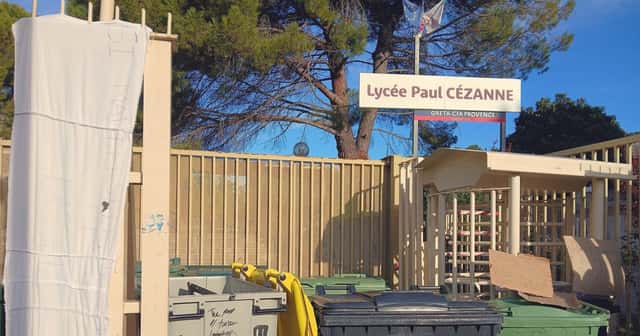
France's attempt to calm five weeks of school and university protests ran into two walls on Monday. At Matignon, most student, high-school and teacher organizations walked out of the first meeting of Prime Minister Sébastien Lecornu's committee to reform Parcoursup, the national university admissions platform, because lawmakers from the National Rally (RN) and its ally the UDR, a right-wing student union and the main employers' federation were at the table. Hours earlier, the largest union of secondary-school heads called its members to rally outside their schools on Friday, November 13, after a principal near Bordeaux was hit in the head by a projectile thrown by a hooded youth.
The two events point in different directions. Student and teacher unions say the government has still not answered their demands and want Parcoursup abolished. Principals say they support some of those demands but that staff have become "targets" of violence around the blockades. The government says it is talking to everyone, including elected lawmakers of every party, and wants the platform reformed for 2027 and replaced in 2028. On Tuesday, November 10, official figures reported by franceinfo put the number of blocked lycées at 49 at 9:30 a.m. A Public Sénat account published that afternoon said lawmakers had left Monday's meeting with no written budget amendment in hand.
Most youth and teacher unions leave the Parcoursup committee#
The committee, which Lecornu announced in the Senate on November 4, met for the first time at 5 p.m. on Monday after the prime minister received youth organizations at 3:30 p.m. It brings together high-school and student organizations, education unions, parents' representatives, members of Parliament and employers' groups, according to Le Figaro and a Reuters report published by Boursorama.
Soon after it opened, much of the room left. "We left this meeting as an intersyndicale, and we insist that we will never enter a room with the far right," Manon Moret, general secretary of the student union Unef, told reporters, according to franceinfo (quotations in this article are translated from French). Éloïse Lefebvre-Milon, co-general secretary of the Union étudiante, said: "It is a disgrace that the far right was at this meeting."
The organizations objected to three participants by name: UNI, a student union that describes itself as the "first right-wing student movement"; Thierry Tesson, an RN deputy from the Nord department; and Gaëlle Frontoni, a UDR senator from the Alpes-Maritimes. They also objected to the role given to employers. "We refuse to have higher education reformed around the needs of business. It is young people who must be listened to," Lefebvre-Milon said. She added that the groups left "with the same finding: still nothing satisfactory."
The education unions' intersyndicale left as well. Sophie Vénétitay, general secretary of Snes-FSU, the largest union of secondary teachers, said the government "is incapable of offering a new answer to high-school students and staff." Morgane Verviers, general secretary of Unsa Éducation, said the unions were "worried because the situation has been bogged down for a long time" and that "we really need to find a political way out of this crisis."
According to La Dépêche, citing BFMTV, the high-school intersyndicale said "a red line has been crossed" and that RN and UDR lawmakers "normalize xenophobic and racist speech." BFMTV also reported that Louis Boyard, a deputy for La France Insoumise, left the meeting.
Among youth organizations, only UNI, the high-school group Renouveau Lycéen and some elected members of the National Council for High-School Life (CNVL) stayed, according to a participant quoted by Le Figaro. The meeting continued with them and with the Medef employers' federation, franceinfo reported. It was not the first boycott: on October 21, several student and high-school organizations had already refused to attend a Parcoursup consultation because a UNI representative was present.
Lecornu: "The government does not sort deputies"#
Lecornu answered that he had written to every parliamentary group. "The government does not sort deputies," he said, according to La Dépêche's account of BFMTV's reporting. In his view, a committee open to Parliament cannot pick which elected groups may attend.
No statement from UNI, Renouveau Lycéen, Tesson or Frontoni on the walkout was found on their public accounts by the time of publication. Their reasons for staying, and what they argued inside the room, are therefore not reported here.
The government's offer on Parcoursup dates from October 26. Lecornu promised "a strong evolution" of the platform for the 2027 admissions round, with a duty to give reasons for every rejection and clearer admission criteria, before a full replacement in 2028. He also pledged to cap general and technological tenth-grade classes at 28 pupils in the half of lycées serving the least advantaged students from 2027, then in every public lycée in 2028; 500 extra teaching posts and 500 posts for psychologists, nurses and social workers in 2027; a guaranteed one-hour lunch break; a €5 billion envelope for renovating school buildings; and 15,000 more higher-education places in 2028, according to the Reuters report. Lecornu told senators on November 4 that the government would table budget amendments to fund the commitments, Public Sénat reported. Those amendments land in a budget that is already in trouble: the Assembly has struggled to vote even the revenue side of the 2027 bill.
Higher Education Minister Philippe Baptiste framed the replacement as an open political choice. "We have to build what comes after Parcoursup. For that, we have to answer very political questions. More selection, less selection? Do we want everything to be zoned by area? Do we want more vocational studies or more academic ones? Everything is open," he said on RMC on Monday, according to Reuters.
What the sides want from the replacement#
The walkout sits on top of a real disagreement about what Parcoursup's successor should do. The Senate debate on November 4 showed the range.
The youth intersyndicale (Fage, Union étudiante, Unef and the high-school union USL) wants Parcoursup abolished outright. A joint statement for Tuesday's strike, published by SUD éducation on behalf of education, research and youth organizations, calls for "the immediate lifting of the barriers to the right to study contained in Parcoursup and monMaster," 15,000 permanent posts in universities, more school staff and a building-renovation plan. On the left in the Senate, Communist senator Pierre Ouzoulias argued that the platform rations a growing demand for places against a shrinking supply, and LFI senator Gabriel Amard said: "Every baccalaureate holder has the right to enroll in the course of their choice, full stop. If places are missing, we build them."
On the right, Les Républicains senator Max Brisson called the tool "discredited." He urged lawmakers to "lift the taboo on selection from entry into the bachelor's degree" and called for "a transparent system of openly assumed selection." Speaking for the UNT, the Senate group of RN-aligned senators, Senator Aymeric Durox argued that orientation should lead "toward jobs" and that the country could not "tolerate thousands of students choosing courses with no job prospects." Pierre-Antoine Lévi, the centrist chair of the Senate culture and education committee, described a "fundamental ambiguity" in the 2018 law that guarantees every bachelier access to university yet produces "selection by failure."
The table below summarizes the main positions as stated by their holders. Party labels are linked to 567politics profiles of The Republicans and the National Rally.
| Camp | Main ask on Parcoursup |
|---|---|
| Youth and teacher unions | Abolish it; fund more places |
| Government | Reform in 2027, replace in 2028 |
| LR senators | Openly select at entry |
| RN / UNT senators | Steer students toward jobs |
Principals say they have become targets#
The second development came from the people who run the schools. On Monday the SNPDEN-Unsa, the main union of school heads, called principals to gather outside their establishments on Friday, November 13, at 3 p.m. "We have become targets," said Nicolas Bonnet, the union's national secretary and the head of a lycée in Libourne, on franceinfo. "We are alone," he said, describing "paving stones thrown, bins set on fire, attempted intrusions" at his own school. He spoke of "urban guerrilla" conditions and asked for the "preventive deployment of police" outside schools. Nationally, the union asked the government for "clear and strong answers to the high-school movement" and to make students "an offer they cannot refuse" to end it.
The trigger was an attack in Bègles, next to Bordeaux. On Monday morning the principal of the Émile-Combes vocational lycée was hit on the left temple by a projectile thrown by a hooded person in a group of about 20, Bordeaux prosecutor Renaud Gaudeul said in a statement reported by CNews. The Gironde prefecture said it was a paving stone. The principal needed stitches and was given four days' incapacity for work. Prosecutors opened one investigation for armed group violence and a second after "about thirty hooded individuals threw projectiles at police" who arrived on the scene. Three minors aged 15 and 16 and an 18-year-old were in police custody on Monday evening. Since November 2, the prosecutor said, five Education Ministry staff and several police officers have been injured in the Bordeaux area, and 16 minors and two adults have been taken into custody.
Bègles was not the only case. A deputy principal was assaulted at the Henri-Poincaré lycée in Nancy on November 6, according to franceinfo, and part of a lycée in Tournefeuille near Toulouse was set on fire last Thursday. Local SNPDEN branches stressed that they are not against the students' cause. In the Pyrénées-Atlantiques, the union said it shares some demands, "notably on the resources given to public schools," but that "no demand, however legitimate, can justify violence, threats or attacks on people," La République des Pyrénées reported. The Bordeaux branch used almost the same words, Sud Ouest reported.
The teacher unions that walked out of Matignon put the emphasis elsewhere. Their joint statement condemns what it calls police "repression" against high-school students and the administrative closure of campuses. The Snes-FSU's call for Tuesday mentions both "increased police repression against pupils" and "violence against staff," and asks for "festive, secure and determined" marches.
Exams, discipline and the school year#
A further dispute concerns what happens to students' grades. Education Minister Édouard Geffray ruled out any change to the 2027 baccalaureate exams and suggested catch-up classes "in February or at Easter," Reuters reported. He again called the blockades "illegal" and raised possible "disciplinary sanctions": "High-school students must let their classmates into class, otherwise they will wreck their school year." Baptiste said university exams are individual and there would be no "10 out of 20 for everyone" or automatic pass, though he did not rule out catch-up work and adapted tests. The Union étudiante launched a petition on Sunday asking that no student be "penalized for having fought for the right to study"; it had about 6,900 signatures on Monday morning.
What comes next#
- Youth groups boycott a Parcoursup consultation over UNI's presence
- Lecornu promises a Parcoursup overhaul for 2027 and a replacement in 2028
- Senate debates the platform's future; Lecornu announces the reform committee
- National strike and marches across sectors
- Bègles principal injured; most unions walk out of the first committee meeting
- Education and youth strike and marches; Public Sénat reports no written budget amendments after Monday's meeting
- Principals rally outside their schools
- Public-sector strike over the frozen index point
Source: Public Sénat, franceinfo, SUD éducation
Tuesday's strike was the first time since the youth movement began that the youth intersyndicale and several education and research unions called a mobilization together, Snes-FSU had said. Official figures published during the day, and reported in franceinfo's live blog, put the number of blocked lycées at 49 at 9:30 a.m., or 1.3 percent of about 3,700 schools. Three-quarters of départements reported no disruption. About 50 demonstrations were planned, including a Paris march from the Panthéon to Place d'Italie at 2 p.m. Sophie Vénétitay said the strike was being followed "à certains endroits," or in some places, and that it was weaker than on November 5, when the ministry put teacher participation at nearly 16 percent.
The day was also marked by a separate criminal inquiry in Chelles, Seine-et-Marne. A regional councillor, Angela Pascoa Dos Santos, was hit in the chest by a closed bottle of gasoline outside lycée Gaston-Bachelard. The Meaux prosecutor opened an inquiry for attempted homicide of a public official. Three pupils were held on other charges; the thrower had not been identified. Ministers called the episode urban or criminal violence. The Union syndicale lycéenne condemned the act and said tensions reflected two months without a government answer. That inquiry is covered in a separate 567politics article. Mathieu Lefèvre, whom franceinfo identified as acting government spokesman, said nearly 300 members of the national education service had been injured since the movement began.
Marylise Léon, the CFDT leader, said on France 2, as reported by the same live blog, that her union was not calling the November 17 public-sector strike for now. She said the CFDT would wait for announcements and then decide whether to mobilize or negotiate. Other unions in the public-sector intersyndicale have kept the November 17 date. The government said the Parcoursup committee would issue "first recommendations during November." It has not said whether it will change the committee's membership.
The education dispute is now tied to the wider fight over pay. Teacher unions complain that the public sector was left out of Monday's wage conference, where the government announced a 1.6% minimum-wage rise for December 1. Six public-sector unions have called a strike for November 17 over the frozen index point. For background on how the protests began, see earlier 567politics reporting on the lycée blockades before the November 5 strike and on youth protests in France, Germany and Portugal. Lecornu's record and recent polling are on his 567politics profile.
After Monday's meeting: no written budget amendments#
A Public Sénat account published on November 10, by Emma Bador-Fritche, added detail on what was left on the table after the walkout. Lecornu had invited "une quarantaine de convives," about 40 people, including youth and student groups, teacher unions, parents, school heads, employers' representatives and lawmakers, with Education Minister Édouard Geffray and Higher Education Minister Philippe Baptiste at his side.
Communist senator Pierre Ouzoulias, who stayed until the end, described a meeting that ran out of steam: "À la fin, nous n'étions plus que trois." At the end, only three of us were left, he said. He also said Lecornu had invited every group president and "ne pouvait pas faire le tri entre eux," could not sort among them. The students, he added, were "dans leur rôle." Les Républicains senator Max Brisson, already on the record in this article as calling Parcoursup "discredited," told Public Sénat of his "sidération" at watching lycée groups and then unions leave "tour à tour." He said a "crise d'adolescence" among lycée organizations might pass. But he said unions such as the CFDT or UNSA walking out was "sidérant." He called the scene a "théâtralisation" that said a great deal about the state of "notre démocratie sociale."
On substance, Ouzoulias said the only real way out of the crisis would be financial investment. He put figures on the table: France spends 2.1% of GDP on higher education, Germany 5%. Those figures are reported here as he stated them to Public Sénat. They were not independently audited for this update. "Tant qu'on ne répondra pas à cette question, tout le reste sera secondaire," he said. Socialist senator Colombe Brossel said one can always reform the admissions platform. But, she said, "on n'a rien dit sur le nombre de places disponibles, ni sur le nombre de professeurs supplémentaires qu'il faudrait recruter."
Lecornu said he wanted the bill regulating private higher education to be examined in the National Assembly by December. That bill was adopted by the Senate on June 1 and then, Public Sénat wrote, left in abeyance. He also promised amendments to the 2027 budget. "Mais personne ne sait lesquels," Public Sénat reported. Brossel said: "Nous sommes le 10 novembre et aucune proposition concrète n'a été formulée. Aucune des annonces faites ne satisfait les lycéens, et le mouvement continue." At the end of the meeting, lawmakers had no written amendment in hand, the same account said.
What is not known#
Several things remain unclear. A ministry count for Tuesday morning is now on the record, via franceinfo: 49 lycées blocked at 9:30 a.m. No comparable official count for Monday was published in the sources first reviewed for this article. It is still not known whether the committee will continue with only the organizations that stayed, or whether the government will offer a separate format to the groups that left. The promised 2027 budget amendments had not been produced in writing as of Public Sénat's November 10 account. UNI and the RN and UDR lawmakers had not published their own account of the meeting when this story was published. No representative poll on Parcoursup's replacement or on the blockades was found from the past two weeks, so this report does not describe what the French public as a whole thinks about the dispute.
Differing perspectives
How should France answer the school and university protests, and what should replace the Parcoursup admissions platform?
Each position is summarized as its supporters make it, with equal weight and in alphabetical order. A summary is not an endorsement; the evidence for each is weighed in the story above.
Abolish Parcoursup and fund more university places
Who holds it: Youth unions Unef, Union étudiante, Fage and USL, with education unions including Snes-FSU and SUD éducation
These organizations argue that Parcoursup and its master's-level counterpart put barriers in front of the right to study and should be lifted now, not adjusted. They say the government's first offers show the movement works but remain insufficient, with nothing concrete for universities. They call for 15,000 permanent university posts, more teachers, counselors and support staff, a renovation plan for school and university buildings, and an end to job cuts in the 2027 budget. They refuse to negotiate in the same room as RN and UDR lawmakers.
In their words: SUD éducation (joint intersyndicale statement) ↗
Openly select students at university entry
Who holds it: Les Républicains senators led by Max Brisson, with similar arguments from the RN-aligned UNT group
Brisson argues that guaranteeing every baccalaureate holder a university place only delays the moment of truth, so selection arrives later and more harshly through failure. He says the Parcoursup brand has lost public trust and wants a transparent platform built on openly assumed selection from the first year of the bachelor's degree, without leaving the burden to universities alone. The UNT's Aymeric Durox adds that orientation should lead toward jobs and that students should not be steered into courses with no prospects.
In their words: Public Sénat ↗
Protect school staff first, then settle the demands
Who holds it: The SNPDEN-Unsa union of school heads and its local branches
Principals say they understand and share several student demands, especially on resources for public schools, but that no demand can justify violence, threats or attacks on people. They describe paving stones, burning bins and intrusion attempts, and say staff have become targets and scapegoats. They ask for preventive police deployment outside schools, effective protection for staff, and a clear political answer from the government, an offer strong enough to end the movement.
In their words: franceinfo ↗
Reform it in 2027, replace it in 2028
Who holds it: Prime Minister Sébastien Lecornu's government, including ministers Philippe Baptiste and Édouard Geffray
The government says it has answered the students' coherent demands: capped tenth-grade classes, 500 extra teachers, 500 health and social staff, €5 billion for buildings and 15,000 more university places. It argues Parcoursup should change in 2027, with reasons given for every rejection, before a replacement in 2028 shaped by a committee open to every party in Parliament. Ministers say the choices on selection are political and still open, but that blockades are illegal and exams cannot be passed automatically.
In their words: Reuters via Boursorama ↗
Cite this article
567 Politics staff. “Students walk out of Lecornu's Parcoursup talks over RN presence as principals say they have become targets.” 567politics. Published 2026-11-10. Updated 2026-11-11. https://567politics.com/news/france-parcoursup-committee-walkout-rn-udr-uni-principals-rally-november-2026
Wikipedia citation
{{cite news |title=Students walk out of Lecornu's Parcoursup talks over RN presence as principals say they have become targets |url=https://567politics.com/news/france-parcoursup-committee-walkout-rn-udr-uni-principals-rally-november-2026 |work=567politics |author=567 Politics staff |date=2026-11-10 |language=en}}CSL-JSON for reference managers
{
  "id": "https://567politics.com/news/france-parcoursup-committee-walkout-rn-udr-uni-principals-rally-november-2026",
  "type": "article-newspaper",
  "title": "Students walk out of Lecornu's Parcoursup talks over RN presence as principals say they have become targets",
  "URL": "https://567politics.com/news/france-parcoursup-committee-walkout-rn-udr-uni-principals-rally-november-2026",
  "container-title": "567politics",
  "language": "en",
  "author": [
    {
      "literal": "567 Politics staff"
    }
  ],
  "issued": {
    "date-parts": [
      [
        2026,
        11,
        10
      ]
    ]
  }
}Citations identify this article and its publication date. Assess the reporting and its linked sources before using it as evidence.
Read this article as Markdown or JSON. Cite the original page and retain its sources, dates and qualifications.
Embed this article summary
Paste this HTML into your page. The summary stays linked to the full story and updates with it. No account required.
<iframe src="https://567politics.com/embed/news/france-parcoursup-committee-walkout-rn-udr-uni-principals-rally-november-2026?theme=auto" title="Students walk out of Lecornu's Parcoursup talks over RN presence as principals say they have become targets by 567politics" width="100%" height="440" style="border:0;max-width:100%" loading="lazy"></iframe>
<p style="font-size:14px">Students walk out of Lecornu's Parcoursup talks over RN presence as principals say they have become targets by <a href="https://567politics.com/news/france-parcoursup-committee-walkout-rn-udr-uni-principals-rally-november-2026" rel="nofollow">567politics</a></p>
<script async src="https://567politics.com/embed.js"></script>
READ BEYOND 567POLITICS
Alternate sources & perspectives
Independent coverage and primary evidence to help you compare arguments. A link is not an endorsement; perspective labels describe the linked material.
- independent analysis
"On ne rentrera jamais dans une salle avec l'extrême droite": la première réunion du comité de réforme Parcoursup tourne court ↗
franceinfo
Main account of the walkout, with on-record quotes from Unef, Union étudiante, Snes-FSU and Unsa Éducation leaders and the list of who stayed.
- left argument
Communiqué intersyndical: 10 novembre, en grève et dans les manifestations pour gagner ↗
SUD éducation
The education, research and youth unions' own platform for the November 10 strike: lifting Parcoursup and monMaster barriers, 15,000 university posts, building renovation, and criticism of policing.
- left argument
En grève et dans les manifestations, le mardi 10 novembre! ↗
SNES-FSU
The largest secondary teachers' union explains why it joined the youth intersyndicale and mentions both police action against pupils and violence against staff.
- right argument
Suppression de Parcoursup: et après? Le retour du débat sur la sélection à l'université ↗
Public Sénat
Senate debate of November 4: LR senator Max Brisson's case for openly assumed selection and the UNT's job-oriented view, alongside left-wing senators and Lecornu's announcement of the committee.
- other perspective
Le gouvernement poursuit le dialogue avec lycéens et étudiants, Parcoursup remis sur le métier ↗
Reuters (via Boursorama)
The government's case: the October 26 package, Baptiste's view that selection choices are open, and Geffray on catch-up classes, exams and illegal blockades.
- other perspective
Parcoursup: les présences du RN et de l'UDR provoquent le départ de lycéens et d'étudiants de la réunion à Matignon ↗
La Dépêche du Midi
Carries Lecornu's reply that the government 'does not sort deputies' and the high-school unions' 'red line' statement, both via BFMTV.
- independent analysis
La première réunion du comité de réforme Parcoursup tourne court ↗
Le Figaro (AFP)
Confirms that only UNI, Renouveau Lycéen and some CNVL members stayed, and the committee's composition including employers.
- other perspective
"Nous sommes devenus des cibles": le principal syndicat des proviseurs appelle au rassemblement vendredi 13 novembre ↗
franceinfo
SNPDEN-Unsa national secretary Nicolas Bonnet on violence against school heads and the call for preventive policing and a government offer to end the movement.
- primary evidence
Gironde: un proviseur touché à la tête par un projectile, une enquête ouverte ↗
CNews
Reports the Bordeaux prosecutor's statement on the Bègles attack, the two investigations, arrests and injury counts since November 2.
- other perspective
Violences dans les lycées: un rassemblement pour soutenir les personnels ce vendredi 13 novembre devant Saint-John Perse ↗
La République des Pyrénées
Quotes the SNPDEN Pyrénées-Atlantiques statement: support for some student demands but no justification for violence.
- other perspective
Blocage des lycées: un rassemblement en soutien aux personnels organisé ce vendredi 13 novembre à Bordeaux ↗
Sud Ouest
The Bordeaux SNPDEN branch's statement and rally at Lycée François-Mauriac.
Reviewed 2026-11-09. The discover_politics_sources tool returned only generic Parcoursup help pages, so these links were chosen and opened by hand on November 9, 2026. Perspective labels describe the argument each link carries. No public statement from UNI, Renouveau Lycéen, RN deputy Thierry Tesson or UDR senator Gaëlle Frontoni on the walkout was found on their public X accounts or sites by publication; Les Echos and La Voix du Nord accounts of the meeting were paywalled or blocked and are not listed. No representative poll on Parcoursup's replacement from the past two weeks was found.