Booed in Salzgitter, Reiche tells steelmakers Berlin already won them a power price
Steel states, IG Metall and the industry want cheaper power and "Made in Europe" rules after 2025 output fell to its lowest level since 2009.
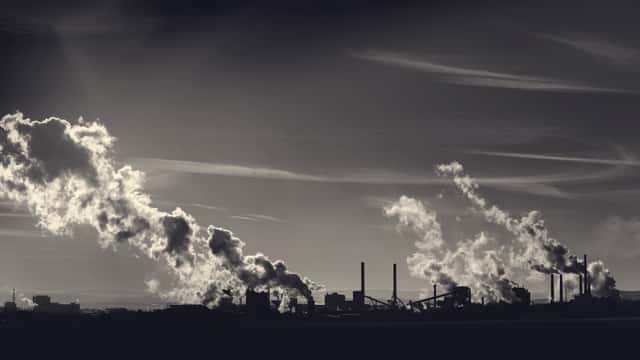
Germany's steel states, its biggest industrial union and the steel industry's trade group handed Economy Minister Katherina Reiche a list of demands on Monday, November 16, at a national steel summit in Salzgitter. Their main ask is a cheaper and more predictable power price. Reiche answered that Berlin has already won an industrial power price over resistance in Brussels, and that companies must keep their own business models competitive. Parts of the audience booed her, according to dpa reporting carried by t-online and FOCUS online.
The meeting came after a year in which crude steel output fell to its lowest level since 2009. It also came one day before the governing coalition's leaders meet on how to pay for a promised cut to the electricity tax, a separate fight over the same underlying problem: power costs.
Output at its lowest since 2009#
The pressure behind the summit shows in the output data. Germany made 34.3 million metric tons of crude steel in 2025, according to WV Stahl's revised annual figures. That was the fourth year in a row below 40 million tons, a level the group treats as the floor for sound capacity use. ZDF, citing the trade group's annual report, said it was the lowest figure since 2009, when output was 32.7 million tons.
As the chart shows, output held between about 42 and 44 million tons for most of the 2010s, then fell after 2018 and has not returned to that range.
Source: WV Stahl, Daten und Fakten 2025, WV Stahl, 2025 revision
Show the numbers
| Year | Output |
|---|---|
| 2011 | 44.3m t |
| 2012 | 42.7m t |
| 2013 | 42.6m t |
| 2014 | 42.9m t |
| 2015 | 42.7m t |
| 2016 | 42.1m t |
| 2017 | 43.3m t |
| 2018 | 42.4m t |
| 2019 | 39.6m t |
| 2020 | 35.7m t |
| 2021 | 40.2m t |
| 2022 | 36.9m t |
| 2023 | 35.4m t |
| 2024 | 37.2m t |
| 2025 | 34.3m t |
This year started better. In its October 22 release, WV Stahl said output in the first nine months of 2026 was 26.5 million tons, up 4 percent on a year earlier. But September fell 13 percent from the same month of 2025, driven by a 20 percent drop in blast-furnace steel. The group's full-year projection slipped from 37.3 million tons after the first half to 35.4 million tons. That would still be the fifth straight year below 40 million.
The trade group's 2025 data book says Germany made 28.7 percent of the EU's crude steel in 2024. About 80,000 people work directly in steelmaking, according to tagesschau, and WV Stahl says about four million work in steel-intensive industries.
What the steel states and the union want#
The demands come from the "Stahlallianz," an alliance of federal states with steel sites, together with the union IG Metall and the trade group Wirtschaftsvereinigung Stahl (WV Stahl). The position paper lists 10 states as signers: Baden-Württemberg, Brandenburg, Bremen, Hamburg, Lower Saxony, North Rhine-Westphalia, Saarland, Saxony, Saxony-Anhalt and Thuringia. NDR described the alliance as 11 states. The paper was presented to Reiche by Lower Saxony's premier Olaf Lies and North Rhine-Westphalia's premier Hendrik Wüst, according to Lower Saxony's economy ministry.
"Electricity is a key factor for low-emission steel production," the paper says. It calls for a "competitive and predictable" industrial power price and says actual prices in Germany are "far removed" from that goal. To get there, it asks the federal government to:
- keep the federal subsidy for transmission grid fees and raise it back to €6.5 billion a year until the mid-2030s;
- win EU state-aid approval so that the new industrial power price can be combined with the existing compensation for carbon costs in electricity prices beyond 2026;
- extend that compensation, in its current form and size, beyond 2030;
- cut levies, energy taxes and grid fees on natural gas, which the paper calls a bridge until enough affordable hydrogen is available.
The paper also wants "lead markets," meaning guaranteed demand, for low-emission steel made in the EU. It asks that public building, infrastructure and transport projects use such steel, and that EU rules define "Made in Europe" by where steel was melted and poured. It calls on Berlin to fund a pilot program at state railway Deutsche Bahn that the coalition agreement promised.
On trade, the paper calls the new EU steel regulation that took effect on July 1, 2026, a "milestone." It wants that protection widened to semi-finished products such as slabs and billets. It also wants the EU's carbon border levy, known as CBAM, extended to steel-heavy finished goods.
"Where the state builds, funds or tenders, steel Made in Europe must get the job," Lies said in the ministry's release. "If we want steel from Europe, we also have to be ready to bet on it." Wüst said Germany "must remain a steel country" and that investments in new plants need "an economic perspective."
Reiche points to what Berlin has done#
Reiche, a Christian Democrat, defended the government's record. "We have an industrial power price for the first time at all, and we fought for it against considerable resistance from Brussels," she said, as quoted by NDR. She said she understood the workers' worries, but added that many EU member states "have no industry at all" and that Germany needs their support.
In a written statement in the same ministry release, Reiche listed the government's steps. She cited the industrial power price and a higher carbon-cost compensation. She said Berlin is pressing at the EU level to cut tariff-free steel imports by 47 percent and to charge tariffs of 50 percent above that level. She said the federal and state governments are spending about €6 billion to help convert key steel sites. "The companies themselves remain responsible for making their business models competitive in the long run," she said.
Her full profile and record are on her 567 Politics page. Earlier this month she also drafted a fuel price cap that drew objections from the Social Democrats.
- First national steel summit
- Second summit, held in Saarland
- New EU steel import regulation takes effect
- Third summit in Salzgitter; position paper handed to Reiche
- Coalition leaders meet on electricity tax cut
- Salzgitter's direct reduction plant due to start
- Earliest finish for thyssenkrupp's Duisburg plant
Source: Land NRW, Positionspapier, tagesschau
Workers' anger and the green steel bet#
Before the summit, more than 2,000 steelworkers rallied outside the Salzgitter plant gates, according to the union's count reported by NDR. In IG Metall's call for the rally, deputy chair Jürgen Kerner said the industry had "no knowledge problem, but an implementation problem." He demanded "clear signals and firm commitments" from the meeting, according to the union's statement.
At the summit, Kerner said workers back the shift to climate-neutral steel, but that uncertainty is growing in the workforce. "The cause is contradictory and unclear signals from politics and company management," he said. A works council member at ArcelorMittal's Bremen plant told tagesschau that workers felt the minister did not even consider their call for a competitive power price.
The industry's plan to cut emissions depends on new direct reduction plants. These turn iron ore into iron with natural gas at first and hydrogen later, replacing coal-fired blast furnaces. Tagesschau reported that thyssenkrupp Steel's plant in Duisburg will cost €3 billion. The company pays about €1 billion, North Rhine-Westphalia €700 million and the federal government €1.3 billion. It is due to be finished in 2029 at the earliest. Salzgitter AG's similar plant, part of its SALCOS project, has close to €1.3 billion in state and federal aid and is due to start next year.
Thyssenkrupp Steel plans to cut 5,000 jobs at its Ruhr sites by 2030 and move another 6,000 to outside firms, tagesschau reported. Its chief executive, Marie Jaroni, told the broadcaster that rising costs under the EU's emissions trading system are the decisive problem. "We cannot go green as fast as carbon costs are rising," she said.
Salzgitter AG chief executive Gunnar Groebler, who also heads WV Stahl, said in his company's release that protection against unfair imports had been strengthened. He warned that it "must not now be hollowed out again in international negotiations."
Economists disagree on the fix#
Experts split on whether more targeted support can save primary steel in Germany. Economist Patrick Kaczmarczyk wrote a study for the union-linked Hans Böckler Foundation. He told tagesschau that green steel from Germany can compete if the state sets the right conditions, including an industrial power price, plant subsidies and public purchasing rules. He called it "a classic coordination problem" in which state action is justified.
A PwC study cited by tagesschau reached a gloomier view. It found that countries such as India and the Gulf states have raw materials and cheaper energy for hydrogen. In its calculations, only scrap-based "secondary" steel gives German producers a real chance.
The Monopolkommission, an independent body that advises the federal government on competition, took a different line in its 2026 main report. It found that German industry paid about 14 cents per kilowatt-hour on average in 2024, against 12 cents in the EU and 8 cents in the United States.
Source: Monopolkommission, Hauptgutachten 2026, chapter 3
Show the numbers
| Region | Price |
|---|---|
| Germany | 14¢ |
| EU-27 average | 12¢ |
| United States | 8¢ |
But it also found that power makes up only 2.29 percent of inputs on average across 163 sectors. It said Germany already has a "dense web" of sector-specific relief that creates red tape and can favor big firms over small ones. It recommended broad cuts to non-market parts of the power price, using sector-specific relief only "in a targeted and narrowly limited" way, and reforming grid fees.
What comes next#
The coalition's leaders meet on Tuesday, November 17. Chancellor Friedrich Merz has said he expects agreement on the electricity tax cut he made a priority earlier this month. That measure would help households and firms, but it does not answer the steel paper's specific demands on grid fees, gas costs and the EU state-aid rules.
In Brussels, the European Parliament is negotiating the Industrial Accelerator Act, which the steel paper hopes will set "Made in Europe" rules for public purchasing. The government's recent first auction for backup gas power plants and the EU dispute over taxing electricity and gas show how many separate decisions will shape what steelmakers pay for energy. The national steel summit meets every two years; the last one was held in Saarland in 2024.
Differing perspectives
How far should the German government go to lower energy costs for the steel industry?
Each position is summarized as its supporters make it, with equal weight and in alphabetical order. A summary is not an endorsement; the evidence for each is weighed in the story above.
Build on the relief already in place
Who holds it: Federal Economy Minister Katherina Reiche (CDU) and the federal government
Reiche argues that the government has already acted: it won an industrial power price over resistance in Brussels and raised carbon-cost compensation. She says Berlin is pushing the EU to cut tariff-free steel imports by 47 percent and charge 50 percent tariffs above that, and that federal and state governments are spending about €6 billion to convert key steel sites. In her view these steps improve the conditions for investment, while companies remain responsible for making their own business models competitive over the long run.
In their words: Lower Saxony Ministry of Economic Affairs (release with Reiche's statement) ↗
Prefer broad power-price cuts over sector subsidies
Who holds it: The Monopolkommission, the independent body that advises the federal government on competition
The commission argues that if power prices are to be lowered, broad and simple cuts to non-market price components should come first. It finds that electricity is on average only about 2.3 percent of industrial inputs, and that Germany already has a dense web of sector-specific relief that adds red tape and can disadvantage smaller firms. It says tools such as an industrial power price should be narrow, justified on the merits and designed not to distort competition, and that grid-fee and market reform matter more than state aid.
In their words: Monopolkommission (Hauptgutachten 2026) ↗
Use every option to cut steel's power and gas costs
Who holds it: The steel states' alliance (10 signing states), the union IG Metall and the trade group WV Stahl
The alliance argues that electricity is the key input for low-emission steel and that German prices are far from competitive. It asks Berlin to restore a €6.5 billion grid-fee subsidy into the 2030s, to combine the industrial power price with carbon-cost compensation beyond 2026, and to extend that compensation past 2030. It also wants gas relief until hydrogen is affordable, 'Made in Europe' rules in public purchasing and wider EU import protection. Without these steps, it says, billions already invested in green steel will not pay off.
In their words: Stahlallianz, IG Metall and WV Stahl (position paper) ↗
Cite this article
567 Politics staff. “Booed in Salzgitter, Reiche tells steelmakers Berlin already won them a power price.” 567politics. Published 2026-11-16. https://567politics.com/news/germany-national-steel-summit-salzgitter-reiche-booed-power-price-position-paper-november-2026
Wikipedia citation
{{cite news |title=Booed in Salzgitter, Reiche tells steelmakers Berlin already won them a power price |url=https://567politics.com/news/germany-national-steel-summit-salzgitter-reiche-booed-power-price-position-paper-november-2026 |work=567politics |author=567 Politics staff |date=2026-11-16 |language=en}}CSL-JSON for reference managers
{
  "id": "https://567politics.com/news/germany-national-steel-summit-salzgitter-reiche-booed-power-price-position-paper-november-2026",
  "type": "article-newspaper",
  "title": "Booed in Salzgitter, Reiche tells steelmakers Berlin already won them a power price",
  "URL": "https://567politics.com/news/germany-national-steel-summit-salzgitter-reiche-booed-power-price-position-paper-november-2026",
  "container-title": "567politics",
  "language": "en",
  "author": [
    {
      "literal": "567 Politics staff"
    }
  ],
  "issued": {
    "date-parts": [
      [
        2026,
        11,
        16
      ]
    ]
  }
}Citations identify this article and its publication date. Assess the reporting and its linked sources before using it as evidence.
Read this article as Markdown or JSON. Cite the original page and retain its sources, dates and qualifications.
Embed this article summary
Paste this HTML into your page. The summary stays linked to the full story and updates with it. No account required.
<iframe src="https://567politics.com/embed/news/germany-national-steel-summit-salzgitter-reiche-booed-power-price-position-paper-november-2026?theme=auto" title="Booed in Salzgitter, Reiche tells steelmakers Berlin already won them a power price by 567politics" width="100%" height="440" style="border:0;max-width:100%" loading="lazy"></iframe>
<p style="font-size:14px">Booed in Salzgitter, Reiche tells steelmakers Berlin already won them a power price by <a href="https://567politics.com/news/germany-national-steel-summit-salzgitter-reiche-booed-power-price-position-paper-november-2026" rel="nofollow">567politics</a></p>
<script async src="https://567politics.com/embed.js"></script>
READ BEYOND 567POLITICS
Alternate sources & perspectives
Independent coverage and primary evidence to help you compare arguments. A link is not an endorsement; perspective labels describe the linked material.
- primary evidence
Positionspapier zum Nationalen Stahlgipfel 2026 ↗
Stahlallianz, IG Metall, WV Stahl (via Lower Saxony Economy Ministry)
Full text of the demands handed to Reiche: grid-fee subsidy, power price plus carbon-cost compensation, gas relief, lead markets, trade protection.
- primary evidence
Stahl-Allianz übergibt Forderungen an Bundesregierung ↗
Lower Saxony Ministry of Economic Affairs
Official release with statements by Lies, Reiche, Wüst, Groebler, Kerner and Tonne.
- primary evidence
Nationaler Stahlgipfel in Salzgitter – Positionspapier an Wirtschaftsministerin Katherina Reiche übergeben ↗
Salzgitter AG
Host company's account of the summit and CEO Gunnar Groebler's remarks.
- primary evidence
Ministerpräsident Hendrik Wüst hält eine Keynote im Rahmen des Nationalen Stahlgipfels 2026 ↗
State of North Rhine-Westphalia
NRW premier's statement on steel and energy costs.
- primary evidence
Kundgebung vor dem Nationalen Stahlgipfel am 16. November ↗
IG Metall Salzgitter-Peine
Union call for the rally held outside the summit.
- primary evidence
Daten und Fakten zur Stahlindustrie in Deutschland 2025 ↗
Wirtschaftsvereinigung Stahl
Industry data book; source of the 2011–2024 crude steel series in the chart.
- primary evidence
Rohstahlerzeugung in Deutschland 2025 (Revision, Stand August 2026) ↗
Wirtschaftsvereinigung Stahl
Revised 2025 output figure of 34.3 million tonnes.
- primary evidence
Rohstahlerzeugung im September 2026: Erholungstrend unterbrochen ↗
Wirtschaftsvereinigung Stahl
Latest monthly output data for 2026.
- independent analysis
Hauptgutachten 2026, Kapitel 3: Industriestrompreise als Mittel der Industriepolitik ↗
Monopolkommission
Government competition advisers' critique of sector-specific power subsidies.
- other perspective
Stahlgipfel in Salzgitter: Industrie hat klare Forderungen an Reiche ↗
NDR
Public broadcaster's report from Salzgitter, including the count of participating states.
- other perspective
Stahlgipfel in Salzgitter: Unternehmen fordern Entlastung beim Strompreis ↗
tagesschau
Report on the summit and the green steel transition.
- other perspective
Stahlproduktion 2025 gesunken: Niedrigster Stand seit 2009 ↗
ZDFheute
Context on the 2025 output slump.
Reviewed 2026-11-16. Hand-picked for the Nov 16, 2026 national steel summit in Salzgitter: the position paper and official releases from the states, host company and union; industry output data from WV Stahl; an independent critique from the Monopolkommission; and public-broadcaster reporting from the event. Each link was opened and read on Nov 16, 2026.