Iraq Sets June 2027 Deadline for Militia Weapons as Factions Dispute Reported Deal
Kataib Hezbollah's political wing says an understanding exists; a Framework source says nothing is written. The prime minister has not signed.
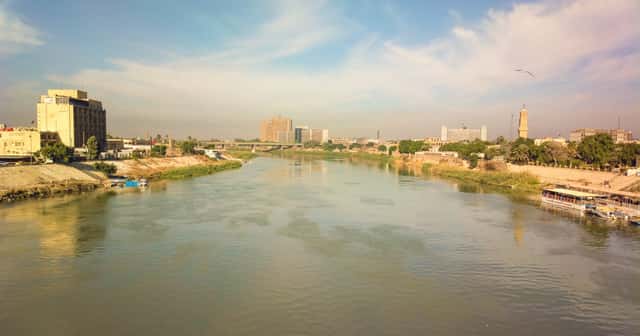
Iraq's government says all weapons outside state control will come under its authority by June 30, 2027. On Monday, Nov. 2, the political wing of one of Iraq's armed factions said it had reached an understanding on how to handle those weapons. It added that the prime minister had not signed it. A source in the ruling Coordination Framework alliance told Kurdistan 24 that no written draft exists.
The dispute shows how far Baghdad has to go. The disarmament plan has a deadline, a legal threat behind it and a US-backed push. It also has armed groups that say they are not bound by it. This report sets out what each side says and what is still unconfirmed. It draws on reporting from Kurdistan 24, Rudaw, Asharq Al-Awsat, the Baghdad outlet 964 Media and AFP as relayed by those outlets.
Monday's claim and the response
The head of the Hoquq parliamentary bloc, the political wing of Kataib Hezbollah, said the Coordination Framework and armed groups had agreed on an understanding about weapons, Kurdistan 24 reported. He said a committee was supposed to be formed from the "resistance front," the government, the Popular Mobilization Forces and the Framework, but the prime minister had not yet signed off.
"The government must officially announce its position on not signing the agreement," he said. He added that there is a suspicion that Washington does not approve of the deal, and that this has made the prime minister hesitate. He also said the agreement stresses regulating the weapons rather than removing them.
A source in the Coordination Framework gave a different account. The source told Kurdistan 24 that the file remains complicated and that only a few points have been discussed verbally. The source said no written agreement exists and no draft has been drawn up between the armed groups and the Framework's committee.
The two accounts cannot both be fully right. This article could not confirm which is closer to the facts. We have not seen the text of any agreement.
How the plan began
On Oct. 1, the prime minister set June 30, 2027, as the deadline for bringing weapons outside state control under government authority, Rudaw reported. The date replaced an earlier Sept. 30 target. It came a day after the US-led coalition's military mission in Iraq ended.
"This process will follow a clear roadmap and agreed-upon timelines - concluding no later than June 30, 2027," the prime minister said, according to Rudaw. He called Oct. 1 a "serious beginning." He also pledged to disarm "all non-Iraqi armed groups present on Iraqi soil" but did not say which groups he meant. Rudaw noted that Iraq hosts several, including Iranian Kurdish opposition groups in the Kurdistan Region.
The day before, major Iran-backed factions rejected the idea that they had made a deal. Kataib Hezbollah's secretary-general said, "we reached no conclusion with the prime minister, having awaited his response until the very last moment," Rudaw reported. He ordered a halt to the group's military operations and "mobile logistical activities." He exempted attacks on what he called hostile aircraft in Iraqi airspace until the government builds enough air defenses. He also defended the continued existence of an armed "resistance" next to state security forces, though he acknowledged that decisions on war and peace should be unified under an agreed authority.
The Islamic Resistance in Iraq, an umbrella group of Iran-aligned factions, said it was "not bound by any timeline or agreement" under discussion, according to its spokesperson as quoted by Rudaw. The spokesperson said factions had spent more than 40 days negotiating the regulation of their weapons through a committee set up by the Coordination Framework, but had received no government response to their proposal. The group said it intended to keep its weapons while remaining open to talks.
Several factions attached conditions, Rudaw reported. These included the withdrawal of foreign forces, the removal of Iranian opposition groups from Iraq, and changes involving the Kurdish Peshmerga. The Peshmerga demand was that they come under the central government's authority. Kataib Hezbollah, Harakat al-Nujaba and Kataib Sayyid al-Shuhada were among the main holdouts.
What followed
The Coordination Framework endorsed the timetable at an emergency meeting on Oct. 2, according to Iraqi Local Media as relayed by Kurdistan 24. On Oct. 5, the prime minister said three factions had handed over weapons and two more had agreed to do so, AFP reported. Kataib Hezbollah immediately said it was "not bound by any timetable or agreement." Harakat al-Nujaba has also refused, Kurdistan 24 reported.
Government posts have been part of the bargaining. On Oct. 15, parliament confirmed a leader of Asaib Ahl al-Haq as a deputy prime minister, after Baghdad asked Washington to drop its objection, according to the Long War Journal and Alhurra as cited by Kurdistan 24. Asaib's Sadiqoun party also took the Labor Ministry. The prime minister argued that rewarding a group that agreed to give up its weapons could persuade others to follow, Kurdistan 24 said, citing Alhurra.
Iraq's deputy prime minister said that some armed groups had made senior executive posts a condition for laying down weapons, according to Kurdistan 24. He said the prime minister is not against their taking part in governing, as long as they disarm fully and obey the law like other political parties.
A former prime minister has said there will be no disarmament of the factions, only a regulation of their weapons, Kurdistan 24 reported. It added that some factions want the deadline pushed to the end of 2027.
The legal threat
On Oct. 19, the Coordination Framework reaffirmed the June 30, 2027, goal and authorized the government to "take steps to ensure compliance," according to Asharq Al-Awsat. The prime minister's media office then told state institutions to pursue criminal complaints against anyone who incites opposition through the media or tries to obstruct decisions on weapons control.
The office cited Articles 2 and 4 of Iraq's Anti-Terrorism Law No. 13 of 2005. It also pointed to a Supreme Judicial Council position that using, supporting or threatening to use weapons outside state authority falls under that law, Asharq Al-Awsat reported.
The statement said freedom of expression is guaranteed, but cannot be used to incite violence or internal conflict, support weapons outside state control or back outlawed groups. Parliament's speaker backed the measures. He said freedoms "must not become a cover" for inciting violence, but stressed that enforcement must respect constitutional rights and equal treatment.
The head of the government's Security Media Cell said no action would be taken without judicial authorization, Asharq Al-Awsat reported. He said several security bodies were monitoring cases of alleged incitement. Asharq Al-Awsat noted that the warning appeared aimed at faction spokespeople and supporters who have mocked or rejected the government's announcements.
The fight over the intelligence service
A second dispute is over who will run the Iraqi National Intelligence Service. The prime minister removed its head on Oct. 26, and the government has not named a successor, 964 Media reported on Sunday.
On Thursday, the prime minister said the service must be kept out of the quota system that shares government posts among parties, factions and sects, according to 964 Media. The government's Security Media Cell denied claims of a plan to appoint a figure from a particular region or group.
The Baghdad daily Al-Mada reported that at least four armed factions are competing for the post. It said they plan to get around US objections by putting forward candidates presented as independent technocrats. According to Al-Mada, signals had reached Baghdad that Washington would be unlikely to accept an intelligence chief tied directly to the factions. We have not seen Al-Mada's original report. 964 Media's summary is the source here.
The head of an Iraqi research center told Al-Mada that the service sits where US and Iranian influence meet. He said it holds much of the central data on armed factions and on networks abroad. In his view, that explains why the post matters so much to the factions.
The US role
Secretary of State Marco Rubio discussed disarming armed groups with the prime minister at the UN General Assembly in September, according to Kurdistan 24. Rudaw reported that Rubio accused Kataib Hezbollah of involvement in a drone attack that shut Saudi Arabia's East-West oil pipeline. He said the group had "fired into Saudi Arabia." Kataib Hezbollah and the Islamic Resistance in Iraq denied responsibility.
Kurdistan 24 also reported in September that the Trump administration warned the prime minister that monthly dollar transfers to Iraq would be suspended if Iran-aligned groups did not disarm. We could not confirm that report against a US government source.
The disarmament question is tied to the wider conflict with Iran. For background, see our reports on the US strikes on Qeshm Island and on Iran's nuclear debate. A parallel dispute over Hezbollah's weapons is playing out in Lebanon, covered in our report on south Lebanon and UNIFIL and in our report on the explosives case.
Turkish troops as a condition
Factions made the withdrawal of Turkish troops one of their conditions, Asharq Al-Awsat reported. Turkey's defense minister said Ankara would keep forces in Iraq and Syria until border security is fully guaranteed. Local reports put the number of Turkish checkpoints inside Iraq and along the border at about 130.
In September Iraq's prime minister and Turkey's president agreed on a "gradual evacuation" of the Zilkan base, set to begin on Oct. 1, according to Asharq Al-Awsat. Ankara has long tied any withdrawal to Baghdad's progress in securing the Sinjar district. A spokesperson for Iraq's commander in chief suggested on Oct. 14 that the Turkish issue could be resolved within three months.
What is established and what is not
| Claim | Status | Source |
|---|---|---|
| Iraq set a June 30, 2027, deadline for weapons to come under state control | Established | Rudaw |
| Armed groups and the Framework agreed on a weapons understanding | Disputed; a Framework source says nothing is in writing | Kurdistan 24 |
| Three factions handed over weapons | Prime minister's claim; not independently verified | Kurdistan 24 (AFP) |
| Kataib Hezbollah accepts the timetable | No; it says it is not bound | Rudaw |
| Intelligence service has a new head | No; no successor named as of Nov. 1 | 964 Media |
| US dollar transfers are tied to disarmament | Reported; not confirmed by a US source | Kurdistan 24 |
What to watch
- Whether the prime minister signs or publicly rejects the reported understanding.
- Who is named to lead the intelligence service, and whether Washington objects.
- Whether any faction asks formally to move the deadline to the end of 2027.
- Whether criminal complaints begin under the anti-terrorism law, and whether courts approve them.
Funding and financial-interest context
Secretary of State Marco Rubio is named in this article for his reported contacts with Iraq's prime minister and for his public statement about Kataib Hezbollah. This report makes no claims about his campaign funding or financial interests. See his profile for his current position. No other U.S. politician is quoted.
This report reflects information available through Monday evening, Nov. 2, Eastern time. Iraqi, Turkish and faction officials are cited by title. Claims that could not be verified are flagged as such.
Differing perspectives
How should Iraq bring armed factions' weapons under state control?
Each position is summarized as its supporters make it, with equal weight and in alphabetical order. A summary is not an endorsement; the evidence for each is weighed in the story above.
Enforce the deadline, with legal consequences
Who holds it: Iraq's prime minister and the Coordination Framework
The Coordination Framework reaffirmed the goal of resolving weapons outside state control by June 30, 2027, and authorized the government to take steps to ensure compliance. The prime minister's office told institutions to pursue criminal complaints against anyone inciting opposition or backing weapons outside state authority, citing the anti-terrorism law. Parliament's speaker backed the measures. Security officials say no action will be taken without judicial authorization.
In their words: Asharq Al-Awsat ↗
Keep the intelligence service out of faction hands
Who holds it: Iraq's prime minister and, reportedly, Washington
The prime minister said the intelligence service must stay outside the quota system that divides posts among parties, factions and sects. Al-Mada reported that signals reached Baghdad that Washington would be unlikely to accept an intelligence chief tied directly to the factions, and that at least four factions are seeking the post. The government denied a plan to appoint a figure from a particular group and said any new head would be announced officially.
In their words: 964 Media ↗
Regulate weapons and bring factions into government
Who holds it: Hoquq bloc, a former prime minister and some Framework figures
The head of the Hoquq bloc says an understanding stresses regulating weapons rather than removing them. A former prime minister has said factions will be regulated, not disarmed. Some factions want senior executive posts as a condition of giving up arms, and some want the deadline moved to the end of 2027. Iraq's deputy prime minister says the prime minister does not oppose their participation if they fully disarm and obey the law.
In their words: Kurdistan 24 ↗
Reject the timetable and keep arms for now
Who holds it: Kataib Hezbollah and the Islamic Resistance in Iraq
Kataib Hezbollah's secretary-general said his group reached no conclusion with the prime minister and defended an armed resistance alongside state forces. The Islamic Resistance in Iraq said it is not bound by any timeline or agreement and that factions negotiated for more than 40 days without a government reply. The group says it will keep its weapons but stay open to talks, linking the issue to ending US influence in Iraq.
In their words: Rudaw ↗
READ BEYOND 567POLITICS
Alternate sources & perspectives
Independent coverage and primary evidence to help you compare arguments. A link is not an endorsement; perspective labels describe the linked material.
- independent analysis
Iraq Weapons Deal Claim Disputed ↗
Kurdistan 24
Kurdistan Region outlet; Nov. 2 report with Hoquq and Framework accounts.
- primary evidence
Iran-backed factions deny agreement as Zaidi sets June 2027 disarmament deadline ↗
Rudaw
Kurdistan Region outlet; quotes from the prime minister, Kataib Hezbollah and the Islamic Resistance in Iraq.
- other perspective
Iraq Threatens Crackdown on Opponents of Disarmament Plan ↗
Asharq Al-Awsat
Saudi-owned outlet; Oct. 20 report on the legal threat and Turkish troops.
- independent analysis
Factions seek Iraq intelligence post despite US veto, paper says ↗
964 Media
Baghdad outlet summarizing an Al-Mada report; Nov. 1.
Reviewed 2026-11-02. Reviewed Nov. 2, 2026 (ET). No text of any weapons understanding was available. The prime minister's claim that three factions handed over weapons comes via AFP as relayed by Kurdistan 24; AFP was not opened. The Al-Mada report on the intelligence post was read only through 964 Media. Reports on US dollar-transfer warnings and Alhurra/Long War Journal details on cabinet posts come from Kurdistan 24's summaries; originals were not opened. Iraqi and faction officials are named by title; Secretary of State Rubio has a profile.