Hezbollah Begins Paying Displaced Families as UNIFIL Nears Its End With No Successor
Aid payments began in Nabatieh on Monday. The UN force leaves on Dec. 31, and Israel, Lebanon and Hezbollah still disagree on who secures the south.
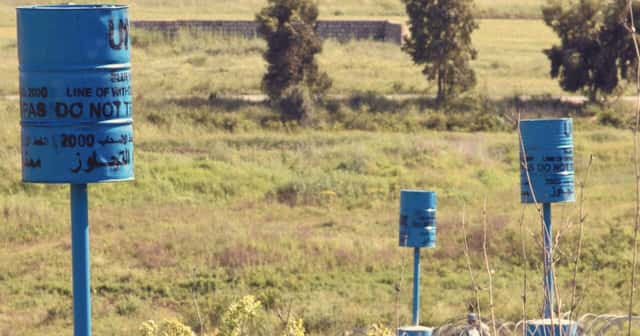
Hezbollah began paying displaced families in southern Lebanon on Monday, Nov. 2, even as the United Nations peacekeeping force there prepares to end its mission on Dec. 31. No agreement exists on what will replace the force. Talks between Lebanon and Israel have produced little, according to the UN Security Council's own monthly outlook.
The two developments are linked. Both turn on a question that has stayed open for months: who controls security and reconstruction in the south. This report sets out what each side says, what the available documents show, and what remains unclear. It draws on reporting from AFP, The National, the Jerusalem Post, the FDD's Long War Journal and Security Council Report.
What happened on Monday
Hezbollah said it had started paying a first tranche of aid to displaced people in the Nabatieh region, according to AFP reporting carried by Arab News. The group called the payments an act of "loyalty to the owners of the destroyed homes."
The local outlet This Is Beirut reported that the program began distributing notes at a center in Nabatieh. It quoted the group as calling the payments "a practical step toward honoring people who have given so much."
The program is called "Promise and Commitment." Hezbollah first announced it on Oct. 13, according to the Long War Journal, a publication of the Foundation for Defense of Democracies, a Washington research group that is critical of Hezbollah. The group's announcement came at a press conference in Beirut's southern suburbs.
The terms, as the Long War Journal described them:
- Families in Beirut and its southern suburbs can receive up to $14,000. That is made up of $8,000 for furniture and $6,000 for rent.
- Families elsewhere in Lebanon can receive up to $12,000. That is $8,000 for furniture and $4,000 for rent.
- Payment comes in four installments, one every three months for a year. The first is $3,500 in Beirut and its suburbs and $3,000 elsewhere.
- The program covers primary homes that were destroyed or made uninhabitable. It also covers people who cannot return to border villages held by Israeli forces, even if their homes are intact.
- It excludes summer homes, second homes and homes left vacant by owners who live abroad.
The chairman of Hezbollah's Executive Council said the program would operate regardless of recipients' sectarian or political affiliation, according to the Long War Journal. He also said housing and furniture aid would be a first phase, with later phases to follow.
AFP said Hezbollah did not specify where the money comes from or how many people will benefit. It noted that this is the group's first such announcement since the current war began on March 2.
The scale of the damage
Hezbollah entered the current war on March 2 in support of Iran, which the United States and Israel attacked on Feb. 28, according to AFP. Security Council Report, an independent research group that follows the Council's work, describes the same sequence.
Provisional figures from Lebanese authorities show that wars since 2023 have damaged or destroyed more than 290,000 homes, AFP reported. Most are in the south and in Beirut's southern suburbs.
The National, citing its own reporting, said Israel's campaign since March has killed more than 4,300 people in Lebanon. It said Israel has also created a buffer zone six to 10 kilometers deep inside Lebanon by demolishing villages and infrastructure. Israel's prime minister said in September that destroying two tunnels beneath the Ali al-Taher ridge completed the establishment of a security zone, The National reported.
Violence has fallen since June, AFP said, after a memorandum between Washington and Tehran and a framework agreement between Lebanon and Israel. Security Council Report said fighting has continued at a lower intensity. It also said Hezbollah has not claimed attacks on Israeli troops since June 19, though Israel has attributed at least three attacks to the group.
Where the money comes from
The source of Hezbollah's funds is disputed. The Long War Journal reported that Reuters, citing two people with direct knowledge, said Iran sent Hezbollah $200 million in September for displaced families. Those sources said intermediaries charged a 20 percent fee. One source estimated that roughly 50,000 families would be prioritized, each initially receiving $3,000.
A State Department spokesperson disputed that the money exists, according to the Long War Journal. The chairman of Hezbollah's Executive Council declined to confirm or deny the Reuters report. The original Reuters report was not available for this article, so these details come from the Long War Journal's summary.
Lebanese authorities have tightened controls on the group's funding channels, AFP said. The June framework also commits Lebanon and the United States to prevent funds from reaching groups outside state control, according to the Long War Journal's reading of paragraph 11. That includes reconstruction money.
Hezbollah's leaders have criticized the government. The Executive Council chairman said the state had failed to help displaced families directly or approve a way to assess damage, the Long War Journal reported. He also accused unnamed Lebanese institutions of helping to enforce outside limits on aid.
The government points to its own projects. Lebanon's prime minister told lawmakers on Oct. 13 that contracts under a World Bank-backed program were close to being awarded, the Long War Journal reported. About $70 million in projects was expected by the end of 2026. That program was designed as a $1 billion framework, but the World Bank's initial loan is $250 million, and the Long War Journal noted that it finances public works rather than payments to owners of destroyed homes.
The peacekeepers leave
The UN Interim Force in Lebanon, known as UNIFIL, was created in 1978. Security Council Resolution 2790, adopted in August 2025, extended its mandate for a final time until Dec. 31 and ordered an orderly withdrawal "within one year" of that date, according to Security Council Report.
The force has more than 7,500 peacekeepers, the Jerusalem Post reported. It cited Reuters in saying more than half of UNIFIL's nearly 50 bases are now in territory controlled by Israeli forces.
UNIFIL has long said it was never given the job of forcibly disarming Hezbollah, the Jerusalem Post reported. Israel has repeatedly accused the force of failing to stop the group from building up near the border. Peacekeepers also serve as a channel for messages between Israel and Lebanon, which have no diplomatic relations.
No successor yet
Security Council Report said no draft text had circulated by the time it published on Monday. It described several options:
- A UN observer mission along the Blue Line, which one Council member apparently raised in closed consultations on Oct. 21.
- A non-UN international force to support the Lebanese army, tied to a French-Italian initiative announced on June 25.
- An EU mission, created on Oct. 12, to strengthen Lebanon's army and internal security forces. That mission is not expected to take over UNIFIL's tasks or deploy in the south.
The National, citing a UN diplomat, reported that Washington was open to individual countries stepping in but did not want a successor force operating under a UN mandate. Security Council Report said the United States seems unwilling to revisit the withdrawal, and that many other Council members would support at least a temporary extension.
Lebanon asked for more time. In an Aug. 26 letter to the UN secretary-general, Lebanon said that extending UNIFIL's current arrangement for a limited period looked like "the most practical option," according to Security Council Report. Separately, 86 members of Lebanon's parliament sent a document to the president and the parliament speaker calling for an extension or alternatives.
At a meeting in Paris with France's president and Jordan's king, Lebanon's president called for a "long-term partnership," not "temporary fixes," The National reported.
What each side says
Israel and the United States. Israel wants assurances that Hezbollah will not rebuild military infrastructure near the border, the Jerusalem Post reported. The National said Israel's Oct. 27 election hardened its position against concessions to Lebanon or its army. Security Council Report said Israel conditions any withdrawal on demonstrable progress toward Hezbollah's disarmament across the country.
Lebanon's government. It insists that Israeli forces must leave Lebanese territory, the Jerusalem Post reported. Its president says Hezbollah must ultimately be disarmed but does not want a process that leads to armed conflict inside Lebanon. The government has also described seizures of weapons as part of a push to extend state authority, a point covered in our report on the charges over an explosives truck.
Hezbollah. It links any talk of disarmament to a full Israeli withdrawal and has raised the possibility of internal strife if confronted directly by the state, according to Security Council Report. The group conditions any discussion of its weapons on an end to Israeli violations and a withdrawal of Israeli forces, the same report said.
European and UN officials. A UN diplomat told The National that peacekeepers could not simply leave without another mechanism. A French-Italian plan would not itself try to disarm Hezbollah, according to a Sciences Po Paris analyst quoted by The National. It would support the Lebanese army and could help verify both the army's work and any Israeli withdrawal.
What is established and what is not
| Claim | Status | Source |
|---|---|---|
| UNIFIL's mandate ends Dec. 31, with withdrawal within a year | Established | Security Council Report |
| A successor force has been agreed | Not established; no draft text circulated | Security Council Report |
| Hezbollah began paying aid on Nov. 2 | Reported by the group and AFP | Arab News (AFP) |
| Iran sent $200 million for the aid | Unconfirmed; disputed by a State Department spokesperson | Long War Journal, citing Reuters |
| Israeli buffer zone will become permanent | Not established; some UN officials worry it will | Security Council Report |
| Lebanon-Israel talks in October made a breakthrough | Reportedly no | Security Council Report |
The talks and the framework
Israeli, Lebanese and US military delegations met on Oct. 20 and 21 in Florida. The talks focused only on security, and like the August round they reportedly ended without a breakthrough, Security Council Report said.
The June 26 framework, signed by all three governments, ties several steps together. According to the Long War Journal, paragraph three makes internationally supported reconstruction in designated border areas follow verified disarmament and a full Lebanese army security takeover. The agreement also covers a phased Israeli withdrawal.
The UN secretary-general's most recent report on resolution 1559, issued on Oct. 7, said Israeli air strikes, shelling and demolitions have continued in violation of Lebanon's sovereignty. It said the Israeli "security zone" is a considerable impediment to deploying the Lebanese army. The same report said Hezbollah's rejection of disarmament north of the Litani River prevents the state from holding a monopoly on weapons. Security Council Report summarized both findings.
Some Council members and UN officials worry that Israel's construction of semi-permanent positions signals an intent to stay, Security Council Report said. We found no Israeli statement in the sources reviewed that declares such an intent. Israel's stated aim is to keep the area from again becoming a base for attacks.
An analyst at Sciences Po Paris offered a measured view. "I would not necessarily predict a complete security vacuum on January 1, since Unifil will still be in the process of drawing down," he told The National. "But there could certainly be a serious functional gap if no successor monitoring and support arrangements are operational by then."
What to watch
- The Security Council is expected to hear a briefing on resolution 1701 in November, Security Council Report said. Any move to delay the drawdown would need a new resolution.
- Hezbollah's payments will test whether the group can keep funding families as financial pressure grows.
- The Lebanese cabinet's handling of Hezbollah's weapons remains in dispute, as shown in the explosives case. See also our coverage of Iran's nuclear debate and of the regional defense pact talks.
- The wider U.S.-Iran confrontation, which preceded this war, is still unresolved. See our report on the Qeshm Island strikes and the Yemen fighting.
Funding and financial-interest context
No U.S. politician is quoted in this article, and it makes no claims about campaign funding or financial interests of any elected official. Funding questions here concern Hezbollah's finances. Those details rest on reports that this outlet could not independently verify, and they are labeled as such above.
This report reflects information available through the evening of Monday, Nov. 2, Eastern time. Statements by Lebanese, Israeli and Hezbollah officials are cited by title. Claims that could not be confirmed are flagged as such.
Differing perspectives
What should replace UNIFIL, and who should secure southern Lebanon?
Each position is summarized as its supporters make it, with equal weight and in alphabetical order. A summary is not an endorsement; the evidence for each is weighed in the story above.
Back the army with a flexible European-led mechanism
Who holds it: France, Italy and other European countries, per The National
France and Italy are working on an ad hoc international mechanism to support the Lebanese army and possibly help verify both its work and an Israeli withdrawal. More than 10 countries expressed interest in an EU training mission. A UN diplomat told The National that peacekeepers cannot simply withdraw without another mechanism. An analyst said a serious functional gap is possible if no successor arrangements are operational by January.
In their words: The National ↗
Disarm Hezbollah before any Israeli withdrawal
Who holds it: Israel and, reportedly, the United States
Israel wants assurances that Hezbollah will not rebuild military infrastructure near its northern border before it pulls back. Security Council Report says Israel ties any withdrawal to demonstrable progress on Hezbollah's disarmament across the country. Israel and the United States supported ending the UNIFIL mission. The Jerusalem Post reports that diplomats see a new Security Council extension as difficult to win because of that support.
In their words: The Jerusalem Post (The Media Line) ↗
Extend UNIFIL briefly or deploy a successor
Who holds it: Lebanon's government and many parliament members
In an Aug. 26 letter, Lebanon told the UN secretary-general that ending UNIFIL needs careful re-examination to avoid a security vacuum. It called a limited extension of the current arrangement the most practical option. Eighty-six members of parliament urged an extension or alternatives. Lebanon's prime minister said a successor should keep monitoring, reporting and liaison functions. Security Council Report says many Council members would back a temporary extension.
In their words: Security Council Report ↗
Keep weapons until Israel leaves and the state delivers
Who holds it: Hezbollah
Hezbollah's Executive Council chairman defended the group's continued armed role at the Oct. 13 launch of its housing program. He criticized the government for failing to help displaced families directly or set up a way to assess damage. He accused unnamed Lebanese institutions of helping enforce outside limits on aid. The Long War Journal reports he said the program would run regardless of recipients' sect or political affiliation.
In their words: FDD's Long War Journal ↗
READ BEYOND 567POLITICS
Alternate sources & perspectives
Independent coverage and primary evidence to help you compare arguments. A link is not an endorsement; perspective labels describe the linked material.
- independent analysis
Lebanon, November 2026 Monthly Forecast ↗
Security Council Report
Independent research group; mandate dates, successor options, Council dynamics.
- independent analysis
South Lebanon faces possible security gap as Unifil withdrawal nears with no successor agreed ↗
The National
Abu Dhabi-based outlet; Sept. 22; European plans, buffer zone, casualty figure.
- other perspective
UNIFIL's upcoming end of Lebanon operations raises questions about what's next ↗
The Jerusalem Post (The Media Line)
Israeli outlet; Sept. 17; Israeli concerns and UNIFIL's role.
- independent analysis
Hezbollah announces aid to Lebanese displaced by war with Israel ↗
Arab News (AFP)
Nov. 2 wire report on first payments; 290,000 homes figure.
- right argument
Hezbollah announces 'Promise and Commitment' housing and reconstruction program ↗
FDD's Long War Journal
Hawkish think-tank publication; program terms, Reuters funding claim, World Bank program.
- primary evidence
Hezbollah Launches 'Promise and Commitment' Campaign in Southern Lebanon ↗
This Is Beirut
Nov. 2 local report quoting Hezbollah's media office.
Reviewed 2026-11-02. Reviewed Nov. 2, 2026 (ET). The Reuters report on $200 million from Iran was not opened; it is cited only as summarized by the Long War Journal, and a State Department spokesperson disputed it. The UN secretary-general's October report was not opened and is described via Security Council Report. The Hezbollah announcement was not read in the original. The Israeli position relies on the Jerusalem Post analysis and Security Council Report summaries, not an Israeli government statement. Foreign officials are named by title.