Eisenkot's shortest path to 61 runs through the Haredi parties, but UTJ says religion rules won't move
UTJ will talk to anyone who settles yeshiva students' status but rules out changes on Shabbat, kashrut and conversion. Shas says it stays on the right.
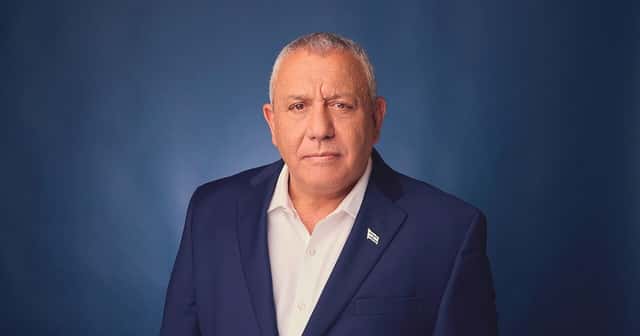
A day after President Isaac Herzog gave Gadi Eisenkot the first chance to form Israel's next government, the clearest path to a 61-seat majority runs through the two ultra-Orthodox, or Haredi, parties that sat in Prime Minister Benjamin Netanyahu's camp for most of the past decade. United Torah Judaism says it will negotiate with anyone who resolves the military-service status of yeshiva students. It also says it will accept no change at all on religion and state. Shas says it remains in the right-wing bloc, but Israeli reporting suggests it could follow UTJ if UTJ moves first.
The arithmetic explains the attention. Eisenkot's core opposition bloc won 48 seats in the October 27 election. Netanyahu's bloc won 53, and Arab-majority parties won a record 19. UTJ's seven seats and Shas's six would bring Eisenkot to exactly 61, The Jerusalem Post reported. That route would avoid relying on Arab parties, which Avigdor Liberman has refused to do. But it would cut against one of the opposition's most explicit campaign promises: ending the broad exemption from military service for Haredi men.
The numbers behind each route#
Eisenkot has 28 days from Sunday, November 8, to assemble a majority in the 120-seat Knesset, and Herzog can extend that by 14 days, according to AFP, in a report carried by France 24. AFP's breakdown of the smaller parties lets readers compare the main options.
Source: The Jerusalem Post, AFP via France 24
Show the numbers
| Route | Core opposition bloc | Added partners |
|---|---|---|
| With UTJ (7) and Shas (6) | 48 | 13 |
| With Ra'am (8) and Joint List (11) | 48 | 19 |
| Arab parties, without Yisrael Beytenu | 41 | 19 |
The chart shows why the Haredi option matters. A government built on Arab-majority parties has more than enough seats on paper, but only if Liberman's Yisrael Beytenu stays inside. Liberman has vowed that his seven lawmakers will not join any government that relies on Arab Israelis, AFP reported. By simple subtraction, the remaining bloc plus all 19 Arab-party seats would total 60, one short. AFP also described a narrower option in which Eisenkot relies mainly on Ra'am, with the Joint List abstaining on no-confidence votes.
Netanyahu's camp, at 53 seats, is also short. Both Netanyahu and Eisenkot have called for a national unity government, AFP reported, but each insists on leading it. The final count and the earlier rounds of consultations are covered in 567politics' report on Israel's final count and its explainer on Herzog's coalition timetable.
What Eisenkot has said he wants#
Eisenkot told the mandate ceremony on Sunday that "creative and unconventional political steps" would be needed to form a government, and repeated his call for a "national emergency government," The Jerusalem Post reported. He has suggested starting as a minority government, with some parties voting to install him without joining at first, AFP reported. He has also said he will work with lawmakers from other parties who accept four principles he has laid out, and that once the new Knesset is sworn in he plans to repeal laws that, in his words, "threaten democracy."
Eisenkot has called Netanyahu dangerous and unfit to lead, citing the failure to prevent the October 7, 2023 attack and the corruption charges against him, according to AFP. His camp argues that a government relying on Arab parties would threaten Israel's Jewish character, and he has accused Arab lawmakers of electoral fraud, which they deny, AFP reported. Israel's attorney general said on Monday that there is no evidence of foreign election interference, according to the Post's live coverage.
The largest parties in the new Knesset show how fragmented the field is:
| Party | Leader or type | Seats |
|---|---|---|
| Likud | Benjamin Netanyahu | 27 |
| Yashar | Gadi Eisenkot | 21 |
| B'Yachad | Naftali Bennett | 12 |
| Joint List | (Arab-majority) | 11 |
| Ra'am | (Arab-majority) | 8 |
Party seats for Likud, Yashar and B'Yachad are from The Jerusalem Post's live coverage; Joint List and Ra'am figures are from AFP. Turnout was 77.7%, up 7.1 points from 2022, according to the Central Elections Committee figures cited by the Post. U.S. President Donald Trump weighed in on Sunday, saying Eisenkot and Netanyahu have "very similar views," the Post reported.
What UTJ is asking for#
UTJ has framed its position in religious terms and kept it narrow. "We have an unequivocal directive from the Torah sages to negotiate with anyone who agrees to resolve the status of yeshiva students, and that is what we will do," a senior UTJ official told the Haredi site Kikar HaShabbat, as reported by Israel National News.
The same official set a limit on what the party would give up in return. "There is no doubt that any cooperation by us with anyone will require fully preserving the status quo on all issues of religion and state," he said. "We will not agree to any changes on these issues, from Shabbat and kashrut to conversion." A senior official in Degel HaTorah, one of UTJ's two factions, added: "Anyone dreaming of compromises on religion and state does not know Rabbi Dov Lando."
UTJ chairman Yaakov Asher wrote that "every proposal will first be brought for a decision" by the party's leading rabbis. The senior official also played down the chance of a quick deal. "It will take time, perhaps a long time," he said. "I doubt any agreement will be reached while Gadi Eisenkot holds the mandate." He described UTJ as belonging to neither the Netanyahu bloc nor the change bloc, but to "the bloc of Torah students."
UTJ also turned down an early test of cooperation on Monday. Eisenkot's Yashar party invited both Haredi parties to help replace Knesset Speaker Amir Ohana of Likud when the new Knesset convenes on Tuesday, The Jerusalem Post reported. Asher said UTJ's "principled position" is that a new speaker should be chosen together with a new government, "rather than upon the convening of the Knesset."
Shas: a denial on the record, signals off it#
Shas has been more guarded. On Saturday, November 7, after Israeli TV channels reported that Shas would not oppose an Eisenkot government if UTJ's rabbis approved one, the party called the reports "total fake news." It said that, as directed by its Council of Torah Sages, it is part of the right-wing bloc, according to Israel.com's account of the statement, which Shas leader Aryeh Deri reposted on X. Israel.com noted that the denial addressed joining a government, a narrower claim than the TV reports, which said only that Shas would not stand in the way.
On Sunday, Yishai Cohen, a reporter for Kikar HaShabbat, told the radio station 103FM that Shas could consider joining if the status of yeshiva students is resolved, but is waiting for UTJ to move first, The Jerusalem Post reported. He said Shas fears losing traditional voters who want Netanyahu. "If it sees that the government is stable in the long term, it will be able to say: 'We were dragged into this situation,'" Cohen said. These are a journalist's assessments, not statements from the party.
Netanyahu's counter-effort#
Netanyahu has assigned ministers to work on the Haredi leadership, The Jerusalem Post reported. Some ministers were asked to approach associates of Rabbi Dov Lando and Rabbi Moshe Hillel Hirsch. Finance Minister Bezalel Smotrich was tasked with reaching people in Yashar who oppose relying on Arab parties. The effort also includes trying to bring Liberman back to the right-wing camp, which Likud sources said has so far failed.
The Post reported that some in Likud privately doubt Netanyahu can hold UTJ if Eisenkot offers an acceptable enlistment arrangement. When Netanyahu warned Haredi figures that Eisenkot would not deliver a draft law, senior Haredi officials replied, according to the Post: "Unlike your enlistment law, the High Court of Justice will not strike down Eisenkot's." That exchange is reported second-hand and could not be independently confirmed.
The tradeoff for the opposition#
The Haredi route creates tension inside Eisenkot's own camp. Ending the exemption for yeshiva students was a central opposition promise, and resentment over it has grown while reservists serve repeated tours in Gaza, Lebanon and Iran, AFP noted. Liberman, who has harshly criticized the Haredi parties in the past, has nonetheless opened the door to an alliance with them as a way to avoid depending on Arab parties, AFP reported.
Yair Golan, the most left-leaning opposition leader and a supporter of working with Arab parties, mocked that approach. If Liberman does not want to draft the ultra-Orthodox or reverse Netanyahu's judicial changes, Golan said, he should simply form a government with Netanyahu, according to AFP. Within UTJ, meanwhile, there are reservations about partnering with parties such as The Democrats, the Post reported.
These positions reflect different priorities rather than a dispute over facts. Supporters of a Haredi deal put replacing Netanyahu first. Critics on the center-left put military service equality and secular reforms first. UTJ and Shas put the status of yeshiva students and the religious status quo first. Any coalition agreement would have to show which of those commitments gives way.
What to watch this week#
The new Knesset is sworn in on Tuesday. The first measurable signal will be whether the opposition gathers the 61 signatures needed to replace Ohana, a process Yashar says is under way. Ohana has said he would schedule any such vote for the following week rather than on inauguration day, the Post reported. The bloc had not yet agreed on its own candidate for speaker as of Monday.
Beyond that, the key question is whether UTJ's rabbis endorse talks on a specific enlistment arrangement, and whether Eisenkot's partners accept the price of no change on Shabbat, kashrut and conversion. 567politics' earlier reports cover UTJ's decision to recommend no candidate and Netanyahu's call for a broad government. The Israel political spectrum shows where each party sits on economic and social questions, as dated editorial estimates.
Differing perspectives
How should Eisenkot try to reach a 61-seat majority, and at what price?
Each position is summarized as its supporters make it, with equal weight and in alphabetical order. A summary is not an endorsement; the evidence for each is weighed in the story above.
A national emergency government built creatively
Who holds it: Gadi Eisenkot and his Yashar party
Eisenkot argues that the country needs a national emergency government to replace Netanyahu quickly, and that creative and unconventional political steps will be required to get there. He says he will work with lawmakers from other parties who accept his four principles, and that the new Knesset should move fast, including replacing the speaker and repealing laws he says threaten democracy.
In their words: The Jerusalem Post, quoting Eisenkot and Yashar ↗
Deal with whoever resolves yeshiva students' status
Who holds it: United Torah Judaism and its rabbinic leadership, including chairman Yaakov Asher
UTJ says its rabbis have directed it to negotiate with anyone who agrees to resolve the status of yeshiva students, which it calls the central issue. It says it belongs to neither the Netanyahu bloc nor the change bloc. Any cooperation, it argues, must fully preserve the status quo on religion and state, from Shabbat and kashrut to conversion, and every proposal will first go to the leading Torah sages.
In their words: Israel National News, quoting UTJ and Degel HaTorah officials ↗
Keep the draft pledge and work with Arab parties
Who holds it: Yair Golan and the most left-leaning parts of the opposition
Golan supports working with Arab-majority parties, which won a record 19 seats, rather than buying Haredi support with a service exemption. He argues that the opposition campaigned explicitly on ending the exemption and reversing Netanyahu's judicial changes. If partners such as Liberman will not draft the ultra-Orthodox or undo those changes, he says, they might as well form a government with Netanyahu.
In their words: AFP via France 24, quoting Yair Golan ↗
Keep the right-wing bloc together under Netanyahu
Who holds it: Likud and Prime Minister Benjamin Netanyahu's camp
Netanyahu's camp argues for a broad national unity government with Netanyahu at its head and is working to keep the Haredi parties in the right-wing bloc. Its ministers are reaching out to Haredi rabbinic leaders and to Yashar members who oppose relying on Arab parties. Netanyahu has warned Haredi leaders that Eisenkot would not deliver the enlistment arrangement they seek.
In their words: The Jerusalem Post, reporting Likud officials and Netanyahu's outreach ↗
Cite this article
567politics staff. “Eisenkot's shortest path to 61 runs through the Haredi parties, but UTJ says religion rules won't move.” 567politics. Published 2026-11-09. https://567politics.com/news/israel-eisenkot-haredi-parties-utj-shas-draft-deal-61-seats-november-2026
Wikipedia citation
{{cite news |title=Eisenkot's shortest path to 61 runs through the Haredi parties, but UTJ says religion rules won't move |url=https://567politics.com/news/israel-eisenkot-haredi-parties-utj-shas-draft-deal-61-seats-november-2026 |work=567politics |author=567politics staff |date=2026-11-09 |language=en}}CSL-JSON for reference managers
{
  "id": "https://567politics.com/news/israel-eisenkot-haredi-parties-utj-shas-draft-deal-61-seats-november-2026",
  "type": "article-newspaper",
  "title": "Eisenkot's shortest path to 61 runs through the Haredi parties, but UTJ says religion rules won't move",
  "URL": "https://567politics.com/news/israel-eisenkot-haredi-parties-utj-shas-draft-deal-61-seats-november-2026",
  "container-title": "567politics",
  "language": "en",
  "author": [
    {
      "literal": "567politics staff"
    }
  ],
  "issued": {
    "date-parts": [
      [
        2026,
        11,
        9
      ]
    ]
  }
}Citations identify this article and its publication date. Assess the reporting and its linked sources before using it as evidence.
Read this article as Markdown or JSON. Cite the original page and retain its sources, dates and qualifications.
Embed this article summary
Paste this HTML into your page. The summary stays linked to the full story and updates with it. No account required.
<iframe src="https://567politics.com/embed/news/israel-eisenkot-haredi-parties-utj-shas-draft-deal-61-seats-november-2026?theme=auto" title="Eisenkot's shortest path to 61 runs through the Haredi parties, but UTJ says religion rules won't move by 567politics" width="100%" height="440" style="border:0;max-width:100%" loading="lazy"></iframe>
<p style="font-size:14px">Eisenkot's shortest path to 61 runs through the Haredi parties, but UTJ says religion rules won't move by <a href="https://567politics.com/news/israel-eisenkot-haredi-parties-utj-shas-draft-deal-61-seats-november-2026" rel="nofollow">567politics</a></p>
<script async src="https://567politics.com/embed.js"></script>
READ BEYOND 567POLITICS
Alternate sources & perspectives
Independent coverage and primary evidence to help you compare arguments. A link is not an endorsement; perspective labels describe the linked material.
- right argument
UTJ's red line: No changes on religion and state ↗
Israel National News
UTJ and Degel HaTorah officials' own terms: negotiate with anyone on yeshiva students, no change on Shabbat, kashrut or conversion.
- primary evidence
Shas calls reports it could back an Eisenkot government 'total fake news' ↗
Israel.com
Reproduces Shas's statement as reposted by Aryeh Deri and compares it with the TV reports it denied.
- independent analysis
Likud officials 'hope for a miracle' as haredi parties weigh joining Eisenkot government ↗
The Jerusalem Post
Details Netanyahu's outreach to Haredi rabbis and the 48+7+6 arithmetic for a 61-seat coalition.
- left argument
Eisenkot's strange bedfellow options to lead Israel ↗
AFP via France 24
Sets out the Arab-party, Haredi and unity routes, including Yair Golan's case against a Haredi deal and Liberman's refusal to rely on Arab parties.
- other perspective
Will Eisenkot be able to form Israel's next government amid divided opposition? ↗
Al Jazeera
Explainer focused on the Arab-led parties' potentially decisive role and the opposition's conflicting positions.
- independent analysis
Gadi Eisenkot reaches out to Netanyahu allies as he strives to form government ↗
The Guardian
Eisenkot's remarks at the mandate ceremony and his three options: power-sharing, Arab-party support or a Haredi deal.
Reviewed 2026-11-09. Reviewed November 9, 2026. Discovery surfaced encyclopedia and profile pages, which were not listed, plus Al Jazeera and Guardian reports that were opened and are listed. The Washington Post's report on the Haredi option was paywalled beyond its opening paragraph and is not listed. Shas's own statement is represented through Israel.com's account and Aryeh Deri's repost; UTJ officials' remarks come from Kikar HaShabbat via Israel National News. We found no representative poll on an Eisenkot-Haredi coalition. Statements attributed to unnamed Likud and Haredi officials could not be independently confirmed.