Arab parties' votes help Eisenkot bloc win 63-50 fight over the Knesset's powerful Arrangements Committee
The panel splits 9-9 between the two blocs, with four seats for the Joint List and Ra'am. Likud alleges cooperation with "supporters of terrorism"; Liberman still rejects an Arab-backed government.
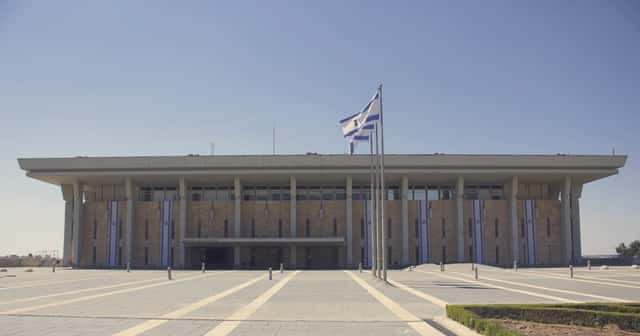
Israel's new Knesset voted 63-50 on Wednesday, November 11, to set up its powerful Arrangements Committee on terms written by the bloc led by Gadi Eisenkot. The vote rejected a Likud plan that would have given Arab-led parties fewer seats. The committee will run the parliament's business until a government forms. Its makeup gives nine seats to Eisenkot's bloc, nine to the bloc backing caretaker Prime Minister Benjamin Netanyahu, and four to the Arab-led Joint List and Ra'am.
The vote was the first floor test of the 26th Knesset, which was sworn in a day earlier. It showed that the 67 lawmakers outside Netanyahu's bloc can act together on procedure. It also handed Likud a new line of attack. The party said the Eisenkot bloc had begun to cooperate with "supporters of terrorism." Eisenkot's partners, for their part, have not agreed among themselves on whether Arab-led parties should help form a government.
Within hours, the new committee named Yisrael Beytenu leader Avigdor Liberman to chair a temporary Foreign Affairs and Defense Committee, according to the Haredi news site Kikar HaShabbat.
What the Knesset approved#
The plenum adopted a proposal by MK Roy Folkman of Yashar, the party led by Gadi Eisenkot. Folkman will chair the 22-member committee. The Times of Israel and i24NEWS both reported the 63-50 result and the seat split.
Under Folkman's plan, each faction gets one committee seat for every five lawmakers it has. That gives Likud five seats and Yashar four. B'Yachad, the Joint List, The Democrats and Ra'am get two each. Yisrael Beytenu, Otzma Yehudit, United Torah Judaism, Shas and Religious Zionism get one each.
| Faction | Bloc | Committee seats |
|---|---|---|
| Likud | Netanyahu bloc | 5 |
| Yashar | Eisenkot bloc | 4 |
| B'Yachad | Eisenkot bloc | 2 |
| The Democrats | Eisenkot bloc | 2 |
| Joint List | Arab-led parties | 2 |
| Ra'am | Arab-led parties | 2 |
| Yisrael Beytenu | Eisenkot bloc | 1 |
| Otzma Yehudit | Netanyahu bloc | 1 |
| United Torah Judaism | Netanyahu bloc | 1 |
| Shas | Netanyahu bloc | 1 |
| Religious Zionism | Netanyahu bloc | 1 |
The 63 votes in favor and 50 against add up to 113. Seven of the 120 lawmakers were not counted on either side in the reports. The reports did not say who they were.
The plenum session was run by outgoing Knesset Speaker Amir Ohana of Likud, according to Kikar HaShabbat. The Eisenkot bloc has nominated Yashar's Matan Kahana to replace him. Ohana has set the speaker vote for next Tuesday, November 17. The bloc's nomination is covered in 567 Politics' report on the swearing-in.
Why the committee matters#
The Arrangements Committee is a stopgap body. It holds real power in the weeks before a government and its permanent committees exist.
According to i24NEWS and the Times of Israel, the committee:
- proposes the membership of the Knesset's standing committees for a plenum vote;
- may set up temporary Finance and Foreign Affairs and Defense committees until the standing ones exist;
- holds the House Committee's powers over procedure and debate until that committee forms; and
- may appoint temporary deputy speakers.
The law also sets rules for who sits on it. The chair must come from the faction of the lawmaker the president has tasked with forming a government. Seats must reflect the relative size of the factions. Every faction with four or more lawmakers must get at least one seat. Kikar HaShabbat reported that faction representatives met on Monday, November 9, but could not agree on a seat formula. That is why two rival plans went to the floor.
Eisenkot holds the mandate to form a government. That gave his party the chair under the law. The seat formula was the open question.
The rival Likud plans#
Likud MK Ofir Katz put forward the losing plan. It called for an 18-member committee with one seat for every seven lawmakers, according to i24NEWS and Kikar HaShabbat.
Katz told the plenum that Likud had first offered one seat for every four lawmakers. By his count, that would have given his bloc 15 seats, the rival bloc 12 and the Arab factions four. In i24NEWS's translation, he said: "After concerns were raised that the committee would be too large, we offered a genuine compromise: eight representatives for our bloc, seven for the other bloc and three for the Arab factions."
"It is a fair proposal, but they refused because they are trying to conceal their cooperation with supporters of terrorism in the Knesset," Katz said.
The Times of Israel reported that critics called the compromise plan "discriminatory and anti-democratic." They said it would have tilted the committee toward Netanyahu's bloc.
The chart below shows how each plan would have split the seats by bloc. The figures come from Katz's own account and the approved text.
Source: Times of Israel, i24NEWS, Kikar HaShabbat
Show the numbers
| Plan | Netanyahu bloc | Eisenkot bloc | Arab-led parties |
|---|---|---|---|
| Katz first offer | 15 | 12 | 4 |
| Katz compromise | 8 | 7 | 3 |
| Folkman plan (approved) | 9 | 9 | 4 |
Under the Folkman formula, the Netanyahu and Eisenkot blocs tie at nine seats. The Arab-led parties hold the four other seats. Under the Katz compromise, the Netanyahu bloc would have had one more seat than the Eisenkot bloc. The Arab-led parties would have had one fewer.
What each side said#
Folkman cast the outcome as a matter of norms, not blocs. "In my view, good politics is pragmatic politics. Civility cannot be legislated, but there are norms and there are laws," he said, as quoted by i24NEWS. "I proposed reaching an agreement with MK Katz on the committee's composition because I believe in consensus. Disagreeing for its own sake serves no purpose, and there is no reason to create unnecessary tension."
Likud issued a written statement after the vote. "It has begun. The parties of Eisenkot, Lieberman and Bennett voted today alongside Tibi and Abbas in the Knesset plenum," it said. "We call on you to join us in unity. Stop cooperating with supporters of terrorism who boycott the national anthem." The statement referred to Joint List lawmaker Ahmad Tibi and Ra'am chair Mansour Abbas.
The Times of Israel reported on Tuesday that most Arab lawmakers were absent for the anthem at the swearing-in ceremony. The reports on Wednesday's vote did not include a response from the Joint List or Ra'am to the Likud statement.
A procedural majority, not a coalition#
The vote does not mean Eisenkot has a government. The October election left Netanyahu's bloc with 53 seats, Eisenkot's bloc with 48 and Arab-led parties with 19, as 567 Politics reported from the final count. Together, the Eisenkot bloc and the Arab-led parties hold 67 seats. That is more than the 61 needed for a majority.
But the Eisenkot bloc is split on whether Arab-led parties should be part of a government.
Liberman said on Tuesday that he backs Eisenkot for prime minister. He also ruled out relying on the two Arab parties. "I am working to put an end to the rule of Netanyahu — once and for all. Not a temporary end," he said, according to the Times of Israel. "Any minority government will ultimately, quickly, return him to power." He said he would "not lend a hand" to a coalition that relies on Arab parties. His model is a 61-seat government made of the Eisenkot bloc's 48 seats plus the 13 seats of UTJ and Shas.
Democrats leader Yair Golan took the opposite view on the same day. "I call on all my colleagues in the change bloc — let's form a government quickly. Do not rule out the Arab parties, and do not rule out the Arab public," he said, as reported by the Times of Israel.
Ra'am's Abbas has said his party wants in. "We aspire to be part of the next coalition and government. Those who will benefit from this are Jewish and Arab citizens. We will extend a hand for a partnership that will be led by Gadi Eisenkot," he told his faction, according to Ynet. The Joint List has pledged to help oust Netanyahu's government and to provide a "safety net" of votes, the Times of Israel reported. Abbas's reported offer to recognize Hamas as a terror group is covered in an earlier 567 Politics story.
The Jerusalem Post reported on Wednesday that some members of the Eisenkot bloc suspect Golan prefers a minority government. The paper cited unnamed sources in the bloc.
So Wednesday's vote shows how the two tracks differ. Yisrael Beytenu voted with the Arab-led parties on a procedural question. Its leader still says he will not join a government that depends on them.
Netanyahu's camp and the speaker fight#
Netanyahu's allies have tried to make Arab support a test of legitimacy. Finance Minister Bezalel Smotrich said on Tuesday that a speaker appointment won "with the votes of Israel's enemies" would be "illegitimate," according to the Times of Israel. He urged Kahana not to accept the post if it depends on Arab-led parties.
Netanyahu made a similar case in his Knesset speech this week. According to the Times of Israel, he said the Arab parties seek to destroy the Jewish state and must not be part of a government. Eisenkot later called off planned talks with Likud, as 567 Politics reported.
The Times of Israel also reported that right-wing protesters rallied outside the Knesset against what they called a "government with terrorists."
The speaker vote on November 17 will be a second test. If the same 63 votes hold, Kahana would replace Ohana. UTJ has said it will not vote to replace the speaker, as 567 Politics has reported.
The temporary committees#
The Arrangements Committee met later on Wednesday. It chose the members of the temporary Finance and Foreign Affairs and Defense committees, Kikar HaShabbat reported.
Liberman will chair the temporary Foreign Affairs and Defense Committee. Its listed members include Likud's Boaz Bismuth, Yaakov Bardugo, Ofir Katz and Elisha Madan, B'Yachad's Ram Ben Barak and Keren Terner, and Golan of The Democrats. Ra'am's seat goes to Yoav Segalovitz. Otzma Yehudit's Limor Son Har-Melech, UTJ's Eliyakim Stark, Shas's Yinon Azulai and Religious Zionism's Simcha Rothman also sit on the panel.
The temporary Finance Committee will oversee the state budget and approve budget changes. Its listed members include Tibi of the Joint List, with a second Joint List member to be named later. Ra'am's seat goes to Iman Khatib-Yassin. Likud named Bardugo, David Peter, Talik Goyali and Eti Atia.
Liberman said on Tuesday that, as committee chair, he would summon the heads of the Shin Bet, the IDF and the Mossad. He said he would ask Shin Bet chief David Zini about probes into alleged election fraud and foreign interference. "There is no effective [parliamentary] oversight of the security establishment," he said, according to the Times of Israel.
What comes next#
Eisenkot is still trying to build a 61-seat government. He has said he will not give up on "service for all," the military or civilian service model that the Haredi parties oppose. UTJ leader Yaakov Asher has said his party will not join any coalition without a draft arrangement for yeshiva students. Shas says it is not in talks with anyone but Netanyahu. The coalition math is set out in 567 Politics' look at the Haredi path to 61.
The next fixed date is the speaker vote on Tuesday, November 17. The Arrangements Committee will also have to propose the full slate of standing committees for a plenum vote. How the Arab-led parties' seats are used in that process may show how the Eisenkot bloc settles its own split. Party positions are mapped on the Israel political spectrum.
Sources#
- Times of Israel, "Knesset approves makeup of powerful Arrangements Committee 63-50, rejecting Likud bid to dilute Arab parties' influence," by Ariela Karmel, November 11, 2026: https://www.timesofisrael.com/liveblog_entry/knesset-approves-makeup-of-powerful-arrangements-committee-63-50-rejecting-likud-bid-to-dilute-arab-parties-influence/
- i24NEWS, "Knesset approves committee to organize parliamentary work after election, with support of Arab parties," November 11, 2026: https://www.i24news.tv/en/news/israel/politics/artc-knesset-approves-committee-to-organize-parliamentary-work-after-election-with-support-of-arab-parties
- Kikar HaShabbat, report on the 63-50 vote (Hebrew), November 11, 2026: https://www.kikar.co.il/political-news/knesset-organizing-committee-approved-folkman
- Kikar HaShabbat, report on the temporary committees (Hebrew), November 11, 2026: https://www.kikar.co.il/political-news/knesset-organizing-committee-temporary-committees-
- Arutz Sheva, report on the 63-50 vote (Hebrew), November 11, 2026: https://www.inn.co.il/news/710588
- Times of Israel, "Eisenkot vows not to fold on service for all, as potential UTJ allies insist on draft exemptions," November 10, 2026: https://www.timesofisrael.com/eisenkot-vows-not-to-fold-on-service-for-all-as-potential-utj-allies-insist-on-draft-exemptions/
- Ynet, "Abbas Does Not Deny Ynet Report: 'We Aspire to Be Part of the Coalition and Government'," November 2026: https://www.ynetnews.com/article/qoem2zbft
- Jerusalem Post, report on tensions inside the Eisenkot bloc, November 11, 2026: https://www.jpost.com/israel-election-2026/article-914561
Differing perspectives
Should the Eisenkot-led bloc rely on the votes of Arab-led parties to run the Knesset and form a government?
Each position is summarized as its supporters make it, with equal weight and in alphabetical order. A summary is not an endorsement; the evidence for each is weighed in the story above.
Back Eisenkot but rule out reliance on Arab parties
Who holds it: Yisrael Beytenu leader Avigdor Liberman
Liberman says he backs Eisenkot for prime minister and wants to end Netanyahu's rule for good, not for a short time. He argues that a minority government that relies on Arab parties cannot function, would soon collapse and would return Netanyahu to power with about 70 seats after a new election. He wants a 61-seat coalition of the Eisenkot bloc plus UTJ and Shas.
In their words: Times of Israel, quoting Liberman ↗
Bring Arab-led parties into the next coalition
Who holds it: Ra'am chair Mansour Abbas; Democrats leader Yair Golan; the Joint List, which offers outside support
Abbas says Ra'am will keep working to replace the government and wants to be part of the next coalition. He says his party will extend a hand to a partnership led by Gadi Eisenkot, and that Jewish and Arab citizens would both gain from it. Others in this camp, including Democrats leader Yair Golan, argue that the change bloc should not rule out the Arab parties or the Arab public.
In their words: Ynet, quoting Mansour Abbas ↗
Split committee seats by bloc, with fewer for Arab-led parties
Who holds it: Likud and its MK Ofir Katz, backed by the Netanyahu-aligned bloc
Likud argues that its 8-7-3 compromise was a fair way to divide the committee after concerns that a one-seat-per-four plan would make it too large. Katz says the Eisenkot bloc refused because it wants to hide its cooperation with what he calls supporters of terrorism. The party says lawmakers who boycott the national anthem should not shape how the Knesset works, and calls on its rivals to join a unity government instead.
In their words: Arutz Sheva (Channel 7), quoting Katz and the Likud statement ↗
Use the 67-seat majority on Knesset procedure
Who holds it: Yashar MK Roy Folkman, who wrote the approved plan, and the factions that voted for it
Folkman argues that the law asks for a committee that reflects the size of each faction, and that one seat per five lawmakers does that. He says good politics is pragmatic politics, that he offered Katz an agreement on the makeup, and that disagreeing for its own sake only creates tension. Supporters point out that the approved plan gives the Netanyahu and Eisenkot blocs nine seats each.
In their words: i24NEWS, quoting Folkman ↗
Cite this article
567 Politics staff. “Arab parties' votes help Eisenkot bloc win 63-50 fight over the Knesset's powerful Arrangements Committee.” 567politics. Published 2026-11-11. https://567politics.com/news/israel-knesset-arrangements-committee-63-50-folkman-katz-arab-parties-liberman-fadc-november-2026
Wikipedia citation
{{cite news |title=Arab parties' votes help Eisenkot bloc win 63-50 fight over the Knesset's powerful Arrangements Committee |url=https://567politics.com/news/israel-knesset-arrangements-committee-63-50-folkman-katz-arab-parties-liberman-fadc-november-2026 |work=567politics |author=567 Politics staff |date=2026-11-11 |language=en}}CSL-JSON for reference managers
{
  "id": "https://567politics.com/news/israel-knesset-arrangements-committee-63-50-folkman-katz-arab-parties-liberman-fadc-november-2026",
  "type": "article-newspaper",
  "title": "Arab parties' votes help Eisenkot bloc win 63-50 fight over the Knesset's powerful Arrangements Committee",
  "URL": "https://567politics.com/news/israel-knesset-arrangements-committee-63-50-folkman-katz-arab-parties-liberman-fadc-november-2026",
  "container-title": "567politics",
  "language": "en",
  "author": [
    {
      "literal": "567 Politics staff"
    }
  ],
  "issued": {
    "date-parts": [
      [
        2026,
        11,
        11
      ]
    ]
  }
}Citations identify this article and its publication date. Assess the reporting and its linked sources before using it as evidence.
Read this article as Markdown or JSON. Cite the original page and retain its sources, dates and qualifications.
Embed this article summary
Paste this HTML into your page. The summary stays linked to the full story and updates with it. No account required.
<iframe src="https://567politics.com/embed/news/israel-knesset-arrangements-committee-63-50-folkman-katz-arab-parties-liberman-fadc-november-2026?theme=auto" title="Arab parties' votes help Eisenkot bloc win 63-50 fight over the Knesset's powerful Arrangements Committee by 567politics" width="100%" height="440" style="border:0;max-width:100%" loading="lazy"></iframe>
<p style="font-size:14px">Arab parties' votes help Eisenkot bloc win 63-50 fight over the Knesset's powerful Arrangements Committee by <a href="https://567politics.com/news/israel-knesset-arrangements-committee-63-50-folkman-katz-arab-parties-liberman-fadc-november-2026" rel="nofollow">567politics</a></p>
<script async src="https://567politics.com/embed.js"></script>
READ BEYOND 567POLITICS
Alternate sources & perspectives
Independent coverage and primary evidence to help you compare arguments. A link is not an endorsement; perspective labels describe the linked material.
- independent analysis
Knesset approves makeup of powerful Arrangements Committee 63-50, rejecting Likud bid to dilute Arab parties' influence ↗
The Times of Israel
Vote result, the 9-9-4 bloc split, the committee's powers, and quotes from Katz and Folkman.
- independent analysis
Knesset approves committee to organize parliamentary work after election, with support of Arab parties ↗
i24NEWS
Second account with the legal rules for the committee, Katz's 18-member plan, Folkman's full quote and Likud's statement.
- right argument
63 vs. 50: Likud proposal rejected, Roy Folkman to head the Arrangements Committee (Hebrew) ↗
Arutz Sheva (Channel 7)
Hebrew report from a right-leaning outlet carrying Katz's case for the 8-7-3 compromise and Likud's criticism of the vote.
- independent analysis
The Arrangements Committee: Knesset approves its formation by 63 to 50 (Hebrew) ↗
Kikar HaShabbat
Haredi news site's report with the approved seat allocation, the legal requirements, the failed Nov. 9 faction meeting and Ohana's role in the session.
- independent analysis
Arrangements Committee sets the makeup of the Finance and Foreign Affairs and Defense committees (Hebrew) ↗
Kikar HaShabbat
Lists members of the temporary committees and names Liberman as chair of Foreign Affairs and Defense.
- other perspective
Eisenkot vows not to fold on service for all, as potential UTJ allies insist on draft exemptions ↗
The Times of Israel
Liberman's case against relying on Arab parties, Golan's case for including them, and Smotrich's view of Arab votes for the speaker.
- other perspective
Abbas does not deny Ynet report: 'We aspire to be part of the coalition and government' ↗
Ynet
Ra'am chair Mansour Abbas states his party's aim to join a coalition led by Eisenkot.
- independent analysis
Eisenkot's bloc struggles with internal divisions amid haredi coalition talks ↗
The Jerusalem Post
Reports, citing unnamed sources, suspicion in the bloc over Golan's preference for a minority government and Bennett's intentions.
Reviewed 2026-11-11. discover_politics_sources returned only generic Knesset reference pages, so these sources were hand-picked from pages opened on Nov. 11, 2026. The Knesset's own announcement could not be opened because the Knesset site blocks automated access, and an Israel Hayom report returned an access-denied page. No public reply from the Joint List or Ra'am to Likud's statement was found. The Jerusalem Post report on divisions in the Eisenkot bloc relies on unnamed sources.