Adelson’s $95 million for a pro-Trump PAC puts Israel policy and donor access under scrutiny
Original FEC filings trace four 2024 gifts. Executive records show policy alignment, a sanctions reversal and limits to claims that donations bought decisions.
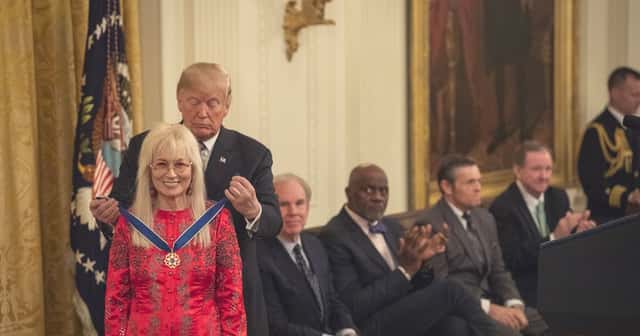
Miriam Adelson supplied $95 million to Preserve America PAC in four installments during the third quarter of 2024. The pro-Trump group’s federal filing offers a starting point. It helps trace the ties between a major pro-Israel donor, access to the president and U.S. policy. It does not establish that a policy was purchased. Original FEC report, pages 6–7
The strongest public evidence of the relationship goes beyond matching a donation with a decision. At a December 2025 White House reception, Trump invoked Adelson’s financial support as he invited her to speak. That is evidence of presidential recognition tied to money. The transcript does not establish a bargain over Israel policy. Official reception transcript
This first report in our series follows the disclosed 2024 funding. It also reviews selected decisions from 2017–2025. It asks which policy outcomes aligned with the donor’s stated preferences, where the evidence points to access, and where claims of control outrun the record. Sources were checked on November 5, 2026; the historical filing is not presented as a current or career fundraising total.
Four checks and a clearly identified recipient#
The recipient was Preserve America PAC, FEC committee C00878801. Its October 15, 2024 report covers July 1–September 30, 2024. The itemized entries identify Miriam Adelson as the contributor.
| Receipt date | Donor | Recipient | Reported amount |
|---|---|---|---|
| July 26, 2024 | Miriam Adelson | Preserve America PAC | $25 million |
| August 13, 2024 | Miriam Adelson | Preserve America PAC | $25 million |
| September 9, 2024 | Miriam Adelson | Preserve America PAC | $25 million |
| September 17, 2024 | Miriam Adelson | Preserve America PAC | $20 million |
Source: the original report’s Schedule A, pages 6–7. These four entries total $95 million. We have not reconciled every later amendment or refund; this is a dated disclosure, not a final net total for the election cycle.
The figure is large in relation to the recipient’s own fundraising: the same report lists $95,085,402.35 in total quarterly receipts. The four gifts account for about 99.91% of that reported amount.
Source: Original FEC quarterly report
Show the numbers
| Source | Reported receipts |
|---|---|
| Miriam Adelson | $95,000,000 |
| All other receipts | $85,402.35 |
Political support is different from money received by Trump#
Preserve America was an outside group supporting Trump, rather than his authorized campaign committee. FactCheck.org’s August 2024 profile describes its pro-Trump role and advertising against Kamala Harris. That distinction changes the wording of any claim about what the candidate received.
The money in the table went to the PAC. That is the named recipient. It should not be described as $95 million paid personally to Donald Trump, or as $95 million deposited in his campaign account. Outside advertising can benefit a candidate without becoming a campaign receipt.
There is primary evidence of the advertising channel. A separate August 20 independent-expenditure filing identifies Harris-related digital advertising and a media buy. Its certification states that the reported spending was not undertaken in cooperation with a candidate or authorized committee. That is the filer’s certification, not an independent audit of its conduct.
The FEC’s receipts guide explains that independent-expenditure-only committees can accept unlimited contributions and do not make contributions to candidates. A large disclosed super PAC gift therefore does not, by its size alone, show a contribution-limit violation.
Our reporting on AIPAC-linked payments to Democratic campaigns examines a different funding channel, including gifts forwarded by an intermediary. Combining those figures with super PAC advertising under one label would conceal who received the money and how it operated.
Adelson’s own explanation: support for a record she approved#
Adelson set out her reasons for supporting Trump in a November 4, 2024 Israel Hayom opinion article. She praised his withdrawal from the Iran nuclear agreement and the embassy move to Jerusalem. She also cited domestic regulation, immigration and demands that NATO partners spend more on defense.
Her argument presents the donation relationship as backing a politician whose record she already endorsed. It is evidence of her stated preferences. It does not independently establish every reason for her giving, or exclude private requests that are absent from the public record.
The timing matters. In his December 6, 2017 statement, Trump recognized Jerusalem as Israel’s capital and directed preparations to relocate the embassy. He defended the decision as serving U.S. interests and advancing peace. That announcement preceded the four 2024 contributions examined here.
Trump’s March 25, 2019 proclamation recognized Israeli sovereignty over the Golan Heights. It cited Israel’s security and threats from Iran and armed groups in Syria. This, too, was an established position before the 2024 payments.
Neither chronology proves independence from donor influence over a longer period. It does rule out treating these particular 2024 payments as events that preceded those first-term decisions. A serious influence investigation must distinguish support for an existing position from evidence that funding changed it.
A consequential reversal after the election#
One specific second-term action deserves scrutiny: Trump’s removal of the Biden administration’s West Bank sanctions framework.
Biden’s February 1, 2024 executive order authorized sanctions against people undermining peace, security and stability in the West Bank. It cited violent acts by extremist settlers. It also cited forced displacement and damage to property. The order framed those activities as threats to both regional stability and U.S. foreign-policy objectives.
Trump’s January 20, 2025 rescission order revoked that authority among many other Biden actions. The effect is set out in a January 24 Treasury announcement: the department removed the program and its designated persons from the sanctions list and unblocked property frozen under that order.
That changed how the program’s targets were treated. It followed the election and the donations. Those facts justify asking who sought the reversal and how the administration made the decision. They do not identify Adelson as its author.
Axios reported on January 24 that Israeli officials lobbied Trump’s transition team to remove the sanctions, citing an administration official. That is evidence reported about a lobbying effort. It is not documentation that Adelson requested the action or conditioned her contributions on it.
One question remains open. Did the donor, her staff or someone acting for her ask for these sanctions to be removed? None of the records reviewed for this article establishes such a request. The published order and implementation notice establish the outcome, while the internal decision process remains outside this review.
The annexation allegation was denied—and policy did not move in one direction#
An alleged condition involving West Bank annexation requires even more care. JTA’s October 2024 report, published by The Times of Israel, said Adelson’s spokesperson denied a report that she conditioned support on Trump endorsing Israeli annexation of the West Bank.
That denial is material. This review found no verified agreement setting such a condition. It would be inaccurate to turn the disputed report into a settled description of what the donations bought.
Trump also publicly opposed annexation on September 25, 2025. A Reuters video transcript records him saying he would not permit it and that he had spoken with Benjamin Netanyahu. Reuters situated the remarks amid concerns raised by Arab leaders.
The statement is evidence of a public policy position on that date. It is not proof that every later decision followed it, or that settlement activity stopped. It also weakens a claim that the donor secured a firm promise to allow annexation.
There were competing arguments within U.S. politics as well. An October 21, 2025 Senate letter supported Trump’s opposition and urged him to preserve a two-state outcome and the Abraham Accords. The signatories argued that annexation and settlement expansion threatened those goals. Their letter supplies an alternative policy rationale for opposition; it does not reveal Trump’s private reasoning.
The clearest evidence of access came from Trump himself#
At the December 16, 2025 Hanukkah reception, Trump invited Adelson to speak while invoking what he said she had contributed. The official transcript records his phrase, “When somebody can give you $250 million,” as he explained the invitation.
His $250 million assertion is not the verified donation total used in this article. The transcript also records discussion of another term and possible future support. Spoken claims or prospective pledges cannot be added to the four documented receipts as if the money had arrived.
The exchange supports a narrower, consequential conclusion: the president publicly connected financial backing with a speaking opportunity at the White House. It does not show that the donor set policy on sanctions, borders or weapons. It does make access a documented part of the relationship rather than a conclusion inferred only from a fundraising table.
Two substantive arguments about the relationship#
The strongest defense is political association. In Adelson’s published account, Trump had already delivered policies she considered valuable, and she supported his return. A donor can favor a candidate because of policy agreement. The sequence of first-term decisions and later contributions is consistent with that explanation, though it cannot settle every question about private influence.
The strongest reform argument concerns unequal power. It need not rest on a proven bargain. The Brennan Center’s January 2025 analysis argues that reliance on billionaire-funded outside groups increases wealthy donors’ political power and the risk of corruption. It discusses Adelson alongside other large funders and examines Democratic as well as Republican outside spending.
These arguments address different tests. Whether a specific exchange occurred is a factual question requiring evidence of that exchange. Whether a system gives wealthy backers excessive access is a broader institutional judgment. The absence of a proven bargain does not settle that judgment; concern about the system does not establish an individual crime.
The debate also crosses familiar political boundaries. Our guide to politicians rejecting AIPAC support describes different objections on the left and right. Those objections should be evaluated on their own terms rather than treated as one political program.
What this record establishes#
The chain of evidence has clear links and gaps. A major donor funded an outside group working to elect Trump. Her stated views matched key parts of his earlier record. His team later reversed a West Bank sanctions policy. He also linked her financial support with recognition at the White House. The reviewed sources do not establish that her money caused the sanctions decision or purchased annexation.
Further evidence would need to connect a particular request to a particular government action: correspondence, meeting records, contemporaneous accounts or other documents showing what was sought and how officials responded. A contribution and a favorable policy, standing alone, leave those steps unresolved.
Campaign funding also needs to remain separate from family business. The financial relationships examined in our Kushner foreign-money ledger concern investments, fees and property transactions. They cannot be added to Adelson’s PAC contributions as one interchangeable total.
Nor should this funding be relabeled an Israeli government payment. The reviewed disclosure names an individual contributor. The FEC prohibits foreign-national election funding and foreign direction of election-related decisions. A donor’s support for Israel does not establish that a foreign government supplied or directed the money. Identity, religion and a policy preference cannot substitute for tracing the funds.
Reporting note: This is a retrospective document review, not a claim of newly discovered payments. Dollar amounts are nominal U.S. dollars. The original quarterly filing, separate advertising disclosure, executive documents and published responses were reviewed on November 5, 2026. We did not contact the donor, PAC or White House directly. The site’s Trump profile lacked a verified FEC funding snapshot. A refresh could not run without a verified link to his FEC identity. We used the named original PAC filings for this report. The missing profile data does not mean zero funding. This is not a complete audit.
Differing perspectives
How should Adelson’s financial support affect assessments of Trump’s Israel policy and donor access?
Each position is summarized as its supporters make it, with equal weight and in alphabetical order. A summary is not an endorsement; the evidence for each is weighed in the story above.
Back candidates with a proven policy record
Who holds it: Miriam Adelson, in her published endorsement of Trump
Adelson presents her support as a choice based on an existing record. She praises Trump’s approach to Israel and Iran alongside his positions on regulation, immigration and allied defense spending. On this view, donors may support candidates who have already advanced policies they favor, and agreement between a donor and a president is a reason for political participation rather than evidence that a decision was purchased.
In their words: Israel Hayom — Miriam Adelson ↗
Reduce dependence on wealthy outside funders
Who holds it: Brennan Center for Justice campaign-finance researchers Marina Pino and Julia Fishman
The researchers argue that reliance on billionaire-backed outside groups expands the political power of a small set of wealthy donors and increases the risk of corruption. They see the 2024 election as evidence that these groups can assume important campaign functions while formal separation from candidates provides inadequate protection. Their concern extends to the structure of influence and access, even when a specific exchange for an official act has not been proved.
In their words: Brennan Center for Justice ↗
Cite this article
567politics AI-assisted reporting. “Adelson’s $95 million for a pro-Trump PAC puts Israel policy and donor access under scrutiny.” 567politics. Published 2026-11-06. https://567politics.com/news/miriam-adelson-trump-pac-95-million-israel-policy-donor-access
Wikipedia citation
{{cite news |title=Adelson’s $95 million for a pro-Trump PAC puts Israel policy and donor access under scrutiny |url=https://567politics.com/news/miriam-adelson-trump-pac-95-million-israel-policy-donor-access |work=567politics |author=567politics AI-assisted reporting |date=2026-11-06 |language=en}}CSL-JSON for reference managers
{
  "id": "https://567politics.com/news/miriam-adelson-trump-pac-95-million-israel-policy-donor-access",
  "type": "article-newspaper",
  "title": "Adelson’s $95 million for a pro-Trump PAC puts Israel policy and donor access under scrutiny",
  "URL": "https://567politics.com/news/miriam-adelson-trump-pac-95-million-israel-policy-donor-access",
  "container-title": "567politics",
  "language": "en",
  "author": [
    {
      "literal": "567politics AI-assisted reporting"
    }
  ],
  "issued": {
    "date-parts": [
      [
        2026,
        11,
        6
      ]
    ]
  }
}Citations identify this article and its publication date. Assess the reporting and its linked sources before using it as evidence.
READ BEYOND 567POLITICS
Alternate sources & perspectives
Independent coverage and primary evidence to help you compare arguments. A link is not an endorsement; perspective labels describe the linked material.
- primary evidence
Preserve America PAC original third-quarter 2024 report ↗
Federal Election Commission — Preserve America PAC filing
Pages 2, 6 and 7 identify quarterly receipts and four Miriam Adelson gifts totaling $95 million. This is the original historical filing, not a final net cycle total.
- primary evidence
Preserve America PAC August 20, 2024 independent-expenditure report ↗
Federal Election Commission — Preserve America PAC filing
Documents Harris-related advertising and the filer's independence certification; distinct from a campaign receipt.
- right argument
The right man for the job ↗
Israel Hayom — Miriam Adelson
Adelson's own endorsement explains her support through Trump's existing Israel, Iran and domestic-policy record.
- left argument
Fifteen Years Later, Citizens United Defined the 2024 Election ↗
Brennan Center for Justice
Reform advocates' analysis of megadonor influence, including Adelson, and outside spending by both parties. It does not establish a specific policy bargain.
- primary evidence
Remarks at a Hanukkah Reception, December 16, 2025 ↗
GovInfo — Office of the Federal Register
Official transcript connects Trump's invitation for Adelson to speak with his assertions about her financial backing. Spoken totals and future pledges are not verified receipts.
- primary evidence
Initial Rescissions of Harmful Executive Orders and Actions ↗
The White House
January 20, 2025 order revokes Executive Order 14115, among other actions; does not establish a donor's role in the decision.
- primary evidence
Termination of West Bank emergency and designation removals ↗
U.S. Department of the Treasury
January 24, 2025 implementation notice explains removal of designations and unblocking of property under the revoked order.
- independent analysis
Miriam Adelson gives $100 million to Trump campaign, making good on reported pledge ↗
JTA, published by The Times of Israel
October 2024 reporting identifies the super PAC channel and reports the spokesperson's denial of an annexation condition. Its headline is broader than the campaign-receipt distinction used in our article.
- independent analysis
Preserve America PAC ↗
FactCheck.org — Annenberg Public Policy Center
August 2024 profile documents the group's pro-Trump role and anti-Harris advertising; not a final election-cycle spending report.
- independent analysis
Trump says he will not allow Israel to annex the West Bank ↗
Reuters, published by MarketScreener
September 25, 2025 video transcript records Trump's opposition to annexation, relevant to evaluating claims that a donor secured such a commitment.
- other perspective
Senators' October 21, 2025 letter opposing West Bank annexation ↗
U.S. senators — published by Senator Mark Kelly
Signatories' own argument for preserving a two-state solution and regional agreements; not evidence of Trump's private reasoning.
Reviewed 2026-11-05. Retrospective review of selected 2017–2025 records, checked November 5, 2026. The original October 15, 2024 PAC filing is a historical disclosure; later amendments, refunds and full-cycle totals were not reconciled. No verified automated Trump-profile funding snapshot was available, so specific original PAC filings were read directly. Automated source discovery returned irrelevant results; manual searches supplied the verified list below. JTA reporting carried by The Times of Israel is one publisher, not two. No direct outreach or private decision records were available. No donor-policy bargain is established.