Sherrod Brown flips Ohio's Senate seat and Amy Acton wins the governorship, AP projects
The AP called the Senate special election for Brown at 11:10 p.m. with a 48.6% to 46.5% count and the governor's race for Acton at 51% to 46%. Both margins matched the final polls; both counts were partial.
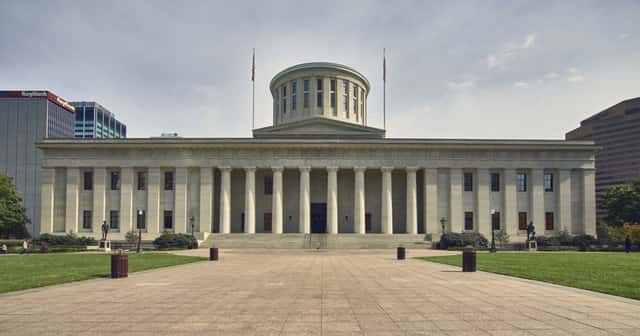
Ohio elected a Democratic governor and a Democratic senator on the same night for the first time since 2006. The Associated Press called the U.S. Senate special election for former Sen. Sherrod Brown over Republican Sen. Jon Husted$ at 11:10 p.m. Eastern on Tuesday, Nov. 3, 2026, WKRC in Cincinnati reported. At that moment Brown had 48.6% of the vote to Husted's 46.5%. CBS News made its own projection a minute later.
About a quarter of an hour earlier, the AP had called the governor's race for Democrat Amy Acton over Republican Vivek Ramaswamy. With roughly 85% of the vote counted, Acton had 51% to Ramaswamy's 46%, Forbes reported. She will be the first woman elected governor of Ohio and the first Democrat to win the office since Ted Strickland in 2006.
Both results are projections built on partial counts. The Ohio secretary of state's official tally will change the margins, and we will update our Ohio Senate and Ohio governor race pages as it does. Neither Husted nor Ramaswamy had conceded in the reports we were able to open before midnight, and we have not seen a transcript of either Democrat's victory remarks.
Two flips in a state Trump won by 11 points
President Trump carried Ohio by about 11 points in 2024, and Brown lost his Senate seat that same year to Republican Bernie Moreno$ by roughly 4 points. CBS News noted that no senator since 1988 had won a comeback bid after losing reelection. Brown's win ends that streak and gives Democrats a Senate seat in a state that had been trending away from them for a decade.
The Senate race was a special election. Husted was appointed in January 2025 to fill the seat Vice President JD Vance$ vacated. Whoever won serves out the final two years of the term Vance won in 2022, so Brown will face voters again in 2028 if he seeks a full term. Husted, 59, had been Ohio's lieutenant governor, secretary of state and House speaker before his appointment; his record is on our Jon Husted profile. Brown, 73, served in the House from 1993 to 2007 and in the Senate from 2007 to the start of 2025.
The governor's race was open because Mike DeWine is term-limited after two terms. Ramaswamy, 41, is a biotech founder who ran for president in 2024 and was endorsed by Trump and Vance. Acton, 60, is a physician whom DeWine appointed as state health director in 2019; she led Ohio's early pandemic response and left the post in June 2020.
| Race | Democrat | Republican | Count at the call |
|---|---|---|---|
| U.S. Senate (special) | Sherrod Brown, 48.6% | Jon Husted, 46.5% | share counted not reported |
| Governor | Amy Acton, 51% | Vivek Ramaswamy, 46% | about 85% counted |
Sources: WKRC for the Senate figures at 11:10 p.m.; Forbes for the governor's race. Both cite the Associated Press count. The figures will change as counting finishes.
The two Ohio results landed in a night that also saw Democrats flip Senate seats in North Carolina, Texas and South Carolina and win the House, as we reported in our story on the House majority and Hakeem Jeffries$. Whether Democrats reach 51 Senate seats depends on races in Maine, Iowa, Kansas, Alaska and Michigan that had not been called in the sources we could open at midnight. Our pre-election report on the final Ohio Senate polls noted that Ohio was the Trump-won state with the smallest 2024 margin among Democrats' targets.
How the polls compare with the count
The final polls were close to the early returns in the Senate race and slightly understated Acton's margin in the governor's race, though both counts were incomplete at the time of the calls.
In the Senate race, the New York Times/Siena College poll released Nov. 1 had Brown ahead 49% to 44% among 717 likely voters, with a margin of error of plus or minus 4.4 points. InsiderAdvantage had Brown at 49% and Husted at 47% among 1,200 likely voters polled Oct. 29 and 30. YouGov had it 50% to 48%, ResearchCo 49% to 48%, and ActiVote tied at 50%. The AP's 48.6% to 46.5% at the call sits inside every one of those ranges.
In the governor's race, the eight final polls we reviewed had Acton ahead by 2 to 7 points, with a simple unweighted average of 50.0% to 45.1%. Her 5-point lead at 85% counted matches that average almost exactly. Suffolk's October poll had her up 48% to 44%, Fox News 50% to 48%, and Marist 50% to 43%.
Source: Siena Research Institute, InsiderAdvantage, WKRC/AP, Forbes/AP
Show the numbers
| Measure | Democrat | Republican |
|---|---|---|
| Senate, NYT/Siena | 49% | 44% |
| Senate, InsiderAdvantage | 49% | 47% |
| Senate, AP count at call | 48.6% | 46.5% |
| Governor, NYT/Siena | 49% | 43% |
| Governor, InsiderAdvantage | 49% | 46% |
| Governor, AP count at call | 51% | 46% |
The pollster Matt Towery of InsiderAdvantage had written that Ohio "has recently had a pattern of turning hugely Republican on Election Day" and that Husted "could actually defeat Brown." That pattern did not repeat on Tuesday. The polls' performance in Ohio contrasts with Texas, where the governor's race ran far ahead of the final surveys, as we describe in our report on Gina Hinojosa's win over Greg Abbott. Our methodology page explains how we treat polls.
The most expensive Senate race in Ohio's history
More than $413 million was spent by both sides in the Senate race, WKRC reported, which it described as the most expensive Senate contest in the country this cycle and the most expensive in Ohio's history. We have not independently totaled the outside spending.
Candidate committees tell part of the story. Federal Election Commission summaries we checked on Nov. 2 showed Brown's campaign with $68.4 million in receipts through Oct. 14, including $57.9 million from individuals, and Husted's campaign with $19.9 million through Oct. 22, including $9.8 million from individuals. The two reports cover different end dates and are not directly comparable.
The 567politics funding snapshot for Husted, drawn from FEC filings on Nov. 1 for the 2026 cycle, lists receipts from 465 political committees totaling about $2.3 million on the committee-contribution line, which excludes individual donors and does not net refunds. Energy-sector employee PACs appear among them, including $10,000 from the Duke Energy Corporation PAC and $10,000 from the Chevron Employees PAC, each across multiple transactions. The snapshot's topic registry is partial, and an employee PAC is distinct from the corporation's treasury and from individual employees. The same snapshot lists outside spending reported to the FEC: $3.6 million from Americans for Prosperity Action supporting Husted and $1.0 million from the AFSCME Working Families Fund opposing him were the largest entries. Contributions show who backed a candidate; they do not show that a donor shaped a vote or a policy.
Brown does not have a 567politics profile, so no comparable snapshot exists for him. On the state side, Ohio candidates for governor file with the secretary of state. The Ohio Capital Journal's reading of the last pre-general reports, which we summarized before the election, showed Ramaswamy's campaign spending $51.1 million against Acton's $26.2 million, with Ramaswamy carrying $41.3 million in outstanding debt, much of it loans from the candidate. As in Texas, the better-funded candidate lost both Ohio races.
What each side argued
Both Senate candidates ran on the cost of living and disagreed about the cause. Husted argued that tax cuts and more supply bring prices down. "We need to create more supply to meet demand so we can lower prices," he told WTOL, pointing to a federal law that he said cut taxes on tips, overtime and Social Security and expanded the child tax credit. He called data centers "a local decision" and said his Ratepayer Protection Act would make them "pay their own way." He also argued that Brown had been in office for more than 50 years with little to show for it.
Brown argued that corporations and the politicians who serve them drive prices. "Jon Husted was a special interest guy in Columbus. He was in the pocket of FirstEnergy and the banks," he told WKYC. His platform calls for data centers to pay the full cost of their power, a cap on utility rate increases, a ban on drug companies charging Americans more than other countries, and fines for insurers who deny care a doctor prescribes. He also campaigned against the administration's tariffs and the Iran war as sources of higher costs, WKRC reported.
Democratic ads tied Husted to House Bill 6, the 2019 nuclear bailout at the center of a bribery scandal. FactCheck.org found that Husted backed the bill and that FirstEnergy money of about $3.5 million helped his campaigns through outside groups, and that he "hasn't been charged with or accused of any wrongdoing in the scandal." Husted's campaign called the ads "baseless lies." We reported the full exchange in our final-poll story.
In the governor's race, Ramaswamy proposed resetting property taxes to pre-pandemic levels and capping their growth, phasing out the state income tax over 8 to 10 years and halting new data center approvals by executive order until legislation passed. Acton proposed a roughly $2 billion "Working Families Tax Cut" with a child tax credit, a wider homestead exemption, a rebate for property tax spikes above 4%, full funding of the Fair School Funding formula and an audit of EdChoice vouchers. The details are in our Election Eve comparison.
The ad that changed the governor's race
The campaign's defining dispute was a Ramaswamy ad featuring Acton's estranged mother, Donna Arthur, who called Acton a "liar." Arthur lost custody of Acton and her brother in 1978, the same year their stepfather was indicted on charges of raping Acton as a child, Time reported. Acton's brother, Philip Stearns, called the ad "a despicable low." DeWine called it "deeply, deeply troubling" and "just plain wrong" and asked the campaign to withdraw it, while keeping his endorsement. Husted and former Attorney General Dave Yost also distanced themselves. Trump and Vance defended Ramaswamy, and Vance told Republicans to "stop whining about an advertisement and go win the race."
Ramaswamy pulled the ad on Oct. 29 after spending about a quarter of the $4 million planned, Forbes reported. Cook Political Report moved the race from Toss Up to Lean Democrat on Oct. 23, citing the ad in part, Time reported. Our earlier story covered the ad and the three polls that measured its fallout. Whether the ad cost Ramaswamy the race cannot be established from the result alone. Acton led in every poll we reviewed before the ad aired, and Ohio's shift matched a national swing toward Democrats. The ad is one plausible contributor among several, not a demonstrated cause.
Ramaswamy also faced criticism from parts of the political right over his 2024 defense of the H-1B visa program and attacks on his ancestry and faith from online activists, which we detailed before the election. None of the polls we reviewed measured the effect of those attacks on Republican turnout.
What Acton can and cannot do
Ohio's governor proposes a budget and signs or vetoes bills, but the General Assembly writes tax law and appropriations. Republicans held supermajorities in both chambers going into the election, and Signal Ohio reported before the vote that the legislature was virtually certain to stay Republican. Acton said during the campaign that she expected Democrats to "break the supermajority," which would make her veto harder to override. We had not seen legislative results by the time of writing, so whether that happened is unknown.
That means Acton's tax credit, homestead expansion and school funding plans each need legislative votes. Her proposed "conditional moratorium" on data centers would also need either legislation or action by the Public Utilities Commission, whose members the governor appoints with Senate confirmation. Her promise to audit EdChoice vouchers is within the executive branch's reach through the Department of Education and Workforce, though the program itself is set in statute.
For Brown, the practical questions are committee assignments and whether Democrats hold a majority when the new Senate convenes in January 2027. His utility cap and drug pricing proposals are federal bills that would need 60 votes or inclusion in a budget measure.
What remains unknown
The final margins, county-level results and the makeup of the Ohio General Assembly were not available at midnight. Neither Republican had conceded in the reports we could open, and neither had alleged irregularities. The AP and CBS calls rest on partial counts that both organizations judged sufficient; the official canvass will follow in the coming weeks. The national Senate majority, which gives Brown's win much of its significance, was still undecided.
Differing perspectives
What should Ohio's newly elected senator and governor do first to lower living costs for Ohio households?
Each position is summarized as its supporters make it, with equal weight and in alphabetical order. A summary is not an endorsement; the evidence for each is weighed in the story above.
A family tax credit, homestead relief and full school funding
Who holds it: Gov.-elect Amy Acton, her campaign and the Ohio Democratic Party
Acton and her supporters argue that the fastest relief is a Working Families Tax Cut with a child tax credit, costing about $2 billion, paired with a wider homestead exemption and a rebate for households whose property values jumped more than 4%. They say fully funding the bipartisan Fair School Funding plan and auditing the EdChoice voucher program would ease the pressure that pushes school levies onto homeowners. They favor a conditional moratorium on data centers and a requirement that such companies bring their own power.
In their words: ABC 6 On Your Side (WSYX), interview with Amy Acton, Oct. 20, 2026 ↗
Cut taxes and increase supply
Who holds it: Sen. Jon Husted, his campaign and Republican supporters
Husted and his supporters argue that prices fall when supply rises to meet demand and when people keep more of what they earn. They point to the federal law that cut taxes on tips, overtime and Social Security income and raised the child tax credit, and say the next step is more energy production and fewer regulatory barriers. They say decisions on data centers belong to local communities and that his Ratepayer Protection Act would make data centers pay their own way without a state moratorium.
In their words: WTOL 11, quoting Jon Husted ↗
Make data centers and corporations pay, cap utility bills
Who holds it: Sen.-elect Sherrod Brown, his campaign and allied labor unions
Brown and his supporters argue that families see more money going out than coming in because corporations game the system and no one in Washington stands up to them. They say data centers should pay the full cost of the power they use so household bills do not rise, that utility rate increases should be capped, that drug companies should be barred from charging Americans more than other countries, and that insurers who deny care a doctor prescribes should be fined. They also want a ban on stock trading by members of Congress.
In their words: Sherrod Brown campaign website ↗
Roll property taxes back to pre-pandemic levels and phase out the income tax
Who holds it: Vivek Ramaswamy, his campaign and Republican legislators who back his tax plan
Ramaswamy and his supporters argue that property taxes rose out of control after the pandemic and are pushing long-time owners out of homes they own outright. They propose resetting bills to pre-pandemic levels, capping growth from there and using state surpluses to backstop local shortfalls, while phasing out the state income tax over eight to ten years starting with capital gains. They say prosecuting Medicaid fraud and ending data center tax abatements would help pay for it, and that new data centers should be halted until legislation passes.
In their words: ABC 6 On Your Side (WSYX), interview with Vivek Ramaswamy, Oct. 14, 2026 ↗
READ BEYOND 567POLITICS
Alternate sources & perspectives
Independent coverage and primary evidence to help you compare arguments. A link is not an endorsement; perspective labels describe the linked material.
- primary evidence
Democrat Sherrod Brown defeated Republican Sen. Jon Husted in Ohio's US Senate race ↗
WKRC Local 12 (Cincinnati)
Reports the AP call at 11:10 p.m. with Brown at 48.6% and Husted at 46.5%, Brown's platform themes and the $413 million spending figure.
- independent analysis
Sherrod Brown wins Ohio 2026 Senate election, flipping seat for Democrats ↗
CBS News
CBS projection at 11:11 p.m., the 1988 comeback precedent and context on Ohio's 2024 margins.
- independent analysis
Amy Acton beats Vivek Ramaswamy in Ohio gubernatorial race ↗
Forbes
AP call shortly before 11 p.m. with Acton at 51% and Ramaswamy at 46% at about 85% counted; history of the attack ad.
- independent analysis
Amy Acton flips Ohio governor's office after bitter race against Ramaswamy ↗
Time
Cook Political Report rating changes, DeWine's criticism of the ad while keeping his endorsement.
- primary evidence
NYT/Siena poll of likely voters: Alaska, Iowa, Kansas, Maine, Michigan, Ohio and Texas ↗
Siena Research Institute
Final pre-election poll release with Brown up 5 and Acton up 6 in Ohio and the stated margin of error.
- primary evidence
Final InsiderAdvantage Ohio survey: Brown 49, Husted 47; Acton 49, Ramaswamy 46 ↗
InsiderAdvantage
Final poll release with method, sample and the pollster's own expectation that Husted could win.
- left argument
Our fight ↗
Sherrod Brown campaign
Brown's platform on data centers, utility caps, drug prices and insurers.
- right argument
Ohio U.S. Senate candidates making final pitches as Election Day nears ↗
WTOL 11 (Toledo)
Husted in his own words on supply, tax cuts and the Ratepayer Protection Act.
- right argument
ABC 6 asks GOP gubernatorial candidate Vivek Ramaswamy about taxes, data centers, school funding ↗
WSYX ABC 6 (Columbus)
Ramaswamy's property tax rollback and income tax phase-out plan in an Oct. 14 interview.
- left argument
ABC 6 asks Democratic gubernatorial candidate Amy Acton about property taxes, data centers, school funding ↗
WSYX ABC 6 (Columbus)
Acton's Working Families Tax Cut, homestead and school funding plans in an Oct. 20 interview.
- independent analysis
Ohio Democratic ads connect Husted to bribery scandal despite no charges of wrongdoing ↗
FactCheck.org
Evaluation of the House Bill 6 attack ads against Husted.
- primary evidence
Candidate financial summary: Jon Husted, 2026 cycle ↗
Federal Election Commission
Husted's committee receipts and cash on hand; Brown's summary is at candidate S6OH00163.
Reviewed 2026-11-03. Reviewed shortly after the AP calls on the night of Nov. 3, 2026. Vote shares come from the AP count as carried by WKRC and Forbes; the Ohio secretary of state's live results site is script-rendered and could not be read from our environment. The automated source-discovery search returned only general pages about Ohio and was not used. Several outlets (NBC News, The Hill, NBC4 Columbus, Washington Post) could not be opened. No concession statements from Husted or Ramaswamy and no victory remarks from Brown or Acton were available at the time of review; the research note will be updated if they are published. X and Reddit could not be opened directly.