High Court orders Israel to open a mother-and-child health station in Shuafat refugee camp
After a five-year petition by local mothers, the court set a February 2027 deadline. The Health Ministry and the city say funding and renovation are underway.
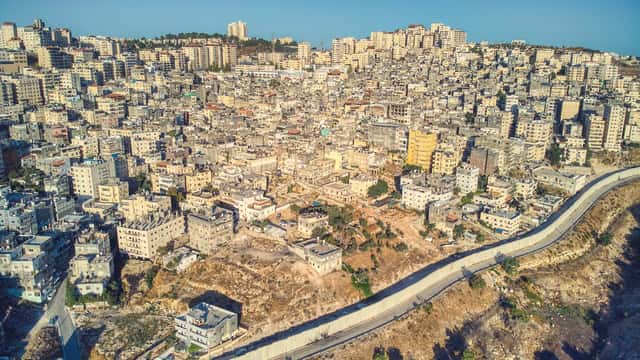
Israel's High Court of Justice has ordered the Health Ministry and the Jerusalem municipality to open a mother-and-child health station, known in Hebrew as Tipat Halav, in the Shuafat refugee camp in East Jerusalem. The ruling, given on Sunday, November 15, ends a petition that five mothers from the area and the Association for Civil Rights in Israel (ACRI) filed in November 2021.
The station is meant to serve the camp and three nearby neighborhoods, Ras Khamis, Ras Shehadeh and Dahiyat al-Salam. They lie inside Jerusalem's city limits but on the far side of Israel's separation barrier. Residents who want routine vaccinations, child development checks or pregnancy tests now have to travel to other parts of the city and cross a checkpoint, according to the petition.
Justice Daphne Barak-Erez wrote the judgment. Justices Yael Willner and Yechiel Kasher agreed. "It is right to open the discussion in the case before us, and to a great extent also to close it, with the statement: enough," she wrote, according to quotations published by the legal news service Takdin on Bizportal (Hebrew).
The state and the city never disputed that the neighborhoods need a station. The question before the court was whether they were moving fast enough. The court found that they were not.
What the court ordered#
According to ynet (Hebrew), the court set out three stages. A permanent station will be built in a public-buildings compound the city is planning in the camp. That compound is expected to take three to five years to build.
Until then, the Health Ministry and the city must open a temporary station by February 1, 2027, in a building the municipality has rented inside the camp. If they cannot do that, they must run a mobile clinic by the same date and finish the station in the building by July 1, 2027. Takdin's summary of the ruling describes the same two steps more briefly, as a temporary station from March and a permanent one from July.
The ministry and the city were also ordered to pay the petitioners 30,000 shekels in costs.
- By February 1, 2027open a temporary station in a building the city rented in the camp
- Fallbackif the building is not ready, run a mobile clinic by the same date
- By July 1, 2027finish the station in the rented building
- In 3 to 5 yearsmove to a permanent station in the planned public-buildings compound
- Coststhe ministry and the city pay the petitioners 30,000 shekels
Source: ynet (Hebrew), Takdin (Hebrew)
Barak-Erez based the ruling on the right to health and on Israel's National Health Insurance Law. That law says covered health services must be given "within a reasonable time and at a reasonable distance from the insured person's place of residence." She wrote that the authorities had failed that duty.
"Plans to provide a proper answer for Tipat Halav services in East Jerusalem in general, and in the Shuafat refugee camp in particular, have gone on for more than 20 years," she wrote, according to Takdin. She said this conduct was "far from fulfilling the basic duty to act with due speed" and amounted to "an unjustified violation of the right to health" of the neighborhoods' residents. She noted that those affected were "pregnant women, infants and toddlers, young children and their parents."
She also said the case was not about large budgets. The services in question, she wrote, belong to "the basic level of health services in the State of Israel, ones that have been provided as a matter of routine since its founding."
"It is not possible to accept a situation in which the respondents do not fulfill explicit duties under the law for so long," she wrote. "The respondents' recognition of these duties does not detract from the importance of carrying them out in practice."
Why the station took so long#
The ruling lists a long chain of failed attempts, according to ynet. One tender was rejected over suspected harm to the integrity of the process. The winner of a second tender could not obtain insurance, and that tender was canceled in 2025. A plan to put a mobile structure near the checkpoint was frozen because of the position of security officials. A mobile clinic was close to ready, but the state and the city dropped it to wait for a better solution in an existing building.
Takdin reported that about 15 update notices were filed over the life of the case. It said their bottom line was that no progress had been made. In its first response in 2022, the Health Ministry said it recognized the need for a station but faced difficulty finding a suitable building and staff. The city said it was already building a public-buildings complex in the area that would include a station, and argued there were no grounds for the court to step in.
The court also weighed a middle option: using a building in the camp that served UNRWA, the UN agency for Palestinian refugees, until the agency's work in Israel stopped. The judgment said it was not clear when that would be possible, Takdin reported.
The dispute is older than the current case. Takdin reported that a first petition was filed in 2001. At the time, the Health Ministry said a station would open in northeast Jerusalem that year and later in Shuafat and Issawiya. Some stations did open in East Jerusalem over the years, but no solution was found for Shuafat and its surroundings.
ACRI's 2021 petition (Hebrew) points to another commitment. In a 2006 High Court case over the barrier near al-Ram, the state said it would work with the city to ease the barrier's effect on residents, including by opening two health stations beyond it. ACRI says that in 2022 the ministry and the city again committed to two stations beyond the barrier. One opened in Kafr Aqab. The one for Shuafat did not.
- First petition; the ministry says a northeast Jerusalem station will open
- In the al-Ram barrier case, the state pledges two stations beyond the barrier
- A checkpoint is set up at the entrance to the camp, the petition says
- Five mothers and ACRI file the current petition
- The ministry tells the court a tender will be done within three months
- A tender is canceled after the winner cannot get insurance
- The court issues a conditional order to the state and the city
- The state and the city report funding approvals and ask for more time
- The court accepts the petition and sets deadlines
Source: Takdin (Hebrew), ACRI, ACRI petition (Hebrew), Respondents' November 2026 update (Hebrew)
What the state and the city told the court#
A week before the ruling, the Health Ministry and the city filed a joint update (Hebrew), dated November 8. It said the process had passed "the point of no return." They described "significant developments" in the previous month, which they called "a real leap forward."
According to the filing, the city has signed a lease and taken possession of a campus of schools and public buildings in the camp, where the station will be set up. On October 26, a Health Ministry committee approved a contract with the city, without a tender, worth up to 4 million shekels for one year, from November 1, 2026, to October 31, 2027. The sum covers renovation, equipment and 12 months of operation.
The city's finance committee backed the plan on October 25, and the city council approved it on October 29, the filing said. On November 8, the city treasurer approved the start of renovation work that week. The work was expected to take two to three months.
The filing said a city-owned company, Merom, would then run a quick bidding process to choose an operator, with 21 days for bids and 14 more to pick a winner. At least two staffed stations would open within 30 days of handing the building to the operator. Full service would follow within 60 days. The respondents asked the court to let them report again by November 18 before it ruled. The court gave its judgment three days earlier.
The petitioners had questioned parts of that plan earlier. In an August response (Hebrew) to a previous update, ACRI said the city's approval to lease the campus dealt with schools for about 2,100 pupils who now study outside the camp. It said the document made no specific mention of a health station. ACRI also noted that every contract needed for the station depended on the city finance committee, which was not due to meet until late October. The November filing reported that those approvals had since been given.
- Oct. 25 to 29city finance committee and city council approve the station and the lease
- Oct. 26ministry committee approves up to 4 million shekels for one year, without a tender
- Nov. 8city treasurer approves renovation work, expected to take 2 to 3 months
- OperatorMerom runs a bidding round, 21 days for bids and 14 days to choose
- Openingtwo staffed stations within 30 days of handover, full service within 60 days
Source: Respondents' joint update, November 8, 2026 (Hebrew)
Ynet's report also noted that Jerusalem Mayor Moshe Leon has made developing the city's eastern neighborhoods a priority. It said his administration has advanced investments of hundreds of millions of shekels in infrastructure, education, transport and services for Arab residents, including about 100 million shekels to upgrade East Jerusalem's business district.
What the petitioners say#
ACRI lawyer Tal Hassin, who argued the case, welcomed the result. "This is the expected ruling," she told ynet. "Israel stuck tens of thousands of residents and citizens behind a wall and a checkpoint that they never asked for, and simply abandoned them." She listed what she said the neighborhoods lack, including playgrounds, government offices, National Insurance offices, youth clubs, banks and an employment service. "At least in the critical area of Tipat Halav services, thanks to which Israel has very low infant mortality, the court has put an end to this," she said.
In the petition, the mothers said a trip through the checkpoint toward the rest of the city can take hours. They cited a 2019 study by the Jerusalem Institute for Policy Research, which put the wait at the checkpoint at 45 to 90 minutes at rush hour, plus about half an hour on the narrow access road. They also said mothers with newborns are sometimes caught in clashes that break out at the checkpoint.
The petition said the population of the four neighborhoods is not known precisely. It cited an estimate of about 60,000 people from the same study, and a 2015 court filing by the Gihon water company that called 80,000 "a reasonable estimate (on the low side)." The petition said most residents hold Israeli permanent residency, the status given to East Jerusalem Palestinians after Israel annexed the area in 1967. UNRWA ran health services in the camp for people with refugee cards, according to the petition.
How stations are spread across Jerusalem#
The petition also argued that the problem goes beyond Shuafat. It said the city runs 32 Tipat Halav stations. Five are in the city's Arab neighborhoods, and three more in western neighborhoods also serve Arab residents. Arab residents make up about 38 percent of the city's population, the petition said.
Source: ACRI petition, November 2021 (Hebrew)
Show the numbers
| Location | Stations |
|---|---|
| In Arab neighborhoods | 5 |
| In western neighborhoods, also serving Arab residents | 3 |
| Other municipal stations | 24 |
The petition said the city told ACRI, in answer to a freedom-of-information request, that new stations are opened jointly with the Health Ministry based on residents' needs, and only if the ministry adds funding. It said the city had carried out needs surveys but none had dealt with Tipat Halav services.
Wider context#
The ruling came on the same day the same judge wrote another High Court judgment against the state, in a case over settler Moshe Sharvit and Jordan Valley farmers. In that case the court found the army had failed to protect Palestinian farmers. Both petitions were brought by ACRI.
The Shuafat case also touches on UNRWA's changing role. The agency has been cutting jobs, as 567 Politics reported on UNRWA's Gaza staff cuts. Other recent coverage of Palestinian homes and rights includes the punitive demolition in Kafr Ni'ma. Questions about who governs and serves Palestinians in East Jerusalem and the West Bank are also part of the debate over the PLO's planned 2027 elections.
Barak-Erez closed the judgment with a piece of history. She noted that the first Tipat Halav station in the country was opened in Jerusalem's Old City in 1921 by Dr. Helena Kagan. "The time has come for her historic project to spread across the whole city of Jerusalem," she wrote, according to ynet.
What is not yet known#
The full judgment had not been posted publicly when this story was written. Neither the Health Ministry nor the Jerusalem municipality had published a response to the ruling. It is not yet clear whether the renovation in the rented building will finish in time for the February 1 deadline, or whether a mobile clinic will be needed first. The contract between the ministry and the city was still awaiting signature as of November 8, according to their filing.
The petition asked for two stations for the four neighborhoods. The ruling, as reported, deals with one station in the camp. Whether a second station will follow has not been reported.
Differing perspectives
Have Israeli authorities done enough to provide a mother-and-child health station for Shuafat camp and nearby neighborhoods?
Each position is summarized as its supporters make it, with equal weight and in alphabetical order. A summary is not an endorsement; the evidence for each is weighed in the story above.
Open stations beyond the barrier without further delay
Who holds it: Five mothers from Shuafat camp and nearby neighborhoods; the Association for Civil Rights in Israel (ACRI)
The mothers and ACRI argue that Tipat Halav stations exist so that vaccinations, growth checks and pregnancy care are close to home, and that tens of thousands of residents beyond the barrier have none. They say families must cross a checkpoint and spend hours on the road to reach a station elsewhere in the city. They point to state pledges dating back to 2006, tenders that failed and years of updates without progress, and say the gap violates residents' rights to equality and health.
In their words: Association for Civil Rights in Israel ↗
The authorities are committed and the station is on track
Who holds it: Israel's Health Ministry and the Jerusalem municipality, as respondents in the case
The Health Ministry and the Jerusalem municipality say they have always accepted the need for a station and are committed to providing one. They point to real obstacles, including finding a suitable building and staff, a tender that collapsed over insurance, and security limits near the checkpoint. In their November filing they said the process had passed "the point of no return," with up to 4 million shekels approved, a building leased and renovation starting, and asked for time to finish it properly under the law.
In their words: Health Ministry and Jerusalem municipality joint update to the High Court, Nov. 8, 2026 (Hebrew) ↗
Cite this article
567 Politics staff. “High Court orders Israel to open a mother-and-child health station in Shuafat refugee camp.” 567politics. Published 2026-11-16. https://567politics.com/news/palestine-high-court-shuafat-camp-tipat-halav-health-station-acri-mothers-november-2026
Wikipedia citation
{{cite news |title=High Court orders Israel to open a mother-and-child health station in Shuafat refugee camp |url=https://567politics.com/news/palestine-high-court-shuafat-camp-tipat-halav-health-station-acri-mothers-november-2026 |work=567politics |author=567 Politics staff |date=2026-11-16 |language=en}}CSL-JSON for reference managers
{
  "id": "https://567politics.com/news/palestine-high-court-shuafat-camp-tipat-halav-health-station-acri-mothers-november-2026",
  "type": "article-newspaper",
  "title": "High Court orders Israel to open a mother-and-child health station in Shuafat refugee camp",
  "URL": "https://567politics.com/news/palestine-high-court-shuafat-camp-tipat-halav-health-station-acri-mothers-november-2026",
  "container-title": "567politics",
  "language": "en",
  "author": [
    {
      "literal": "567 Politics staff"
    }
  ],
  "issued": {
    "date-parts": [
      [
        2026,
        11,
        16
      ]
    ]
  }
}Citations identify this article and its publication date. Assess the reporting and its linked sources before using it as evidence.
Read this article as Markdown or JSON. Cite the original page and retain its sources, dates and qualifications.
Embed this article summary
Paste this HTML into your page. The summary stays linked to the full story and updates with it. No account required.
<iframe src="https://567politics.com/embed/news/palestine-high-court-shuafat-camp-tipat-halav-health-station-acri-mothers-november-2026?theme=auto" title="High Court orders Israel to open a mother-and-child health station in Shuafat refugee camp by 567politics" width="100%" height="440" style="border:0;max-width:100%" loading="lazy"></iframe>
<p style="font-size:14px">High Court orders Israel to open a mother-and-child health station in Shuafat refugee camp by <a href="https://567politics.com/news/palestine-high-court-shuafat-camp-tipat-halav-health-station-acri-mothers-november-2026" rel="nofollow">567politics</a></p>
<script async src="https://567politics.com/embed.js"></script>
READ BEYOND 567POLITICS
Alternate sources & perspectives
Independent coverage and primary evidence to help you compare arguments. A link is not an endorsement; perspective labels describe the linked material.
- primary evidence
After years of delay: High Court orders a Tipat Halav station in Shuafat (Hebrew) ↗
Takdin on Bizportal
Quotations from Justice Barak-Erez's ruling, the case history since 2001, counsel and costs.
- independent analysis
20 years after the state committed: a Tipat Halav station will be set up in Shuafat refugee camp (Hebrew) ↗
ynet
Most detailed account of the deadlines, the failed tenders and ACRI lawyer Tal Hassin's response; includes the municipality's East Jerusalem investment record.
- other perspective
Establish Family Health Centers in East Jerusalem Neighborhoods Beyond the Separation Barrier ↗
Association for Civil Rights in Israel
The petitioners' English summary of the case and the 2022 commitment to two stations.
- other perspective
Establish Tipat Halav clinics in East Jerusalem neighborhoods beyond the wall (Hebrew) ↗
Association for Civil Rights in Israel
Hebrew case page listing every filing and decision in HCJ 7566/21.
- primary evidence
Petition in HCJ 7566/21, November 2021 (Hebrew) ↗
ACRI (court filing)
The mothers' petition: checkpoint delays, population estimates and the 32-station figures.
- primary evidence
Joint update by the respondents, November 8, 2026 (Hebrew) ↗
Health Ministry and Jerusalem municipality (court filing)
The authorities' own account of funding approvals, the lease, renovation and the operator timeline.
- primary evidence
Petitioners' response to the respondents' update, August 2026 (Hebrew) ↗
ACRI (court filing)
ACRI's questions about the campus lease and the contracts awaiting city approval.
- primary evidence
Preliminary response of the Jerusalem municipality, March 2022 (Hebrew) ↗
Jerusalem municipality (court filing)
The city's early position, including its planned public-buildings complex in the area.
- primary evidence
Response affidavit of the Health Ministry, July 2026 (Hebrew) ↗
Health Ministry (court filing)
The ministry's account of temporary options, including a mobile unit or an existing building.
- other perspective
Establish more Tipat Halav stations in East Jerusalem (Hebrew) ↗
ACRI legal archive
The earlier ACRI case for ten East Jerusalem stations, after which the ministry pledged five more.
Reviewed 2026-11-16. Compiled 2026-11-16 from pages and court filings opened and read; discover_politics_sources returned only generic homepages, so every source was chosen by hand. The full November 15 judgment in HCJ 7566/21 had not been posted publicly; its terms are cited through Takdin's quotations and ynet's account, which differ slightly on the temporary station's start date (ynet: by February 1, 2027; Takdin: from March). The Health Ministry and Jerusalem municipality had not published a response to the ruling; their position is cited from their own court filings. No Arabic-language coverage of the ruling was found. Hebrew-language sources are labeled.