Israel's High Court finds the state failed to protect Jordan Valley farmers from settler Moshe Sharvit
The unanimous ruling orders the army to keep Sharvit off 12 Palestinian farmers' land and secure their access; the state said it was already doing enough.
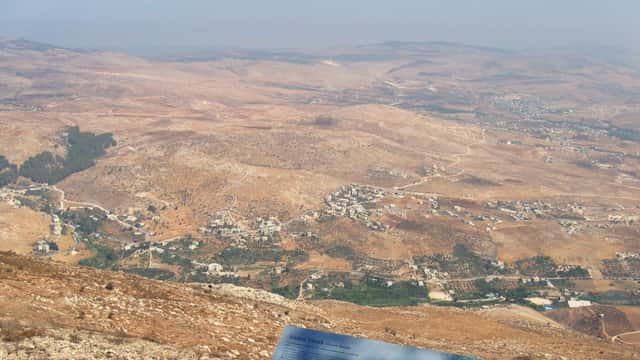
Israel's High Court of Justice has ruled that the state is failing its legal duty to protect Palestinian farmers in the Jordan Valley from a settler, Moshe Sharvit, and ordered the army to keep him off their land. The unanimous ruling, given on Sunday, November 15, accepted a petition filed for 12 farmers from the Wadi al-Far'a area. They say they have been unable to reach and work their plots since October 2023.
Justice Daphne Barak-Erez wrote the judgment. Justices Ofer Grosskopf and Gila Canfy-Steinitz agreed. The court ordered "effective steps" to protect the farmers. These include removing Sharvit from their land, enforcing grazing limits, and taking active measures so they can reach and farm their land, with escorts if needed. That is according to long quotations from the ruling published by the legal news service Takdin on Bizportal (Hebrew).
The state had argued that it was already doing enough. Sharvit denied the farmers' claims. The court rejected the state's position and ordered it to pay 25,000 shekels in costs. Sharvit must pay 10,000 shekels.
What the court ordered#
The petition was filed in June 2025 by the Association for Civil Rights in Israel (ACRI) with the planning-rights group Bimkom, according to ACRI and the Palestinian outlet PNN (Arabic). It asked the military commander to remove Sharvit from the West Bank, or at least from the farmers' fields and homes. It also asked the army to remove a barrier and let the farmers work their land without interference.
The ruling does not order Sharvit out of the West Bank as a whole. It orders the army to take concrete steps on the ground. According to Takdin's account, the court ordered:
- removal of Sharvit from the petitioners' land;
- effective enforcement where herds graze beyond permitted limits;
- active steps to secure the farmers' routine access to their land, including escort and security when needed;
- a permanent way through a gate placed in the area, or moving the gate somewhere else.
ACRI's summary of the ruling says the court required "regular daily passage" through the gate or another solution that ensures passage. PNN reported that the court also criticized the army for giving retroactive approval to a gate built without a permit. The full text of the November 15 judgment was not available online when this story was written. Its terms are reported here through Takdin, ACRI and PNN, which quote it at length.
Why the court said the state fell short#
Barak-Erez wrote that the case "revealed a grim, troubling and difficult picture" of state authorities "showing helplessness in the face of frequent and continuing violations of the law by Israeli citizens in the area, and in particular by Sharvit." She wrote that many acts that hurt the farmers "were not dealt with at all," and that even "minimal steps" the authorities decided on "remained only 'on paper.'" Those quotations are 567 Politics translations of the Hebrew text published by Takdin.
- Removekeep Sharvit and those acting for him off the petitioners' land
- Enforceact when herds graze beyond permitted limits
- Escortsecure the farmers' routine access, with security when needed
- Open the gateallow daily passage, or move the gate elsewhere
- Pay coststhe state pays 25,000 shekels and Sharvit 10,000
The judge listed what she described as the conduct shown in the case. It included violent assaults that sometimes caused injuries, gunfire into the air, stun and smoke grenades thrown at homes, threats, physical expulsion from farmland and homes, blocked access roads, damaged crops and property damage. She said this happened "frequently and continuously."
The state argued that the farmers' claims could not be verified because they did not appear in police logs or in the records of the army's regional brigade. The court disagreed. Barak-Erez wrote that there was "much unequivocal evidence" of Sharvit's conduct, including video and photographs. She added that while the High Court does not usually decide disputes of fact, in this case the pattern was clear and the state had not answered it well enough.
The court did not say the army had denied its duty. According to Takdin, the army accepted that it must protect the farmers but argued that it was doing so. Barak-Erez wrote that "without making light of the complexity" of the army's work, the court "cannot accept" a situation that amounts to "de facto acceptance" of routine harm to the farmers, their property and their livelihoods.
She also criticized the police. "It is impossible to finish without pointing to the difficulty in the fact that police activity in this context was not seen at all," she wrote. The court did not issue orders to the police, because the farmers had not asked for them, but said it expected the issue to be addressed.
Who Moshe Sharvit is#
Sharvit runs the Emek Tirtza farm, also known as Moshe's Farm, near the farmers' land. ACRI calls it an unauthorized outpost. It says Sharvit has broken a restraining order issued against him in March 2025 and that his goal is to drive Palestinians out of the area. Those are ACRI's allegations. Sharvit has denied the claims against him in this case, according to Takdin.
Several governments have acted against him. The UK government sanctioned him on February 12, 2024, describing him as "an extremist settler who has threatened, harassed and assaulted Palestinian shepherds and their families in the Jordan Valley." The U.S. Treasury added Sharvit and "Moshes Farm," also called the Tirza Valley farm outpost, to its sanctions list on March 14, 2024.
That U.S. listing no longer stands. On January 24, 2025, the Treasury removed all names listed under the West Bank sanctions order after President Donald Trump revoked it. A Maariv report from June 2024 said Canada had also sanctioned him.
- Farmers say Sharvit blocks the access road to their plots
- UK sanctions Sharvit over attacks on Palestinian shepherds
- U.S. Treasury lists Sharvit and his farm under sanctions
- U.S. removes West Bank sanctions after Trump revokes the order
- A restraining order is issued against Sharvit, ACRI says
- ACRI files the petition for 12 farmers
- Court issues a conditional order to the state
- Court issues an interim order to remove Sharvit from the land
- Court accepts the petition and orders the army to act
Source: ACRI, High Court interim order (Hebrew), Takdin
Sharvit has rejected the accusations in his own words before. In a March 2024 interview with Arutz Sheva (Hebrew), he said left-wing groups had "been persecuting us for several years." He called the British sanctions "a badge of victory and heroism for important pioneering work," and said: "No lawsuits were filed against me in court, nor complaints with the police." He described the farm's work as helping "to keep guarding the Land of Israel," and said he was carrying on the work of his brother, reserve Capt. Harel Sharvit, who was killed in Gaza.
The farm's buildings have also been the subject of other litigation. In 2024 the settlement watchdog group Peace Now petitioned the High Court to enforce demolition orders against structures at the farm. Sharvit asked the court to dismiss that petition, arguing that it lacked jurisdiction, Maariv reported.
What each side says now#
ACRI argues that the army's failure to protect the farmers leads to their dispossession. Its petition says the army told farmers to accept Sharvit's restrictions, or acted in ways that reinforced them. It says the farmers' efforts to coordinate safe access with the army failed, and that five written appeals to army officials "went nowhere." Under international humanitarian law, ACRI argues, Palestinians in the West Bank are protected residents whom the military commander must protect.
In an April 2026 notice to the court, ACRI said that even after the interim order, Sharvit kept damaging the farmers' fields, entering homes and making threats. It also alleged that soldiers in uniform continued to back and accompany him. The army has not publicly answered that specific allegation, and no response from the Israel Defense Forces to the final ruling had been published when this story was written.
The court framed the ruling as a broader warning. "Similar claims are brought before this court day after day, and it seems that many proceedings are being held on the subject, too many," Barak-Erez wrote, according to Takdin. She said she hoped the judgment would serve as a "wake-up call" and ended: "This is the time to act."
The wider pattern in the West Bank#
The ruling comes during a tense olive harvest season. United Nations monitors have recorded a record month of settler attacks, while Israeli officials point to arrests and to what they call provocations by activists, as covered in earlier reporting on the harvest. The army has also cleared several outposts it called sources of violence, and has hunted suspects after a mass vehicle arson in Lubban ash-Sharqiya.
By the count of the Palestinian Authority's Colonization and Wall Resistance Commission, incidents it attributes to settlers rose from 647 in September to 1,369 in October, according to reports by Al-Quds and the official Palestinian news agency WAFA (Arabic). The commission is a Palestinian government body. It uses its own, broader definitions than UN monitors, and its figures have not been independently verified. Israeli authorities have not published a comparable monthly count.
Source: Al-Quds (September report), WAFA (October report, Arabic)
Show the numbers
| Month | By Israeli forces | By settlers |
|---|---|---|
| September 2026 | 1,404 | 647 |
| October 2026 | 1,764 | 1,369 |
The Wadi al-Far'a case differs because a court has now found, in a final judgment, that the state did not meet a duty it does not dispute. It does not decide any criminal charge against Sharvit. Whether the army now removes him and keeps the gate open is the next question.
What is not yet known#
Several facts remain open. The full judgment has not been posted publicly. The state has not said how or when the army will carry out the orders. It is also not clear whether the Israel Police will open new criminal cases after the court's criticism.
The farmers have not been able to farm their plots for more than three years, by ACRI's account. The damage to their income has not been measured in any public court record seen for this story.
Differing perspectives
What should Israeli authorities do to settle the dispute between settler Moshe Sharvit and the Wadi al-Far'a farmers?
Each position is summarized as its supporters make it, with equal weight and in alphabetical order. A summary is not an endorsement; the evidence for each is weighed in the story above.
Remove Sharvit and guarantee the farmers' access
Who holds it: The 12 Wadi al-Far'a farmers; the Association for Civil Rights in Israel (ACRI) and Bimkom
The farmers and ACRI argue that Sharvit has blocked them from their land since October 2023 through threats, attacks and a barrier on the access road, and that the army has let this stand. They say five appeals to officers failed and that soldiers kept backing him even after an interim order. Because Palestinians in the West Bank are protected residents, they argue, the military commander must remove him, open the road and escort farmers so they can work their land.
In their words: Association for Civil Rights in Israel ↗
The army already protects residents within its means
Who holds it: The State of Israel and the Israel Defense Forces, as respondents in the case
The state accepted that the army has a duty to protect the farmers but argued that it was already meeting that duty and that the steps it had taken were enough. Its lawyers told the court that many of the farmers' accounts could not be verified, because the incidents they described did not appear in police logs or in the records of the army's regional brigade. On that view, further court orders telling the army how to police the area were not needed.
In their words: Takdin on Bizportal (ruling's account of the state's position, Hebrew) ↗
The farm guards the land and faces a political campaign
Who holds it: Moshe Sharvit, founder of the Emek Tirtza farm
Sharvit denied the farmers' claims in court. In past interviews he has said left-wing groups have pursued his farm for years and that foreign sanctions against him are a badge of honor for pioneering work. He says no lawsuit or police complaint had been filed against him when he was sanctioned, and describes the farm's grazing and farming as a way to keep guarding the Land of Israel and continue the work of his brother, who was killed fighting in Gaza.
In their words: Arutz Sheva (interview with Moshe Sharvit, Hebrew) ↗
Cite this article
567 Politics staff. “Israel's High Court finds the state failed to protect Jordan Valley farmers from settler Moshe Sharvit.” 567politics. Published 2026-11-16. https://567politics.com/news/palestine-high-court-sharvit-wadi-al-fara-farmers-state-failed-army-ordered-acri-november-2026
Wikipedia citation
{{cite news |title=Israel's High Court finds the state failed to protect Jordan Valley farmers from settler Moshe Sharvit |url=https://567politics.com/news/palestine-high-court-sharvit-wadi-al-fara-farmers-state-failed-army-ordered-acri-november-2026 |work=567politics |author=567 Politics staff |date=2026-11-16 |language=en}}CSL-JSON for reference managers
{
  "id": "https://567politics.com/news/palestine-high-court-sharvit-wadi-al-fara-farmers-state-failed-army-ordered-acri-november-2026",
  "type": "article-newspaper",
  "title": "Israel's High Court finds the state failed to protect Jordan Valley farmers from settler Moshe Sharvit",
  "URL": "https://567politics.com/news/palestine-high-court-sharvit-wadi-al-fara-farmers-state-failed-army-ordered-acri-november-2026",
  "container-title": "567politics",
  "language": "en",
  "author": [
    {
      "literal": "567 Politics staff"
    }
  ],
  "issued": {
    "date-parts": [
      [
        2026,
        11,
        16
      ]
    ]
  }
}Citations identify this article and its publication date. Assess the reporting and its linked sources before using it as evidence.
Read this article as Markdown or JSON. Cite the original page and retain its sources, dates and qualifications.
Embed this article summary
Paste this HTML into your page. The summary stays linked to the full story and updates with it. No account required.
<iframe src="https://567politics.com/embed/news/palestine-high-court-sharvit-wadi-al-fara-farmers-state-failed-army-ordered-acri-november-2026?theme=auto" title="Israel's High Court finds the state failed to protect Jordan Valley farmers from settler Moshe Sharvit by 567politics" width="100%" height="440" style="border:0;max-width:100%" loading="lazy"></iframe>
<p style="font-size:14px">Israel's High Court finds the state failed to protect Jordan Valley farmers from settler Moshe Sharvit by <a href="https://567politics.com/news/palestine-high-court-sharvit-wadi-al-fara-farmers-state-failed-army-ordered-acri-november-2026" rel="nofollow">567politics</a></p>
<script async src="https://567politics.com/embed.js"></script>
READ BEYOND 567POLITICS
Alternate sources & perspectives
Independent coverage and primary evidence to help you compare arguments. A link is not an endorsement; perspective labels describe the linked material.
- primary evidence
High Court ordered the state to act operationally against a settler who systematically harms Palestinians (Hebrew) ↗
Takdin on Bizportal
Longest available quotation of Justice Barak-Erez's ruling, the orders, the state's argument, Sharvit's denial and the costs.
- other perspective
Remove a Violent Settler from the West Bank and Ensure Palestinian Farmers are Protected ↗
Association for Civil Rights in Israel
The petitioners' account of the case from the June 2025 filing to the November 15 ruling.
- other perspective
Remove a violent settler from the West Bank and guarantee protection for Palestinian farmers (Hebrew) ↗
Association for Civil Rights in Israel
Hebrew case page with links to the petition, filings and court decisions.
- primary evidence
High Court interim order of March 11, 2026 (Hebrew) ↗
High Court of Justice (via ACRI)
The court's interim order telling the army to remove Sharvit and those acting for him from the land pending a ruling.
- independent analysis
Top Court Orders Israel to Protect Jordan Valley Palestinians, Condemns Enforcement Failures ↗
Haaretz
English report on the ruling; paywalled beyond the opening.
- independent analysis
High Court criticizes authorities for failing to protect Palestinians from settlers in the Jordan Valley (Arabic) ↗
PNN
Palestinian outlet's account, including the gate's retroactive approval and Bimkom's role in the petition.
- other perspective
Moshe Sharvit to Arutz Sheva: Sanctions from Britain? We are only growing stronger (Hebrew) ↗
Arutz Sheva
Sharvit's own account of his farm and his response to British sanctions, March 2024.
- independent analysis
Moshe Sharvit to the High Court: You have no authority to rule on demolishing my farm (Hebrew) ↗
Maariv
2024 report on Peace Now's demolition petition and Sharvit's jurisdiction argument.
- other perspective
Peace Now petition against Moshe Sharvit's farm (Hebrew) ↗
Peace Now
The settlement watchdog's case for enforcing demolition orders at the farm.
- primary evidence
UK sanctions extremist settlers in the West Bank ↗
UK Government
February 12, 2024 designation of Sharvit and the government's stated reasons.
- primary evidence
West Bank-related Designations, March 14, 2024 ↗
U.S. Treasury, OFAC
U.S. sanctions listing of Sharvit and Moshe's Farm (Tirza Valley farm outpost).
- primary evidence
Termination of Emergency With Respect to the Situation in the West Bank; Designation Removals ↗
U.S. Treasury, OFAC
January 24, 2025 removal of all West Bank-related U.S. sanctions, including Sharvit's.
Reviewed 2026-11-16. Compiled 2026-11-16 from pages opened and read; discover_politics_sources returned only generic homepages, so every source was chosen by hand. The full text of the November 15 judgment in HCJ 66192-06-25 was not posted publicly when this list was compiled; its terms are cited through Takdin's long quotations, ACRI's summary and PNN. Haaretz's report was paywalled beyond its opening paragraph. No IDF or Israel Police statement responding to the final ruling had been published. Sharvit's own views are cited from a 2024 interview; he did not publish a response to this ruling that could be found. Hebrew- and Arabic-language sources are labeled.