Israel's army says the coordinated West Bank olive harvest went well; rights groups count hundreds of attacks
As the season closes, the IDF reports 90% of coordinated harvests done, while Yesh Din and a PA commission tally hundreds of settler and army incidents.
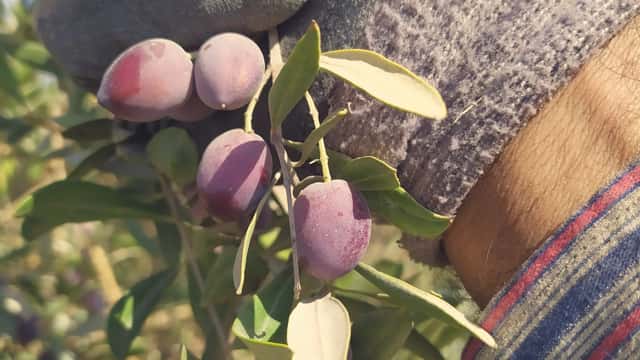
Israel's military says this year's olive harvest in the West Bank went smoothly where it was coordinated with the army. Rights groups and Palestinian officials who tracked the same season describe something else: hundreds of attacks by settlers, and farmers kept off their land. Both sets of figures were published as the season drew to a close this week, and they barely overlap.
The olive crop is the main source of income for many Palestinian families. Each autumn, the harvest also becomes a test of who controls access to farmland near settlements, and of whether Israeli forces protect farmers or restrict them. The new numbers do not settle that question. They show how far apart the two accounts have grown.
What the army says#
The Israel Defense Forces said on Monday that its troops had secured more than 150 coordinated harvest events across the West Bank this season, JNS reported. It said about 90% of the harvests coordinated with the military were complete. The Civil Administration is the military body that runs civilian affairs in the territory. Citing its data, the army said some 16,000 to 17,000 tons of olives had been picked, enough for roughly 16 to 17 million liters of oil.
"Claims that security forces deliberately prevented the olive harvest are false," the army said. It said its forces had worked to prevent friction and violence and had stepped in to restore order where incidents occurred.
The Civil Administration told The Jerusalem Post that it expects the whole West Bank harvest to bring in about 900 million shekels. The security establishment said violent incidents affected only a small share of areas, and that coordinated harvests had gone ahead "without unusual incidents." It said it takes violence and crime "from all sides" seriously.
The Post also pinned down what the army's figures leave out. The Civil Administration said the 90% figure covers only harvests arranged with Israeli authorities in advance, not the whole season. The army could not say how many Palestinian farmers were unable to reach their land or get a coordination slot. It also had no count of violent incidents involving settlers, farmers or troops this season.
- Start of the period covered by Yesh Din's 446-incident count and the PA commission's 674-attack count
- US photojournalist Heidi Levine injured in a settler attack near Abu Falah
- Masked settlers allegedly attack harvesters near Taybeh with European diplomats present
- Brad Lander detained at Nahalin; two foreign activists ordered deported after At-Tuwani harvest
- Yesh Din reports 414 harvest-related settler incidents in five weeks
- PA commission reports 674 attacks from October 1 to November 6
- IDF says about 90% of coordinated harvests are complete
- WAFA reports 70 olive trees destroyed in Masafer Yatta and a farmer detained near Tulkarm
Source: The Jerusalem Post, Yesh Din, WAFA, Israel National News, JNS
Coordination is the core of Israel's approach. Farmers whose groves lie near settlements or inside closed areas must book a slot with the army. In October, the military said that unannounced harvests near Israeli communities create a security risk. It spoke after troops detained dozens of people, including New York congressional candidate Brad Lander, at an uncoordinated harvest near Nahalin, Israel National News reported. In that case, the army said the landowner and dozens of people with him had arrived without arranging the harvest in advance, and that he was given contact details to book another date. It said prior coordination is "essential for maintaining public order and ensuring the safety of everyone in the area."
Police took the same line the same week. They said a father and son, both foreign activists, were arrested at an uncoordinated harvest near At-Tuwani in the South Hebron Hills. Both were later ordered deported and barred from returning, Israel National News reported. Police said the harvest had been held "with the encouragement of the Al-Haq organization, which is defined as a terror group." They warned that activity of this kind "could lead to confrontations and escalation on the ground." Al-Haq is a Palestinian rights group; 567 Politics reported today on a travel ban on its director, Shawan Jabarin.
What the rights groups counted#
Yesh Din, an Israeli human rights group, documented 446 incidents linked to the harvest between October 1 and November 16, according to the Jerusalem Post. They included 219 violent assaults and 209 cases of theft and property damage. More than 100 allegedly took place with Israeli security forces present. The Post said it had not independently verified the figures.
The group's earlier update to diplomats, covering September 27 to October 31, gives more detail. It counted 852 incidents of settler violence in those 35 days, 414 of them tied to the harvest. That works out to about 24 incidents a day, spread across more than 204 Palestinian communities. Israeli soldiers were involved or present in 23.6% of settler attacks, it said. The group said its data comes from its own field researchers, field reports it verified, and cross-checks of other public reports. One incident can include several kinds of violation, so the categories below overlap.
Source: Yesh Din
Show the numbers
| Type | Incidents |
|---|---|
| Crop theft and property damage | 203 |
| Violence against harvesters | 180 |
| Harvesters prevented from picking | 136 |
| Damage to olive trees | 65 |
Yesh Din reads the numbers as a pattern. The attacks on harvesters, the blocked access and the theft of produce "are not random, uncontrollable or a coincidence," it wrote. It argued that the "impunity and support" settlers get from Israeli forces lets them pursue annexation, and it called on other governments to press Israel to protect farmers and hold attackers accountable.
What the Palestinian Authority counted#
The Palestinian Authority's Colonization and Wall Resistance Commission kept its own tally. It recorded 674 attacks on olive trees and farmers across the West Bank, including East Jerusalem, in the 37 days from October 1 to November 6, WAFA reported. It blamed settlers for 520 and Israeli forces for 154.
The commission listed 249 cases of intimidation and threats, 76 physical assaults and 43 cases of blocked access to land. It also counted 91 olive thefts and estimated that about 2,974 olive trees had been damaged. It said some incidents had no tree count, and that the losses would last beyond this season because mature trees and farm equipment were damaged. It also listed detentions, gunfire, tear gas and pepper spray, and assaults on foreign solidarity activists and journalists who went with farmers. One Palestinian died of wounds from settler gunfire during the harvest, it said.
By the commission's count, attacks during the harvest have doubled in three years. Its earlier seasons were also measured over different spans, so the trend is approximate.
Source: WAFA
Show the numbers
| Season | Attacks |
|---|---|
| 2023 | 333 |
| 2024 | 407 |
| 2025 | 441 |
| 2026 | 674 |
The commission called for "effective international intervention to protect Palestinian farmers," safe access to farmland and accountability for those responsible.
The three tallies are not directly comparable. Yesh Din counts settler incidents tied to the harvest. The PA commission counts attacks by both settlers and Israeli forces. The army counts only coordinated events and has published no incident total. The figures from the rights group and the commission rely on their own field reports and have not been independently verified.
Where the attacks were reported#
The PA commission said three districts in the northern and central West Bank accounted for about 72.6% of the attacks it logged. Nablus led with 230, followed by Ramallah and al-Bireh with 130 and Salfit with 129. In these areas, Palestinian villages sit close to settlements and outposts. 567 Politics has reported on arson in Lubban al-Sharqiya and the killing of a 14-year-old boy in Burqa during the harvest.
Source: WAFA
Show the numbers
| Governorate | Attacks |
|---|---|
| Nablus | 230 |
| Ramallah and al-Bireh | 130 |
| Salfit | 129 |
| Hebron | 87 |
| Jenin | 41 |
| Bethlehem | 30 |
| Qalqilya | 24 |
| Jerusalem | 3 |
Some of the season's incidents drew attention well beyond the West Bank. On October 16, American photojournalist Heidi Levine was hurt in an attack by settlers near Abu Falah, northeast of Ramallah, while accompanying farmers and activists, the Jerusalem Post said. She described being beaten with sticks and kicked, with Palestinian youths trying to protect her. The next day, about seven masked settlers allegedly attacked harvesters near Taybeh while European diplomats were there. A Belgian consulate vehicle was damaged, and police opened an investigation.
Reports of incidents continued on Tuesday, as the army was describing the season as nearly over. WAFA said settlers from Susiya destroyed about 70 olive trees belonging to a farmer in the Masafer Yatta area south of Hebron. It also said Israeli forces detained a farmer picking olives on his own land north of Tulkarm, fired tear gas and stopped others from finishing. Those accounts come from local sources cited by WAFA. No Israeli response to either report had been published.
The fight over access goes to court#
Access to land is also being argued before Israel's High Court of Justice. In October, six Palestinian farmers from Nahalin, near Bethlehem, petitioned the court through the Association for Civil Rights in Israel. They said soldiers and settlers had kept them from their land, or sharply limited their access, since October 2023, citing blocked farm roads, threats and orders to leave, the Jerusalem Post reported.
An earlier ruling backed farmers in a similar dispute. The court found that the state had failed farmers in Wadi al-Fara and ordered the army to act, as 567 Politics reported this month. For a wider view of October's violence, including United Nations figures, see our report on the PA commission's 3,133 October incidents.
What remains unknown#
Several numbers that would help settle the dispute have not been published. Israel has not said how many farmers asked for coordination and were refused, how many groves near settlements went unharvested, or how many settler attacks it investigated this season. No count of indictments has been released.
The rights groups' totals, for their part, depend on their own field researchers and on reports from villages. Neither has been checked by an independent body. And the army's tonnage estimate covers the whole West Bank, so it cannot show what was lost in the groves where farmers say they could not pick at all.
Differing perspectives
Did Israel's coordinated system protect this year's West Bank olive harvest?
Each position is summarized as its supporters make it, with equal weight and in alphabetical order. A summary is not an endorsement; the evidence for each is weighed in the story above.
Coordination kept the harvest safe
Who holds it: The Israel Defense Forces and the Civil Administration
The army says its troops secured more than 150 coordinated harvest events and that about 90% of coordinated harvests are complete, with 16,000 to 17,000 tons of olives picked. It calls claims that forces deliberately prevented the harvest false. It says booking a slot in advance is needed to keep order and keep everyone safe near Israeli communities, and that troops stepped in to restore order where incidents broke out.
In their words: JNS, reporting the Israel Defense Forces' statement ↗
Farmers need international protection
Who holds it: The Palestinian Authority's Colonization and Wall Resistance Commission
The commission says settlers and Israeli forces carried out 674 attacks on olive farmers and trees from October 1 to November 6, up from 333 in the 2023 season, with about 2,974 trees damaged and one harvester dead of settler gunfire. It says the damage will outlast this year's crop. It calls for effective international intervention to protect Palestinian farmers, guarantee their safe access to their land and hold those responsible to account.
In their words: WAFA, reporting the commission's findings ↗
Settler violence is a policy that Israel enables
Who holds it: Yesh Din, an Israeli human rights group
Yesh Din says almost half of the settler incidents it logged in five weeks were tied to the harvest, and that soldiers were involved or present in nearly one in four attacks. It argues that the attacks, blocked access and theft are not random, and that impunity and support from Israeli forces serve a goal of annexation. It wants other governments to demand that Israel give farmers access, keep them safe and hold attackers accountable.
In their words: Yesh Din ↗
Cite this article
567 Politics staff. “Israel's army says the coordinated West Bank olive harvest went well; rights groups count hundreds of attacks.” 567politics. Published 2026-11-17. https://567politics.com/news/palestine-olive-harvest-idf-90-percent-coordinated-yesh-din-446-incidents-pa-commission-674-november-2026
Wikipedia citation
{{cite news |title=Israel's army says the coordinated West Bank olive harvest went well; rights groups count hundreds of attacks |url=https://567politics.com/news/palestine-olive-harvest-idf-90-percent-coordinated-yesh-din-446-incidents-pa-commission-674-november-2026 |work=567politics |author=567 Politics staff |date=2026-11-17 |language=en}}CSL-JSON for reference managers
{
  "id": "https://567politics.com/news/palestine-olive-harvest-idf-90-percent-coordinated-yesh-din-446-incidents-pa-commission-674-november-2026",
  "type": "article-newspaper",
  "title": "Israel's army says the coordinated West Bank olive harvest went well; rights groups count hundreds of attacks",
  "URL": "https://567politics.com/news/palestine-olive-harvest-idf-90-percent-coordinated-yesh-din-446-incidents-pa-commission-674-november-2026",
  "container-title": "567politics",
  "language": "en",
  "author": [
    {
      "literal": "567 Politics staff"
    }
  ],
  "issued": {
    "date-parts": [
      [
        2026,
        11,
        17
      ]
    ]
  }
}Citations identify this article and its publication date. Assess the reporting and its linked sources before using it as evidence.
Read this article as Markdown or JSON. Cite the original page and retain its sources, dates and qualifications.
Embed this article summary
Paste this HTML into your page. The summary stays linked to the full story and updates with it. No account required.
<iframe src="https://567politics.com/embed/news/palestine-olive-harvest-idf-90-percent-coordinated-yesh-din-446-incidents-pa-commission-674-november-2026?theme=auto" title="Israel's army says the coordinated West Bank olive harvest went well; rights groups count hundreds of attacks by 567politics" width="100%" height="440" style="border:0;max-width:100%" loading="lazy"></iframe>
<p style="font-size:14px">Israel's army says the coordinated West Bank olive harvest went well; rights groups count hundreds of attacks by <a href="https://567politics.com/news/palestine-olive-harvest-idf-90-percent-coordinated-yesh-din-446-incidents-pa-commission-674-november-2026" rel="nofollow">567politics</a></p>
<script async src="https://567politics.com/embed.js"></script>
READ BEYOND 567POLITICS
Alternate sources & perspectives
Independent coverage and primary evidence to help you compare arguments. A link is not an endorsement; perspective labels describe the linked material.
- primary evidence
90% of coordinated olive harvests completed in Judea and Samaria ↗
JNS
The IDF's end-of-season statement: more than 150 secured events, about 90% of coordinated harvests complete, 16,000-17,000 tons, and its rejection of claims that forces blocked the harvest.
- independent analysis
IDF calls West Bank olive harvest success as hundreds report settler violence ↗
The Jerusalem Post
Sets the army's figures against Yesh Din's 446 incidents and notes what the military could not count, plus the Nahalin petition and October incidents.
- other perspective
Update to the international community: 852 incidents of settler violence in 5 weeks, including 414 related to the olive harvest ↗
Yesh Din
The rights group's September 27-October 31 data, incident breakdown, method note and call on foreign governments.
- other perspective
Report: Israeli forces and colonists carry out 674 attacks on farmers in West Bank since October 1 ↗
WAFA
The PA Colonization and Wall Resistance Commission's tally by governorate and type, with its season-by-season comparison.
- other perspective
Colonists destroy approximately 70 olive trees in Hebron's Masafer Yatta ↗
WAFA
November 17 report, citing local sources, of trees destroyed near Susiya.
- other perspective
Occupation forces detain farmer during olive harvest north of Tulkarm ↗
WAFA
November 17 report, citing local sources, of a farmer detained in An-Nazla ash-Sharqiya.
- primary evidence
Anti-Israel congressional candidate Brad Lander detained during unauthorized olive harvest ↗
Israel National News
Quotes the IDF on why it requires harvests near Israeli communities to be coordinated in advance.
- primary evidence
Father and son deported from Israel over illegal olive harvest ↗
Israel National News
The police account of the At-Tuwani arrests and deportations, including its statement on Al-Haq.
Reviewed 2026-11-17. Compiled 2026-11-17 from pages opened and read in full; every source was chosen by hand because the discovery tool returned unrelated results earlier today. The army's season figures come from its statement as reported by JNS and the Jerusalem Post. Yesh Din's and the PA commission's tallies are their own field counts and have not been independently verified; the three counts cover different periods and categories. The November 17 WAFA reports cite local sources, and no Israeli response to them was found.