PA body records 3,133 West Bank incidents in October; UN logs record month of settler attacks
A PA commission says incidents it blames on Israeli forces and settlers rose 52.8% in the olive harvest month. Israel cites security coordination.
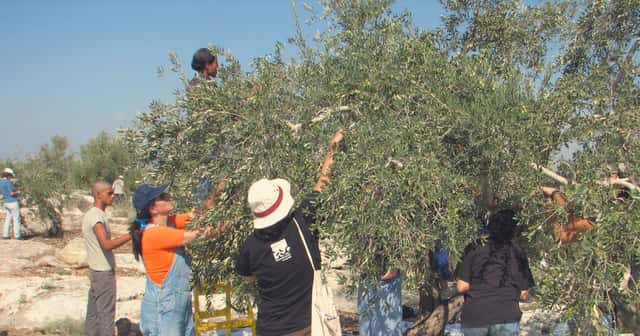
A Palestinian Authority body recorded 3,133 incidents it classed as attacks by Israeli forces and settlers across the West Bank in October 2026. That is 52.8% more than the 2,051 it recorded in September. The Colonization and Wall Resistance Commission, a PA agency, published the figures on Monday, Nov. 2, through the official WAFA news agency. It said incidents it attributed to settlers more than doubled, from 647 to 1,369.
A separate count by the United Nations points the same way. The UN Office for the Coordination of Humanitarian Affairs (OCHA) said in its Oct. 29 situation report that October had already recorded 397 settler attacks causing casualties or property damage between Oct. 1 and Oct. 26. OCHA called that "the highest monthly number of such attacks since documentation began in 2006."
Both counts cover the olive harvest, which runs from early October through November. Israeli military and police officials say harvests near Israeli communities must be coordinated in advance for security reasons. Settler leaders say activist groups use the season to provoke confrontations. Palestinian officials and rights groups say farmers face attacks and access limits on their own land. This story sets out the numbers, what they measure, and how each side describes the season.
What the PA commission counted
The commission counts any act by Israeli forces or settlers that it views as harming Palestinians, their land or property. That is a broad definition. It includes shootings and physical assaults, but also damage to property and farmland, burning of trees and vehicles, seizure of property, road closures and blocking access to land, according to an Anadolu summary of the report. The report itself also lists military orders and demolitions. The report uses the word "colonists" for settlers, a term common in PA statements. Israel does not accept that description.
Source: Al-Quds (September report), WAFA (October report)
Show the numbers
| Month | By Israeli forces | By settlers |
|---|---|---|
| September 2026 | 1,404 | 647 |
| October 2026 | 1,764 | 1,369 |
The rise came mostly from incidents the commission attributed to settlers. Incidents it attributed to Israeli forces rose by about a quarter, from 1,404 to 1,764.
The commission said three governorates in the central and southern West Bank accounted for about 61% of all incidents. Ramallah and al-Bireh had the most, followed by Nablus and Hebron.
Source: WAFA (Colonization and Wall Resistance Commission report, Nov. 2, 2026)
Show the numbers
| Governorate | All incidents | By settlers |
|---|---|---|
| Ramallah and al-Bireh | 704 | 393 |
| Nablus | 636 | 353 |
| Hebron | 568 | 255 |
| Jenin | 224 | 28 |
| Jerusalem | 219 | 74 |
| Salfit | 217 | 128 |
| Bethlehem | 198 | 57 |
The report also listed these October figures. All are the commission's own counts:
| Measure | October 2026 |
|---|---|
| People directly harmed in settler incidents | at least 356 (22 children, 22 women) |
| Trees damaged | 5,890, including 4,498 olive trees |
| Olive thefts recorded | 165 |
| Sheep reported stolen | 384 |
| Attempts to set up new outposts | 28 |
| Demolitions | 62 operations, 129 structures |
| Inhabited homes demolished | 62 |
| People affected by demolitions | at least 220 (125 children) |
Hebron governorate accounted for 3,366 of the damaged trees, the commission said. It also recorded five land orders covering about 229.6 dunams (roughly 57 acres). These included two declarations of "state land" dated Oct. 18: 118.75 dunams near Sa'ir and al-Shuyukh in Hebron governorate, and 64.06 dunams near Battir in Bethlehem governorate.
The commission listed five construction tenders for 1,629 housing units. Three were in East Jerusalem: 730 units in Pisgat Ze'ev, 502 in Gilo and 47 in Givat Hamatos. A fourth was for 350 units in Ma'ale Adumim. Israel regards Pisgat Ze'ev, Gilo and Givat Hamatos as neighborhoods of Jerusalem. Most other countries regard them as settlements on land Israel captured in 1967.
The commission called for "serious international action that goes beyond statements of condemnation," including steps to "hold accountable those responsible," in our translation of the Arabic report.
What the UN counted
OCHA uses a narrower definition. It counts only settler attacks that cause casualties or property damage. Its figure of 397 for Oct. 1 to Oct. 26 cannot be compared directly with the commission's 1,369.
For the week of Oct. 20 to 26, OCHA recorded 62 such attacks across 49 communities, against a weekly average of 53 so far in 2026. Ramallah governorate accounted for 25 of the 62. OCHA said 38 attacks that week were linked to the olive harvest, including seven in Area B, where the PA runs civil affairs.
The same week, OCHA said 57 Palestinians were injured in the West Bank: 23 by settlers and 34 by Israeli forces. It also recorded the displacement of 24 herding families, about 94 people, from Khirbet Ras al Ahmar in Tubas governorate "amid increasing access restrictions and repeated settler attacks and intimidation."
OCHA also described access limits. It said coordinated access for farmers was suspended in parts of Jenin and Nablus governorates and in areas behind the barrier in Qalqiliya. In Salfit governorate, it said, scheduled access near Mas'ha and Az Zawiya was canceled several times, "sometimes with less than a day's notice."
The UN report also covered violence against Israelis. On Oct. 23, two Palestinians opened fire at a checkpoint in Hebron, killing two Israeli soldiers and injuring four others before they were killed. Israel then launched an operation in Hebron city that OCHA said displaced about 3,000 people, a figure still under verification. We covered the later Israeli withdrawal from parts of Hebron in a separate story.
How Israeli authorities describe the harvest
Israeli military statements focus on coordination and security. When troops detained about 90 Rabbis for Human Rights volunteers who were harvesting with Palestinian farmers near Nahalin on Oct. 21, the IDF said the group had not asked in advance. "The landowner was informed that he must coordinate the olive harvest on his plot of land and was provided with the relevant contact information to arrange a harvest at a later date," the army said, the Jerusalem Post reported. Kan News later reported that the area did not need prior coordination, according to the same article.
The IDF's Arabic-language spokesperson said the army would "not allow inciting elements to exploit civil activity to provoke violence or create disturbances. The olive harvest season is an agricultural activity; it must not be transformed into a period of violence and conflict."
Israeli police have made arrests over settler attacks. On Oct. 19, police and the Shin Bet security service arrested 10 people in a raid police called Operation Olive Leaf, CBS News reported. The arrests followed several reported attacks on harvesters, including one on Oct. 16 in which a masked group injured Palestinians and Washington Post photographer Heidi Levine. "Items linking the suspects to the alleged offenses were seized, and several vehicles were confiscated," police said. US Ambassador Mike Huckabee had called the attack on Levine an "act of terror carried out by masked cowards." Secretary of State Marco Rubio said: "We've asked the Israelis and continue to ask them to crack down on that stuff."
The Israeli military also said it had begun dismantling a settler outpost near Wadi a-Rahim after Israeli civilians sprayed graffiti and set fire to a shed there, CBS reported.
We did not find a response from the IDF, COGAT or the Israeli government to the commission's October totals specifically. Israeli agencies do not publish a comparable monthly count of settler incidents.
How settler leaders describe the season
Settler leaders frame the harvest differently. At an online meeting before the season, Yesha Council chairman Israel Ganz said: "In recent years, the olive harvest has turned into a festival for anarchist organizations, who exploit it to harm farmers, the settlement enterprise, and the image of the State of Israel," JNS reported on Oct. 7.
Avi Cohen-Scali, director-general of Israel's Diaspora Affairs ministry, said at the same meeting: "The olive harvest campaign is not humanitarian aid to Palestinians, but a campaign of hatred and violence against the residents of Judea and Samaria." Judea and Samaria is the term Israeli officials use for the West Bank. The district police chief, Moshe Pinchi, said police would work to keep out foreigners who "come under the guise of tourism or human rights" but work to delegitimize Israel, as JNS paraphrased him.
How Palestinian officials and rights groups describe it
The PA commission said the timing of the incidents with the harvest "reflects direct targeting of the historic and economic bond between the Palestinian farmer and his land," in our translation. It said many incidents happened "under the protection of the occupation forces and with their participation in many cases."
Amnesty International goes further. "Once again, Israel's apartheid system is turning the olive harvest into a season of horror for Palestinian families across the occupied West Bank," said Heba Morayef, its regional director, in an Oct. 19 statement. Amnesty called on states to halt trade with settlements and impose targeted sanctions on Israeli officials. Israel rejects the apartheid label and Amnesty's findings.
Some Israeli voices share part of this criticism. Yizhar Hess, vice chairman of the World Zionist Organization, said after the Nahalin detentions: "We must not accept a reality in which those who act in the name of justice are arrested, while those who resort to violence enjoy de facto impunity."
Limits of the data
Readers should weigh several limits:
- Definitions differ. The PA commission counts a wide range of acts, including closures and military orders. OCHA counts only settler attacks with casualties or damage. The two totals measure different things.
- Attribution. The commission attributes each incident to forces or settlers. OCHA notes some incidents in which settlers were "accompanied by Israeli forces." Neither source publishes incident-level data for October that would let readers check each case.
- No Israeli counterpart. Israel's military and police publish case-by-case statements, not monthly totals. That leaves no official Israeli figure to compare.
- Partial month. OCHA's 397 figure covers Oct. 1 to Oct. 26 only. Its full-month figure was not yet published at the time of writing.
- Harvest timing. Some rise from September to October may reflect the harvest itself, which brings more Palestinians to land near settlements and outposts. Neither source separates that effect.
Why the numbers matter for politics
The figures arrive as Israel's parties negotiate a new government. Settlement policy and the West Bank are among the issues that divide the blocs, as our coverage of the opposition's push to form a government and Netanyahu's call for a broad government shows. The Joint List's leader, Yousef Jabareen, has said his list cannot join any government "as long as the occupation of our people in the West Bank continues," he told The Guardian.
The PA, for its part, faces questions about its own reach. Our report on Gaza's police and the stalled handover of governance covers one side of that debate. For how we handle contested figures from governments and advocacy groups, see our methodology.
Differing perspectives
What explains the rise in West Bank incidents during the 2026 olive harvest, and how should authorities respond?
Each position is summarized as its supporters make it, with equal weight and in alphabetical order. A summary is not an endorsement; the evidence for each is weighed in the story above.
Coordinate harvests to keep the peace
Who holds it: Israel Defense Forces
The army says the olive harvest is farm work and must not become a period of violence and conflict, and that it will not let inciting elements exploit civil activity to provoke violence. Israeli authorities say harvesting in some areas is prohibited without coordination with the security services. The army says landowners are told to coordinate and are given contact details to arrange a harvest, and that only harvesters may enter areas designated for coordinated harvesting.
In their words: The Jerusalem Post (IDF statements) ↗
Hold Israel to account internationally
Who holds it: Palestinian Authority's Colonization and Wall Resistance Commission
October's figures show attacks by Israeli forces and settlers rising together during the olive harvest, aimed at the bond between Palestinian farmers and their land. Many settler incidents take place under the protection of Israeli forces or with their participation. Outposts, demolitions, land orders and new housing tenders add to the pressure. The commission says the world must go beyond condemnation and take practical steps to stop the attacks and hold those responsible to account.
In their words: WAFA (Palestinian Authority news agency) ↗
Protect settler farmers from activist provocation
Who holds it: Yesha Council chairman Israel Ganz; regional settler farmers
Settler leaders say the harvest has become a stage for anarchist and foreign activist groups that provoke farmers, take over harvest areas and produce material for campaigns against Israel. They want closer coordination with the army and government so local farmers can work safely, and they back keeping out or deporting foreigners who come to cause trouble, so that their account of events is heard.
In their words: JNS ↗
Sanction officials and end trade with settlements
Who holds it: Amnesty International
Amnesty says settler attacks are state-driven, not the acts of a few individuals, and that together with military limits on access to groves they cause heavy suffering and economic loss for Palestinian families. It urges states to halt trade, investment and cooperation that sustain the occupation, ban settlement trade, impose targeted sanctions on implicated Israeli officials and back international accountability efforts.
In their words: Amnesty International ↗
READ BEYOND 567POLITICS
Alternate sources & perspectives
Independent coverage and primary evidence to help you compare arguments. A link is not an endorsement; perspective labels describe the linked material.
- primary evidence
Colonization and Wall Resistance Commission: 3,133 attacks by occupation forces and settlers in October (Arabic) ↗
WAFA
Palestinian Authority news agency's report of the commission's October figures, including the governorate breakdown.
- primary evidence
Official report: 2,051 Israeli attacks against Palestinians and their property ↗
Al-Quds
The commission's September report, used for the month-to-month comparison.
- independent analysis
Humanitarian Situation Report, 29 October 2026 ↗
UN OCHA
UN count of settler attacks causing casualties or damage, using a narrower definition than the PA commission.
- other perspective
Palestinians report more than 3,100 attacks by Israeli army, occupiers in occupied West Bank in October ↗
Anadolu Agency
Turkish state news agency's summary of the commission report and its definitions.
- primary evidence
IDF and police statements on the olive harvest ↗
The Jerusalem Post
Quotes from the Israeli army and officials on harvest coordination and closed zones.
- independent analysis
US and Israel on West Bank settler violence and arrests ↗
CBS News
Reports Israeli police arrests in Operation Olive Leaf and US officials' comments.
- right argument
Judea and Samaria farmers brace for disruptions during olive harvest ↗
JNS
Settler leaders and farmers describe activist provocation and call for closer coordination.
- left argument
States must act as Israeli state-driven settler violence escalates at start of Palestine olive harvest ↗
Amnesty International
Rights group's case for sanctions and an end to settlement trade.
- other perspective
Israel opposition bloc and Arab parties: Yousef Jabareen interview ↗
The Guardian
Political context on Arab parties' role after the Israeli election.
Reviewed 2026-11-03. Automated discovery returned only irrelevant results, so this list was built from sources opened and read in full for the article. It pairs the PA commission's figures with the UN's narrower count, Israeli army, police and settler-leader statements, and a human rights group's view. Israeli government responses specific to the October totals were not found; the IDF and police positions come from harvest-season statements.