DeSantis draws a contrast with Trump and Ramaswamy as Republicans debate their defeat
The Florida governor questions the war’s costs and the GOP’s candidate choices. Renewed attention has yet to establish an electoral comeback.
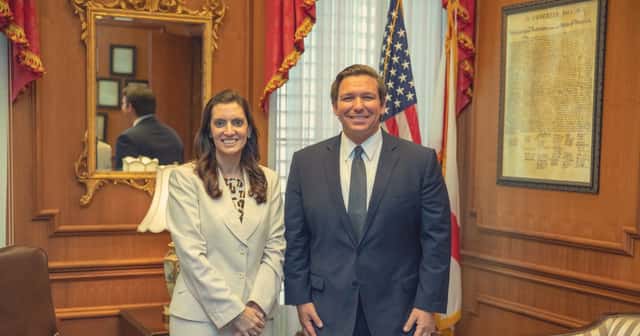
Ron DeSantis is using the GOP’s midterm defeat to make a fresh case for his own approach. His party, he argues, needs leaders who can deliver results. They also need to admit when their message has stopped reaching voters.
His targets include President Donald Trump’s handling of the Iran war. He has also attacked Vivek Ramaswamy’s failed bid for Ohio governor. These disputes give him a clear message for interviews and X clips. They do not yet amount to a new campaign for president. They also do not prove a gain in GOP voter support.
The governor is drawing a contrast as his party debates what went wrong. He can point to a record outside Washington. He can also question the national party’s choices from within the right.
The opening: acknowledging the scale of the defeat
In an early November 4 post on his own X account, he forecast large Democratic gains in Congress. He warned that the GOP might need several cycles to recover. His seat figures were forecasts. They were not final certified totals.
His key point was about time. The party faced a deep problem, in his view. It could not just wait for the next election. That gives him room to question other leaders’ choices and offer his own path forward.
At his Wednesday news conference, he contrasted the national losses with Republicans’ survival in Florida’s statewide races. The News Service of Florida, carried by WUSF, reported that he called the national result a “meteor strike” and warned of consequences lasting beyond one cycle. His presentation treated Florida as evidence that Republicans could still win under conservative leadership.
That comparison has limits. Florida has a different electorate and history from Ohio. Its governor was not seeking reelection this year. Successor Byron Donalds$ also had Trump’s backing. Florida’s wins cannot all be credited to one leader. They do not provide a controlled test of the two men’s approaches.
The difference with Trump: war costs and voter credibility
His Iran critique links war to household costs. In an interview with Stephen A. Smith$, he said the long conflict had raised fuel prices. Some voters had expected Trump to avoid another Middle East war. He challenged GOP efforts to play down those costs or blame the previous president.
Chris Nelson posted an interview clip on X, with a caption emphasizing that disagreement. The account’s emphatic characterization is its own; the policy point is DeSantis’s criticism of how Republicans were explaining the war and its costs.
This is a conservative argument about taking responsibility. It does not require him to adopt Democratic policies. He is asking his own party to answer for events on its watch. His point is that voters know what they pay for gas. Dismissing that cost can make them distrust the party on other issues too.
That does not prove the war alone decided the election. It also leaves a policy question open. Naming a cost is one task. Offering a detailed plan to end the conflict is another.
567politics’ report on the Iran war, prices and competing explanations of the Republican losses examines that broader dispute. Our coverage of Ann Coulter and other conservative critics on X also shows that DeSantis is entering an existing argument, rather than creating the criticism himself.
The sharper attack: Ramaswamy’s fit with Ohio
His criticism of Ramaswamy is more direct. In an interview with Sage Steele, he questioned why the GOP had backed the biotech founder. He called Ohio a working-class state. He argued that Ramaswamy’s tech background and support for skilled-worker visas made it harder to reach those voters.
Steele’s own X account published the segment with the description that DeSantis said Ramaswamy was the wrong choice for Ohio:
The Daily Caller’s November 5 report, available in this reproduction, quoted DeSantis saying Republicans needed to meet voters where they were. His critique was about candidate selection and the ability to make an economic message credible.
That is his account of the loss. Wealth or a tech career does not, by itself, prevent someone from serving workers. His case needs to be weighed against the campaign’s policies and conduct. Other GOP candidates also lost in Ohio. Ramaswamy’s background cannot explain those results on its own.
Amy Acton’s victory over Ramaswamy and Sherrod Brown’s Senate victory are covered in our Ohio election report. That report distinguishes the projections and partial counts available on election night from final certified results.
Distancing himself does not mean abandoning the party
The governor is criticizing national leaders while claiming to speak for GOP voters. That could bring him back into the national debate after his failed 2024 bid. He is arguing that the party needs to change how it governs and campaigns. He is still making that case as a conservative.
There are limits to that strategy. People who dislike Trump may welcome the critique. Voters who still value his endorsement may feel otherwise. An attack on Ramaswamy also cannot prove that the Florida governor would have won Ohio. Nor does it settle who can win a future national primary.
He also faces competition for the same argument. Vice President JD Vance$ has publicly connected the defeat to the Iran war. Our report on Vance’s disagreement with Trump shows why it would be misleading to describe every administration figure as taking a single, uniform position.
Both men want to reach disappointed Republicans. One can point to distance from Washington. The other has a role in the party’s national leadership. Neither advantage settles which message voters will prefer.
A disagreement over workers and visas has a longer history
The Ohio critique also draws on an older divide within the right. In December 2024, Ramaswamy wrote a lengthy X post about American culture and the hiring of engineers. He argued that the country put too little emphasis on academic and technical excellence. Critics heard an insult to American workers and their families.
His thread included a reply to Mike Cernovich that clarified his intent. Ramaswamy said he was making a point about culture, rather than immigration policy. That answer is part of the record. It should be read alongside the criticism, rather than left out because it complicates a rival’s attack. Original post and his reply.
The connection to the governor’s present argument is specific. He is questioning whether a message associated with the technology sector can persuade voters who worry about their place in the economy. That dispute concerns how a candidate explains work and opportunity. It does not establish that every worker shares one view of visas or that a candidate’s profession decides an election.
Our separate review of X explanations for Ramaswamy’s Ohio loss examines the ad backlash, the workers argument and the wider Republican defeat. It treats the explanations as claims to test, with polling and other races as checks.
Candidate choices and the national climate can both matter
The attack on Ramaswamy also raises a question about responsibility. Party leaders choose whom to support. Candidates decide how to campaign. National officials make choices that can affect voters far from Washington. These forms of responsibility can overlap.
A strong national wave does not make campaign choices irrelevant. At the same time, one candidate’s shortcomings cannot explain why other members of his party lost in other states. A serious comparison needs the final returns and a consistent basis for comparing races. Early counts taken at different times can be misleading.
For the governor, this leaves two tasks. He can criticize the party’s decisions now. To turn that critique into a broader claim about his own leadership, he would need to show how his approach could work beyond Florida. The present interviews raise that question without resolving it.
The posts embedded here were selected because they show the governor’s own statement or the interview segments behind the analysis. They are examples of a public argument. They are not a random sample of posts or a measure of national opinion. The location and identity of people watching a clip cannot be inferred from its reach.
More visibility is not yet a demonstrated electoral comeback
There is evidence of renewed media interest. CNN’s Steve Contorno reported November 5 on how people from his past campaign read the recent appearances. They saw room for another run for president. That is their reading of his actions. It is not his announcement of a campaign.
Steele separately promoted a clip addressing the 2028 question:
The discussion shows that his future is getting attention. A promotional caption does not prove a decision to run. Views on X show that a clip has circulated. They are not a poll of voters. They also do not show that viewers agree with it.
The next test is whether he offers a clear policy program. He would also need to win support beyond his existing fans. The interest would need to last past this week’s election debate. Those steps would offer stronger signs of a comeback than clips alone.
His case is clear. The GOP should answer for its record. It should pick candidates who can reach voters and take their costs seriously. He is trying to shape the party’s next steps. Whether that leads to higher office is still an open question.
Photo: Government of Florida, public domain; original source. Archival image.

Differing perspectives
What should Republicans prioritize as they respond to their midterm defeat?
Each position is summarized as its supporters make it, with equal weight and in alphabetical order. A summary is not an endorsement; the evidence for each is weighed in the story above.
Focus on the war and domestic priorities
Who holds it: JD Vance
Vance places the Iran war at the center of Republicans’ defeat and calls for attention to household costs and American priorities. His diagnosis overlaps with DeSantis’s criticism of dismissing voters’ concerns, but makes ending the conflict a more explicit focus. It also shows that debate over the administration’s direction is taking place within its senior leadership.
In their words: JD Vance’s original statement ↗
Rebuild credibility and candidate appeal
Who holds it: Ron DeSantis
DeSantis argues that Republicans need to acknowledge the costs voters experience, explain their governing choices honestly and select candidates who connect with their states. His criticism of Ramaswamy focuses on the gap he sees between a technology entrepreneur’s message and Ohio’s working-class electorate. His Florida comparison offers a conservative alternative within the party.
In their words: Sage Steele’s interview clip ↗
READ BEYOND 567POLITICS
Alternate sources & perspectives
Independent coverage and primary evidence to help you compare arguments. A link is not an endorsement; perspective labels describe the linked material.
- primary evidence
DeSantis on the congressional result ↗
Ron DeSantis / X
Original November 4 post. Seat totals and future recovery dates are attributed forecasts.
- primary evidence
Ramaswamy was the wrong choice for Ohio: interview clip ↗
Sage Steele / X
The interview host's own clip post.
- primary evidence
DeSantis discusses 2028: interview clip ↗
Sage Steele / X
Evidence that his political future is being discussed, not an announcement of a campaign.
- independent analysis
The midterms were a meteor strike for Republicans ↗
News Service of Florida / WUSF
Gray Rohrer reporting on the governor's remarks and the limits of Florida's comparative success.
- independent analysis
Vance and DeSantis make quick moves after GOP losses ↗
CNN / ABC17
Steve Contorno reporting, attributed in the draft. No primary polling gain is inferred from media attention.
Reviewed 2026-11-05. Original X posts and the interview host's two clip posts were inspected in the browser. Nelson's clip is identified as a third-party upload. No measured post-election increase in voter support is asserted. Discovery returned irrelevant Ron/notary search results and none were used. Funding tools lacked verified snapshots for DeSantis and Ramaswamy; no donor claims are made. Four standalone URLs passed embed validation. Publication review adds the original Ramaswamy culture post and his reply; no measured support gain is asserted.