No one is running against Thune. So why do Republican senators want to delay his re-election?
Johnson, McCormick and Lee want a post-midterm reckoning before Tuesday's vote; Rick Scott wants a SAVE Act pledge. A 2022 delay bid failed 32-16.
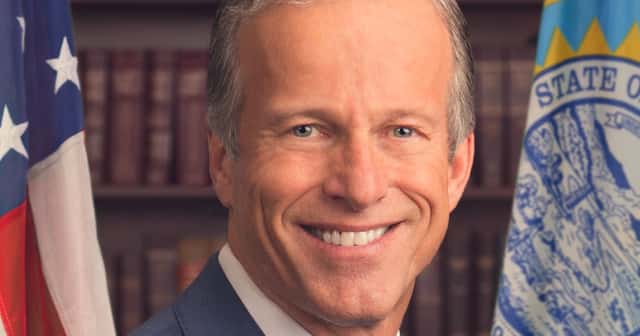
Senate Republicans are scheduled to elect their leaders at 9 a.m. Tuesday in the Old Senate Chamber, and Majority Leader John Thune has no declared opponent. Yet a growing group of Republican senators says the vote should not happen yet. Sen. Ron Johnson of Wisconsin planned to deliver a letter on Monday with the five signatures needed to force a special conference meeting, Semafor reported. Sen. Dave McCormick of Pennsylvania joined the call on Sunday night, writing that "Tuesday is too soon," according to Axios.$$$
The push is not, so far, a challenge to Thune. It is a fight over sequence: whether a conference that just lost its majority should first argue about what went wrong and what it will do in the lame-duck session, or install its leadership team first and argue afterward. The answer will shape how much leverage the party's conservative senators have over Thune before he becomes minority leader in January.
What the delay camp is asking for#
Johnson has framed the request as a matter of basic accountability after a defeat. In a letter he planned to send to Senate Republican Conference Chair Tom Cotton of Arkansas, obtained by the Washington Examiner, he called it "political malpractice" to move forward with closed-door elections so soon after a "stunning defeat." He told Fox News that "it's not like we've got to quick-form a majority in the Senate and do all the things with the committees. We have time," as quoted by Al Jazeera. "This is time for reflection. This is time not to just, quick, make a knee-jerk decision."$
Johnson also made a historical argument on X.
In that Nov. 7 post, Johnson wrote that "since 1934, leadership elections have occurred about 40 days after an election," and that since 2006 the gap had shortened "to just nine days." 567 Politics has not independently verified those averages. The post's broader point, that recent conferences have voted quickly, is consistent with the 2022 and 2024 calendars described below.
McCormick, a first-term senator from a swing state, made a narrower case. "One of the things I learned in business and the Army is that after a failure, you have to start with honesty, transparency, and accountability," he wrote, according to Axios. "We need leadership in place fast, but Tuesday is too soon." He said he had raised his concerns directly with Thune and was not asking him to step aside.
Sen. Mike Lee of Utah has added a practical condition. He wrote that Republicans have "no business holding Senate Republican leadership elections until: (1) we've had ample opportunity to discuss what happened on Tuesday, and (2) we know who's going to be in our conference," according to Al Jazeera. On Nov. 7 he posted on X that "we shouldn't rush back into Senate leadership elections without having some hard, necessary conversations about how we move forward."$
Lee's second point refers to two Senate races that are still uncalled. In Mississippi, Democrat Scott Colom led Sen. Cindy Hyde-Smith$ 49.1% to 48.8%, and in Alaska, Democrat Mary Peltola led Sen. Dan Sullivan$ 48.2% to 47.9%, according to AP tallies cited by USA Today. Alaska's ranked-choice tabulation does not begin until Nov. 18 under state law. We have covered both counts in detail, in Mississippi and in Alaska. If both incumbents lose, two current Republican senators would vote in an election for a conference they will not belong to.
Rick Scott$'s price: the SAVE America Act#
Sen. Rick Scott of Florida, who ran against Thune in 2024 and lost, is tying his support to a specific policy commitment rather than to the calendar.
"I've been fighting for over two years to get the SAVE/SAVE America Act, passed in the Senate," Scott wrote on Nov. 8. "We have two months to get it done. Every candidate for a leadership job must commit to passing it. Failure is not an option." The bill, which would add proof-of-citizenship requirements to federal voter registration, has not advanced in the Senate, where it lacks the 60 votes needed to overcome a filibuster. Roll Call described it as legislation that "never had a chance of passing the chamber," and noted that it was a source of friction between Thune and President Trump.
Scott said in September that he was not planning to challenge Thune again, according to Roll Call. A demand that "every candidate" commit to the bill therefore works as leverage over Thune's agenda for the final weeks of the Republican majority, not as an announced candidacy.
Thune's case: a record and a fight ahead#
Thune has not publicly answered the delay request in detail, based on available reporting, and the elections were still scheduled to proceed as of Monday, according to a person familiar with the matter cited by Axios. His case for continuity rests on the record he described on election night. "Over the last two years, Senate Republicans have put up a strong record of accomplishment that's created safer streets, more money in Americans' pockets, and new opportunities for families and businesses to get ahead," he wrote, as reported by SDPB. "As we head into 2027, Senate Republicans will not stand idly by as the far-left, socialist wing of the Democrat Party attempts to unwind everything we've done."
His allies argue, in effect, that a minority conference needs a settled team immediately. Majority Whip John Barrasso of Wyoming, who is expected to seek his post again, wrote that "there are clear lessons to be learned from the results" and that Republicans "should listen to what voters unmistakably said," while adding that "our focus should not waiver from the top priority of driving down prices," Roll Call reported. Sen. James Lankford of Oklahoma and Sen. Shelley Moore Capito of West Virginia are expected to run again for conference vice chair and policy committee chair.$$$
Trump has stayed formally neutral. "It's gonna be up to the Republicans. They choose. I don't choose," he told reporters on Friday, according to Axios. But he has also blamed the Senate in part for the defeat: "We had a bad election because of a few things. One thing was not getting things approved in the Senate."
The conference Thune would lead#
The scale of the change explains some of the urgency on both sides. Republicans held 53 seats in the current Congress. Democrats have secured 54 seats for the next one and Republicans 44, with two races uncalled, according to AP results published by NBC News and USA Today. Our Senate control race page tracks the final count.
| Senate | Democrats | Republicans | Uncalled |
|---|---|---|---|
| 119th Congress (now) | 47 | 53 | – |
| 120th Congress (Jan. 2027) | 54+ | 44+ | 2 |
The current figures include independents who caucus with Democrats; the 53–47 split is from Roll Call's report on Thune's bid. Under current Senate rules, a minority of 41 or more can still block most legislation by filibuster, but nominations need only a simple majority, and the majority sets the floor schedule and runs committees. That makes the minority leader's job mostly about holding a bloc together, which is the very thing the delay group says needs discussion first.
The Republican Party's losses also hit the House, where the conference is choosing between Steve Scalise$ and Jim Jordan$ for minority leader in its own Tuesday vote, as we reported in our preview of the House leadership race.
The 2022 precedent#
Senate Republicans have faced a nearly identical request before, and the conference rejected it. After a disappointing 2022 midterm, Sen. Ted Cruz$ of Texas moved to delay the leadership election until after Georgia's Dec. 6 runoff. The motion failed 32–16, and the conference then re-elected Mitch McConnell$ over Rick Scott 37–10, with one senator voting present, Roll Call reported. In 2024, Thune won a three-way race on the second ballot, defeating John Cornyn$ 29–24 after Scott was eliminated with 13 first-ballot votes, according to the results compiled from Politico's reporting.
Source: Roll Call (2022), 2024 results via Politico, compiled on Wikipedia
Show the numbers
| Vote | Prevailing side | Losing side |
|---|---|---|
| 2022 motion to delay | 32 | 16 |
| 2022 leader: McConnell v. Scott | 37 | 10 |
| 2024 leader, 2nd ballot: Thune v. Cornyn | 29 | 24 |
The 2022 numbers show that the delay motion drew 16 votes, six more than the 10 who backed Scott's challenge to McConnell, which suggests some senators were willing to slow the process without voting against the leader. The difference this year is that there is no challenger, so a delay vote, if one happens, would measure frustration with process rather than support for an alternative.
What each side's argument gets right, and where it is thin#
The delay camp's strongest point is about information. Two seats remain undecided, and senators who may not return would help choose a leader for a conference they leave in January. Lee's concern on that point is factual, not speculative. Its weaker point is the implied promise that a few more days of discussion will produce a different outcome; no senator has announced a bid, and in 2022 a roughly three-hour conference meeting ended with the incumbent re-elected by a wide margin.
Thune's allies' strongest point is practical. The lame-duck session is short, the Senate has nominations and a December government funding deadline to manage, as NBC News noted, and an unsettled leadership could complicate both. Their weaker point is the suggestion that the calendar itself requires speed; Johnson's observation that the minority need not organize committees in a hurry is accurate on its face.
Scott's argument mixes the two questions. Demanding a policy commitment as the price of a leadership vote is a recognizable form of bargaining, but tying it to the SAVE America Act sets a test Thune cannot pass on his own, because the bill needs 60 votes, not just his support. That does not make the demand illegitimate, but it means Thune's answer can only be a promise about effort, not about results.
How Tuesday could unfold#
Johnson's letter, if it reaches Cotton with five signatures, forces a special conference meeting but does not by itself postpone Tuesday's vote, according to Semafor. Any delay would require a vote of the conference. If the elections go ahead, the size of any vote to delay, and whether senators who called for one vote against Thune or simply abstain, will be the clearest early measure of how much room he will have to lead the minority. Senate Democrats will hold their own leadership elections in early December.
Differing perspectives
Should Senate Republicans hold their leadership elections on Nov. 10 as scheduled?
Each position is summarized as its supporters make it, with equal weight and in alphabetical order. A summary is not an endorsement; the evidence for each is weighed in the story above.
Delay the vote for a conference debate first
Who holds it: Sens. Ron Johnson, Dave McCormick and Mike Lee and other signers of Johnson's letter
Delay supporters argue that after what McCormick calls the worst election results in decades, the conference should first discuss what went wrong, what it stands for and how its agenda should change. They say a minority does not need to organize committees in a hurry, that recent conferences have voted unusually fast, and that two uncalled Senate races mean the conference does not yet know its own membership. McCormick says he is not asking Thune to step aside.
In their words: Axios (statements by Sen. Dave McCormick) ↗
Hold the elections as scheduled
Who holds it: Majority Leader John Thune, Whip John Barrasso and senators backing the current leadership team
Supporters of the current schedule argue that Republicans need a settled leadership team immediately to manage the lame-duck session and to oppose the incoming Democratic majority from its first day. Thune points to a two-year record he says produced safer streets and more money in Americans' pockets, and says Republicans will work with President Trump to stop Democrats from unwinding it. Barrasso says the lessons of the election are clear and that the focus should stay on lowering prices.
In their words: Roll Call (statements by John Thune and John Barrasso) ↗
Require a SAVE America Act pledge from candidates
Who holds it: Sen. Rick Scott and supporters of the voter-registration bill
Scott argues that the remaining two months of Republican control are the last chance to pass the SAVE America Act, which would require proof of citizenship to register to vote in federal elections. He says he has pushed the bill for more than two years and that every candidate for a leadership post should commit to passing it before senators vote, treating the leadership election as a chance to secure that commitment.
In their words: Sen. Rick Scott on X ↗
Cite this article
567 Politics staff. “No one is running against Thune. So why do Republican senators want to delay his re-election?.” 567politics. Published 2026-11-09. https://567politics.com/news/senate-republican-leadership-election-delay-thune-ron-johnson-mccormick-rick-scott-november-2026
Wikipedia citation
{{cite news |title=No one is running against Thune. So why do Republican senators want to delay his re-election? |url=https://567politics.com/news/senate-republican-leadership-election-delay-thune-ron-johnson-mccormick-rick-scott-november-2026 |work=567politics |author=567 Politics staff |date=2026-11-09 |language=en}}CSL-JSON for reference managers
{
  "id": "https://567politics.com/news/senate-republican-leadership-election-delay-thune-ron-johnson-mccormick-rick-scott-november-2026",
  "type": "article-newspaper",
  "title": "No one is running against Thune. So why do Republican senators want to delay his re-election?",
  "URL": "https://567politics.com/news/senate-republican-leadership-election-delay-thune-ron-johnson-mccormick-rick-scott-november-2026",
  "container-title": "567politics",
  "language": "en",
  "author": [
    {
      "literal": "567 Politics staff"
    }
  ],
  "issued": {
    "date-parts": [
      [
        2026,
        11,
        9
      ]
    ]
  }
}Citations identify this article and its publication date. Assess the reporting and its linked sources before using it as evidence.
Read this article as Markdown or JSON. Cite the original page and retain its sources, dates and qualifications.
Embed this article summary
Paste this HTML into your page. The summary stays linked to the full story and updates with it. No account required.
<iframe src="https://567politics.com/embed/news/senate-republican-leadership-election-delay-thune-ron-johnson-mccormick-rick-scott-november-2026?theme=auto" title="No one is running against Thune. So why do Republican senators want to delay his re-election? by 567politics" width="100%" height="440" style="border:0;max-width:100%" loading="lazy"></iframe>
<p style="font-size:14px">No one is running against Thune. So why do Republican senators want to delay his re-election? by <a href="https://567politics.com/news/senate-republican-leadership-election-delay-thune-ron-johnson-mccormick-rick-scott-november-2026" rel="nofollow">567politics</a></p>
<script async src="https://567politics.com/embed.js"></script>
READ BEYOND 567POLITICS
Alternate sources & perspectives
Independent coverage and primary evidence to help you compare arguments. A link is not an endorsement; perspective labels describe the linked material.
- independent analysis
McCormick calls for delay in Senate GOP leadership elections ↗
Axios
McCormick's full statement, Trump's comments on the Senate, and confirmation that the elections were still scheduled.
- independent analysis
Senate's post-election drama escalates quickly ↗
Semafor
Explains what Johnson's five-signature letter can and cannot do, and Lee's and Scott's conditions.
- right argument
Ron Johnson presses to delay Senate GOP leadership elections: 'Political malpractice' ↗
Washington Examiner
First report on Johnson's letter to Conference Chair Tom Cotton, quoting his case for a delay.
- right argument
Conservative Republican Bloc Seeks Midterm Autopsy Before Tuesday's Senate Leadership Election ↗
The New York Sun
Frames the conservative senators' argument that Thune should make his case rather than be re-elected by default.
- other perspective
Thune to run for minority leader ↗
CQ Roll Call
Thune's and Barrasso's statements, the Tuesday schedule and Scott's September comment that he would not challenge Thune.
- other perspective
Thune says Senate Republicans won't 'stand idly by' in face of Democrats' new majority ↗
South Dakota Public Broadcasting
Home-state coverage of Thune's election-night statement and bid to stay leader.
- independent analysis
Which Republicans are running for minority leadership roles in US Congress? ↗
Al Jazeera
Overview of both chambers' Republican leadership races, with Johnson's and Lee's quotes.
- primary evidence
McConnell prevails in Senate GOP leadership contest ↗
CQ Roll Call
Contemporaneous report of the 2022 votes: the 32-16 defeat of Cruz's delay motion and McConnell's 37-10 win.
- primary evidence
Mississippi and Alaska Senate races remain uncalled ↗
USA Today
AP tallies in the two uncalled races that determine the size of the Republican conference.
- right argument
Sen. Ron Johnson on the timing of leadership elections ↗
Sen. Ron Johnson on X
Johnson's own historical argument for slowing the vote.
- right argument
Sen. Rick Scott on the SAVE America Act and leadership candidates ↗
Sen. Rick Scott on X
Scott's demand that every leadership candidate commit to passing the bill.
Reviewed 2026-11-09. Reviewed November 9, 2026. The automated source discovery returned only generic Senate pages, so the sources below were chosen by hand from pages we opened. The Hill, Politico and CBS News pages on the delay push timed out and are not listed. We did not find a statement from Thune's office responding directly to the delay request, nor a left-of-center argument specifically about the timing of the Republican vote; Democratic commentary on the GOP leadership fight is therefore not represented. Johnson's letter itself was not publicly posted when reviewed.