Tucker Carlson calls midterms the “end of the Trump era” and targets Fox News
Carlson’s X videos frame the defeat as betrayal. He targets war advocates, rejects a stolen-election explanation and stops short of endorsing Vance.
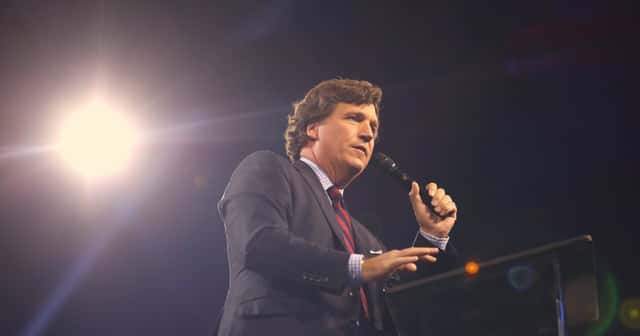
Tucker Carlson treated the Republican midterm defeat as a verdict on Donald Trump and the people who had promoted his Iran policy. In his first extended response, he declared an end to the political era built around Trump and Fox News, challenged Mark Levin and Ben Shapiro, and argued that the party had broken faith with its own voters.
His original X video post framed the result in stark terms: “The Republican Party just imploded.” A second post carried the title “The Great Betrayal.” Together, they show Carlson presenting the losses as a reason to reconsider who should lead and influence the right. They do not establish that Republican voters as a whole accept his diagnosis.
The electoral backdrop is established: Democrats won control of both chambers of Congress, according to the Associated Press. The causes, and the response Republicans should make, remain disputed. Carlson’s account places the governing agenda at the center. Levin’s response places more blame on critics who attacked Trump before voters went to the polls.
The original posts#
Carlson published his long reaction on X on November 4 Eastern time. The post links a video of nearly two hours. His website presents the program as “Tucker Reacts to the Republican Midterm Bloodbath”. The same episode is available on his YouTube channel under a different title.
On November 5, his account published a shorter video with a caption identifying betrayal as its theme. The title below is Carlson’s framing of the political dispute, rather than a finding that establishes any particular allegation against the administration.
The distinction between captions and spoken remarks matters. The longer claims discussed in this article come from the episode, with timestamps linked where useful. The short captions alone do not contain a full explanation of the result. Readers can examine the original videos rather than relying on a clipped quotation detached from its argument.
A rejection he says Republicans earned#
Near the start of the episode, Carlson described the losses as punishment for the administration’s conduct. He rejected the suggestion that Republicans had been robbed of victory and said they had earned their defeat. His argument concerned accountability for governing, rather than an allegation that the count had been manipulated. Original episode, about 2:00–3:20
That position is distinct from celebrating the Democratic platform. Carlson expressed unhappiness about Democratic victories while arguing that Republican leaders deserved to lose. A person can reject both parties’ programs and still regard an election result as a fair judgment on the incumbent party. His response should be understood on those terms.
It also sets him apart from the response examined in our report on Laura Loomer and Mark Levin. Loomer emphasized the dangers she attributed to Democratic power. Carlson directed his main indictment at the party that had held power. Those emphases point toward different strategies: rallying against the opposition, or changing the leadership and policy of one’s own side.
Neither strategy is validated merely by how strongly its advocate expresses it. The test is whether it addresses the reasons people voted as they did and offers a workable response. Carlson’s dissatisfaction is clear; its reach among voters cannot be measured from the posts themselves.
His break also predates Election Day. In June, the Associated Press reported that Carlson would not support the Republican Party ahead of the midterms. He also said he would not support Democrats. That earlier statement helps place the new videos in context: his criticism of the party was already public before the result gave it renewed attention. It does not prove that his criticism caused the result. A position announced before an election can make a later argument consistent without making every part of that argument correct.
What he means by the end of an era#
At roughly eight minutes, Carlson called the result the “end of the Trump era.” He immediately extended the judgment to Fox News. TheWrap’s report documents his argument that the network helped persuade Trump to enter the Iran war.
His criticism is about influence as well as policy. In his telling, the president’s preferred broadcasts helped shape decisions that voters then rejected. That challenges the credibility of the people advising or encouraging a leader, alongside the judgment of the leader who made the decisions.
The argument has a limit. Evidence that a network broadcast support for a war does not, by itself, prove that those broadcasts caused the president to choose it. Establishing that would require more evidence about the decision and the weight given to each adviser. Carlson’s account of Fox’s influence is an attributed explanation, not a completed reconstruction of presidential decision-making.
Nor should his language be read as a literal announcement that Trump has left office or Fox has stopped broadcasting. Carlson acknowledged that the network could continue operating and that Trump could remain president. He was declaring their political credibility exhausted in his own assessment. Whether that assessment becomes a wider political reality is a separate question. Original episode, about 7:45–9:35
Levin and Shapiro become targets#
Later in the episode, Carlson replayed a pre-election exchange in which Levin used a Fox survey to argue that Iran did not appear likely to drive the midterms. Shapiro agreed with that assessment in the clip. Carlson challenged the reasoning and demanded attention to the original survey question. Episode, about 34:40–37:45
The exchange was also reproduced in a Media Matters clip and transcript. That source is useful for checking the excerpt, but its selection is not the full program. Our earlier report on the backlash against Levin and Shapiro provides the background to the dispute.
There is a sound question inside Carlson’s criticism: what did the poll actually ask? Ranking an issue first is different from regarding it as important. A respondent may put the cost of living first while believing a war contributed to household pressure. A survey can measure both attitudes without producing a contradiction.
Carlson also proposed his own highly charged alternative wording about the war’s costs and purposes. That wording would introduce another problem: a question that presumes destructive consequences and a particular motive can steer a response. A fair comparison needs the exact questions, population, dates and answer options. Replacing one incomplete account of a poll with a loaded hypothetical does not resolve the measurement issue.
This story does not treat the figure used in the replayed clip as a verified measure of the war’s electoral effect. For the evidence beyond the commentators’ exchange, see our review of the war, prices and competing midterm explanations.
Levin offers a competing account#
Levin’s own November 5 program page states the counterargument directly. He argues that Carlson and other critics had weakened Republicans by attacking Trump and discouraging support before the election. He defends the confrontation with Iran as a response to a security threat and rejects Carlson’s interpretation of American interests.
In an earlier post, Levin had argued that the defeat had several causes and criticized the people assigning blame online. That statement is included here so readers can examine his response in his own words.
The strongest version of Levin’s case is that security decisions cannot be judged solely by whether they help a party win. A leader might decide that an action is necessary while accepting political costs. That is a substantive argument. It still requires evidence about the threat, the available options and the consequences of acting.
His separate claim about critics depressing support also requires evidence. Showing that Carlson attacked Trump does not establish how many voters changed their behavior because of him. Likewise, Carlson’s attack on war advocates does not establish how much influence each advocate had over the administration or the election. Both sides assign responsibility beyond what their selected statements can measure.
These are different accounts of the same defeat. Carlson argues that leaders failed their supporters. Levin argues that critics weakened the coalition and that the security case for the policy remains valid. The Republican Party’s coalition contains competing foreign-policy views; neither commentator’s account should be treated as the party’s settled position.
Praise for Vance comes with a qualification#
Carlson also welcomed JD Vance$’s account of the losses. He treated the vice president’s comments as an acknowledgment that voters had reasons to reject the party. But he explicitly said his praise was not an argument that Vance should be the nominee in 2028. Episode, about 39:10–42:20
That qualification matters. Agreement with a politician’s explanation of one election is different from endorsing that politician for the next one. The episode supplies evidence of the former. It should not be turned into an announcement of the latter.
It leaves a practical question unanswered: which people and policies could rebuild the coalition Carlson says was betrayed? His reaction identifies targets for accountability. It does not, by itself, establish an agreed successor, a new party platform or a route to winning back voters.
One constitutional claim needs correction#
Carlson’s warning about Trump’s remaining power included an overstatement. He described presidential foreign-policy power as effectively unrestricted by the Constitution. That description confuses a claim about weak political checks with the constitutional allocation of authority. Episode, about 9:25–10:20
The Senate Historical Office explains that Congress holds the power to declare war and shapes military policy through funding and oversight. Whether lawmakers use those powers forcefully is a separate question. Failure to impose a particular restraint does not mean Congress lacks authority.
That distinction is relevant to the next stage of the dispute. An election can change political incentives without immediately settling policy. Carlson’s response demands a break with the people he blames. Levin’s demands continued resolve against the threat he identifies. The evidence needed to judge those prescriptions extends beyond the force of their rhetoric.
Reporting note: Reviewed November 6, 2026. Carlson’s original X timeline and two post permalinks were inspected. X’s public embed service confirmed authorship, captions and dates. Spoken remarks were checked against the public transcript of the original YouTube episode and linked reporting. Dates in the body use Eastern time; embed previews may show UTC dates. This is selected coverage of named commentators, not a representative survey. No engagement count is used as evidence of public agreement. Discovery results were screened; unrelated results were excluded. The story makes no allegation about campaign funding or undisclosed payments.
Photo: Tucker Carlson speaking at AmericaFest in Phoenix in December 2023, by Gage Skidmore, under CC BY-SA 2.0. Archival image; display crops may vary.

Differing perspectives
How should Republicans respond to the midterm defeat and the dispute over the Iran war?
Each position is summarized as its supporters make it, with equal weight and in alphabetical order. A summary is not an endorsement; the evidence for each is weighed in the story above.
Break with the leadership and its war advocates
Who holds it: Tucker Carlson
Carlson argues that Republican leaders broke faith with voters who expected them to put American interests first. He treats the midterm defeat as a judgment on that record and wants the people who promoted the Iran war to lose influence. His position centers accountability for governing choices and the public advice that supported them.
In their words: Tucker Carlson’s original post-election episode, November 4, 2026 ↗
Defend the security decision and challenge its critics
Who holds it: Mark Levin
Levin argues that confronting Iran was a necessary response to a security threat and should not be judged solely by electoral costs. He says critics weakened Republicans before the vote by attacking Trump and discouraging support. His position centers the president’s duty to act against threats and the need to examine the critics’ role in the defeat.
In their words: The Mark Levin Show, November 5, 2026 ↗
Cite this article
567 Politics staff. “Tucker Carlson calls midterms the “end of the Trump era” and targets Fox News.” 567politics. Published 2026-11-06. https://567politics.com/news/tucker-carlson-midterm-reaction-end-trump-era-fox-news-x-2026
Wikipedia citation
{{cite news |title=Tucker Carlson calls midterms the “end of the Trump era” and targets Fox News |url=https://567politics.com/news/tucker-carlson-midterm-reaction-end-trump-era-fox-news-x-2026 |work=567politics |author=567 Politics staff |date=2026-11-06 |language=en}}CSL-JSON for reference managers
{
  "id": "https://567politics.com/news/tucker-carlson-midterm-reaction-end-trump-era-fox-news-x-2026",
  "type": "article-newspaper",
  "title": "Tucker Carlson calls midterms the “end of the Trump era” and targets Fox News",
  "URL": "https://567politics.com/news/tucker-carlson-midterm-reaction-end-trump-era-fox-news-x-2026",
  "container-title": "567politics",
  "language": "en",
  "author": [
    {
      "literal": "567 Politics staff"
    }
  ],
  "issued": {
    "date-parts": [
      [
        2026,
        11,
        6
      ]
    ]
  }
}Citations identify this article and its publication date. Assess the reporting and its linked sources before using it as evidence.
READ BEYOND 567POLITICS
Alternate sources & perspectives
Independent coverage and primary evidence to help you compare arguments. A link is not an endorsement; perspective labels describe the linked material.
- primary evidence
Carlson’s original post-election episode ↗
Tucker Carlson / YouTube
Original public episode and transcript. Timestamped passages support the reported arguments, including his rejection of a stolen-election explanation and his qualification about Vance.
- primary evidence
Carlson posts his extended midterm reaction on X ↗
Tucker Carlson / X
Original account, caption, video attachment and post date checked. Published November 4 Eastern time, November 5 UTC.
- primary evidence
The Great Betrayal ↗
Tucker Carlson / X
Original November 5 follow-up post with a short caption and video. The article identifies the caption as Carlson's framing and uses the full episode for the longer spoken arguments.
- right argument
Levin argues that critics weakened Republicans before the vote ↗
The Mark Levin Show
Levin's own program summary and rough transcript explain his security argument and accusation that Carlson and other critics discouraged Republican support. These causal accusations are attributed, not treated as measured electoral effects.
- independent analysis
Carlson declares an end to the Trump and Fox News eras ↗
TheWrap
Alex Welch's November 5 report documents Carlson's remarks about Trump, Fox News and the Iran war. Used to cross-check the original episode.
- other perspective
Carlson attacks Levin and Shapiro over their earlier Iran-war analysis ↗
Media Matters for America
An advocacy organization's selected clip and transcript from the November 4 show. Useful for checking the excerpt; it does not by itself establish the causes of the election or the full program context.
- primary evidence
Congress’s powers over war, funding and oversight ↗
U.S. Senate Historical Office
Official explanation of Congress's authority. Supports the correction distinguishing weak practical constraints from an absence of constitutional checks.
Reviewed 2026-11-06. Original Carlson X timeline and post permalinks were inspected in the browser. X's embed service confirmed authorship, captions and dates. Spoken remarks were reviewed in the exported public transcript of the original YouTube episode, with timestamped links in the body. TheWrap and Media Matters were read separately; Media Matters is an advocacy organization and its linked item supplies a selected clip and transcript, not independent confirmation of Carlson's factual assertions. Levin's own program page supplies his competing argument. Some direct web retrievals failed; the original episode transcript and official Levin page were available through other public retrievals. Discovery-only and unrelated candidates were excluded. No representative survey of reactions or separate institutional Fox response was established.