Survivors and critics clash over UK conversion practices bill as MPs and peers take evidence
MPs and peers heard two survivors of religious conversion efforts as a report co-written by Baroness Falkner called the draft ban unworkable. Ministers call it misleading.
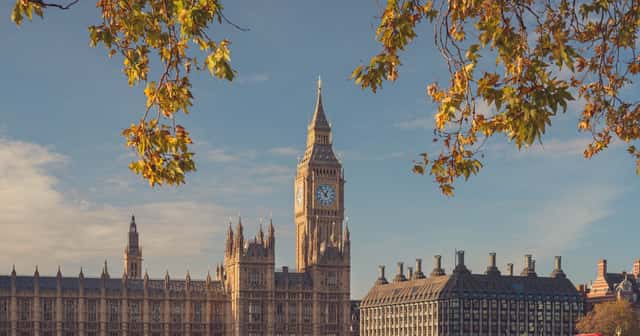
Two people who spent years in religious attempts to change their sexuality told a committee of MPs and peers on Monday that England and Wales still have no law against what happened to them. On the same day, a think tank report co-written by a former chair of Britain's equality regulator called the government's draft ban "ideological, authoritarian, unworkable and wholly unsuitable." Ministers answered that the report was "misleading."
The exchanges came in the second week of pre-legislative scrutiny of the draft Conversion Practices Bill. A joint committee of both Houses of Parliament is testing the text before the government decides what to introduce formally. The core dispute is not whether abuse should be illegal. Almost every side says it should. The dispute is about where the criminal line falls, especially inside families, churches and therapy rooms, and whether the bill's wording protects the people it targets without catching ordinary parenting, prayer or professional care.
This article sets out what the draft bill says and what the committee heard on October 29 and November 2. It then covers the new Policy Exchange report, the responses from the government and the bill's supporters, and what polling does and does not show.
What the draft bill would do
The government published the draft bill on June 25, 2026. It applies to England and Wales only. The text on GOV.UK, last updated September 1, has six clauses and a schedule.
Clause 1 defines a "conversion practice" as conduct intended to make a person have, or not have, a sexual orientation or a transgender identity. It also covers conduct meant to make them believe they do or do not have one. "Transgender identity" includes people undergoing or proposing gender reassignment and people who identify "as neither male nor female or as not solely male or female."
The definition alone does not create a crime. Clause 2 makes it an offense to carry out an "abusive conversion practice" that causes either serious harm to the person's physical or mental health, or "serious alarm or distress" that has "a substantial adverse effect on their usual day-to-day activities." Whether conduct counts as abuse is "a question of fact" decided on all the circumstances. The bill lists factors to weigh, including sexual conduct, violent or threatening behavior, controlling or coercive behavior, economic pressure and "psychological or emotional pressure."
The maximum penalty on conviction in the Crown Court is five years in prison, a fine, or both. A second offense covers people in England and Wales who intend to encourage or assist an abusive conversion practice abroad on a UK national or resident. A schedule creates civil Conversion Practice Protection Orders, which the government says are modeled on orders used against forced marriage and female genital mutilation.
Healthcare has a specific carve-out. Conduct in the course of providing health care services is not a conversion practice "unless the person acts in a way that falls far below the standards reasonably expected of a person in their position." The bill also makes directors, partners and governing-body members of organizations liable if they authorize, permit, take part in or fail to take reasonable steps to prevent an offense by the body.
The government's own summary says the bill is not meant to criminalize "expressing beliefs about LGBT+ identities" or to ban "explorative conversations and questioning about someone's identity," and that a "high threshold for criminality" keeps only abusive, harmful acts in scope. The text itself does not contain an express clause protecting religious expression or parental decisions. Supporters say none is needed because the harm and abuse thresholds do that work. Critics say the absence is the problem.
- Government publishes the draft bill for England and Wales
- Updated draft text posted on GOV.UK
- Joint committee's first oral evidence session, two panels
- Jayne Ozanne and Ian Smith give evidence; Policy Exchange report published
Source: GOV.UK, Sex Matters, Humanists UK
Why the government says a law is needed
Ministers argue that existing offenses do not fit. The government's June announcement said domestic violence, coercive control and communications offenses "do not adequately address the unique nature of abusive conversion practices," and that the lack of a legal definition makes it hard for police and prosecutors to act. Olivia Bailey, the equalities minister, said at publication that conversion practices "are driven by the false belief that being LGBT+ is shameful and can be forcibly changed."
The draft drew support at publication from Stonewall, the anti-abuse charity Galop, the Ban Conversion Therapy Coalition, the Royal College of Psychiatrists, the Domestic Abuse Commissioner and the Rt Revd David Walker of the Church of England. Hilary Cass, whose review of gender identity services for children shaped NHS policy, said she was pleased the text gave "a clearer definition of what conversion practices are, compared to previous drafts, but also what they are not." The Royal College of Psychiatrists, while supporting the bill, said it must let clinicians "continue to have appropriate exploratory conversations with their patients."
How common such practices are is uncertain. The BBC reported that about 5% of the 108,000 respondents to the government's 2018 LGBT Survey said they had been offered some form of conversion therapy and 2% said they had undergone it. That survey did not define the term and did not ask when or where it happened, and it was a self-selected sample, not a representative one. Galop told the BBC it identified more than 300 calls about conversion practices between 2022 and 2025. In a sample of 195, it found 123 cases reported as initiated by parents, 158 involving coercive and controlling behavior, 52 that were religion-based and 47 involving physical violence. Those are helpline contacts, not a measure of prevalence.
What survivors told the committee on November 2
The committee's Monday afternoon session heard from Jayne Ozanne, a member of Guernsey's parliament and former chair of the Ban Conversion Therapy Coalition, and Ian Smith, who now runs a men's mental health initiative in Wales. The most detailed published account comes from Humanists UK, which campaigns for a ban and released quotations from the hearing. Readers should weigh that source accordingly; the official transcript had not been published when this article was written.
Smith said that from 1987 to 1997 he took part in exorcisms, Christian counseling and peer-support groups in Wales and Bristol aimed at stopping him being gay. At one session, he said, about ten men "laid hands on me, spoke in tongues and shouted at the demons they believed were inside me" for more than two hours. He later attempted suicide. "This wasn't one person or one session. My whole environment became conversion therapy," he said. He told Humanists UK that he had sought out the practices himself: "My willingness to participate did not make them harmless."
Ozanne said she sought prayer for 20 years and ended up "in hospital fighting for my life." She said she spoke "as a Christian" with "a deep love of prayer, but not all prayer is healthy or good." She said the problem was "the constant messaging that who I was was unacceptable."
Their evidence goes to a question the bill's supporters raise most often: consent. Many of the practices Smith described were things he asked for. The draft bill does not say whether a person's consent prevents conduct from counting as abuse. Nathan Stilwell of Humanists UK urged Parliament to pass a ban "with no loopholes for suppression or so-called consent," while saying people "must remain free to pray and to seek open, exploratory support." Others say adults must remain free to seek religious help consistent with their own beliefs.
What critics told the committee on October 29
The first evidence session, on October 29, set out the opposing case. Its account here comes from Sex Matters, a group that gave evidence against the bill, and from the Christian Institute, which also opposes it. Both are advocates.
Helen Joyce of Sex Matters argued that the abuse threshold is modeled on the coercive-control offense, "which was written for adults," and that the bill "makes no distinction between adults and children." She said: "If my husband takes my phone away from me because he doesn't want me contacting people, that's coercive control. If I do that to my child, that may be responsible parenting." She also argued that the healthcare exemption covers only conduct in healthcare, not therapist training, supervision or work with parents.
Dennis Kavanagh, a criminal barrister and director of the Gay Men's Network, argued that "abusive" has no settled meaning in criminal law and that nothing in the bill requires prosecutors to show a parent intended harm. He said the bill "makes it a crime to say to your teenage daughter 'I want you to love your body. I want you to grow up to be a happy lesbian. I don't believe you are a man.'" Dermot Kehoe of LGB Alliance argued, in Sex Matters' summary, that Section 28 chilled a generation without a single prosecution, and that a law's main effect is often what people stop doing.
On the first panel, according to Sex Matters, Ilias Trispiotis of the Ban Conversion Practices Coalition argued that the bill was wrong to separate abusive from non-abusive practices because, in his view, conversion practices are "inherently abusive." Asked by Naz Shah MP whether a parent who does not affirm a child's gender identity could be prosecuted, he said it would be "heavily contextual" and that prosecutors could be trusted to be careful. Kai O'Doherty of Galop said the charity sees "hundreds of contacts around conversion practices annually," and Stephen Kiely of Stonewall proposed limiting the healthcare exemption to practitioners regulated by a statutory body or listed on an accredited register.
That exchange shows the bill being criticized from both directions. Supporters of a wider ban say the abuse threshold leaves harmful practices lawful. Opponents say the same threshold is too vague to give parents and clergy fair warning.
The Policy Exchange report
On Monday the think tank Policy Exchange published Not What It Says On The Tin, by Akua Reindorf KC and Baroness Falkner of Margravine, a former chair of the Equality and Human Rights Commission. 567politics could not open the report itself; Policy Exchange's website returned an error and a security check. The account below relies on the Daily Mail and Hits Radio News, which quoted it at length.
Falkner said the draft "appears oblivious to human rights law in Britain" and "in current form it breaches numerous rights including the right to a fair trial, the right to a family life, the freedom to hold religious or other beliefs, while curtailing freedom of expression." She said it "will be unworkable unless it is considerably revised and then subjected to a full public consultation." The report warns that the bill could criminalize parents and religious organizations and affect schools and teachers. Baroness Sharron Davies, the former Olympic swimmer, called it "essential reading."
Reindorf argued that conversion practices were historically understood as "cruel, coercive or violent" efforts such as electric shock therapy, corrective rape, exorcisms and compelled prayer healing, which she said "are already unlawful under existing criminal legislation." She said the draft "extends well beyond" those practices, including by criminalizing what she called "good faith conversations between parents and children."
The report says that because the bill sets no minimum age for prosecution, "even children who are still at primary school may be liable to criminal prosecution for abusive conversion practices against their schoolmates where they have made comments or asked questions without malice or harmful intent." That point needs context. The bill does not set its own age limit, but it does not need to for the general rule to apply: the age of criminal responsibility in England and Wales is 10 for every offense, and children aged 10 to 17 are dealt with in youth courts. Whether a child's remarks could meet the bill's intent, abuse and serious-harm tests is a separate question the report raises and the government disputes.
The report also argues that the bill's definition of transgender identity, which covers anyone who identifies "as neither male nor female or as not solely male or female," is broad enough to take in hundreds of identity labels, and it gives "catgender" as an example. Government sources told the Daily Mail that claim was "nonsense" and that the bill does not define any new genders in law. It also calls some prevalence figures cited by supporters "wildly improbable," pointing to a survey suggesting that as many as 30% of transgender people had been subjected to exorcism.
The government's and supporters' response
A government spokesperson told Hits Radio News: "This report is misleading and based on a number of inaccurate claims. This draft Bill targets a specific form of abuse, it does not touch regular parenting." The spokesperson added that "successive governments have agreed for almost a decade that conversion practices have no place in modern Britain."
Nick Baldwin of LGBT+ Humanists said the bill "targets abusive practices that cause real harm, not ordinary family conversations or the teaching of religious beliefs." He added that "several EU countries, including France, Germany and Spain, already ban conversion practices, all while bound by the same human rights laws as the UK." That point answers the report's human-rights objection with a comparison; it does not show that this specific text would survive a challenge, since each country's law is drafted differently.
Two claims in this debate deserve the same scrutiny. Reindorf's statement that the historically recognized practices "are already unlawful" is partly right: violence and sexual assault are crimes. But Smith's account, of exorcisms and counseling he sought out that caused psychological harm, is the kind of case that existing offenses fit poorly, which is the gap the government cites. In the other direction, the government's assurance that the bill "does not touch regular parenting" describes its intent. The text itself contains no parental exemption, and whether a court would agree turns on how judges read "abuse" and "serious alarm or distress." Both claims are best read as predictions about how the law would work, not settled facts.
What polls show, and their limits
No independent poll since the draft's publication has measured public views on its specific text. Two surveys are often cited, and they ask different questions.
In April 2022, YouGov for The Times surveyed 1,826 British adults online on April 6 and 7, 2022, and found that 65% said conversion therapy to change someone's sexual orientation should be banned and 62% said the same of therapy to change someone's gender identity; 14% opposed each ban and 22% to 23% were unsure. That poll predates the bill and asked about a ban in general.
On November 2, the Christian Institute, which opposes the bill, released a poll of 4,201 UK adults conducted by Whitestone Insight from July 20 to 23, 2026. The institute says 51% of all respondents initially supported "extending the law," including 57% of Labour voters, 61% of Green voters and 46% of Reform UK voters. Respondents were then shown 15 scenarios that the institute's lawyers say the bill could cover, such as a parent refusing to let a child join a Pride march, or a minister advising a man not to leave his wife for another man. The institute reports that support fell to 3% when tested across all 15. Its headline text presents that figure as a share of all adults, while its notes to editors present it as a share of initial supporters; the release does not resolve the difference.
Source: The Christian Institute
Show the numbers
| Group | Initial support |
|---|---|
| Green voters | 61% |
| Labour voters | 57% |
| All adults | 51% |
| Reform UK voters | 46% |
These results come with caveats. The sponsor is a party to the dispute. The release does not publish the exact question wording, the scenario wording or the margin of error. The scenarios reflect the institute's legal reading of the bill, which the government rejects. Asking respondents whether they would still back a law "if" it covered a list of disputed cases tests reactions to those cases, not support for the bill as the government describes it. The poll also found that more than two-thirds of respondents had not heard of the legislation. Together, the two surveys suggest broad support for banning conversion therapy in principle and real uncertainty about where the line should sit. Neither measures opinion on the current text.
Where this sits in a wider debate
The bill comes as gender identity law remains contested in Britain. 567politics has covered a tribunal's ruling on nurse Sandie Peggie's claim against the Royal College of Nursing and the equality regulator's letter to Reform UK about compliance with the Equality Act. Elsewhere, Tasmania's lower house passed a Greens bill to prohibit conversion practices in October, while Ghana's Speaker has said a bill restricting LGBTQ+ advocacy will pass, a reminder of how widely countries differ on these questions.
Within each camp there are divisions. Some LGB groups, such as LGB Alliance and the Gay Men's Network, oppose the bill's inclusion of gender identity because they argue it could steer same-sex attracted young people toward transition. Some Christians, such as Ozanne and Walker, back a ban, while others, including the Christian Legal Centre, oppose it. Andrea Minichiello Williams of the Christian Legal Centre told the BBC in June that the bill would "needlessly restrict freedom of speech and prayer" and said her group would challenge it in court. Some Labour MPs have also voiced doubts; the Christian Institute's release cites Preet Kaur Gill telling the Telegraph she had "serious concerns" about the bill's fit with the Cass Review.
The next stages for the bill
The joint committee will continue taking evidence and is expected to report with recommendations. The government can then revise the text and introduce a bill, which would go through all stages in both the Commons and the Lords, where amendments are likely on consent, suppression, parental conduct and religious expression. Under clause 6 of the draft, the law would take effect two months after it is passed.
Open questions include whether ministers will add an express protection for parents or for religious teaching, whether they will widen the offense to cover suppression or consenting adults, and whether the healthcare carve-out will be narrowed to regulated professionals, as Stonewall has proposed, or widened to cover training and work with families, as Sex Matters has proposed. The official transcripts of both sessions, when published, will allow a fuller check of what each witness said.
Differing perspectives
Should Parliament pass the draft Conversion Practices Bill for England and Wales largely as written?
Each position is summarized as its supporters make it, with equal weight and in alphabetical order. A summary is not an endorsement; the evidence for each is weighed in the story above.
Do not create a new offense
Who holds it: The Christian Institute and the Christian Legal Centre
They argue that genuinely abusive and violent practices are already illegal and that the draft's scope could reach parental decisions, private conversations, prayer and pastoral advice. They cite polling showing that initial support falls sharply when respondents are shown such scenarios, and they say people should be free to express non-coercive religious views without fear of prosecution.
In their words: The Christian Institute ↗
Pass it with its current threshold
Who holds it: The UK government and equalities minister Olivia Bailey; supporters including Galop and the Royal College of Psychiatrists
They argue that existing domestic abuse, coercive control and communications offenses do not fit conversion practices and that the lack of a legal definition hampers police and prosecutors. They say the bill sets a high threshold, covering only abusive conduct intended to change a person's identity that causes serious harm, and that it does not criminalize expressing beliefs, exploratory conversations or ordinary parenting, while exempting legitimate healthcare.
In their words: GOV.UK (Office for Equality and Opportunity) ↗
Revise it to protect parents and family life
Who holds it: Sex Matters, the Gay Men's Network and LGB Alliance
They argue that the abuse test is modeled on a coercive-control offense written for adults and draws no distinction between adults and children. They say parents who do not affirm a child's gender identity could face prosecution, that the healthcare carve-out does not cover training or work with families, and that ordinary people cannot tell from the text whether their conduct is criminal.
In their words: Sex Matters ↗
Widen it to cover suppression and consent
Who holds it: Humanists UK and survivors who gave evidence, including Ian Smith; the Ban Conversion Therapy Coalition
They argue that much of the harm comes from prayer, counseling and group sessions that each look lawful and that people sometimes seek out willingly. They say consent does not make such practices harmless and that the law should reach attempts to suppress, not only change, a person's sexuality or identity, while keeping people free to pray and to seek open, exploratory support.
In their words: Humanists UK ↗
READ BEYOND 567POLITICS
Alternate sources & perspectives
Independent coverage and primary evidence to help you compare arguments. A link is not an endorsement; perspective labels describe the linked material.
- primary evidence
Conversion Practices (draft) Bill ↗
GOV.UK
Full text of the draft bill, including the offense, the abuse factors, the healthcare carve-out and protection orders.
- primary evidence
Government pushes forward with conversion practices ban to protect LGBT+ people from abuse ↗
Office for Equality and Opportunity
The government's June 25 announcement and supporting statements from Cass, Galop, Stonewall and others.
- independent analysis
Jail time and unlimited fines planned under conversion practices ban ↗
BBC News
Reporting on the draft's publication, prevalence data and its limits, and reaction from both sides.
- left argument
'They shouted at the demons inside me': survivors of conversion practices tell Parliament ban can't wait ↗
Humanists UK
Evidence from Ian Smith and Jayne Ozanne on November 2 and the case for a wider ban.
- other perspective
Criminalising parents who don't affirm - the first evidence session ↗
Sex Matters
A witness group's account of the October 29 session, arguing the bill risks criminalizing parents.
- right argument
Labour support for 'conversion therapy' ban collapses to just 4% when voters see potential impact on parents & pastors ↗
The Christian Institute
Sponsor's release of its Whitestone Insight poll; question wording not published.
- independent analysis
Draft Conversion Practices Bill criticised as threat to human rights ↗
Hits Radio News
Quotes from the Policy Exchange report's authors, LGBT+ Humanists and the government's rebuttal.
- right argument
Jail threat if you insist a human can't be a cat: Absurdity of Labour's 'unworkable' gay and trans Bill ↗
Daily Mail
Detailed coverage of the Policy Exchange report's claims, with the government's response.
- independent analysis
Most Britons want conversion therapy banned, including that aimed at transgender people ↗
YouGov
April 2022 poll on banning conversion therapy in general, before the draft bill.
- primary evidence
Age of criminal responsibility ↗
GOV.UK
The general age of criminal responsibility in England and Wales, relevant to the report's claim about children.
Reviewed 2026-11-03. Discovery search returned only unrelated results (military draft and sports pages), so these sources were found and opened directly by 567 Politics staff. Parliament's committee pages and the Policy Exchange report could not be opened (security check and server error), so the report is cited through news coverage that quotes it, and the evidence sessions through accounts published by participating groups. Official transcripts were not yet available. Perspective labels describe the arguments in each linked item, not the outlets' overall politics.