How governments abroad read the Democratic midterm win, and what Congress can actually change
Spain, Norway and South Africa welcomed the result; Japan, Greece and China stressed continuity; Russia and Iran said nothing changes. What each said, what a Democratic Congress controls on aid, war powers and tariffs, and what foreign publics think of the U.S.
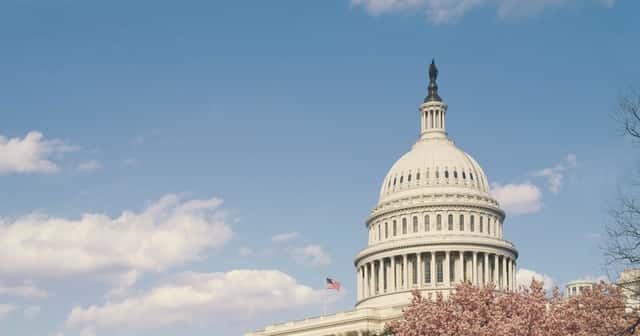
Governments from Oslo to Tokyo to Tehran spent Wednesday morning reading the American midterm results for their own purposes. Democrats won the House and the Senate on Tuesday, flipping at least seven Senate seats, according to the Associated Press tally reported by the Boston Globe. President Trump said he would accept the results and work with Democrats, and that he held "the ultimate power" of the veto, per CBS News. Abroad, the responses split along lines that had little to do with American party labels. Allies who disagree with the administration on Ukraine, climate or trade welcomed the result. Allies who depend on the alliance stressed that nothing changes. Adversaries said the vote proved their point. And a few leaders said nothing at all.
This story collects the reactions that could be verified as of midday Eastern time. It explains what a Democratic Congress can and cannot do on foreign policy. It also reports what representative surveys say about how foreign publics view the United States this year. Social-media reactions are treated as a selection of expressed views, not as a measure of opinion in any country.
Who said what
Reuters compiled the first roundup on Wednesday morning, as syndicated by Yahoo News and, in an expanded version, by Devdiscourse. We checked those quotes against local reporting where we could. The table groups them by the tone of the response; the labels are ours.
| Country | Who | Venue | Gist |
|---|---|---|---|
| Spain | PM Pedro Sánchez | X post | Voters rejected "hatred" and "climate denial" |
| Norway | PM Jonas Gahr Støre | To Reuters | "A powerful political signal" |
| South Africa | President Cyril Ramaphosa | To reporters | "A new era in world relations" |
| Japan | Chief Cabinet Secretary Minoru Kihara | Press briefing | Alliance is "the cornerstone," regardless |
| Greece | Spokesman Pavlos Marinakis | Skai TV | "Nothing will be affected" |
| China | Spokesperson Mao Ning | Press briefing | "An internal affair of the United States" |
| Russia | Deputy FM Sergei Ryabkov | To RIA | Policy "does not depend on" other countries' politics |
| Iran | Speaker Mohammad Bagher Qalibaf | X post | "Americans said NO TO WAR" |
| Germany | Defense Minister Boris Pistorius | Berlin conference | Congratulated Democrats; administration "will remain the same" |
| Poland | PM Donald Tusk | Press conference | "Democracy won in America"; advised against governing by veto |
| Czech Republic | PM Andrej Babiš | Reuters | Expects "impeachment and vetoes, and a certain kind of paralysis" |
| France | Finance Minister Roland Lescure | BFM TV | Trump must decide whether to "rise above the fray" |
| Italy | PM Giorgia Meloni | To reporters | "We'll talk about America another time" |
Sources: Reuters via Yahoo; Reuters via Devdiscourse; eldiario.es; TimesLIVE; WION; Arab News; ZDF; Rzeczpospolita; Il Foglio. All statements made November 4, 2026.
Leaders who welcomed the result
Spain's prime minister went furthest. Pedro Sánchez posted on X that "the American people voted against policies that only serve to impoverish people. Against hatred. Against sexism. Against climate denial and against the privileges of the elites," in Reuters' translation. In the Spanish original he added that the same thing "happened in Brazil" and "will happen soon in Spain." He said the "far-right wave" his domestic rivals Alberto Núñez Feijóo and Santiago Abascal "are trying to jump on is no longer growing: it is crumbling," eldiario.es reported. Sánchez faces his own electoral test, and the post reads as much as a domestic message as a foreign-policy one.
Norway's Jonas Gahr Støre told Reuters the vote was "a powerful political signal about a change of course among American voters." He said "voices are now emerging in American politics that are closer to us than the president and the administration, for example on climate and environment, and in foreign policy and development aid policy." South Africa's Cyril Ramaphosa spoke after voting in his own country's municipal elections. He said "the people of America have spoken" and that "this is going to introduce a new era in world relations," TimesLIVE reported. Two days earlier, Washington had suspended South Africa from the AGOA trade preference program. He called that "a negative for us" and said "diversification has now become the order of the day."
In Germany, Defense Minister Boris Pistorius congratulated Democrats on a "historic victory" at the Berlin Security Conference but added that "the US administration will remain the same, and we will continue to cooperate with it trustfully," ZDF reported. Poland's Donald Tusk spoke at a joint press conference with the Czech prime minister. He said "democracy won in America" and "President Trump is still president." His advice, he said, would be "not to overuse the veto as a method of governing," Rzeczpospolita reported. London Mayor Sadiq Khan called the result "a true rejection of the damaging and divisive politics of Donald Trump," the Evening Standard reported.
Leaders who stressed continuity
Japan's chief cabinet secretary, Minoru Kihara, told his regular briefing that "regardless of the outcome of this election, the Japan-US alliance is the cornerstone of Japan's foreign and security policy," per Reuters. Greece's government spokesman said "nothing will be affected by this outcome." He added that "on the key committees there will be individuals with whom the Greek government has very good relations." Taiwan's foreign ministry issued a written statement. It described its U.S. policy as "guided by the principles of non-partisanship" and promised to keep working with "parties in the US Congress, and the executive branch." A British health minister, James Frith, said the UK-US relationship "is unwavering and unchanging."
China's foreign ministry spokesperson, Mao Ning, said the elections were "an internal affair of the United States." China was "willing to continue working with the US to uphold and implement the important consensus reached by the two heads of state," she said, WION reported from the briefing. Germany's transatlantic coordinator, Metin Hakverdi, put the same point in domestic terms. "Foreign policy is determined by the president," he said. But "the domestic political pressure on Donald Trump is growing," and Democrats "now have a whole series of parliamentary rights in their toolbox," per t-online.
Adversaries
Russia's deputy foreign minister, Sergei Ryabkov, told the RIA agency that "the Democratic Party leadership's approach to relations with Russia is sharply negative." Russia's line on Ukraine, he said, "does not depend on the fluctuations of the political barometer in other countries." Iran's parliament speaker and chief negotiator, Mohammad Bagher Qalibaf, posted on X that "Americans said NO TO WAR, and we endorse this message." He added that if the U.S. government "betrays their public will to serve international paymasters and blackmailers, it will learn our NO comes with a Nightmare," Reuters reported via Arab News. Other Iranian officials struck different notes. Deputy Foreign Minister Kazem Gharibabadi said on Tuesday that "we do not tie our foreign policy to elections in other countries." A lawmaker, Alaeddin Boroujerdi, said "there is no difference between Democrats and Republicans when it comes to America's hostile policies," Ynet collected. Those are claims by officials of a government at war with the United States; they establish what Tehran chose to say, not what American voters meant. Our coverage of the Doha mediation tracks the diplomacy itself.
Right-of-center Europe
Leaders aligned with Trump mostly declined to comment or blamed the Iran war rather than the broader project. Italy's Giorgia Meloni, asked at an Armed Forces Day ceremony in Rome, said "we'll talk about America another time," Il Foglio reported. France's Jordan Bardella said one "must respect the verdict of the ballot box," and that midterms almost always go against the incumbent president. He added that "American intervention regarding Iran carries very heavy consequences" for European purchasing power through oil prices, per Reuters. Germany's Alice Weidel of the AfD told t-online that "Trump had promised his voters not to pursue an interventionist foreign policy." She said "this broken promise has now come back to haunt the Republicans." In Poland, the president's foreign-policy chief, Marcin Przydacz, said voters "decided on change." He called the result "a memento for D. Tusk and his people," Polsat News reported.
Who stayed silent
As of about 11 a.m. Eastern, we found no statement from Emmanuel Macron, Friedrich Merz, Keir Starmer, Ursula von der Leyen, António Costa, Mark Carney, Claudia Sheinbaum, Narendra Modi, Sanae Takaichi, Anthony Albanese, Luiz Inácio Lula da Silva or Benjamin Netanyahu. Sheinbaum had said on Tuesday that "it is not our place to comment today" and that Mexico would "respect whatever the result," Infobae reported. Silence from a head of government is normal practice after another country's legislative election and should not be read as a position.
Why the Israel aid announcement drew the sharpest reaction
The one foreign-policy decision Trump announced on election night concerned Israel. He said on Fox & Friends that the roughly $4 billion in annual U.S. military aid "gets cut off at the end of the year." Netanyahu, he said, had told him "it would be appropriate if we do not receive aid," the Jewish Telegraphic Agency reported. Netanyahu's office did not comment. Israeli opposition figures did. Yair Golan called the cutoff "heavy damage to Israel's security." Gadi Eisenkot said Netanyahu "must provide answers to Israeli citizens, tonight," the Times of Israel reported. Our separate report on the aid announcement has the Israeli reaction in full.
The legal position matters for every government reading the result. The 2016 memorandum of understanding promised $38 billion over fiscal years 2019 through 2028, or $3.3 billion a year in foreign military financing plus $500 million for missile defense. The Congressional Research Service notes that such memoranda "are not legally binding agreements like treaties." Congress appropriates the money year by year, in its May 2025 report on U.S. aid to Israel. A president cannot cancel an appropriation Congress has enacted; he can decline to request one, and Congress can enact one he did not request. In practice the aid will depend on what the new Democratic majorities write into the fiscal 2027 bills and whether Trump signs them.
What a Democratic Congress controls
Foreign governments are right that the president sets foreign policy day to day. They are also right that Congress holds levers. The table lists the main ones and the catch attached to each.
| Lever | Who holds it | The catch |
|---|---|---|
| Appropriations (Ukraine, Israel, any aid) | Both chambers, by law | President can veto; override needs two-thirds |
| War powers resolution on Iran | Both chambers, expedited in Senate | Subject to veto; prior measures were vetoed or ignored |
| Treaties | Senate, two-thirds present | Only for formal treaties, not executive deals |
| NATO withdrawal | Barred without Senate consent or an act of Congress | Enacted in the FY2024 defense bill |
| Tariffs | Congress, after the Supreme Court's IEEPA ruling | Administration shifted to Sections 122, 232 and 301 |
Sources: Constitution Annotated on the Appropriations Clause; CRS R42699 on the War Powers Resolution; Constitution Annotated on the Treaty Clause; 22 U.S.C. § 1928f; Cornell LII on Learning Resources v. Trump.
On Ukraine, the numbers show how much depends on appropriations. CRS counted $68.2 billion in U.S. security assistance committed from February 2022 through June 2026. But Congress "has not made significant new Ukraine funding available since April 2024." Presidential drawdown authority was cut to $100 million for fiscal 2025 and 2026, per the CRS August 2026 brief. The House passed a new Ukraine bill in June 2026 by 226 to 195 through a discharge petition; it did not become law. That is the context for Støre's and Schaldemose's hopes and for Ryabkov's dismissal. Our report on the Abu Dhabi trilateral talks covers the diplomatic track.
On Iran, House Democrats have said what they intend. Rep. Ted Lieu said that "on day one, Democrats will pass a bill to end the Iran war," and Rep. Ro Khanna said he "would stop the funding" for further action, Reason reported. A war-powers resolution can pass both chambers by simple majority, but the president can veto it, and Democrats lack the two-thirds needed to override. A funding restriction attached to a must-pass bill is harder to veto, but it invites a shutdown fight. Hakeem Jeffries, the likely next Speaker, said on election night that "this is a change election" and promised "accountability," WVXU reported. Our report on the House result covers his agenda.$$$
On tariffs, the Supreme Court's February 2026 ruling in Learning Resources v. Trump held 6 to 3 that the International Emergency Economic Powers Act does not authorize tariffs, per Cornell's case summary. The administration moved to other statutes. Bernd Lange, who chairs the European Parliament's trade committee, warned that "US protectionism won't disappear" and that the "EU cannot live at Trump's mercy," per Reuters. The Czech prime minister, Andrej Babiš, predicted that "until the end of President Trump's term, it will be all about impeachment and vetoes, and a certain kind of paralysis." At the same time, he said, "President Trump will almost certainly continue to do exactly as he pleases." Those are forecasts, not findings. The record of divided government in the United States supports both readings at different times.
What foreign publics think
Representative survey data on foreign views of the United States exist for 2026, though none yet measures reaction to the midterms. Pew Research Center surveyed 42,151 people in 36 countries between February 8 and May 13, 2026. Interviews were by telephone, face to face and online, with fieldwork run by Gallup and partner firms. The median share expressing confidence in Trump "to do the right thing regarding world affairs" was 23 percent. A median of 37 percent held a favorable view of the United States and 57 percent an unfavorable one. A median of 74 percent disapproved of his handling of Iran, per Pew's June 23 report. The share of Canadians calling the United States a reliable partner fell from 83 percent in 2022 to 35 percent.
Source: Pew Research Center, 36-country survey, Feb. 8–May 13, 2026
Show the numbers
| Country | Confidence |
|---|---|
| Israel | 66% |
| South Africa | 26% |
| United Kingdom | 26% |
| Japan | 25% |
| Spain | 21% |
| Canada | 20% |
| Germany | 16% |
| France | 15% |
| Mexico | 11% |
The Lowy Institute's 2026 poll of Australians was released June 22. It found 31 percent trusted the United States "to act responsibly in the world," a record low, with 38 percent saying "not at all," per the Lowy Institute. Field dates and sample size are in the full report, which we did not open. Inside the United States, the AP Voter Poll was conducted by SSRS for AP and the networks, with roughly 100,000 interviews from October 22 through Election Day. About six in ten voters said the United States made the "wrong decision" in taking military action against Iran. About seven in ten wanted Congress to provide more checks on the presidency, PBS NewsHour reported. Our report on the Iran war as a midterm issue has the detail. Those figures describe American voters, not foreign publics, and no foreign survey taken since Tuesday exists.
What people are saying online
Our usual method is to sample X and Reddit directly. During this run, Reddit's listings were not reachable from our research desk. Our tool for opening individual X posts failed on every attempt, so we could not verify any post at its permalink. The reactions above that were made on X, by Sánchez, Qalibaf, Khan, Przydacz and others, are therefore cited to the news outlets that reproduced them. We did not locate posts by ordinary users outside the United States that we could attribute to a credibly self-identified country, and we report none. That is a gap in this story. A European Parliament vice president, Christel Schaldemose of Denmark, posted that the result "could benefit the support for Ukraine, the green transition, and relations with the rest of the world." But "the EU must continue the course of standing stronger and standing on its own two feet," she wrote, per Reuters. Belgium's defense minister, Theo Francken, posted that "governing in the United States will be almost impossible in the coming years given the level of internal division." He would "mainly look" to "trade policies, support to Ukraine and NATO," he wrote.
What remains unknown
Whether the heads of government who stayed silent will speak, and what Macron, Merz and Starmer say when they do. Whether Trump's Israel aid decision exists in writing; an Israeli Finance Ministry official told Walla that "no formal document was submitted," the Times of Israel reported. Which Senate Republicans would join a war-powers or tariff vote. Whether Democrats attach Iran funding limits to the fiscal 2027 appropriations bills. And the final seat counts, with Alaska and Mississippi uncalled in the Senate and dozens of House races still open on Wednesday morning.
Differing perspectives
What should other governments expect from a Democratic-controlled Congress on U.S. foreign policy?
Each position is summarized as its supporters make it, with equal weight and in alphabetical order. A summary is not an endorsement; the evidence for each is weighed in the story above.
A chance to rebuild support for Ukraine and climate policy
Who holds it: Norway's prime minister, European Parliament figures such as Christel Schaldemose and Bernd Lange, and other European governments at odds with the administration
These leaders argue that the vote sends a powerful signal that American voters want a different direction, and that voices closer to Europe on climate, development aid and Ukraine now hold the purse strings in Congress. They say that could benefit support for Ukraine and the green transition. At the same time they argue Europe must keep building its own strength and not mistake a congressional election for a return to the old transatlantic relationship, because U.S. protectionism will not disappear and the president still sets policy.
In their words: Reuters roundup of international reactions, syndicated by Yahoo News, Nov. 4, 2026 ↗
Expect continuity, because the president sets foreign policy
Who holds it: Japan's chief cabinet secretary, Greece's government spokesman, Taiwan's foreign ministry, China's foreign ministry and Germany's transatlantic coordinator
These governments argue that a legislative election does not change who conducts foreign policy. Japan says its alliance with the United States is the cornerstone of its security regardless of the outcome; China calls the vote an internal American affair and says it will keep working with the administration on the consensus reached by the two presidents; Germany's coordinator says foreign policy is determined by the president even as domestic pressure on him grows. On this view, allies should plan for the same administration with a more assertive Congress, not for a new policy.
In their words: t-online, reactions from the German government, Nov. 4, 2026 ↗
Nothing changes for us; the vote proves our point
Who holds it: Russia's deputy foreign minister Sergei Ryabkov and Iran's parliament speaker Mohammad Bagher Qalibaf and other Iranian officials
Moscow argues that the Democratic leadership has long been hostile to Russia, so there is nothing new, and that Russia's line on Ukraine does not depend on political swings in other countries. Tehran argues the result shows Americans said no to the war with Iran and that Congress should follow that message; some Iranian officials add that they see no difference between the two American parties on policy toward Iran and that Iran does not tie its foreign policy to other countries' elections.
In their words: Reuters via Arab News, remarks by Iran's parliament speaker, Nov. 4, 2026 ↗
Use the purse and oversight to end the Iran war and roll back tariffs
Who holds it: House Democratic leaders and members including Hakeem Jeffries, Ted Lieu and Ro Khanna
House Democrats argue that voters gave them a mandate for change and accountability. They say they will move on day one to pass a measure ending the Iran war, use the appropriations process to stop funding further military action, and vote to end the global tariffs the administration imposed. They point to the AP Voter Poll finding that about seven in ten voters want Congress to provide more checks on the presidency as evidence that this is what the public asked for.
In their words: Reason, quoting Reps. Ted Lieu and Ro Khanna and Sen. Chuck Schumer, Nov. 4, 2026 ↗
READ BEYOND 567POLITICS
Alternate sources & perspectives
Independent coverage and primary evidence to help you compare arguments. A link is not an endorsement; perspective labels describe the linked material.
- primary evidence
International politicians react to Democrats winning US midterms (Reuters roundup) ↗
Reuters via Yahoo News
The wire roundup of verbatim reactions from Spain, Norway, Taiwan, South Africa, Greece, Russia and Japan.
- other perspective
Reaktionen aus Deutschland auf die US-Midterms: Pistorius gratuliert, Hakverdi und Weidel ↗
t-online
German-language reactions across the spectrum, from the governing SPD and CDU to the AfD and Die Linke, in the original wording.
- other perspective
Iranian speaker says US vote shows Americans have rejected Iran war ↗
Reuters via Arab News
Tehran's reading of the result, in the parliament speaker's own words; a party to the conflict, not a neutral observer.
- other perspective
Ramaphosa says US midterms spark hope for a reset in world relations ↗
TimesLIVE (Reuters)
South Africa's reaction alongside its response to the AGOA suspension announced two days earlier.
- primary evidence
U.S. Foreign Aid to Israel (RL33222) ↗
Congressional Research Service
The 2016 memorandum's terms and the point that it is not legally binding; Congress appropriates the aid annually.
- primary evidence
U.S. Security Assistance to Ukraine (IF12040) ↗
Congressional Research Service
Totals committed since 2022, the drawdown cap and the status of new funding as of August 2026.
- primary evidence
The War Powers Resolution: Concepts and Practice (R42699) ↗
Congressional Research Service
How war-powers measures work, including the expedited Senate procedure and the veto problem.
- right argument
How Democrats can stop the Iran war now ↗
Reason
A libertarian outlet's case for using appropriations and war-powers votes, quoting House Democrats on their plans and noting the veto math.
- independent analysis
The Democrats' blue wave will have more impact on European politics than on policy ↗
European Policy Centre
A Brussels think tank's argument that Europeans should not mistake the result for a return to transatlantic normality.
- primary evidence
Trump gets negative reviews internationally in 2026; fewer say U.S. is a reliable partner ↗
Pew Research Center
The 36-country survey fielded Feb. 8 to May 13, 2026, with methodology and country-level results.
- left argument
Why a Democratic win in US midterms could adversely affect Europe ↗
Al Jazeera
A pre-election analysis, quoting Carnegie Europe, warning that a Democratic win could make Europe complacent and push Trump toward a deal with Russia.
Reviewed 2026-11-04. Reviewed Nov. 4, 2026. The discovery search returned nothing relevant (truck makers and dictionary entries), so the list was built from pages our desk opened directly. Most leader quotes come from a Reuters roundup read through syndicated copies; we verified Sánchez, Ramaphosa, Tusk, Meloni, Mao Ning, Pistorius and Weidel against local outlets, but could not open the original X posts because our social-post tool failed. Pages at CNN, NPR, NBC, Axios, The Hill and the Chinese and Japanese government transcript sites could not be opened. We found no statement from Macron, Merz, Starmer, von der Leyen, Carney, Sheinbaum, Modi, Takaichi, Albanese, Lula or Netanyahu as of midday Eastern; a later update may add them. The Pew country values in the chart were read from a graphic and rounded.