Six in ten voters called the Iran war the wrong decision; Trump says it was "a part" of Republican losses
The AP Voter Poll found most voters opposed the war and a third called it crucial to their vote. Trump's allies blame it, other Republicans blame candidates, Democrats weigh war powers and funding, and Iran says Americans voted "NO TO WAR."
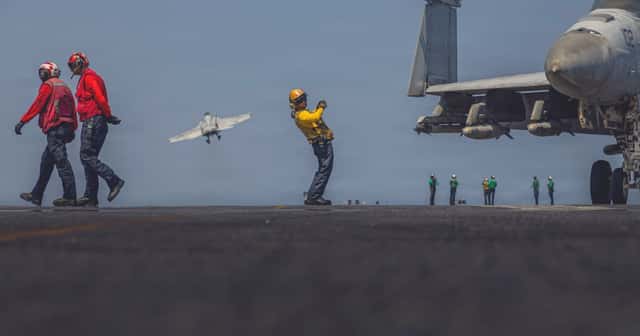
The war with Iran, now in its ninth month, was on the ballot on Tuesday even though no candidate's name was attached to it. About six in ten voters told the AP Voter Poll that the United States made the "wrong decision" in taking military action against Iran, and roughly one-third called the war a "crucial" factor in their vote for Congress, the Associated Press reported on Tuesday evening. By early Wednesday, with Democrats projected to control both chambers, President Donald Trump had conceded a point his allies were already making: "I think a part of it was Iran," he told Fox News, "but at the same time people understood the importance of what I've done with Iran," according to Reuters.
In Tehran, the reaction was faster and blunter. "Conscience or the cost of living, Americans said NO TO WAR, and we endorse this message," Mohammad Bagher Ghalibaf, Iran's parliament speaker and chief negotiator, wrote on X, AFP reported.
This story sets out what the election-day survey and earlier polls show about opinion on the war, what Trump and his critics on the right are saying, what Democrats say they will do with their new majorities, and where the war and the talks to end it stand. It does not settle how much the war, as opposed to prices, candidates or Trump himself, moved votes; the data cannot separate those cleanly.
What voters said on Election Day
The AP Voter Poll is this year's version of the exit poll. It was conducted by SSRS for the AP, ABC News, CBS News, CNN, Fox News Media, NBC News and Versant, among about 80,000 registered voters in all 50 states, with interviews from October 19 or 22 through November 3 and a margin of sampling error of plus or minus 0.6 points for the full sample, per the AP's methodology note. The networks' "exit poll" figures come from the same survey, so the CNN, NBC and AP numbers below are one data set, not three. 567politics covered the first wave of the data in its exit poll report on Tuesday evening and the pre-election SSRS voter poll earlier in the week.
The AP's own summary was that about six in ten voters called the military action the wrong decision and that about a third called the war a crucial factor, "lower than the shares who said that about the cost of living or government corruption." The Federalist, citing NBC's breakdown of the same survey, reported that 74% called the war a "crucial" or "major" factor, that 63% called it the wrong decision, including 16% of Republicans and 82% of Democrats, and that Democratic candidates won 63% of voters who called the war crucial or major. Breitbart, citing CNN's version, reported the same 74%, split into 34% "crucial" and 40% "major," and that 87% of voters were concerned about gas prices. Responsible Statecraft put the wrong-decision share at 62%. The small differences reflect rounding and different waves of weighting; the exact question wording was not published on any page 567politics could open.
The cost of the war, by the Pentagon's own estimate delivered to Congress, reached $47.1 billion through October 16, up about $3.5 billion in six weeks, with 18 service members killed and more than 860 injured, the New York Times reported on October 28. A separate Pentagon casualty database counted 21 deaths "in connection with" operations against Iran through October 9, including non-combat deaths, according to Shafaq News; the two counts use different definitions and 567politics could not reconcile them.
The polls before the election pointed the same way
The election-day result was not a surprise. Representative polls had shown majorities against the war since its first month.
| Poll | Fieldwork and sample | Question | Result |
|---|---|---|---|
| Pew Research Center | Mar. 16–22, 2026; 3,524 adults | Right or wrong decision to use military force | 59% wrong, 38% right |
| Washington Post-ABC-Ipsos | Released May 1, 2026; adults, sample not given | Was attacking Iran a mistake | 61% mistake, 36% right decision |
| Quinnipiac University | July 23–27, 2026; 963 registered voters | Support or oppose the military action | 60% oppose, 34% support |
| Economist/YouGov | Aug. 14–17, 2026; adult citizens | Right or wrong decision | 57% wrong, 25% right |
| AP Voter Poll (SSRS) | Oct. 19–Nov. 3, 2026; about 80,000 registered voters | Right or wrong decision | About 6 in 10 wrong |
Sources: Pew Research Center; Al Jazeera's report on the Post-ABC-Ipsos poll, which did not give the sample size; Quinnipiac University, margin of error plus or minus 4.1 points; YouGov, which did not list the sample size on the page reviewed; the AP. The questions differ in wording and population, so the table shows a consistent direction, not a precise trend.
The partisan gap was wide in every survey. Pew found Republicans and Republican-leaning adults backed the decision 71% to 26% in March, while Democrats and Democratic leaners opposed it 88% to 11%. Quinnipiac in July found 74% of Republicans supported the action and 89% of Democrats opposed it, with independents opposed 69% to 26%. YouGov in August found 65% of adults wanted a deal to end the war as quickly as possible.
Gas prices are the war's most visible domestic cost. The U.S. Energy Information Administration's weekly retail series put regular gasoline at $4.153 a gallon for the week of November 2, 2026, down from $4.269 a week earlier but $1.134 above the same week a year ago; diesel stood at $6.292, up $2.539 from a year earlier, per the EIA. These are national weekly averages, not seasonally adjusted. AAA's national average was $4.15 on November 3, against $3.08 reported by AAA on November 6, 2025, per AAA.
Source: U.S. Energy Information Administration
Show the numbers
| Fuel | Nov. 2025 | Nov. 2026 |
|---|---|---|
| Regular gasoline | $3.02 | $4.15 |
| Diesel | $3.75 | $6.29 |
What Trump said
Trump's position shifted across the week. On Sunday he told Fox's Sean Hannity that the United States "might have to go after" a facility under Pickaxe Mountain near Natanz and called the conflict "a very soft war," ABC News reported. On Monday he said a deal "could happen" and that "Iran wants a settlement, as soon as possible," per CBS News. In an interview with the Financial Times published Tuesday, he said the United States had no immediate plan to strike again: "I'm ready, we're ready. We're locked and loaded if we need to go, but there may be no reason for it," Iran International reported. He said indirect talks over Iran's enriched uranium stockpile were continuing and that "we seem to be getting everything we want."
After polls closed, Trump called in to Fox News. "I think the Democrats did a good job; I really do," he said, and "I wasn't on the ballot," The Independent reported. On the war, he said "a part of it was Iran" but that voters "understood the importance of what I've done with Iran." He said Democrats would send over bills he would not accept and that he would veto them. Fox News's own account said Trump believed he had support for the war but that voters were not willing to tolerate the "short-term" pain of higher gas prices, per Fox News. Shortly before midnight he posted on Truth Social that Fox "bears responsibility for these losses" for airing Democrats, CNN's Brian Stelter reported. 567politics' earlier report on Trump's reaction examined his claim that Republicans would have won with him on the ballot.
Trump has been consistent on one point. In September he told Fox's Laura Ingraham, "If I had it do again, I would do exactly as I did," the AP reported.
The argument on the right
Republicans and conservative commentators split on Tuesday night between those who blame the war and those who blame candidates, messaging or the broader climate.
The war-first camp was loud. An unnamed Republican strategist told the New York Post, "I hope Chuck Schumer calls Bibi Netanyahu and thanks him for his victory," and a source close to Trump said, "Every piece of data we have says it was the war and gas prices," per the Post's story as republished by the Frontier Post. 567politics could not open the Post's original page. Matt Walsh of the Daily Wire wrote, "Trump launched an unpopular and pointless war. Gas prices are too high," and Buck Sexton wrote on X, "Unnecessary war that did not go as promised," both per Fox News. Fox's Sean Hannity, asked whether the results would have differed without the war, said, "I think 100 percent," per Stelter. Fox News opinion contributor Doug Schoen wrote that "this is a vote against the war in Iran as it's being conducted," per a column carried by WFMD.$
The other camp pointed elsewhere. Trump adviser Alex Bruesewitz wrote that "most Republican candidates this cycle were uninspiring, lazy, and thoroughly ineffective communicators." Mary Katharine Ham wrote on X that Trump "picked a bunch of the bad ones." Radio host Erick Erickson listed "the corruption," "the incompetence," tariffs and "the playing nice with Russia" alongside the war, per Fox News. Josh Holmes of the Ruthless podcast said, "I don't think this was, at all, concerned with policy. This is a firm backlash," per Stelter.
The most direct pre-election evidence came from Texas. In audio of a September donor meeting first reported by Axios, Attorney General Ken Paxton, then the Republican Senate nominee, said: "It's not tariffs. It's the war, it's gas prices," and that "diesel is over $6 a gallon," the Daily Caller reported. His spokesperson called the recording a "non-story." Paxton lost on Tuesday to Democrat James Talarico, Roll Call reported, one of six Republican-held seats Democrats flipped.
Not every Republican accepts the premise. Sen. Lindsey Graham said in May, "If I had to give up my job to make sure Iran would never have a nuclear weapon, I would do it," the Washington Examiner reported. 567politics found no post-election statements from Graham, Sens. Rand Paul or Tom Cotton, or Rep. Thomas Massie on the war's role in the results in pages it could open.$$$
What Democrats say they will do
Democrats will control the House from January 3 and, by the AP's projection, the Senate. Neither majority is large enough to override a veto, so their tools are hearings, war powers resolutions and the appropriations process.
Both chambers passed an Iran war powers resolution in June 2026. "Today, Congress stood up to Donald Trump and voted to end his costly, unnecessary, and devastating war with Iran," Chuck Schumer said in a June 23 statement. The war continued. In October, Hakeem Jeffries told The Intercept that the "mechanism that is in front of us will be to aggressively move war powers resolutions," and on appropriations: "we'll deal with the appropriations process when we deal with the appropriations process," The Intercept reported. Rep. Adam Smith, the top Democrat on the House Armed Services Committee, said he was "open to exploring options for using the NDAA or appropriations bills as a way to end the war."$$
Outside advocates want more. Brian Finucane of the International Crisis Group told The Intercept that Democrats "should be willing to play hardball, and that would require using the power of the purse." The current stopgap funding law expires December 11, before the new Congress sits. Reason's Matthew Petti noted that Jeffries has said a first move of the new majority would be to "run" Defense Secretary Pete Hegseth "out of town," and quoted Michigan Senator-elect Abdul El-Sayed asking, "are we safer because of that war?" El-Sayed's win, covered in 567politics' Michigan report, adds a vocal opponent of the war to the Democratic caucus.
567politics reviewed the Federal Election Commission snapshots on this site for Schumer and Jeffries. The partial topic registry for Israel-related PACs showed no tagged contributions to either leader's committee in the 2026 cycle as of the November 3 retrieval. Schumer's 2026 committee receipts on the declared Schedule A line include $3,000 from the Employees of RTX Corporation PAC and $2,500 from the Boeing Company PAC, both defense contractors, per FEC filings. Those are employee PACs, not corporate treasury funds, and the snapshot excludes individual donations; it is not a career total. Contributions do not establish any link to policy positions. No FEC snapshot exists on this site for Trump.
Iran, Israel and the talks
Iran's government had said before the vote that it expected no change. Foreign Ministry spokesman Esmaeil Baghaei said Iran did not expect a "new America" after the midterms and asked, "Do all roads ultimately lead to Tel Aviv?" the Times of Israel reported. After the results, Ghalibaf's post added a threat: if the U.S. government "betrays their public will to serve international paymasters and blackmailers, it will learn our NO comes with a Nightmare." Iran's demands, per CBS, include release of frozen assets, lifting of the U.S. naval blockade and an end to fighting on all fronts, in exchange for a phased reopening of the Strait of Hormuz. Foreign Minister Abbas Araghchi said talks were "proceeding very intensively" and that "everything depends on Washington's political rationality."
The talks run through Qatar and Pakistan. Iranian negotiators left Doha on Sunday after three days, and Qatar's foreign minister said both sides were reviewing its proposals, as 567politics reported. On Sunday night the United States carried out what it called limited defensive strikes near Hormuz, hitting Qeshm Island after Iranian forces fired on a U.S. aircraft; 567politics covered those strikes. Brent crude fell 7.4% to $105.03 on Monday, per CBS.
Israel's role is contested. The AP reported on Sunday, citing two regional officials and a third person, that Prime Minister Benjamin Netanyahu was pressing Trump for "another wave of strikes on Iran" after the midterms, and that a return to war could help him form an emergency government after losing his parliamentary majority, per the AP. Israel's ambassador to the United Nations denied it, Iran International reported. Secretary of State Marco Rubio said Trump "hasn't made a decision" and "would prefer to solve it diplomatically." The same weekend Trump said the United States would end $4 billion in annual military aid to Israel by the end of 2026, which 567politics reported Israeli officials said they had not been told about.
What people are saying online
567politics reviewed the hot listings of r/Conservative, r/politics, r/worldnews and r/neoliberal on the morning of November 4 through a read-only mirror. Reddit itself and comment threads could not be opened, and X could not be opened, so X posts are quoted only as reported by named outlets. These are selected online reactions, not a measure of public opinion; the representative evidence is the polling above.
On r/Conservative, three of the day's most-discussed threads were about the war: "Trump allies blame Iran war for GOP's devastating midterm losses" (877 points, 136 comments), "US has no immediate plan to strike Iran, Trump tells FT" (945 points, 26 comments) and "Trump Acknowledges Iran Played Role in Republican Midterm Losses" (587 points, 18 comments). A thread titled "What the hell is our next strategy?" drew 3,359 points and 1,095 comments. On r/worldnews, the AP story on Netanyahu pressing for strikes drew 361 comments but only 16 net upvotes, a sign of a divided thread, per the listing. r/politics threads focused on individual races rather than the war.
On X, Responsible Statecraft quoted Reid Smith of the advocacy group Stand Together writing on election night, "It's the war stupid," and Walsh calling the war "the greatest political blunder in the last two decades at least," per Responsible Statecraft. Iran International's English account relayed Ghalibaf's post. All three are commentators, advocates or officials, not ordinary users; 567politics did not locate verified posts from ordinary U.S. users that it could quote.
What the evidence can and cannot show
The survey shows that most voters opposed the war and that most of them said it mattered to their vote. It does not show that the war, rather than prices or Trump's standing, decided any given race. Those factors overlap: the AP found higher shares calling the cost of living and government corruption crucial than the war, and gas prices are themselves tied to the war. Republicans who blame candidate quality are making a claim the survey can neither confirm nor rule out. What is not in dispute is the direction of opinion, which has been stable since March across pollsters, question wordings and populations.
What remains unknown: whether Trump orders further strikes, as the AP's sources say Netanyahu wants; whether a deal emerges from Doha; and whether Democrats use the December 11 funding deadline or wait for January. For how 567politics handles polls and attributed claims, see the methodology.
Differing perspectives
What should the new Congress do about the war with Iran?
Each position is summarized as its supporters make it, with equal weight and in alphabetical order. A summary is not an endorsement; the evidence for each is weighed in the story above.
End the war through a negotiated settlement now
Who holds it: Iran's government, including Foreign Minister Abbas Araghchi, parliament speaker Mohammad Bagher Ghalibaf and spokesman Esmaeil Baghaei; mediators Qatar and Pakistan
Iran's leaders argue that the American public has rejected the war and that Washington should accept its terms: release of frozen assets, an end to the naval blockade and a halt to fighting on all fronts, in exchange for a phased reopening of the Strait of Hormuz. Ghalibaf says Americans "said NO TO WAR, and we endorse this message." Araghchi says talks are intensive and "everything depends on Washington's political rationality." Mediators say both sides are reviewing proposals and that the process needs time rather than new strikes.
In their words: AFP via The Times of Israel, quoting Ghalibaf's X post ↗
Keep the pressure on and let the president negotiate
Who holds it: President Trump, the White House, Secretary of State Marco Rubio and Republican supporters of the war such as Sen. Lindsey Graham
The administration argues that the war has left Iran weaker, that more oil is moving through Hormuz than before and that Tehran is negotiating because of the blockade. Trump says the United States is "locked and loaded if we need to go, but there may be no reason for it," and that "we seem to be getting everything we want" in indirect talks over the uranium stockpile. Rubio says the president would prefer a diplomatic solution. Supporters argue that congressional limits now would hand Iran leverage at the table and that preventing an Iranian nuclear weapon justifies the cost.
In their words: Iran International, reporting Trump's Financial Times interview ↗
Pass war powers resolutions and use the power of the purse
Who holds it: Senate Democratic leader Chuck Schumer, House Democratic leader Hakeem Jeffries, Rep. Adam Smith and advocates such as the International Crisis Group's Brian Finucane
Democrats argue that Congress already voted in June to end a war they call costly, unnecessary and devastating, and that the election gives them a mandate to act. Jeffries says the first mechanism is to "aggressively move war powers resolutions"; Smith says he is open to using the defense authorization or appropriations bills to end the war. Advocates say the new majorities should be willing to "play hardball" with funding, because hearings alone will not stop strikes, and point to the exit poll showing most voters opposed the war.
In their words: The Intercept, quoting Jeffries, Smith and Finucane ↗
The losses were about candidates and prices, not the war
Who holds it: Republican strategists and commentators including Alex Bruesewitz, Mary Katharine Ham, Erick Erickson and Josh Holmes
A group of Republicans argues that the party lost because of weak candidates, poor messaging, tariffs and a general backlash against the president, not because of the war itself, and that Congress should not read the results as a verdict on Iran policy. Bruesewitz says most Republican candidates were "uninspiring, lazy, and thoroughly ineffective communicators." Holmes says the vote was "not, at all, concerned with policy" but was "a firm backlash." In this view the right response is better candidates and a focus on costs, while leaving war decisions to the president.
In their words: Fox News, quoting conservative commentators' posts ↗
READ BEYOND 567POLITICS
Alternate sources & perspectives
Independent coverage and primary evidence to help you compare arguments. A link is not an endorsement; perspective labels describe the linked material.
- primary evidence
AP Voter Poll: Voters want Congress to impose more checks on an unpopular president ↗
Associated Press (via PBS NewsHour)
The AP's summary of its election-day survey, including the six-in-ten 'wrong decision' finding and the $47.1 billion Pentagon cost estimate.
- primary evidence
Americans Broadly Disapprove of U.S. Military Action in Iran ↗
Pew Research Center
March 2026 survey of 3,524 adults with full methodology and partisan breakdowns.
- primary evidence
Quinnipiac University national poll, July 29, 2026 ↗
Quinnipiac University Poll
Registered-voter poll with exact question wording on support for the military action, ground troops and whether the war is worth fighting.
- independent analysis
Iran War Cost Rises to $47.1 Billion, Pentagon Says ↗
The New York Times (via The Philadelphia Inquirer)
Eric Schmitt's report on the Pentagon's unclassified cost and casualty estimates delivered to Congress through October 16.
- right argument
Exit Poll: Iran War Was 'Crucial' Or 'Major' Factor For 3 In 4 Voters ↗
The Federalist
Conservative outlet's breakdown of NBC's exit poll figures on the war, with partisan splits.
- right argument
Conservatives stunned by 'catastrophic' midterm 'blue tsunami,' blame Trump's Iran war, high gas prices ↗
Fox News
Roundup of Republican and conservative reactions, split between blaming the war and blaming candidates; includes Trump's 'short-term pain' remarks.
- left argument
'It's the war, stupid': Dems sweep midterms on wave of voter anger ↗
Responsible Statecraft (Quincy Institute)
Foreign-policy-restraint outlet's case that the war drove the result, with exit poll figures and quoted X posts.
- other perspective
How Democrats can stop the Iran War now ↗
Reason
Libertarian analysis of the war powers and funding tools available to the new majorities, with Schumer, Jeffries and El-Sayed quotes.
- left argument
Democrats Have a Plan to End the Iran War. It Doesn't Involve the Power of the Purse. ↗
The Intercept
Jeffries, Adam Smith and advocacy groups on war powers resolutions versus appropriations, before the election.
- independent analysis
Trump says US has no immediate plan to strike Iran, but 'locked and loaded' if needed ↗
Iran International
London-based Persian-language outlet's report on Trump's Financial Times interview; the FT page itself could not be opened.
- other perspective
Iran's top negotiator says Americans voted 'NO TO WAR' ↗
AFP via The Times of Israel
Iran's official reaction to the results, in Ghalibaf's own words.
- independent analysis
Netanyahu is pressing Trump to attack Iran after the midterms, officials tell AP ↗
Associated Press (via WHDH)
AP's sourced report on Israeli pressure for new strikes and Rubio's response; Israel's UN envoy denied the account.
Reviewed 2026-11-04. Sources reviewed November 3–4, 2026. The discover_politics_sources search returned only general Iran pages; candidates were found through direct searches. The AP's own apnews.com page for the Voter Poll did not surface, so AP text is cited via PBS NewsHour's republication. The Financial Times interview, the New York Post story, NBC and CNN exit poll pages, Axios and Truth Social could not be opened directly; they are cited through outlets that reported them (Iran International, the Frontier Post, The Federalist, Breitbart, CNN via Yahoo). X and Reddit could not be opened; X posts are quoted as reported by named outlets. No post-election statements from Sens. Graham, Paul or Cotton, Rep. Massie, Rep. Ocasio-Cortez or Prime Minister Netanyahu were located. Pentagon casualty counts of 18 and 21 come from different definitions and could not be reconciled.