Brazil's police chief blames 'broken trust' for sidelining the delegates who named justices in Master files
Andrei Rodrigues denies interfering as rewritten reports on six Supreme Court justices head to Fachin and senators question the removals on Wednesday.

Brazil's Federal Police chief has put his reasons in writing. In a reply to the Justice Ministry made public on Monday, November 16, Director-General Andrei Rodrigues explained why two senior delegates lost their leadership posts. He cited "a break in the fundamental relationship of mutual trust" with their superiors. The two had written the first police reports on how Supreme Court justices appear in the Banco Master files. He denied any interference in the investigation.
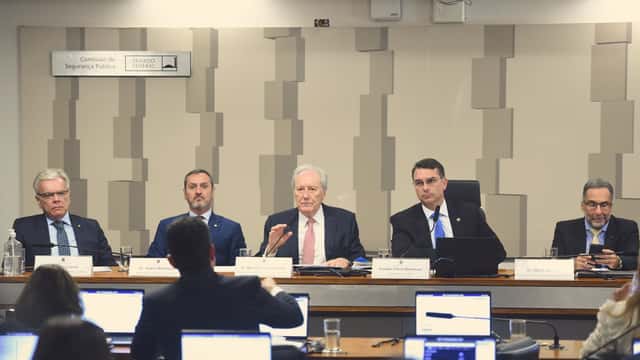
The explanation arrives two days before a double deadline. On Wednesday, November 18, two Senate committees plan to question Justice Minister Wellington César Lima e Silva, and have invited Rodrigues, about the removals. The same day, the police plan to hand Chief Justice Edson Fachin the rewritten reports, which now cover six Supreme Court justices rather than three, CNN Brasil reported.
The dispute is no longer about whether the moves happened. It is about why. Police leaders say the delegates broke a court-set format and the chain of command. The delegates' association and a senator who once served as a police delegate say the moves punish investigators for naming powerful judges. Quotations from Portuguese-language documents below are 567 Politics translations.
What Rodrigues told the ministry#
The Justice Ministry asked for a formal explanation on November 11, after the removals set off a public dispute inside the force, CartaCapital reported. TV Globo published the core of the reply on Monday night, according to G1.
Rodrigues wrote that the police "chose not to proceed" with appointing delegates Daniel Mostardeiro Cola and Wedson Cajé Lopes to newly created posts of trust. He cited "administrative convenience and timeliness" and the broken relationship of trust between "direct and hierarchically related" leadership roles. Both had worked in the unit that handles corruption, financial crime and money laundering.
He gave two reasons the reports were rejected. First, they cited only three justices, Alexandre de Moraes, Dias Toffoli and Kassio Nunes Marques, rather than "all mentions found without exception." Second, they contained "elements that went beyond the 'strictly descriptive character'" the chief justice had set. Poder360 reported the same wording.
He closed with a denial. "There was no avocation of or interference in any criminal investigation," he wrote, calling the step "an administrative measure in the interest of strict compliance with a judicial order." Avocation means a superior taking a case away from the investigator in charge.
Earlier reporting adds a procedural complaint. CartaCapital and O Globo reported that leadership had asked for the reports to be discussed at a meeting before completion. The delegates filed them in the force's electronic records system first. Rodrigues's letter, as published, does not mention that point.
The court order at the center of the fight#
Both sides invoke the same instruction. On October 13, after a meeting between Fachin and Rodrigues, the court and the police issued a joint note. It said the police must send the court every mention of a justice found in the investigations, "without exception" and "in strictly descriptive character," according to Estadão's report of the note. Investigating a sitting justice requires authorization from the full court. "Once the necessary elements are presented, the plenary of the Supreme Federal Court, after hearing the Prosecutor-General's Office, may deliberate," the note said.
The phrase "strictly descriptive" carries the dispute. Police leaders read it as barring analysis and cross-referencing of data that would amount to investigating judges without permission. But Fachin's aides told O Globo on November 11 that a descriptive report can still point to signs of possible crimes. In their account, the line falls at reaching conclusions that belong to the courts, not at identifying evidence. That account came from unnamed aides, not a written ruling. It still undercuts a reading of the order as a ban on technical analysis.
The first versions also left people out. CartaCapital reported that the revised work will produce individual reports on six Supreme Court justices and at least two judges of the Superior Court of Justice. Valdo Cruz's G1 blog named André Mendonça, Luiz Fux and Gilmar Mendes as among those also mentioned.
A mention is not an accusation. CNN Brasil noted that the appearance of a justice's name in seized messages does not, by itself, mean that person is suspected of wrongdoing. After the reports arrive, Fachin is expected to send them to Prosecutor-General Paulo Gonet, who can request more steps, seek an investigation or ask that the matter be dropped. The full court has the final word.
- Fachin formally requests a police report on mentions of justices
- Court and police issue joint note on complete, descriptive reports
- Police say staff moves are administrative and case teams are unchanged
- Delegates' association condemns the removals
- Senate committees invite the justice minister and police chief
- Rodrigues sends written reasons to the Justice Ministry
- Senate hearing; police plan to deliver revised reports to Fachin
Source: Federal Police, Estadão via UOL, ADPF, Agência Senado, G1, CNN Brasil
The case that the removals were improper#
The National Association of Federal Police Delegates, known as ADPF, issued a note of repudiation on November 10. It called the police explanations "insufficient" to clarify the removals and the order to redo the documents. It said investigations must respect the "technical-legal autonomy" of the delegates in charge, a guarantee it traces to Law 12,830 of 2013.
The association went further than the two cases. It backed a long-pending constitutional amendment, PEC 412/2009, to give the Federal Police autonomy. It also proposed that the director-general be chosen from a list of three names elected by delegates, with a fixed term that does not coincide with the president's. "Investigative autonomy cannot depend on the position or influence of the people mentioned in an investigation," the note said. It offered to start that vote at once to pick a new director-general.
Senator Alessandro Vieira, of the centrist MDB party in Sergipe and a former police delegate, called the order "completely irregular" in a November 12 interview with CNN Brasil. "The police delegate concludes his work and sends it to the courts," he said. "He does not submit it to review by the boss on duty, who has no autonomy for that." He said he saw "an attempt at a grand deal" in Brasília and argued the aim was "to prevent investigations from advancing." Those are his allegations. He has not presented documents showing such a deal, and no court or committee has found one.
The police chief's answer to his critics#
Rodrigues used Monday's ceremony for Federal Police Day to answer the criticism in public. "There is no crisis, internal split, much less loss of autonomy in the Federal Police," he said, according to G1. He said "isolated voices" should not see themselves as bigger than the institution of more than 16,000 staff.
He also offered his own account of motive. "However much they attack the institution, me and my family directly, they will not intimidate me," he said, as reported by Agência Brasil. "We know what is behind it all: greed for strategic posts and the command of our institution." He did not name anyone or describe the threats. His claim about rivals' motives is no more established than Vieira's claim about a deal.
Rodrigues framed hierarchy and discipline as inseparable from technical autonomy. Agência Brasil reported that he cited R$20 billion recovered from criminal groups over four years, R$4.4 billion of it from June to September 2026, as evidence of the force's record. He also said the recently approved public security amendment would widen the police's role, a change covered in our report on the security overhaul.
The force's earlier position is on the record. A November 9 police statement said appointments and dismissals are internal management acts. It said leadership roles are separate from case work and that teams in the Master operation, known as Compliance Zero, remain unchanged.
What the justices named have said#
Moraes, Toffoli and Nunes Marques have each addressed the Master affair before. In a September 14 filing to Fachin, Moraes denied any wrongdoing and said he never favored the bank or its former owner, Daniel Vorcaro. He said there was "no message at all" from him showing legal advice, favoritism or advance knowledge of a police operation, G1 reported. He called the case against him politically motivated.
The next day, Nunes Marques told the full court he had never exchanged messages with Vorcaro or ruled on a Master case, and that his son "never provided any service to the bank," Valor reported. Toffoli stepped aside from that session for personal reasons and noted that an earlier challenge to his role in the case had been archived. That September session, on whether to open an investigation of Moraes, ended without a decision after Justice Flávio Dino asked for more time, R7 reported. None of the three has been charged. The new reports were not public as of Tuesday morning.
Earlier steps in this story, including Glenn Greenwald's accusation of a cover-up and the Senate's first request for answers, are covered in our November 12 report. The court's own crisis also shaped Fachin's decision to close the long-running fake news inquiry.
What Wednesday can and cannot settle#
- Deliverypolice hand descriptive reports on each justice mentioned to Chief Justice Fachin
- ReferralFachin is expected to send them to Prosecutor-General Paulo Gonet
- Prosecutor's viewGonet can ask for more steps, seek an investigation or ask to drop the matter
- Decisionthe full Supreme Court decides whether any justice is investigated
Source: CNN Brasil, Estadão via UOL
The Senate session is an invitation, not a summons. Rodrigues is not legally required to attend. As of Monday night he had not confirmed. Columnist Matheus Leitão of Metrópoles reported that he would consult President Luiz Inácio Lula da Silva first, according to J1 News.
The hearing and the delivery can test the competing accounts in limited ways. Senators can ask whether the instruction to discuss the reports before filing was written down, and when. They can ask whether the original reports will reach the court alongside the revised ones. Fachin can compare the versions he receives. Without those documents, the public has two competing accounts and no way to choose between them.
Senate politics will shape what follows. Senate President Davi Alcolumbre has opposed impeachment requests against Supreme Court justices. A Senate with more right-wing members takes office in February 2027, and some incoming senators have threatened impeachment over the Master messages, Veja reported. Whether the reports lead to an investigation of any justice depends on Gonet and the full court, not on the police or the Senate.
Differing perspectives
Was Federal Police leadership justified in removing two delegates and ordering the Master reports on Supreme Court justices redone?
Each position is summarized as its supporters make it, with equal weight and in alphabetical order. A summary is not an endorsement; the evidence for each is weighed in the story above.
Justified to comply with the court's order
Who holds it: Federal Police Director-General Andrei Rodrigues and the police leadership
Police leaders say the first reports named only three justices instead of every mention found and added analysis beyond the strictly descriptive format the chief justice set, a line that protects against investigating judges without the full court's permission. They say the episode broke the mutual trust that direct leadership roles depend on, so the appointments were not carried forward. They stress that only leadership posts changed, case teams are untouched, and no investigation was taken over or obstructed.
In their words: G1, quoting Rodrigues's reply to the Justice Ministry ↗
Protect delegates' investigative autonomy
Who holds it: National Association of Federal Police Delegates (ADPF)
The delegates' association says the police explanations do not justify removing the two delegates or ordering their documents redone. It argues that Law 12,830 of 2013 guarantees the technical and legal autonomy of the delegate in charge of an inquiry, and that independence cannot depend on how powerful the people mentioned are. It wants constitutional autonomy for the Federal Police and a director-general chosen from a list of three elected by delegates, serving a fixed term.
In their words: ADPF ↗
Treat the removals as irregular and investigate them
Who holds it: Senator Alessandro Vieira (MDB-SE) and senators backing the hearing requests
Vieira, a former police delegate, argues that a delegate completes an inquiry and sends it to the courts, and that no superior has legal authority to review or rewrite that work. He says the investigations already point to very serious facts about some justices and that the removals look like part of a broader political arrangement meant to stop the inquiries from advancing. He wants the Senate to question the justice minister, the police chief and the delegates.
In their words: CNN Brasil ↗
Cite this article
567 Politics staff. “Brazil's police chief blames 'broken trust' for sidelining the delegates who named justices in Master files.” 567politics. Published 2026-11-17. https://567politics.com/news/brazil-pf-rodrigues-broken-trust-master-delegates-senate-hearing-fachin-reports-november-2026
Wikipedia citation
{{cite news |title=Brazil's police chief blames 'broken trust' for sidelining the delegates who named justices in Master files |url=https://567politics.com/news/brazil-pf-rodrigues-broken-trust-master-delegates-senate-hearing-fachin-reports-november-2026 |work=567politics |author=567 Politics staff |date=2026-11-17 |language=en}}CSL-JSON for reference managers
{
  "id": "https://567politics.com/news/brazil-pf-rodrigues-broken-trust-master-delegates-senate-hearing-fachin-reports-november-2026",
  "type": "article-newspaper",
  "title": "Brazil's police chief blames 'broken trust' for sidelining the delegates who named justices in Master files",
  "URL": "https://567politics.com/news/brazil-pf-rodrigues-broken-trust-master-delegates-senate-hearing-fachin-reports-november-2026",
  "container-title": "567politics",
  "language": "en",
  "author": [
    {
      "literal": "567 Politics staff"
    }
  ],
  "issued": {
    "date-parts": [
      [
        2026,
        11,
        17
      ]
    ]
  }
}Citations identify this article and its publication date. Assess the reporting and its linked sources before using it as evidence.
Read this article as Markdown or JSON. Cite the original page and retain its sources, dates and qualifications.
Embed this article summary
Paste this HTML into your page. The summary stays linked to the full story and updates with it. No account required.
<iframe src="https://567politics.com/embed/news/brazil-pf-rodrigues-broken-trust-master-delegates-senate-hearing-fachin-reports-november-2026?theme=auto" title="Brazil's police chief blames 'broken trust' for sidelining the delegates who named justices in Master files by 567politics" width="100%" height="440" style="border:0;max-width:100%" loading="lazy"></iframe>
<p style="font-size:14px">Brazil's police chief blames 'broken trust' for sidelining the delegates who named justices in Master files by <a href="https://567politics.com/news/brazil-pf-rodrigues-broken-trust-master-delegates-senate-hearing-fachin-reports-november-2026" rel="nofollow">567politics</a></p>
<script async src="https://567politics.com/embed.js"></script>
READ BEYOND 567POLITICS
Alternate sources & perspectives
Independent coverage and primary evidence to help you compare arguments. A link is not an endorsement; perspective labels describe the linked material.
- primary evidence
Nota à imprensa (November 2026) ↗
Polícia Federal
Police statement that the leadership changes were administrative, that case teams are unchanged and that no investigation was interfered with.
- primary evidence
STF and PF: mentions in the Master case must be sent without exception, in descriptive form ↗
Estadão via UOL
Text of the October 13 joint note from the Supreme Court and the Federal Police that both sides now cite.
- primary evidence
Master: committees invite justice minister and PF director ↗
Agência Senado
Senate news service report on the committee votes inviting the justice minister and Andrei Rodrigues to testify.
- independent analysis
PF cites broken trust for removing delegates and denies interfering in investigation ↗
G1
Reports Rodrigues's written explanation to the Justice Ministry, including the claim that the first reports named only three justices.
- independent analysis
Delegates were removed over broken trust, says Andrei Rodrigues ↗
Poder360
Separate account of the police chief's reply to the ministry.
- independent analysis
PF attributes removals to failure to follow order on Master reports ↗
CartaCapital
Account of the police leadership's case that the delegates did not follow the court's instructions.
- other perspective
ADPF condemns removal of delegates in Master case investigations ↗
National Association of Federal Police Delegates (ADPF)
The delegates' association's statement invoking investigative autonomy under Law 12,830 and calling for a fixed-term director-general.
- other perspective
Master: removal of delegates is irregular and abusive, Vieira tells CNN ↗
CNN Brasil
Sen. Alessandro Vieira, a former delegate and critic of the removals, argues no superior may rewrite a delegate's work.
- independent analysis
PF should deliver reports on justices in Master case to Fachin on Wednesday ↗
CNN Brasil
Timing of the revised reports and the path from Fachin to the Prosecutor-General.
- independent analysis
Fachin considers that a descriptive PF report on justices may include signs of crimes ↗
O Globo
The chief justice's reading of what a 'descriptive' report may contain, central to the dispute.
- primary evidence
Nunes Marques declares himself recused from Moraes judgment ↗
Valor Econômico
Justice Nunes Marques's own statement to the full court denying any contact with Vorcaro.
- primary evidence
Moraes speaks for the first time on Vorcaro messages and denies wrongdoing ↗
G1
Justice Alexandre de Moraes's response to the messages that named him.
Reviewed 2026-11-17. Hand-picked from pages opened on November 17, 2026; the automated source-discovery tool returned unrelated pages. Rodrigues's written reply to the Justice Ministry was not published in full and is cited through G1, Poder360 and CartaCapital accounts. The original and revised police reports were not public. The removed delegates had not spoken publicly; their side is represented by the ADPF statement.