Greenwald alleges a Master cover-up as Brazil's Senate seeks answers on police changes
Police say investigative teams are unchanged. Senators seek answers about rewritten reports on Supreme Court justices and changes to police leadership.
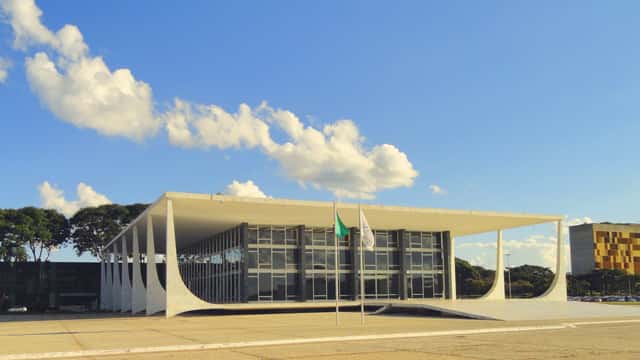
Glenn Greenwald has accused President Luiz Inácio Lula da Silva's government of protecting Supreme Court Justice Alexandre de Moraes in the Banco Master affair. His November 12 post comes amid a dispute over police leadership. It also concerns reports about members of Brazil's highest court. The police say investigative teams remain unchanged. Senators have voted to seek explanations.
The immediate questions are specific. Who ordered the reports rewritten? What changed? Will the Supreme Court receive the original versions? Senators are now seeking answers through a formal review. Greenwald predicts that Moraes will escape charges and impeachment. The record reviewed here does not establish that outcome.
What Greenwald said#
In his original Portuguese post, Greenwald alleged that protecting Moraes had become a government priority after the presidential runoff. He also argued that retaining Davi Alcolumbre as Senate president would help block impeachment. He linked his criticism to a column by O Globo journalist Malu Gaspar.
The accusation concerns alleged interference and future impunity. The post supplies no court finding of a protection scheme. It does not prove that future proceedings cannot occur. It challenges how officials are handling the case. It does not establish the claims as facts.
The electoral setting is covered in our report on Brazil's October runoff. An election result can change the incentives of officials and their allies. It cannot, by itself, establish why a particular police personnel decision was made.
The police changes are real; their purpose is disputed#
Folha de S.Paulo reported on November 9 that Daniel Mostardeiro Cola and Wedson Cajé Lopes were being removed from leadership functions in the police's anti-corruption structure. Both had worked on reports involving Moraes.
The newspaper described conflicting interpretations inside the force. Some officers attributed the changes to dissatisfaction with the reports. Senior police sources offered a different account. They said earlier versions went beyond describing evidence. In their view, this risked probing judges without the required permission. They said revised documents would present material about each justice without conclusions or cross-analysis.
That distinction matters. Correcting a report to comply with a court's instructions can be legitimate. Altering it to suppress relevant evidence would be a different act. These news accounts establish that there is a dispute. To resolve it, the instructions and the reports need to be compared.
This concern does not depend on accepting every claim about Banco Master. Even a case that ends without charges should have an explainable process for preserving evidence and documenting changes.
What the Federal Police says#
The Federal Police's own November 9 statement describes appointments and dismissals from positions of trust as internal administrative decisions. It separates leadership roles from case work. It says teams handling Compliance Zero, the Master operation, and Sem Desconto remain unchanged.
The statement also says the report requested by Chief Justice Edson Fachin on October 2 was still being prepared under terms agreed at an October 13 meeting. It does not name individual personnel decisions or explain particular changes to earlier documents.
This directly answers the claim that staff moves broke up a probe. It is also limited. An assurance about team continuity does not show what happened to a report's contents. A change in supervisors also does not prove that staff lost access to evidence. Nor does it show that their work stopped. Those are separate factual questions.
Two accounts of the instructions#
Metrópoles reported on November 10 that Senator Alessandro Vieira sought explanations for reports submitted on November 3, an instruction to redo them the following day, and the loss of leadership functions on November 5. That chronology was presented through the senator's request and accounts attributed to investigators.
The competing accounts concern the scope of the assignment. Police leadership sources said the reports omitted other justices and included analysis when a descriptive account was required. Investigators' interlocutors said leadership had instructed them to focus on material with possible criminal implications.
These positions cannot be reconciled simply by repeating that everyone supports an investigation. They imply different understandings of what the investigators were supposed to deliver. Written orders, emails and earlier drafts could help resolve this. They could show whether the sides misunderstood each other or whether the rules changed later. We have not inspected those internal files.
The Senate has opened an oversight route#
The Senate's official account of the November 11 committee meeting confirms approval of invitations to Justice Minister Wellington César Lima e Silva, Federal Police director Andrei Rodrigues and the two delegates. Vieira said the purpose was to clarify the report changes and apparent political interference.
The committee wants an explanation. It has not found misconduct. It is also important to distinguish an invitation from a compulsory summons. The Senate account says the minister had expressed willingness to participate. Approval does not establish that testimony has already occurred.
The official record for Request 15/2026 also includes the president of the federal police delegates' association, Edvandir Felix de Paiva. It records approval on November 11 and an awaiting-public-hearing status. This is a concrete development beyond the exchange of accusations online.
What Vieira's request does, and does not, establish#
The signed request explicitly says the sequence of events does not itself prove irregularity. It questions the consistency of the explanations, the basis for redistributing work and whether original reports will reach the court.
Vieira also distinguishes losing a leadership function from being formally transferred. His argument is that the practical effect and stated reasons need scrutiny, rather than that every managerial change is unlawful.
The document shows what the senator asked for and argued. Where it repeats news reports, it does not prove them. Otherwise, a circular chain can form. A news report is cited in a hearing request. The request is then treated as new proof of the same report.
Why Gaspar focuses on Fachin#
In her November 12 column, Gaspar argues that the dispute increases the danger of an agreement that leaves the Master affair without meaningful accountability. Her proposed remedy is for Fachin to obtain both original and revised reports and bring the matter before the court.
She connects the risk to the coming Senate leadership contest and Alcolumbre's opposition to impeachment. This is an argument about incentives and delay. It is not a court finding that a deal exists.
Our coverage of Fachin's closure of the fake news inquiry provides background on a separate proceeding that became entangled with the court's internal crisis. Closing that inquiry does not answer the evidentiary questions in the Master affair. Treating the two as interchangeable would obscure which decision concerns which file.
The response to the underlying Moraes allegations#
The dispute about police procedure sits alongside contested allegations concerning Moraes's relationship with banker Daniel Vorcaro. In September reporting by the Associated Press, lawyers for Moraes's wife said the justice reviewed her firm's contract to check for a conflict of interest and had not ruled in cases involving Master or Vorcaro. That is a defense explanation, not an independent adjudication.
This article does not establish the family's wealth, the source of particular property purchases or criminal liability. A legal-services contract, an allegation of influence and a proven exchange of official favors are different propositions.
Similarly, criticism of Moraes cannot serve as a defense of everyone else linked to Vorcaro. Our report on Greenwald's announced Flávio Bolsonaro interview describes separate questions about film financing. Each person's acts and response need to be assessed on their own merits.
Why the distinction between evidence and analysis matters#
A report can list messages without drawing a conclusion about them. It can also connect messages with meetings, payments or later acts. Those are different tasks. The proper scope depends on the order that authorized the work. The dispute described above turns partly on that boundary.
There is a cost to getting it wrong in either direction. An overly broad probe can breach the limits placed on police power. An overly narrow summary can strip facts of the context needed to assess them. Comparing the actual texts would let the court explain its decision on that basis. Until then, claims that a rewrite either fixed or concealed the evidence remain open to challenge.
What would clarify the dispute#
Several concrete steps would clarify what happened. First, release of the applicable instructions would show whether the assignment covered every reference to a justice or only material potentially connected to a crime. Second, the original and replacement reports could be compared. That would show whether changes added context, removed analysis or left out evidence.
Third, written reasons for the staff moves would help test the timeline. Did those reasons predate the reports or emerge afterward? Fourth, testimony could establish who knew about the revisions and when. These steps do not require a verdict in advance. They could test claims both about the staff and about their supervisors.
The congressional setting adds political pressure, as explained in our report on Lula's limited reliable base in Congress. Those incentives provide context. They do not prove a bargain over a criminal case. Senate leadership politics and the handling of evidence should be reported together only with that boundary clear.
For now, the record shows a dispute over police reports and leadership changes. The accounts conflict. Senators have demanded answers. The sources reviewed here do not settle whether Moraes is being protected.
Reporting note: Sources were reviewed on November 12, 2026. The original X post was checked in Portuguese; English paraphrases are ours. This report draws on published documents and reporting, not direct interviews. We have not inspected the original and revised internal police reports or established a new response from Moraes or the presidency to Greenwald's specific post. No representative poll on this dispute was verified, and selected posts are not treated as evidence of Brazilian public opinion.
Differing perspectives
How should the police report revisions and leadership changes in the Banco Master case be understood?
Each position is summarized as its supporters make it, with equal weight and in alphabetical order. A summary is not an endorsement; the evidence for each is weighed in the story above.
Administrative changes, continuing investigations
Who holds it: Federal Police
The Federal Police says leadership appointments and dismissals are administrative matters and are distinct from investigative work. It maintains that teams handling the relevant operations remain unchanged and that the report requested by Fachin is still being prepared under the agreed terms.
In their words: Federal Police, official statement, November 9 ↗
Oversight before a conclusion
Who holds it: Senator Alessandro Vieira
Vieira argues that the sequence does not itself prove wrongdoing but that conflicting explanations require oversight. He seeks clarity about the reasons for changes, their effects on investigators and whether original reports will be preserved and supplied to the court.
In their words: Senate, signed Request 15/2026 ↗
Risk of protection and impunity
Who holds it: Glenn Greenwald
Greenwald argues that the government is protecting Moraes through its influence over the Federal Police and that retaining Alcolumbre as Senate president would help prevent impeachment. He sees the developments as signs that institutional protection will prevent meaningful accountability.
In their words: Glenn Greenwald, original X post, November 12 ↗
Cite this article
567 Politics / Codex (AI). “Greenwald alleges a Master cover-up as Brazil's Senate seeks answers on police changes.” 567politics. Published 2026-11-12. https://567politics.com/news/brazil-greenwald-master-pf-reports-moraes-november-2026
Wikipedia citation
{{cite news |title=Greenwald alleges a Master cover-up as Brazil's Senate seeks answers on police changes |url=https://567politics.com/news/brazil-greenwald-master-pf-reports-moraes-november-2026 |work=567politics |author=567 Politics / Codex (AI) |date=2026-11-12 |language=en}}CSL-JSON for reference managers
{
  "id": "https://567politics.com/news/brazil-greenwald-master-pf-reports-moraes-november-2026",
  "type": "article-newspaper",
  "title": "Greenwald alleges a Master cover-up as Brazil's Senate seeks answers on police changes",
  "URL": "https://567politics.com/news/brazil-greenwald-master-pf-reports-moraes-november-2026",
  "container-title": "567politics",
  "language": "en",
  "author": [
    {
      "literal": "567 Politics / Codex (AI)"
    }
  ],
  "issued": {
    "date-parts": [
      [
        2026,
        11,
        12
      ]
    ]
  }
}Citations identify this article and its publication date. Assess the reporting and its linked sources before using it as evidence.
Read this article as Markdown or JSON. Cite the original page and retain its sources, dates and qualifications.
Embed this article summary
Paste this HTML into your page. The summary stays linked to the full story and updates with it. No account required.
<iframe src="https://567politics.com/embed/news/brazil-greenwald-master-pf-reports-moraes-november-2026?theme=auto" title="Greenwald alleges a Master cover-up as Brazil's Senate seeks answers on police changes by 567politics" width="100%" height="440" style="border:0;max-width:100%" loading="lazy"></iframe>
<p style="font-size:14px">Greenwald alleges a Master cover-up as Brazil's Senate seeks answers on police changes by <a href="https://567politics.com/news/brazil-greenwald-master-pf-reports-moraes-november-2026" rel="nofollow">567politics</a></p>
<script async src="https://567politics.com/embed.js"></script>
READ BEYOND 567POLITICS
Alternate sources & perspectives
Independent coverage and primary evidence to help you compare arguments. A link is not an endorsement; perspective labels describe the linked material.
- primary evidence
Federal Police statement on leadership functions and ongoing investigations ↗
Polícia Federal
November 9 institutional response: distinguishes leadership functions from investigative teams and says the report is still being prepared.
- primary evidence
Senate committee approves invitations over Banco Master reports ↗
Agência Senado
Confirms the November 11 oversight action; invitations do not establish misconduct or completed testimony.
- primary evidence
Signed Request 15/2026 for testimony and explanations ↗
Senado Federal
Vieira explains the issues he wants examined and explicitly cautions that chronology alone does not prove wrongdoing.
- other perspective
Greenwald's allegation of protection for Moraes ↗
Glenn Greenwald / X
The original November 12 post that prompted coverage; establishes his expressed allegations and predictions, not their truth.
- independent analysis
Gaspar argues Fachin should obtain original and revised reports ↗
O Globo / Malu Gaspar
Opinion column warning of impunity and proposing court scrutiny of both versions.
- other perspective
Police leadership changes and the stated rationale for rewriting reports ↗
Folha de S.Paulo
November 9 reporting includes criticism from officers and the procedural explanation given by senior police sources.
- other perspective
Vieira seeks explanations for departures and report revisions ↗
Metrópoles
November 10 account of the competing explanations; its hearing status has been superseded by the later Senate records.
Reviewed 2026-11-12. Reviewed the original Portuguese X post and O Globo column in the browser; verified the Federal Police statement, Senate news and signed request, Folha and Metrópoles reporting. The source-discovery tool returned irrelevant banking links, which were excluded. AP background was available in retrieved search text, while a direct open failed. No direct interviews, underlying internal police report versions, representative poll or new presidential/Moraes response to this specific post were obtained. The positions describe specific arguments, not fixed left/right camps. A Senate request repeating press reports is not independent confirmation of those reports.