China's Communist Party starts electing 2,360 delegates for its 21st Congress in 2027
A Central Committee circular and Organization Department explainer set a timetable through June 2027, with political criteria and front-line quotas.
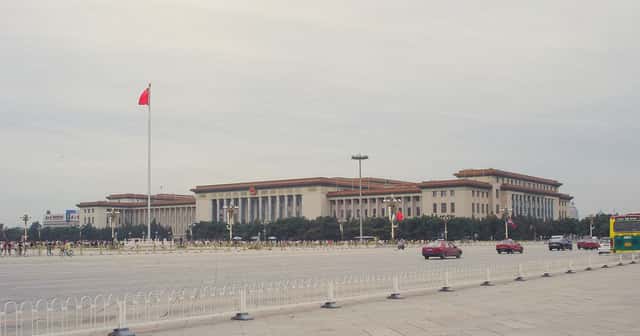
The Central Committee of the Communist Party of China released a circular on electing delegates to the Party's 21st National Congress. Xinhua reported the news on Saturday, November 7. The Party's Organization Department "has made detailed arrangements for the election," Xinhua said. It cited an official statement. The election "will run from now until the end of June 2027."
The 20th Central Committee set the congress date at its fifth plenum in late October. The meeting will be held in Beijing in the second half of 2027. Xinhua said a new Central Committee will be elected there. A new Central Commission for Discipline Inspection will be elected too. A total of 2,360 delegates will be chosen. They will come from 38 electoral units across the country.
Why the circular matters now#
The launch follows the fifth plenum of October 26–29. That plenum adopted a resolution on "persevering with full and rigorous Party self-governance." The gov.cn plenum text carries that language. 567politics covered the plenum's attendance, expulsions and discipline resolution. RTHK wrote that Xi Jinping "is expected to oversee a leadership reshuffle" at the 2027 congress. That line is RTHK's wording. It is not an official CPC forecast in the circular.
A Xinhua explainer ran on November 8. It drew on an Organization Department official. It said the delegates "carry the trust of more than 101 million CPC members and over 5.4 million Party organizations." Those membership figures are the Party's own numbers as reported by Xinhua.
Xi's role, as state media describes it#
Xinhua said Xi Jinping convened meetings of the Politburo Standing Committee and the Politburo. He set "overall requirements, objectives and tasks," the statement said. The explainer said Xi "heard multiple reports on this matter." It said he presided when the circular "was deliberated and adopted." This article reports those lines as state-media accounts. It does not prove the meetings on its own.
Candidate rules and makeup#
The statement called for "putting political standards first." It also called for strict eligibility checks and strict electoral discipline, Xinhua reported. It stressed review of candidates' "political stance and awareness." It also stressed "political judgment, thinking and implementation." It called for "strict scrutiny of candidates' integrity and conduct."
Front-line workers "should account for an appropriate proportion of the delegates," the statement said. The explainer gave shares. Among delegates from provincial-level regions, central financial bodies and central state-owned firms in Beijing, front-line Party members "should generally account for at least one-third." Among delegates from central Party and state departments, the share should be "no less than 15 percent." Women and ethnic-minority members "should each make up a certain proportion." Delegates should also include "workers in new forms of employment," Xinhua reported. Sectors listed include the economy, science and technology, national defense, law enforcement, education, culture, health and sports.
Source: Xinhua explainer, Nov. 8, 2026
Show the numbers
| Group | Minimum front-line share % |
|---|---|
| Provincial regions, central finance, central SOEs in Beijing | 33 |
| Central Party and state departments | 15 |
Procedure#
The explainer listed five steps. They are nomination, unit assessment, a preliminary list, a preparatory list and the formal election. The number of candidates "must exceed the number of seats by more than 15 percent." Elected delegates will face a qualification review committee before the congress. The statement called for oversight "throughout the electoral process." It pledged "zero tolerance for violations of rules, discipline and laws." The explainer said efforts would seek "to prevent vote-buying and other electoral violations."
Ideological framing#
The statement urged making the election "a process of studying and implementing Xi Jinping Thought on Socialism with Chinese Characteristics for a New Era, particularly Xi Jinping Thought on Party Building," Xinhua reported. That framing is the Party's own language as carried by state media.
Related notes the same week#
The Ministry of Foreign Affairs said on November 9 that the 25th meeting of the 14th NPC Standing Committee decided to ratify the World Artificial Intelligence Cooperation Organization (WAICO) agreement. The NPC decision text says the Standing Committee approved the pact on November 6. The pact was signed in Shanghai on July 16, 2026. The MFA briefing said the body has 38 founding members. That vote is separate from the Party congress delegate race. It is noted here as other official business in the same window.
567politics does not publish a political-spectrum chart for China. Site rules treat China as a closed-autocracy baseline. Party profiles remain available on the China parties directory.
What this article does not claim#
State media is the official position. It is attributed as such. The Chinese-language circular on xinhuanet was not opened for this package. English Xinhua accounts of the statement and explainer are the basis for the figures and quotes above. No independent delegate lists exist yet. Leadership outcomes at the 2027 congress are not forecast here.
How delegate elections fit the Party calendar#
National congresses are the CPC's highest formal body. Between congresses, the Central Committee and its Politburo run day-to-day leadership. Electing 2,360 delegates is both a personnel filter and a political campaign inside the Party. The more-than-15% contested margin and the five-step list process are rules the Organization Department is telling lower units to follow. Whether local units meet the front-line and gender targets will only be clear if review results are published in detail.
Outside analysts often search the run-up to a Party congress for clues about factions and succession. The circular and explainer opened for this article do not name successors. They do not allocate seats by faction. They do not discuss the military's share beyond listing national defense among the sectors. Readers looking for those signals will not find them in the texts cited here. What the texts do stress is political loyalty, anti-corruption checks and representation of front-line and new-employment workers.
Continuity with the fifth plenum#
The fifth plenum's self-governance resolution stressed tighter oversight of officials. 567politics covered that in its earlier plenum story. The delegate circular's language on integrity checks and zero tolerance for electoral violations sits in that lane. It does not, by itself, prove that any named official will be promoted or purged in 2027. Some analysts debate links between discipline drives and congress prep. This article sticks to what Xinhua says the circular requires.
Numbers readers can hold onto#
| Item | Figure | Source |
|---|---|---|
| Delegates to elect | 2,360 | Xinhua, Nov. 7 |
| Electoral units | 38 | Xinhua, Nov. 7 |
| Election window ends | end of June 2027 | Xinhua, Nov. 7 |
| Congress timing | second half of 2027 | Xinhua / fifth plenum |
| Candidate surplus | more than 15% | Xinhua explainer, Nov. 8 |
| CPC members (Party figure) | more than 101 million | Xinhua explainer |
| Party organizations (Party figure) | over 5.4 million | Xinhua explainer |
These are the figures state media published. They are not independent census counts. The WAICO ratification on November 6 is a separate NPC Standing Committee act. It is on npc.gov.cn. The MFA discussed it on November 9.
For Taiwan-related APEC context the same month, see 567politics's story on Taiwan's protest over the Shenzhen invitation. That dispute is not part of the delegate election. It shares the November calendar around the leaders' summit.
Reading the front-line quotas#
The rules ask for about one-third front-line delegates in provincial and certain central enterprise units. They ask for at least 15% in central Party and state departments. The goal is to limit an all-cadre congress. The explainer also nudges units in the new economy to recommend Party members among flexible-employment workers. Those instructions can be met with real shop-floor representation. They can also be met with creative job labels. Outside observers will not know which without unit-level data. China does not routinely publish that data. The article therefore reports the quotas as stated goals.
Attribution standard for CPC process stories#
567politics treats Xinhua and MFA transcripts as official positions. They show what the Party and state say they are doing. They are not independent audits. When this article says delegates "will" be elected under stated rules, it is reporting the circular's instructions as carried by Xinhua. It is not confirming compliance in every unit. Membership totals above 101 million are the Party's published figures.
Readers who compare China's closed chart policy with open charts for France or Japan should note the reason. The absence of a China chart is an editorial eligibility choice. It rests on regime classification sources cited in the spectrum tool. It is not a judgment about whether the congress is newsworthy.
The process now runs through mid-2027. The congress itself comes later that year. Those dates are the clearest facts in the circular.
Unit-level lists will not appear soon. Until they do, the public record is the circular, the explainer and the state-media framing. That is enough to report the timetable and the rules. It is not enough to name winners.
Related 567politics coverage of world reactions after the U.S. midterms notes how Beijing stressed continuity in great-power diplomacy. That theme sits beside the congress calendar rather than inside the circular itself. The delegate race is a Party process. Summit diplomacy is a state process. Readers should keep the two tracks separate even when the dates overlap.
Differing perspectives
What should the CPC emphasize when electing 21st Congress delegates?
Each position is summarized as its supporters make it, with equal weight and in alphabetical order. A summary is not an endorsement; the evidence for each is weighed in the story above.
Put political standards first
Who holds it: CPC Central Committee circular, as reported by Xinhua
The circular tells electoral units to put political standards first, apply strict eligibility checks and enforce electoral discipline. It stresses review of candidates' political stance and integrity, and sets front-line worker shares so the 2,360 delegates are both loyal and broadly drawn.
In their words: Xinhua ↗
Watch the congress as a leadership reshuffle
Who holds it: Outside analysts summarized by RTHK
RTHK reported that the 2027 congress is where Xi Jinping is expected to oversee a leadership reshuffle. In that reading, the delegate election matters less as a civic process than as the opening stage of a personnel contest that outsiders will try to decode from limited public signals.
In their words: RTHK ↗
Cite this article
567 Politics staff. “China's Communist Party starts electing 2,360 delegates for its 21st Congress in 2027.” 567politics. Published 2026-11-09. https://567politics.com/news/china-cpc-21st-congress-delegate-election-circular-november-2026
Wikipedia citation
{{cite news |title=China's Communist Party starts electing 2,360 delegates for its 21st Congress in 2027 |url=https://567politics.com/news/china-cpc-21st-congress-delegate-election-circular-november-2026 |work=567politics |author=567 Politics staff |date=2026-11-09 |language=en}}CSL-JSON for reference managers
{
  "id": "https://567politics.com/news/china-cpc-21st-congress-delegate-election-circular-november-2026",
  "type": "article-newspaper",
  "title": "China's Communist Party starts electing 2,360 delegates for its 21st Congress in 2027",
  "URL": "https://567politics.com/news/china-cpc-21st-congress-delegate-election-circular-november-2026",
  "container-title": "567politics",
  "language": "en",
  "author": [
    {
      "literal": "567 Politics staff"
    }
  ],
  "issued": {
    "date-parts": [
      [
        2026,
        11,
        9
      ]
    ]
  }
}Citations identify this article and its publication date. Assess the reporting and its linked sources before using it as evidence.
Read this article as Markdown or JSON. Cite the original page and retain its sources, dates and qualifications.
Embed this article summary
Paste this HTML into your page. The summary stays linked to the full story and updates with it. No account required.
<iframe src="https://567politics.com/embed/news/china-cpc-21st-congress-delegate-election-circular-november-2026?theme=auto" title="China's Communist Party starts electing 2,360 delegates for its 21st Congress in 2027 by 567politics" width="100%" height="440" style="border:0;max-width:100%" loading="lazy"></iframe>
<p style="font-size:14px">China's Communist Party starts electing 2,360 delegates for its 21st Congress in 2027 by <a href="https://567politics.com/news/china-cpc-21st-congress-delegate-election-circular-november-2026" rel="nofollow">567politics</a></p>
<script async src="https://567politics.com/embed.js"></script>
READ BEYOND 567POLITICS
Alternate sources & perspectives
Independent coverage and primary evidence to help you compare arguments. A link is not an endorsement; perspective labels describe the linked material.
- primary evidence
CPC initiates delegate election ↗
Xinhua
2,360 delegates, 38 units, timetable.
- primary evidence
Explainer on delegate election ↗
Xinhua
Front-line quotas and five-step process.
- primary evidence
NPCSC ratifies WAICO agreement ↗
Xinhua
Reports Nov 6 Standing Committee ratification; NPC Chinese text is on npc.gov.cn (HTTP).
Reviewed 2026-11-09. Xinhua English circular and explainer opened. NPC WAICO decision verified at npc.gov.cn but that host is HTTP-only; HTTPS Xinhua used here instead.