Voters in at least 33 localities limited data centers as candidates who ran against them won
Ohio towns banned large data centers, 56% of voters called AI a major factor, and Brown, El-Sayed and Hinojosa won on the issue. The electricity-cost evidence is more specific than either side's slogans.
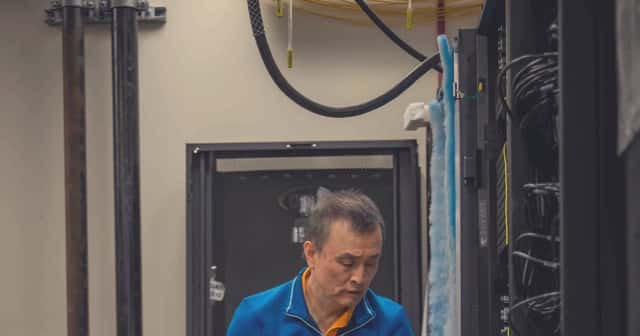
Voters in at least 33 local jurisdictions approved or were on track to approve limits on data centers on Tuesday. Candidates who campaigned against the facilities won Senate and governor's races in Ohio, Michigan, Texas and South Carolina. One measure that backed data center construction, in North Dakota, also passed. The tally comes from the tracking site Data Centers on the Ballot, as reported by Stateline. About a dozen more measures were still uncalled late on election night. Ballotpedia had counted at least 41 local data center questions on the ballot, 21 of them in Ohio across 18 jurisdictions, Broadband Breakfast reported.
The buildout of computing capacity for artificial intelligence has been a stated priority of President Trump. He wrote in August that communities rejecting data centers would "only have yourselves to blame" if they "kill the Golden Goose." On Tuesday, that argument lost in most of the places where voters were asked directly. The national exit poll offered one measure of why. Fifty-six percent of voters said artificial intelligence or data centers were a "crucial or major factor" in their vote for Congress. That figure is from the NBC News exit poll as cited by Stateline and the San Francisco Standard. We could not open NBC's exit poll page directly to confirm the question wording, and we note that below.
This story sets out what passed, what the polls show, what each side argues, and where the evidence on electricity costs, the issue at the center of the fight, actually stands.
What voters decided
Ohio was the center of the local ballot fight. At least 14 municipalities there passed bans or other restrictions, Fortune reported. The state already had more than 125 local moratoriums in place before Election Day, by the count of the Ohio Capital Journal that Fortune cited. The results below are unofficial, and several measures had percentages reported only in general terms.
| Place (Ohio) | Measure | Unofficial result |
|---|---|---|
| Sunbury | Charter ban on data centers using 25 MW or more; aimed at a proposed Amazon campus | Appears to have passed, 100% counted |
| Trenton | Ban targeting an 18-building AWS project | Passed, about 80% to 20% |
| Perry | Financial guarantees required for tax-break recipients | More than 87% in favor |
| Wilmington | Four rezoning referendums for a data center project | About 80% rejected rezoning |
| Pataskala | Charter ban on data centers with 25 MW monthly demand or more | Expected to pass |
| Grove City | Citizen vote required for large developments (50+ acres, 20+ MW or 500,000+ gallons of water a day) | Expected to pass |
| Granville | Charter ban on data centers with peak loads over 25 MW | Expected to pass |
| Ashville | Overturn village agreement with EdgeConneX for a campus under construction | Projected to pass |
Sources: Fortune and WCMH/NBC4 Columbus via Yahoo News, Nov. 4, 2026. "MW" is megawatts of electrical demand.
Results for measures in Conneaut, Defiance, Hubbard, Monroeville, Piqua, Upper Sandusky, Urbana and Oregon, Ohio, were not available in the reporting we could access. The Oregon vote, near Toledo, was the most expensive local contest. Opponents of the restriction raised about $335,000, including $250,000 from Vantage Data Centers, against $4,600 for supporters, Broadband Breakfast reported, citing Cleveland.com. Earlier in 2026, voters in Monterey Park, California, approved a permanent citywide ban with over 86 percent. Voters in Port Washington, Wisconsin, required public approval before the city offers tax incentives for projects over $10 million. Voters in Festus, Missouri, removed every incumbent up for re-election after officials backed a $6 billion, 360-acre project. All three are from the same report.
The measures differ in kind. Some are outright bans above a megawatt threshold. Others are moratoriums, voter-approval requirements, or advisory questions. A ban in a village of a few thousand people stops one project; it does not change state policy. Ohio has more than 200 operating data centers, the fifth most of any state, and companies have announced plans for up to $40 billion in AI infrastructure there by 2030, Fortune reported.
The statewide races
Democrats who made data centers an issue won in several states. In Ohio, Sherrod Brown called Sen. Jon Husted "the face of data centers." Brown proposed ending tax breaks for the companies and making them pay for the utilities their campuses use. He defeated Husted. Amy Acton, who proposed a moratorium, defeated Vivek Ramaswamy, who also proposed one, for governor. Our report on the Ohio results has the counts. In Michigan, Abdul El-Sayed held a rally outside the site of an OpenAI and Oracle campus in Saline Township and argued that data centers should pay for their own energy demand. He defeated Mike Rogers, who in August had endorsed a one-year moratorium on new data centers, Fortune reported. Our Michigan report covers that race.$$
In Texas, Gov. Greg Abbott had promoted the state as an AI "epicentre," then paused permits for new data centers pending an audit. Democrat Gina Hinojosa, who pledged a temporary halt until legal safeguards were in place, defeated him, Euronews reported. In South Carolina, Annie Andrews, who called for a two-year statewide moratorium, won the Senate special election. Republican Byron Donalds, who won Florida's governorship, had also proposed restrictions on data centers, Fortune noted. The issue was not a simple partisan line: Rogers, Ramaswamy and Donalds, all Republicans, proposed limits of their own.$
Candidates' positions are one input among many in a statewide race. None of these results can be attributed to data centers alone. The same election saw Democrats win the Senate on a range of issues, with the cost of living and the Iran war ranking high in exit polls. What the local measures show more cleanly is that where the question was data centers alone, voters mostly said no.
What representative polls show
Unlike the local votes, national polls measure the whole public, and they have been consistent in 2026. The UMass Amherst Poll surveyed 1,000 Americans online from August 21 to 26, 2026. The margin of error was 3.5 points. It asked: "Do you support or oppose the construction of an artificial intelligence data center in your local community?" Eleven percent supported one, 65 percent opposed and 24 percent neither, according to the poll's report. Opposition was 76 percent among Democrats, 67 percent among independents and 52 percent among Republicans. Among respondents who identified "very much" with the MAGA movement, 25 percent supported a nearby data center and 42 percent opposed one.
Gallup asked a similar question of 1,000 U.S. adults by telephone from March 2 to 18, 2026, with a margin of error of 4 points. It found 70 percent opposed a data center near them and 27 percent in favor, as reported by The Washington Times; we could not open Gallup's own release. An August survey by Heatmap Pro and Embold Research found 15 percent would support a data center in their area and 75 percent would oppose one. A year earlier the split was 43 percent to 42 percent, according to a National Review column that cited Vox. In Ohio, a SurveyUSA poll of 1,650 adults for Ohio Northern University's ICAPP found 55 percent opposed data center construction in the state and 22 percent supported it, Fortune reported. Sixty-five percent opposed tax breaks for the facilities.
Source: UMass Amherst Poll, Gallup via The Washington Times, Heatmap/Embold via National Review, SurveyUSA/ICAPP via Fortune
Show the numbers
| Poll | Oppose |
|---|---|
| Heatmap/Embold, Aug. 2026 (U.S.) | 75% |
| Gallup, Mar. 2026 (U.S. adults) | 70% |
| UMass Amherst, Aug. 2026 (U.S.) | 65% |
| SurveyUSA/ICAPP (Ohio adults) | 55% |
Two cautions apply. The polls ask about a data center in the respondent's own area, which is not the same as asking whether the country should build them. And National Review's columnist, drawing on surveys by Scott Rasmussen, argued that the issue ranks low among voters' priorities even where opposition is wide. The exit poll figure of 56 percent calling it a crucial or major factor, if confirmed, would cut against that reading for this election.
The electricity argument
The dispute that drove most of the campaign rhetoric was household power bills. The facts here are more specific than either side's slogans. PJM Interconnection, the grid operator for 13 states from New Jersey to Illinois, including Ohio, runs an annual auction in which utilities buy commitments of generating capacity for a future year. The auction for the 2026–27 delivery year cleared at $329.17 per megawatt-day across the whole PJM footprint, up from $269.92 the year before, PJM reported in July 2025. That was the maximum price allowed under a cap approved by federal regulators. PJM said forecast peak demand rose by more than 5,400 megawatts year over year, "driven largely by data center expansion, electrification and economic growth." Two years earlier, for 2024–25, the price was $28.92, Fortune reported.
PJM's independent market monitor estimated that data centers caused 63 percent of the price increase in the 2025–26 auction, or $9.3 billion recovered from customers, Fortune reported. The Institute for Energy Economics and Financial Analysis put the effect at about $16 a month on an average residential bill in Ohio. Those are estimates by a market monitor and by a research group that advocates an energy transition. We did not review the underlying models. The capacity price is one part of a bill, alongside energy, transmission and distribution charges. How much of it reaches a given household depends on state regulation. PJM itself documents the link between data center growth and higher capacity prices. The share of any household's bill increase caused by data centers is a modeling question, and estimates differ.
The industry's reply is that data centers can be made to pay their own way. Vice President JD Vance said that "99% of the backlash to data centers has come in areas where building a data center means higher utility" bills. "If you build a data center, you should be putting power back into the grid, not taking it out," he added, the Associated Press reported. The Ohio Manufacturers' Association said "Ohio does not have a data center cost crisis," Fortune reported. A Consumer Reports survey in October found 84 percent of respondents would support a separate utility rate category for large users such as data centers, according to Fortune. That suggests the rate-design remedy has support across the divide. Our report on the Senate permitting bill covers the federal side of the grid debate.$
The case for building
Supporters make an economic argument. Trump wrote on August 31 that "if they want to be successful and rich, with far lower taxes and jobs all over the place, let Data Reign," according to the AP. The National Review column cited above argues that demand for electricians, pipe fitters and HVAC technicians exceeds supply. It says facilities need permanent maintenance staff. It says tax revenue from data centers has let some towns cut tax rates and fund schools, and that unions increasingly support the projects. It compares the backlash to earlier fears over fracking and 5G that faded. Chip Pickering of INCOMPAS, a trade group, argues the buildout can bring infrastructure and opportunity to rural America, Broadband Breakfast reported. Build American AI spent at least $2.54 million on Ohio ads between September 7 and October 21, Fortune reported, citing DeSmog. The group is linked to the Leading the Future super PAC network, which is funded by Andreessen Horowitz partners and OpenAI co-founder Greg Brockman. The ads claimed $40 billion in investment and more than 95,000 jobs in the state. They did not endorse candidates.
Keith Durkin, who directs the ICAPP institute at Ohio Northern University, offered a different explanation for the results: "I've never seen any pro-data center advertising. I've never seen any op-eds from the industry," he told Fortune, attributing much of the opposition to uncertainty. That sits awkwardly with the $2.54 million ad figure in the same article. The ads did run statewide rather than in the towns voting on bans.
The case against
Opponents' arguments go beyond bills. Concerns cited in the measures and by the groups behind them include water use, noise, pollution and loss of farmland, according to Stateline and Broadband Breakfast. They also cite the loss of local control when a state or a company negotiates a project over a community's head. Conserve Ohio helped draft ballot language in many towns. It was founded by Nick Owens, a Republican, and Austin Baurichter, a left-leaning independent. Politico called the alliance "strange bedfellows," Broadband Breakfast noted. Owens told Stateline the cross-community organizing was "one of the most beautiful things I've ever seen." Ben Green of the University of Michigan told Fortune that the concern crosses party lines. He described it as "massive corporations coming in and forcing a community to deal with some type of project."
Some arguments on this side overreach. A local ban prevents local harms. It does not reduce national electricity demand if the project moves to the next county. Several of the Ohio measures target projects whose neighbors are already under construction. Trenton's ban, Fortune noted, likely will not affect a four-building AWS campus already being built nearby.
Where the money went
Tech-aligned political spending was large and, by the Standard's account, mostly unsuccessful. Elon Musk spent nearly half a billion dollars backing Republicans, including more than $200 million against James Talarico in Texas, who won, the Standard reported. Crypto PACs spent $55 million against Brown, who won. Pro-AI PACs backed Darline Graham in South Carolina, who lost. Musk posted on X after the results: "Data centers in space looking pretty appealing right now," according to Euronews. Euronews put his midterm spending at $474 million. Not all tech money was on one side. Public First Action, a pro-regulation PAC, backed Republican Scott Singer in Florida's 25th District, who lost to Jared Moskowitz. AI labs gave to pro-regulation candidates, the Standard reported.
Spending figures here come from news reports, not from our own review of Federal Election Commission filings. The campaign-finance snapshots on our politician profiles cover PAC receipts to candidates, not independent expenditures. Readers should treat the totals as reported estimates. Trump's profile carries no verified FEC snapshot, so we report no figures for him.
What people are saying online
Our usual method is to sample X and Reddit threads directly. During this run, neither platform was reachable from our research desk, so we rely on posts quoted by news outlets, with permalinks where reported. Musk's post is cited above as quoted by Euronews (permalink). Shaunna Thomas, who directs the Guardrails Alliance, an advocacy group, posted that the industry should "absorb this remarkably clear lesson: Aligning with Big Tech is a political catastrophe," the Standard reported. An account posting as journalist J.D. Capelouto ran a thread tracking the roughly 40 measures across 13 states on election night (permalink). We could not verify any of these posts against the originals or report engagement counts. They are statements by a donor, an advocate and a journalist, not evidence of public opinion.
What remains unknown
The final count of local measures, including the uncalled Ohio votes. The exact wording and sample of the exit poll question on AI and data centers. How much of any household's bill increase comes from data centers rather than fuel prices, transmission costs or retiring plants. That depends on models we have not reviewed. Whether a Democratic Congress will curb data center tax incentives; Goldman Sachs strategists told Fortune they think it might, but see a national moratorium as unlikely. And whether companies will move projects to states and counties that did not vote. Both the industry and the local organizers expect that.
Differing perspectives
Should communities restrict new data centers, or build them and require the companies to cover the costs?
Each position is summarized as its supporters make it, with equal weight and in alphabetical order. A summary is not an endorsement; the evidence for each is weighed in the story above.
Ban or pause large data centers locally
Who holds it: Conserve Ohio, Big Walnut for Responsible Growth, Great Lakes Neighbors United and the voters who passed bans and moratoriums in Ohio, Wisconsin, California and Missouri
Local organizers argue that large data centers raise electricity bills, consume water, generate noise and pollution, and replace farmland and open space, while decisions are made between companies and state officials over residents' heads. They say a ban or a megawatt cap is the only tool a village has to keep control of its own land use, and point to the breadth of the coalition, which spans Republicans and independents. Nick Owens of Conserve Ohio called the cross-community organizing "one of the most beautiful things I've ever seen."
In their words: Stateline, quoting Conserve Ohio's Nick Owens, Nov. 4, 2026 ↗
Build them, but make them pay for their own power and give communities a say
Who holds it: INCOMPAS and other industry groups, the AI Policy Forum, and Vice President JD Vance in his remarks on grid impacts
This camp says the buildout can bring infrastructure and opportunity to rural America, but only if the costs land on the companies rather than on neighbors. Chip Pickering of INCOMPAS makes the economic case for rural investment; Alex Roark of the AI Policy Forum says communities should be able to "define the value" they receive from a project. Vance has said that if you build a data center you should be putting power back into the grid, not taking it out. Rate design and local benefit agreements, not bans, are the remedy.
In their words: Broadband Breakfast, quoting INCOMPAS and the AI Policy Forum, Nov. 2026 ↗
Build them; rejecting them leaves communities poorer
Who holds it: President Trump and the administration's AI policy, along with developers and trade groups backing the buildout
Trump argues that data centers bring tax revenue, jobs and investment, and that the only reason a community should refuse one is if it does not want to be "successful and rich, with far lower taxes and jobs all over the place." He says opposition is a mistake that communities will regret, and that killing "the Golden Goose" of AI investment would leave the places that do so with only themselves to blame. On this view the national interest in AI capacity and the local interest in growth point the same way.
In their words: President Trump, Truth Social post of Aug. 31, 2026, as reported by the Associated Press ↗
End tax breaks and charge data centers for the demand they add
Who holds it: Sen.-elect Sherrod Brown, Sen.-elect Abdul El-Sayed and other Democratic candidates who ran on the issue
These candidates argue that the problem is not data centers as such but who pays. Brown proposed eliminating tax breaks for data center companies and requiring them to pay for the utilities their campuses use. El-Sayed argued that data centers should pay for their own energy demand and promised "no rate hikes" for households. They point to PJM capacity prices and the market monitor's estimate that data centers drove most of the increase as evidence that residents are subsidizing the buildout.
In their words: Fortune, reporting the Brown and El-Sayed campaign positions, Nov. 4, 2026 ↗
The backlash is overstated and will fade
Who holds it: National Review's editorial writers and pollster Scott Rasmussen, as cited there
This view holds that voters are wary of data centers in the abstract but rank the issue near the bottom of their priorities, that residents who live near completed facilities resent them less than polls predict, and that the current panic resembles earlier scares over fracking and 5G that faded. It argues that construction and maintenance jobs are real and lasting, that municipal tax revenue has funded schools and lowered rates, and that unions increasingly support the projects, so the bet on building will look wise by 2028.
In their words: National Review, September 2026 ↗
READ BEYOND 567POLITICS
Alternate sources & perspectives
Independent coverage and primary evidence to help you compare arguments. A link is not an endorsement; perspective labels describe the linked material.
- primary evidence
PJM auction procures 134,311 MW of generation resources; supply responds to price signal (2026/2027 Base Residual Auction) ↗
PJM Interconnection
The grid operator's own report of the $329.17/MW-day clearing price and its attribution of load growth to data centers.
- primary evidence
UMass Amherst Poll: just 1 in 9 Americans support AI data center construction in their local communities ↗
UMass Amherst Poll
Full methodology, question wording and party breakdowns for the August 2026 national poll.
- independent analysis
Ohio already has 125 local data center moratoriums; early results from its 21 ballot measures ↗
Fortune
Town-by-town Ohio results, the ICAPP/SurveyUSA poll and industry ad spending.
- independent analysis
'People really effing hate data centers': how the AI buildout became the midterms' affordability issue ↗
Fortune
Candidate positions in Ohio and Michigan, PJM cost estimates and the Ohio Manufacturers' Association response.
- left argument
Voters across the country reject data centers ↗
Stateline (via Yahoo News)
The national tally of measures and the organizers' case, in Conserve Ohio's words.
- independent analysis
Data centers are on the ballot: here are the races and groups to watch ↗
Broadband Breakfast
Pre-election guide to the measures, the groups on each side and local campaign money.
- right argument
Trump defends data centers, saying people who oppose them will end up 'backwards and poor' ↗
Associated Press (via KPLC)
Trump's Truth Social post and Vance's remarks on grid impacts, quoted directly.
- right argument
Trump's big bet on data centers ↗
National Review
The case that the backlash is overstated and the economic benefits are real; cites Heatmap/Embold and Rasmussen polling.
- independent analysis
US midterm elections: backlash to AI data centres reaches ballot boxes ↗
Euronews
Non-U.S. view of the results, Texas context and Musk's post.
- other perspective
Silicon Valley's political spending spree meets a blue wave and a data center revolt ↗
The San Francisco Standard
Tech-industry political spending by race and the reaction of pro-regulation donors.
- independent analysis
Gallup poll: 7 in 10 Americans don't want AI data centers near them ↗
The Washington Times
Secondary report of the March 2026 Gallup poll; Gallup's own page could not be opened.
Reviewed 2026-11-04. Reviewed on Nov. 4, 2026. The discovery tool returned irrelevant Microsoft support pages, so the list was assembled from pages opened directly. NBC News's exit poll pages, Stateline's own site, Gallup's release and the Data Centers on the Ballot tracker's live data could not be opened from our research desk; the exit poll figure and the Gallup figures are cited through secondary reports. X could not be opened, so social posts are cited as quoted by news outlets. Final vote counts for several Ohio measures were not available. No company statement from Amazon or other developers was located beyond Amazon's reported decline to comment.