Paris mayor tells riot inquiry the city's east was 'disadvantaged' while shops were looted for hours
Emmanuel Grégoire said 451 Paris shops were vandalized on October 17 and questioned police choices. Lawmakers pressed him on what the city knew.

Paris Mayor Emmanuel Grégoire told a parliamentary inquiry on Monday that the east of the capital had been left less protected than the west during the riots and looting of October 17. He said shop owners there reported "systematic looting, shop after shop," for hours "without a single police officer stepping in to stop them."
Grégoire, a Socialist, testified before the National Assembly's law committee, which is sitting as a commission of inquiry into the events of October 17 and 18. He said the City of Paris had not been warned of "an exceptional level of threat" before the day. He also questioned the police prefecture's decision to close access to the Place de la République early, before the official march set off.
He stressed that he is not in charge of public order and does not see the information the police use. "Was there an error in reading the risks? Was the police deployment too small? I do not have access to that information," he said, according to LCP, the Assembly's television channel.
The hearing can be watched in full on the Assembly's video site. Quotations from French-language sources are 567politics translations.
"An unprecedented scale" of damage#
The mayor opened with the toll. In Paris, he said, 451 shops were vandalized and 228 of them were looted, according to BFMTV. AFP, citing the same testimony, gave the total as 450. He added that "about a hundred fires" were set in public spaces within 48 hours, some at the base of apartment buildings.
"Never have we reached such a level of damage to private property," he said. He called it worse than the 2018 "yellow vest" protests and even May 1968, according to TF1info.
"Behind these figures of broken shop windows and stolen stock, human lives have been very largely broken: those of low-paid workers, small shopkeepers and business owners," he said. He called the violence something "that nothing could excuse."
Source: BFMTV, Nov. 16, 2026
Show the numbers
| Category | Shops |
|---|---|
| Vandalized | 451 |
| Looted | 228 |
He also drew a line between the rioters and the marchers. The violence, he said, was "the work of a minority." He said there was "a big difference" between those who smashed and looted and "the vast majority of protesters," notably along the official route from République to Place de Clichy. Those who looted and put people in danger, he said, "betrayed this mobilization."
Across France, the toll was larger. When the inquiry opened earlier this month, its chair said more than 1,000 police officers and gendarmes had been hurt and more than 3,000 shops looted or vandalized. He added that public buildings had been attacked and the town hall in Limoges set on fire, according to the hearing transcript. A survey published Monday found that, for the first time, more people in France call their country "angry" than merely unhappy.
East versus west#
Much of the testimony focused on where the police were deployed. "It seemed to me that at one point eastern Paris had been disadvantaged compared with western Paris," Grégoire said. He pointed to the protection of the "golden triangle," the area around the National Assembly, the Élysée Palace and the prime minister's office at Matignon.
He said he could share the police's concern for protecting those institutions. But the result, he said, was "a deeply troubling feeling, to say the least," in parts of the city where looting went on for hours. "Shopkeepers whose shops were looted, sometimes for several tens of minutes, had the troubling feeling of being abandoned," he said, according to AFP's account published by La DH. He said he understood Parisians who felt abandoned that day.
He also questioned a key police decision. The march was due to leave from the Place de la République. The police prefecture closed access to the square before the start time, while clashes were already under way there. Grégoire called that closure "premature." In his view, it had a "spreading effect": it pushed trouble into nearby streets and created "counter-demonstrations that were extremely hard to control" in the three areas hit hardest by looting, including central Paris.
The city, he said, only "grasped how unusual" the day was at around noon on that Saturday.
What Nuñez told the same inquiry#
Grégoire's account sits beside that of Interior Minister Laurent Nuñez, who was the inquiry's first witness. Under oath, Nuñez called the day "a failure," but said that failure "does not in itself presume a fault by the services of the State," according to the transcript. He took personal responsibility for a "lack of anticipation," as 567politics reported at the time.
Nuñez described a very different problem at République. He said a march of 110,000 people had to be supervised as it moved from République to Place de Clichy. Meanwhile, several hundred or even several thousand "radicalized activists" stayed on the square all afternoon and "pinned down the police deployment" there. At the same time, he said, wildcat marches of 200 to 2,000 people tried to reach "the places of power," such as the Concorde and the Élysée, and were stopped. Then came "rioters and looters" from mid-afternoon into the evening.
He told the committee the Paris police prefect would give a detailed account of that sequence when called. That hearing has not yet taken place. After the riots, Nuñez offered his resignation to President Emmanuel Macron, who refused it, AFP reported.
- A declared march of 110,000 from République to Place de Clichy
- Hundreds to thousands of "radicalized activists" holding the Place de la République
- Wildcat marches of 200 to 2,000 people heading for seats of power
- Rioters and looters from mid-afternoon into the evening
The city's own police#
Grégoire also answered critics of the city's municipal police. Some lawmakers have said the city "confined" its officers that day. He said 500 municipal police officers were on duty, "a very high level of mobilization."
He said their tasks cannot go beyond prevention and watching over good order, calm, safety and public health. They have "no mission of maintaining public order," he said, a job that falls to the state. As the violence grew, the head of the municipal police took "several measures to protect" officers early in the afternoon, he said. A "general call" then told teams to avoid "sensitive areas." Three city agents were hurt on patrol over the weekend.
The mayor said he was "deeply shocked" by "attacks" from the right-wing opposition on the Council of Paris. That opposition says the municipal police are "neither trained nor equipped" to go out on the ground, and it wants them to carry lethal weapons.
That opposition, the Paris Liberté group co-led by Grégory Canal and Rachida Dati, set out 30 proposals on November 4 to overhaul the force, Le Figaro reported. They include arming officers and testing patrol robots and drones. The group wants the city to put the plan to a vote of Parisians. Its security lead, Éric Schahl, put the yearly cost at 170 million euros. "We agree with Emmanuel Grégoire that the municipal police as it exists today cannot go out on the ground, because the officers are neither equipped nor trained," Schahl said. The group had earlier objected that officers were "told not to go out" on October 17.
- Protests against the cost of living end in riots and looting in several cities
- The law committee picks three rapporteurs; the RN later boycotts
- Interior Minister Laurent Nuñez testifies first, under oath
- Shop owners hit by the violence speak at a round table
- Paris Mayor Emmanuel Grégoire testifies
- Justice Minister Gérald Darmanin is due to testify
- Week in which Marseille Mayor Benoît Payan is due to testify
Source: National Assembly inquiry page
Lawmakers press for answers#
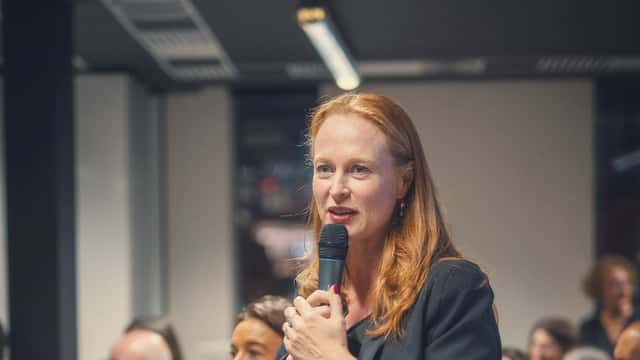
Violette Spillebout, a deputy from Macron's Ensemble pour la République group, asked about secondhand markets. "How could flea markets be authorized a few meters from the Place de la République, when the risk of violence during the protests was known?" she wrote on X after the hearing. "Why was information between the City of Paris and the police prefecture not cross-checked?"
Ugo Bernalicis, a France Insoumise (LFI) deputy, focused on the state. The hearing "did not bring major revelations," he wrote on X. But in his view it confirmed that the Paris police prefect "does not seem to have anticipated the scale of events, nor informed the mayor of Paris early enough" of the deployment and the risks. He said this added to questions about "the failings of the State" and the responsibility of the Interior Ministry.
During the hearing, Bernalicis also asked about advice the police prefecture may have given shopkeepers to hire private security firms, and how the city learned of it. He called the answers "evasive, even non-answers," in a separate post. 567politics found no response from Grégoire to that criticism by Monday night.
The National Rally has said it is boycotting the inquiry after it lost out on a rapporteur post.
A wider fight over October 17#
The inquiry is one of several fronts. After the riots, the Senate passed a government bill known as "casseurs-payeurs" ("wreckers pay"). Amnesty International has urged the government to drop it. The group says it "seriously threatens the right to protest" by exposing all protesters to the risk of a financial penalty, AFP reported.
Protests have continued since then without matching the scale of October 17. Paris authorities have since banned gatherings near 15 schools and campuses. Unions have called a public-sector strike for Tuesday. The violence has also become a theme of the 2027 presidential race, as when Mélenchon and Philippe traded accusations over it on television.
What comes next#
Justice Minister Gérald Darmanin is due before the committee on Tuesday at 9:30 p.m. Paris time, according to the Assembly's inquiry page. The committee's chair, Vincent Caure, said on Monday that Marseille Mayor Benoît Payan will testify next week. The committee is also considering a hearing with Limoges Mayor Guillaume Guérin, whose town hall burned. The Paris police prefect, whose decisions were at the heart of Monday's questions, is expected to be heard later.
The chair also reminded members of a limit on their work. Under the separation of powers, an inquiry may not look into facts that are the subject of ongoing court cases, he said at the start of the hearing.
Grégoire's account rests on what shopkeepers and city staff saw. He said several times that he lacks the police data needed to reach a firm view. Whether the police deployment was too small, and whether the east of Paris was left exposed by choice or by circumstance, are questions the prefecture has yet to answer in public before the inquiry.
Differing perspectives
Why were Paris shops left exposed on October 17, and what should change?
Each position is summarized as its supporters make it, with equal weight and in alphabetical order. A summary is not an endorsement; the evidence for each is weighed in the story above.
A failure, but not proof of a fault by the state
Who holds it: Laurent Nuñez, interior minister
Nuñez calls October 17 a failure, since public buildings and shops were not kept safe, but says that does not in itself show a fault by state services. He says risks foreseen by intelligence all struck at once: a march of 110,000, "radicalized activists" who pinned down police at République, wildcat marches toward the seats of power, and looters later in the day. He says a new approach worked on October 24 and 31.
In their words: Hearing transcript via MonParlement ↗
Arm and overhaul the municipal police
Who holds it: Paris Liberté, the right-wing opposition group on the Council of Paris
The group says the municipal police as it exists cannot go out on the ground because its officers are neither equipped nor trained, and it objects that officers were told not to go out on October 17. It has set out 30 proposals to rebuild the force, including arming officers and testing patrol robots and drones, at a yearly cost it puts at 170 million euros. It wants Parisians to vote on the plan.
In their words: Le Figaro (AFP), quoting Paris Liberté's Éric Schahl ↗
City and prefecture should have shared what they knew
Who holds it: Violette Spillebout, Ensemble pour la République deputy
Spillebout says the risk of violence during the protests was known, yet flea markets were allowed a few meters from the Place de la République. She asks why the City of Paris and the police prefecture did not cross-check their information. She argues that clear answers on both points are needed so that the same situation does not happen again.
In their words: Violette Spillebout on X ↗
Police choices left the east exposed
Who holds it: Emmanuel Grégoire, Socialist mayor of Paris
Grégoire says the city was never warned of an exceptional threat and that public order is the state's job, not the mayor's. He argues the early closure of the Place de la République spread the trouble into nearby streets, and that eastern Paris was less protected than the area around the Élysée and Matignon. Shopkeepers, he says, saw looting go on for hours with no officer stepping in. The city's 500 municipal police have no public-order role, and the violence was the work of a minority.
In their words: National Assembly (hearing video) ↗
The prefecture and the Interior Ministry must answer
Who holds it: Ugo Bernalicis, France Insoumise deputy
Bernalicis says the hearing brought no major revelations but confirmed a key point: the Paris police prefect does not seem to have foreseen the scale of events, or to have told the mayor early enough about the deployment and the risks. In his view, this deepens questions about the failings of the state and the responsibility of the Interior Ministry and prefectoral authorities. He says the inquiry must now establish the exact chain of responsibility.
In their words: Ugo Bernalicis on X ↗
Cite this article
Patrick Karsh. “Paris mayor tells riot inquiry the city's east was 'disadvantaged' while shops were looted for hours.” 567politics. Published 2026-11-17. https://567politics.com/news/france-paris-mayor-gregoire-inquiry-october-17-east-west-looting-prefecture-november-2026
Wikipedia citation
{{cite news |title=Paris mayor tells riot inquiry the city's east was 'disadvantaged' while shops were looted for hours |url=https://567politics.com/news/france-paris-mayor-gregoire-inquiry-october-17-east-west-looting-prefecture-november-2026 |work=567politics |author=Patrick Karsh |date=2026-11-17 |language=en}}CSL-JSON for reference managers
{
  "id": "https://567politics.com/news/france-paris-mayor-gregoire-inquiry-october-17-east-west-looting-prefecture-november-2026",
  "type": "article-newspaper",
  "title": "Paris mayor tells riot inquiry the city's east was 'disadvantaged' while shops were looted for hours",
  "URL": "https://567politics.com/news/france-paris-mayor-gregoire-inquiry-october-17-east-west-looting-prefecture-november-2026",
  "container-title": "567politics",
  "language": "en",
  "author": [
    {
      "literal": "Patrick Karsh"
    }
  ],
  "issued": {
    "date-parts": [
      [
        2026,
        11,
        17
      ]
    ]
  }
}Citations identify this article and its publication date. Assess the reporting and its linked sources before using it as evidence.
Read this article as Markdown or JSON. Cite the original page and retain its sources, dates and qualifications.
Embed this article summary
Paste this HTML into your page. The summary stays linked to the full story and updates with it. No account required.
<iframe src="https://567politics.com/embed/news/france-paris-mayor-gregoire-inquiry-october-17-east-west-looting-prefecture-november-2026?theme=auto" title="Paris mayor tells riot inquiry the city's east was 'disadvantaged' while shops were looted for hours by 567politics" width="100%" height="440" style="border:0;max-width:100%" loading="lazy"></iframe>
<p style="font-size:14px">Paris mayor tells riot inquiry the city's east was 'disadvantaged' while shops were looted for hours by <a href="https://567politics.com/news/france-paris-mayor-gregoire-inquiry-october-17-east-west-looting-prefecture-november-2026" rel="nofollow">567politics</a></p>
<script async src="https://567politics.com/embed.js"></script>
READ BEYOND 567POLITICS
Alternate sources & perspectives
Independent coverage and primary evidence to help you compare arguments. A link is not an endorsement; perspective labels describe the linked material.
- primary evidence
Commission des lois: M. Emmanuel Grégoire, maire de Paris, audition du 16 novembre 2026 (video, French) ↗
National Assembly
Full official video of the mayor's testimony to the inquiry.
- primary evidence
Les évènements liés aux manifestations du 17 octobre 2026 (French) ↗
National Assembly
The inquiry's page, listing hearings including the shop owners' round table and Justice Minister Darmanin's Nov. 17 hearing.
- primary evidence
Audition de M. Laurent Nuñez, ministre de l'Intérieur (transcript, French) ↗
MonParlement (Assembly record)
Transcript of the interior minister's sworn testimony and the chair's national toll of injuries and damage.
- independent analysis
17 octobre: l'est de Paris a été 'défavorisé' par rapport à l'ouest, estime le maire Emmanuel Grégoire (French) ↗
LCP-Assemblée nationale
Detailed account of the testimony by the Assembly's channel, including the east-west remarks.
- independent analysis
Violences du 17 octobre: Emmanuel Grégoire déplore que des 'vies humaines ont été très largement brisées' (French) ↗
BFMTV
Gives the 451 vandalized and 228 looted shop figures and the 'minority' remarks.
- independent analysis
Violences du 17 octobre: le maire de Paris évoque un niveau historique 'd'atteinte aux biens privés' (French) ↗
TF1info (AFP)
AFP account covering the closure of République, the municipal police and the opposition's criticism.
- independent analysis
Violences en marge des manifestations à Paris: record d'atteinte aux biens, selon le maire (French) ↗
La DH (AFP/Belga)
Wire account with context on Nuñez's refused resignation and the 'casseurs-payeurs' bill.
- left argument
Ugo Bernalicis's reaction after the Grégoire hearing (post on X, French) ↗
Ugo Bernalicis
LFI deputy says the prefect did not anticipate events or inform the mayor early enough.
- left argument
Ugo Bernalicis on prefecture advice to shopkeepers (post on X, French) ↗
Ugo Bernalicis
Calls the mayor's answers on private-security advice evasive.
- other perspective
Violette Spillebout's questions to Emmanuel Grégoire (post on X, French) ↗
Violette Spillebout
Centrist deputy asks why flea markets were allowed near République and why information was not shared.
- right argument
Sécurité: la droite parisienne demande un référendum pour une 'refonte' de la police municipale (French) ↗
Le Figaro (AFP)
Paris Liberté's 30 proposals to arm and overhaul the municipal police, and its call for a vote.
- left argument
Victime ou témoin de violences policières? Témoignez (French) ↗
La France Insoumise
LFI's call for accounts of police violence to feed its work on the inquiry.
Reviewed 2026-11-16. Compiled November 16, 2026 from pages opened and read; every source was chosen by hand. Grégoire's testimony is cited from the Assembly's official video and from LCP, BFMTV and AFP accounts, which differ slightly on the count of vandalized shops (451 or 450). Nuñez's earlier testimony is cited from the published hearing transcript. Lawmakers' reactions are cited from their own posts on X. French-language sources are labeled.