Why some progressives say Jeffries' Kushner ties disqualify him—and where Epstein fits
The Kushner meeting has prompted progressive criticism. A separate Epstein fundraising email raises questions but does not prove a personal relationship.
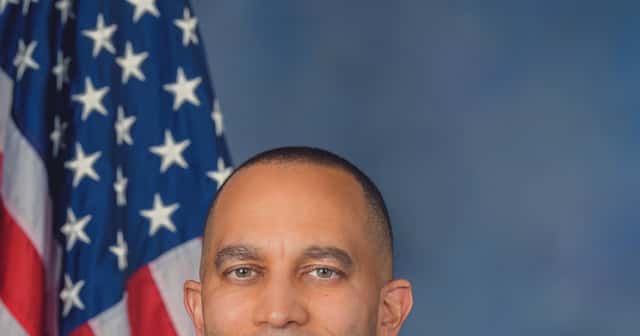
A private meeting between House Democratic leader Hakeem Jeffries$ and Jared Kushner has become a flashpoint for progressive critics who want a more confrontational response to Donald Trump. A separate 2013 fundraising email to Jeffrey Epstein has added questions about donor screening, though it does not establish that Jeffries knew or met Epstein. The two matters are distinct. Treating them as a single proven personal connection would go beyond the records.
What sparked the criticism#
Reporting in August 2026 described Jeffries meeting privately with Kushner, Trump's son-in-law and former White House adviser. Jeffries said they discussed affordability and that speaking with political opponents does not prevent oversight. Progressive critics saw the meeting differently. They argued that Democratic leaders should prioritize investigations of Trump's circle, not private accommodation. CNN's account of Jeffries' response provides his explanation.
The dispute is about the kind of opposition Democrats should offer. Some activists believe contact with Kushner risks normalizing a network they want Congress to scrutinize. Others believe talks on housing and other practical problems can serve voters even when the participants are political opponents. Neither side can determine the outcome of the meeting from the fact that it occurred.
The Epstein email is a separate story#
A fundraising firm working with Jeffries sent Epstein a solicitation in May 2013, years after Epstein's Florida guilty plea. It promoted Democratic fundraising and offered a chance to get acquainted with the then-new congressman. The email is documented. It was not sent by Jeffries himself. He has denied meeting or speaking with Epstein, and reporting has not identified a donation from Epstein to his campaign. FactCheck.org reviewed the competing claims.
The email warrants questions about how fundraising firms screened prospective donors. It does not prove a personal relationship. Our earlier examination of the Epstein correspondence explains the distinction. Readers should not confuse a third-party solicitation with the confirmed Kushner meeting.
Timeline of the controversies#
- Epstein pleads guilty to Florida prostitution-related charges, including an offense involving a minor
- A fundraiser working with Jeffries emails Epstein
- The email draws congressional criticism; Jeffries denies personal contact
- Reports of Jeffries' private meeting with Kushner draw progressive criticism
- Debate continues over Jeffries' approach to opposition and oversight
Source: FactCheck.org, CNN
Evidence and limits#
| Issue | Established | Not established |
|---|---|---|
| Kushner | Jeffries met privately with him | Any improper bargain |
| Epstein | A fundraising firm sent an email | Personal meeting with Jeffries |
| Political donations | No Epstein gift identified in cited reviews | An exhaustive audit of all records |
| Left-wing backlash | Named critics objected to Kushner meeting | A majority of Democrats want Jeffries out |
This comparison is important because public debate often blurs different types of contact. The evidence for the Kushner meeting is direct. The evidence involving Epstein concerns a third-party fundraising approach. The level of confidence and the reasonable conclusions are not the same.
Why Kushner is controversial#
Kushner's work in Trump's administration and his subsequent investment business have drawn scrutiny over potential conflicts of interest. Critics question whether his foreign business relationships create an appearance of privileged access. Supporters note that allegations and concerns about appearances do not, by themselves, establish unlawful conduct. Our review of Kushner's controversies distinguishes documented transactions from disputed interpretations.
That history helps explain why a private meeting with him has political significance. Progressive activists who expect House Democrats to investigate Trump's associates may see informal engagement as sending the wrong signal. Jeffries' defenders can reasonably respond that an elected leader should be able to discuss legislation without granting immunity from scrutiny.
Progressive critics and their argument#
Reporting on the backlash has cited criticism from Our Revolution and Justice Democrats, as well as left-leaning commentators who want Democrats to pursue oversight more aggressively. Their core argument is that Democrats should not present themselves as a forceful check on Trump while cultivating relationships with people close to him. In their view, the priority should be public accountability and transparent decision-making.
That argument does not require proving that the meeting produced wrongdoing. It is a judgment about political strategy and public trust. Some activists see the very choice to meet as a sign of misplaced priorities. Others are more concerned about whether the conversation changed Jeffries' conduct afterward. Those are different tests of leadership.
The argument for engagement#
Jeffries has argued that meeting a political opponent can be part of serving constituents. Housing costs and other economic pressures affect people regardless of party. Negotiations may be necessary even between officials who sharply disagree. A meeting alone does not show a policy concession or a decision to abandon oversight.
The strongest version of this defense would be judged by results. Did the conversation produce useful policy proposals? Did Jeffries maintain the same standards for investigations afterward? Was there transparency about the agenda and any follow-up? These questions are more informative than treating all cross-party contact as either inherently admirable or inherently suspect.
Why the Epstein question still matters#
The fundraising solicitation creates a different accountability issue. A convicted sex offender was approached as a potential participant in political fundraising years after his conviction became public. That raises questions about vendor oversight, list management and screening. A campaign might not review every name contacted by an outside firm. Yet it can still be asked what safeguards it required.
An investigation could request the original email chain, the recipient list, instructions to the fundraising firm and any response from Epstein. Such records might reveal targeted outreach or routine mass solicitation. They might also show whether campaign staff were involved. Until then, neither critics nor defenders should claim to know more than the available correspondence shows.
What is missing from the public reaction#
Selected posts from commentators and statements by activist organizations show that some influential voices on the left object to Jeffries' conduct. They do not measure the views of Democratic voters as a whole. Without representative polling that asks about the Kushner meeting and Epstein email, claims that most Democrats consider Jeffries disqualified would be unsupported.
This distinction matters when headlines describe a revolt. The criticism is real, but its breadth is uncertain. Congressional leadership also depends on the votes of Democratic members, not simply the number of angry posts on social platforms. A small, highly engaged faction may shape debate without representing the median Democratic voter.
The broader fight over Democratic leadership#
The debate fits a wider disagreement over how Democrats should handle wealthy donors, political access and relationships with people in Trump's orbit. Our coverage of the Jeffries-Schumer leadership backlash$ examines other points of friction between the party's leadership and its critics. These issues should not be conflated, but they help explain why a single meeting can become a symbol of wider distrust.
A similar demand for precise evidence appears in our report on congressional corruption allegations. Political connections can raise legitimate questions without proving an illicit agreement. The distinction protects both accountability and fairness.
What would make the case stronger#
Evidence of a specific commitment made to Kushner, a change in oversight decisions after the meeting or undisclosed benefits would materially alter the story. So would records showing that Jeffries personally directed fundraising outreach to Epstein. None of those facts has been established in the material reviewed for this article.
Conversely, documentation showing that the Epstein email was part of a broad, unreviewed mailing would narrow claims of personal involvement, though it would not end the discussion about screening. Public disclosure of the Kushner meeting's agenda and outcomes could help voters judge whether it was productive.
The political stakes#
The issue is not whether elected officials may ever speak with opponents. It is whether those conversations strengthen or weaken the public's confidence that leaders will hold powerful people accountable. Progressive critics emphasize the risk of private access. Jeffries emphasizes the practical need to govern. Both concerns are legitimate subjects for public debate.
The Epstein email should be examined on its own merits, with the same standards applied to comparable solicitations involving politicians of any party. It is evidence of a fundraising approach, not evidence of participation in Epstein's crimes.
For now, the strongest supported conclusion is narrower than the most forceful criticism: some progressive voices regard Jeffries' Kushner engagement as disqualifying, while the Epstein fundraising record raises a separate ethical question. Whether enough Democratic voters or lawmakers share that judgment to threaten his leadership remains unknown.
Differing perspectives
Does Jeffries' meeting with Kushner undermine his fitness to lead House Democrats?
Each position is summarized as its supporters make it, with equal weight and in alphabetical order. A summary is not an endorsement; the evidence for each is weighed in the story above.
Allow dialogue with opponents
Who holds it: Hakeem Jeffries and defenders of cross-party negotiation
A meeting with a political opponent does not imply endorsement or an agreement to overlook wrongdoing. Representatives have a duty to seek solutions on housing and affordability even when doing so requires difficult conversations. The proper test is whether Jeffries maintains oversight and achieves useful results, rather than whether he speaks with Kushner at all.
In their words: CNN reporting Jeffries' defense ↗
Demand tougher opposition
Who holds it: Progressive activists and commentators critical of the meeting
Democratic leaders should prioritize strong oversight of Trump's associates. Private engagement with Kushner may weaken public confidence that Congress will investigate powerful people without favoritism. Critics want transparency about what was discussed and proof that the meeting did not soften scrutiny. They see leadership as requiring visible independence from Trump's political circle.
In their words: Axios reporting on progressive critics ↗
Cite this article
567politics Staff. “Why some progressives say Jeffries' Kushner ties disqualify him—and where Epstein fits.” 567politics. Published 2026-11-06. https://567politics.com/news/hakeem-jeffries-kushner-epstein-progressive-backlash-2026
Wikipedia citation
{{cite news |title=Why some progressives say Jeffries' Kushner ties disqualify him—and where Epstein fits |url=https://567politics.com/news/hakeem-jeffries-kushner-epstein-progressive-backlash-2026 |work=567politics |author=567politics Staff |date=2026-11-06 |language=en}}CSL-JSON for reference managers
{
  "id": "https://567politics.com/news/hakeem-jeffries-kushner-epstein-progressive-backlash-2026",
  "type": "article-newspaper",
  "title": "Why some progressives say Jeffries' Kushner ties disqualify him—and where Epstein fits",
  "URL": "https://567politics.com/news/hakeem-jeffries-kushner-epstein-progressive-backlash-2026",
  "container-title": "567politics",
  "language": "en",
  "author": [
    {
      "literal": "567politics Staff"
    }
  ],
  "issued": {
    "date-parts": [
      [
        2026,
        11,
        6
      ]
    ]
  }
}Citations identify this article and its publication date. Assess the reporting and its linked sources before using it as evidence.
Read this article as Markdown or JSON. Cite the original page and retain its sources, dates and qualifications.
Embed this article summary
Paste this HTML into your page. The summary stays linked to the full story and updates with it. No account required.
<iframe src="https://567politics.com/embed/news/hakeem-jeffries-kushner-epstein-progressive-backlash-2026?theme=auto" title="Why some progressives say Jeffries' Kushner ties disqualify him—and where Epstein fits by 567politics" width="100%" height="440" style="border:0;max-width:100%" loading="lazy"></iframe>
<p style="font-size:14px">Why some progressives say Jeffries' Kushner ties disqualify him—and where Epstein fits by <a href="https://567politics.com/news/hakeem-jeffries-kushner-epstein-progressive-backlash-2026" rel="nofollow">567politics</a></p>
<script async src="https://567politics.com/embed.js"></script>