Harmeet Dhillon resigns from DOJ, leaving a disputed civil rights record
Dhillon says her decision preceded the midterms. Her exit puts DOJ’s changes to police oversight, university enforcement and election monitoring under scrutiny.
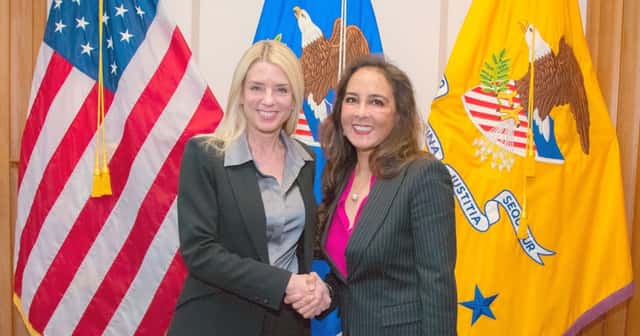
Harmeet Dhillon resigned as head of the Justice Department’s Civil Rights Division on Thursday, November 5, ending a tenure defined by a sharp change in federal enforcement priorities. Attorney General Todd Blanche said he had accepted her resignation and praised her service. Dhillon thanked President Donald Trump and defended her record in a separate public statement. Blanche’s announcement, Dhillon’s statement.
The departure puts new attention on a division that has pulled back from police oversight while pursuing the administration’s agenda on race, education and elections. It also creates a leadership opening just after the midterms. That timing has produced competing accounts of its political meaning, though the fact of her resignation is no longer in dispute.
Dhillon’s account is that the decision preceded Election Day. Democrats are framing it as fallout from the Republican defeat. Those are different claims: an election result can change the context of an announcement without establishing why an official decided to leave. The public statements confirming her departure do not resolve that question. Associated Press, DNC response.
What Dhillon and Blanche said#
Dhillon, whose formal title was assistant attorney general for civil rights, called the job an honor. She highlighted action against diversity, equity and inclusion programs, known as DEI, and her work on women’s and girls’ sports. Her statement presented those priorities as achievements and expressed gratitude to Trump. It did not announce a break with him or a rejection of his policies. Dhillon’s statement.
Blanche’s announcement was equally supportive. He praised Dhillon’s conviction during roughly 18 months leading the division and described her work as a defense of Americans’ civil liberties. That is the attorney general’s assessment of her tenure; critics have reached a very different judgment about the same changes. His announcement confirmed acceptance of the resignation rather than describing a dismissal. Blanche’s announcement.
These are the two officials’ own public accounts, selected because they directly confirm the personnel change. They are evidence of what Dhillon and Blanche said, rather than an independent audit of the division’s results. Readers can assess the claims against the department’s actions, court records and the responses of those who opposed her approach.
The division’s responsibilities extend well beyond the priorities named in a departure statement. Its work covers voting, housing, employment, education, disability rights and criminal civil rights enforcement. A change at the top therefore matters to people seeking federal protection in several areas, as well as to institutions facing investigations. The next leader will inherit those duties alongside the administration’s stated goals. DOJ description of the division.
Why the timing is contested#
The Associated Press reported that Dhillon told Fox News she had decided to leave about three weeks before Election Day. She said White House chief of staff Susie Wiles asked her to wait until after the vote. Dhillon said she wanted to return to private practice and had not been asked to resign. That account is attributed to Dhillon; it is not an independently established explanation of White House deliberations. AP reporting.
DNC Chair Ken Martin offered an opposing political interpretation. In a party statement, he cast her departure as a consequence of the Republican midterm defeat and accused her of using civil rights enforcement for partisan ends. His response shows how Democratic leaders are presenting the exit. It does not establish what instructions Dhillon received or when she first made her decision. Martin’s statement.
ABC News separately reported, citing unnamed sources, that Trump had been frustrated by court losses involving the division. That reporting supplies a possible source of pressure within the administration. It should not be turned into a confirmed claim that he ordered her removal, particularly when Dhillon disputes being asked to leave and Blanche’s announcement offers praise. ABC News.
The careful conclusion is narrower than either a victory speech or a political obituary. Dhillon is leaving after defending her work, and opponents see an opening to challenge that work. Whether internal disagreements contributed to her departure remains a separate question from the confirmed personnel announcement.
Police oversight was an early dividing line#
One of the clearest changes came on May 21, 2025. DOJ announced that it was beginning the process of dismissing lawsuits involving the Louisville and Minneapolis police departments. It also said it was closing several other police investigations and withdrawing findings issued under the Biden administration. These were concrete reversals of the previous department’s approach to local law enforcement. DOJ announcement.
The department defended the shift by arguing that consent decrees imposed heavy costs and federal control on local police. It challenged the prior investigations’ methods and conclusions. Those assertions explain DOJ’s rationale; closing an investigation is not a court finding that every allegation against a department was false. DOJ’s explanation.
A consent decree is a court-enforced agreement used to require changes in conduct. The policy disagreement concerns both the need for that outside supervision and its costs. Supporters of a federal role see a means to secure enforceable changes when local systems fail. Opponents question whether extended court supervision is an effective or proportionate response. DOJ’s announcement made clear which approach the new leadership preferred.
That dispute also places Dhillon’s departure within a broader fight over federal power and police policy. Separate litigation has tested the conditions the administration can attach to police funding. Our coverage of Chicago, Saint Paul and Santa Monica’s police grant case examines that related conflict. A funding condition and a civil rights investigation use different tools, even when both affect local departments.
University enforcement brought another test#
Dhillon’s agenda also placed university admissions under scrutiny. In February 2026, DOJ sued Harvard for admissions records that it said were needed to review compliance with federal civil rights law. The department explicitly described that case as an effort to obtain documents, rather than an allegation that Harvard was then engaging in racial discrimination. That distinction matters when judging both the case and its outcome. DOJ’s lawsuit announcement.
On November 2, Judge Myong Joun dismissed the admissions-data case without prejudice. His decision concerned the government’s failure to adequately establish the procedural steps required before seeking judicial enforcement. It did not decide that Harvard had discriminated, that the government could never seek applicant-level records, or that Harvard could never be required to provide them. Joun’s decision.
Dismissal without prejudice leaves room for a renewed case if the government can address the deficiencies. The ruling was a setback for the action as filed, but its scope was limited. Treating it as a complete rejection of all admissions enforcement would overstate what the judge decided. Our report on the Harvard dismissal explains the procedural dispute and the questions left open.
The episode illustrates a practical limit on political mandates. An administration can choose enforcement priorities, but it still must follow the rules that govern how it pursues them. Separate litigation over the contractor DEI order raises related questions about how broad policy language translates into specific legal obligations. The cases should be evaluated on their own records, rather than combined into one sweeping verdict on every DEI policy.
Election monitors and the limits of a court order#
The division was also central to DOJ’s Election Day monitoring effort. In a November 3 announcement, the department said it was sending about 1,000 monitors and observers across all 50 states. DOJ presented the operation as an effort to protect voting rights and enforce federal election law. The announcement described the scale of the deployment, rather than findings that violations had occurred at every monitored location. DOJ election announcement.
The monitoring dispute produced a court order with a more limited result than a simple claim that DOJ was either barred or given unrestricted access. On November 2, Judge Reggie Walton denied the NAACP’s request for a temporary restraining order without prejudice. He also ordered compliance with restrictions on the monitors’ conduct. Walton’s order.
Those restrictions included no firearms, no sworn law enforcement officers or personnel with arrest powers, no law enforcement insignia, and no interference with voters. Local rules also remained relevant. The decision permitted monitoring subject to limits; it did not establish that every planned deployment would intimidate voters or that federal personnel could disregard state procedures. Our guide to the monitor rules and state limits sets out the distinction.
Staffing and the record a successor inherits#
Leadership choices also affected the division’s workforce. ABC News reported that roughly three-quarters of the staff present at the start of Trump’s second term had departed, citing staffing information provided to Congress. That describes turnover among the original workforce. It is not a measure of the current net head count after any hiring, and it does not mean all those employees were fired. ABC News staffing reporting.
Former division attorney Stacey Young, who leads Justice Connection, criticized Dhillon’s treatment of the institution and its mission in a statement reported by UPI. Her response reflects the concerns of former department personnel who see the policy and staffing changes as a loss of civil rights protections. Blanche’s praise reflects the administration’s opposing view that the division was enforcing rights more faithfully. UPI reporting, Blanche’s statement.
Neither a supportive farewell nor an angry response measures the full effect of an enforcement program. That requires attention to cases brought, cases dropped, court outcomes, remedies and the people affected. The police, university and election records show why the debate will outlast this resignation: they involve decisions with consequences beyond the identity of the official who announced them.
The departure announcements reviewed for this article did not name a successor. The next substantive questions are who takes charge, which investigations continue, and how the department responds to procedural setbacks. A new leader’s statements will matter, but filings, staffing decisions and enforcement actions will provide firmer evidence of whether DOJ’s direction has changed.
Differing perspectives
How should Harmeet Dhillon’s leadership of the Civil Rights Division be assessed?
Each position is summarized as its supporters make it, with equal weight and in alphabetical order. A summary is not an endorsement; the evidence for each is weighed in the story above.
A departure from the division’s protective mission
Who holds it: DNC Chair Ken Martin and Democratic critics
Martin argues that Dhillon used the division to advance Trump’s partisan priorities at the expense of its civil rights mission. From this view, federal enforcement should protect people from discrimination and abuse rather than serve political interests. He presents her exit after the Republican defeat as a moment of accountability and calls for scrutiny of her record.
In their words: DNC Chair Ken Martin’s response ↗
A necessary change in civil rights enforcement
Who holds it: Harmeet Dhillon and administration supporters
Dhillon presents her tenure as a defense of civil rights through action against illegal DEI policies and protection of women’s and girls’ sports. From this view, enforcing equal treatment requires challenging policies that use race or sex in ways the administration regards as unlawful. Her departure statement defends those priorities and thanks Trump for the opportunity to pursue them.
In their words: Harmeet Dhillon’s public departure statement ↗
Cite this article
567 Politics staff. “Harmeet Dhillon resigns from DOJ, leaving a disputed civil rights record.” 567politics. Published 2026-11-05. https://567politics.com/news/harmeet-dhillon-resigns-doj-civil-rights-division-november-2026
Wikipedia citation
{{cite news |title=Harmeet Dhillon resigns from DOJ, leaving a disputed civil rights record |url=https://567politics.com/news/harmeet-dhillon-resigns-doj-civil-rights-division-november-2026 |work=567politics |author=567 Politics staff |date=2026-11-05 |language=en}}CSL-JSON for reference managers
{
  "id": "https://567politics.com/news/harmeet-dhillon-resigns-doj-civil-rights-division-november-2026",
  "type": "article-newspaper",
  "title": "Harmeet Dhillon resigns from DOJ, leaving a disputed civil rights record",
  "URL": "https://567politics.com/news/harmeet-dhillon-resigns-doj-civil-rights-division-november-2026",
  "container-title": "567politics",
  "language": "en",
  "author": [
    {
      "literal": "567 Politics staff"
    }
  ],
  "issued": {
    "date-parts": [
      [
        2026,
        11,
        5
      ]
    ]
  }
}Citations identify this article and its publication date. Assess the reporting and its linked sources before using it as evidence.
READ BEYOND 567POLITICS
Alternate sources & perspectives
Independent coverage and primary evidence to help you compare arguments. A link is not an endorsement; perspective labels describe the linked material.
- primary evidence
Dhillon’s public resignation statement ↗
Harmeet Dhillon / X
Verified original post confirms departure and defends her priorities.
- primary evidence
Blanche accepts Dhillon’s resignation ↗
Attorney General Todd Blanche / X
Verified original announcement confirms acceptance and offers the administration’s assessment.
- independent analysis
Dhillon leaves DOJ’s Civil Rights Division ↗
Associated Press
Reports Dhillon’s account of deciding before Election Day.
- independent analysis
Longtime Trump ally Harmeet Dhillon departing DOJ ↗
ABC News
Staff turnover reporting and unnamed-source account of Trump’s frustrations are attributed, not treated as proof of dismissal.
- independent analysis
Harmeet Dhillon resigns from Justice Department Civil Rights Division ↗
United Press International
Includes former division attorney Stacey Young’s critical response.
- left argument
DNC Chair Ken Martin responds to Dhillon’s resignation ↗
Democratic National Committee
Primary partisan criticism; its explanation of motives is attributed.
- primary evidence
DOJ reverses Biden-era police investigations and proposed decrees ↗
U.S. Department of Justice
May 21, 2025 announcement and rationale for police oversight changes.
- primary evidence
DOJ sues Harvard for admissions records ↗
U.S. Department of Justice
February 13, 2026 release distinguishes records enforcement from a discrimination allegation.
- primary evidence
Judge Joun’s November 2 Harvard admissions-data decision ↗
U.S. District Court, District of Massachusetts / CourtListener
Dismissal without prejudice rests on procedural requirements; merits remain unresolved.
- primary evidence
DOJ announces election monitoring in all 50 states ↗
U.S. Department of Justice
November 3, 2026 deployment announcement, not findings of election violations.
- primary evidence
Judge Walton’s order on DOJ election monitors ↗
U.S. District Court, District of Columbia / Justia
TRO denied without prejudice with restrictions on monitoring conduct.
- primary evidence
Civil Rights Division responsibilities ↗
U.S. Department of Justice
Institutional remit across voting, housing, employment, education, disability and criminal enforcement.
Reviewed 2026-11-05. The resignation is confirmed by the two officials’ original public posts. The reason and timing of the decision remain attributed accounts, rather than independently verified White House deliberations. Court records and DOJ releases distinguish the administration’s policy claims from judicial findings. AP, ABC News and UPI are separate reporting sources; syndicated copies are not counted as additional corroboration. The embedded posts are official statements, not a representative sample of public opinion. No direct outreach was conducted. A successor was not named in the departure announcements reviewed.