Most voters want Congress barred from stock trading. The fight is over how a ban would work
A likely-voter survey found 65% support across party lines. Current law bars insider trading, while proposed bans differ on ownership, families and exceptions.
Most voters want members of Congress barred from buying and trading stocks, according to a national survey of likely voters. A separate poll of adult citizens found an even larger majority against individual-stock trading by elected officials. The results point to broad support for restrictions, while leaving important questions about the rules people would choose.
In an August 1–3, 2026 survey, Data for Progress found 65% support for preventing members of Congress from purchasing and trading stocks. Support reached 68% among Democrats, 67% among Republicans and 60% among independents and third-party voters. Those are survey estimates, not a referendum result. Original polling tables
The question for Congress is how to turn that preference into a law. A ban on new purchases, a ban on trading and a ban on owning individual stocks would produce different rules. The legislative fight in 2026 illustrates those differences.
What the polls found#
Data for Progress, a progressive polling organization, surveyed 1,187 U.S. likely voters through an English-language web panel. It weighted results for demographic factors, geography and recalled presidential vote. The pollster reported uncertainty of about three percentage points for the full sample, with greater uncertainty for subgroups. Its question asked about preventing congressional purchases and trading, without presenting a full bill.
The Economist/YouGov poll used a different population and a wording experiment. Among adult citizens asked whether members of Congress and other elected officials should be allowed to buy and sell individual stocks while in office, 76% said no. In a separate randomly assigned group asked whether such trading should be banned, 71% said yes. YouGov’s report
| Survey and dates. | Population. | Restriction tested. | Support. |
|---|---|---|---|
| Data for Progress, August 1–3, 2026. | Likely voters. | Prevent congressional stock purchases and trading. | 65%. |
| Economist/YouGov, May 22–26, 2026. | Adult citizens, split sample. | Officials should not be allowed individual-stock trades. | 76%. |
| Economist/YouGov, same survey. | Other half of adult-citizen sample. | Officials should be banned from such trades. | 71%. |
The YouGov report lists 1,520 adult citizens overall. The first stock question had 762 respondents; the other half received the alternate wording. Interviews took place online using its opt-in panel, with weighting to represent adult citizens. Its stated overall margin was 3.6 percentage points. That full-sample figure should not be treated as the uncertainty for either smaller split sample.
There is a documentation inconsistency: the PDF’s sample-composition paragraph mentions 1,579 respondents, while its headline and respondent-count line list 1,520. This article uses the reported question tables and discloses that discrepancy. Full YouGov tables and method appendix
Source: Data for Progress, Economist/YouGov
Show the numbers
| Question | Favor restriction |
|---|---|
| DFP: prevent purchases and trading | 65% |
| YouGov: should not be allowed | 76% |
| YouGov: should be banned | 71% |
The defensible conclusion is that majorities favored restrictions in these surveys. The numbers do not establish growing support between May and August. Different samples, dates and wording prevent that comparison.
Support crosses party lines, but is not unanimous#
The cross-party result makes this more than a dispute about one well-known trader or one party’s leadership. The Data for Progress findings show a majority within each of its three partisan groups. They also show that some voters oppose restrictions or remain unsure.
Polls about general rules cannot establish whether voters support each exception, deadline or penalty in a bill. A respondent might favor a ban on active trading while allowing existing holdings. Another might want all individual-company investments sold. Both could endorse the same broad survey item.
These findings fit a wider debate about public office and personal gain, discussed in our coverage of voter concern about corruption. Concern is a public-opinion finding. It is not proof that a particular lawmaker committed a crime.
Data for Progress’s published analysis also found voters divided over whether stock-market investing itself counted as corruption. That distinction prevents a misleading reading of its ban result: support for stricter rules does not mean most respondents consider every investment inherently corrupt. Pollster’s analysis
Current law already prohibits insider trading#
The STOCK Act became law in 2012. It made clear that members of Congress and congressional employees are subject to insider-trading prohibitions. It addressed the use of nonpublic information obtained through official duties for personal benefit. It did not impose a general ban on holding or trading individual stocks. Public Law 112-105
That difference is central to the debate. Insider-trading enforcement concerns unlawful use of information. A broader stock ban would restrict covered transactions even when prosecutors could not show such misuse.
House guidance requires covered securities transactions above $1,000 to be reported by the earlier of two deadlines: 30 days after the filer becomes aware of the transaction, or 45 days after it occurs. House Ethics Committee guidance
| Existing rule. | What it does. | What it does not establish. |
|---|---|---|
| Insider-trading prohibition. | Bars unlawful use of material nonpublic information. | Every profitable trade is illegal. |
| Transaction reporting. | Requires disclosure of covered transactions over $1,000. | The transaction was approved as ethical. |
| Reporting deadlines. | Generally 30 days after awareness, capped at 45 days after trading. | Immediate public notice. |
| General stock ownership. | Remains possible under the existing framework. | Immunity from other laws. |
A disclosed trade can still raise a conflict question. A late report can raise a disclosure question without proving insider trading. These are different standards, with different evidence requirements.
Why reformers want a broader rule#
The case for a ban starts with Congress’s role. Lawmakers make decisions that affect industries and companies. They also receive information through hearings, briefings and oversight. A rule that depends entirely on proving misuse after a trade may leave a substantial trust problem.
A clear transaction or ownership rule would change the enforcement question. Instead of reconstructing what a member knew and used, an ethics office could examine whether a prohibited investment was bought, sold or held. The rule would prevent a category of conflicts rather than relying only on punishment after proven abuse.
That approach has costs to consider. A spouse may work in finance or receive employer stock. A member may enter office with illiquid assets. A forced sale can have tax consequences. The policy question is how to address those situations without creating exceptions broad enough to defeat the rule.
None of those design questions requires assuming that every lawmaker with a portfolio is dishonest. A preventive rule can be justified by institutional trust even where no individual crime has been proved.
Two proposals show what a ban can mean#
Senators Ashley Moody$, a Republican, and Kirsten Gillibrand$, a Democrat, introduced the Restore Trust in Congress Act in January. Their joint statement argued that members should focus on public results rather than financial gain. The proposal covers ownership and trading by members, spouses and dependent children. Sponsors’ statement
Its introduced text provides divestment periods and exceptions, including qualifying diversified funds and government bonds. Existing covered individuals would generally have 180 days to divest; those becoming covered later would generally have 90 days. This is proposed legislation, not an enacted requirement. S.3649 text
The House-passed Stop Insider Trading Act takes a narrower approach. It generally prohibits new covered purchases while permitting existing holdings and sales with advance public notice. Covered people include members, spouses and dependent children. Exceptions apply. H.R.7008, House-passed text
| Approach. | Existing individual stocks. | New purchases. | Main policy tradeoff. |
|---|---|---|---|
| Existing framework. | Generally permitted. | Generally permitted under applicable law. | Enforcement relies on disclosure and misconduct rules. |
| H.R.7008. | Can be retained; sales require notice. | Generally prohibited for covered investments. | Restricts activity while leaving ownership interests. |
| S.3649 as introduced. | Generally must be divested. | Generally prohibited for covered investments. | Removes more interests but requires asset transitions. |
Neither proposal should be described simply as prohibiting all investment. The definitions and exceptions determine what remains available.
What happened to the House-passed bill#
The House passed H.R.7008 on July 22, 2026. On September 30, the Senate voted 53–47 on whether to end debate on the motion to begin considering it. That fell short of the required three-fifths threshold. The official result was rejection of cloture on the motion to proceed. Senate roll call 253
This was a procedural vote, not final enactment. No enacted general congressional stock-trading ban was identified in the materials reviewed for this November 6 report. The cited proposal text should not be read as current law.
The package also contained photo-identification requirements for federal voting. Roll Call reported that Democrats objected to those provisions and to the stock provisions’ limited reach. Republican leaders argued that Democrats were refusing an opportunity to advance reform. Roll Call’s account
That combination matters when judging the vote. A senator could oppose this package while favoring a stricter stock ban. Another could favor it as an achievable first step. The tally alone does not tell readers which policy each senator would accept in a separate bill.
The strongest competing cases#
Pete Ricketts$ defended the narrower proposal after the Senate vote. He argued that public service should not be a profit-making business and faulted Democrats for blocking the bill. The incremental case is that purchase limits and advance sale notice would create enforceable restrictions even without mandatory divestment. Ricketts’s statement
The stronger-ban case asks why members should retain company-specific financial interests while helping shape public policy. Moody and Gillibrand’s proposal addresses that concern through ownership limits. Its cross-party sponsorship shows that the divide over scope does not fall neatly along party lines.
The objection to compulsory divestment deserves scrutiny too. Selling assets can create practical burdens for households and spouses. Exemptions can address genuine occupational constraints, but their scope affects whether a prohibition works. A broad exception for employer compensation, for example, must be evaluated alongside the rule’s purpose.
This report does not treat the minority opposing a ban as a single organized bloc. The surveys reviewed do not establish a shared reason for that opposition. Assigning all dissenters a defense of congressional profiteering would invent a motive the polling did not measure.
How to judge the next proposal#
A useful evaluation starts with the conduct the text covers. Does it restrict buying, selling, ownership or all three? Does it apply to spouses and dependents? Does it cover derivatives that reproduce a stock’s financial exposure? Who interprets exceptions and enforces penalties?
Readers should also distinguish diversified funds from investments tied to a single company or industry. An exception that preserves broad retirement investing serves a different purpose from one that preserves a concentrated financial stake.
The polls provide a clear public preference for stronger limits. They leave the detailed policy unsettled. Congress’s next test is whether it can agree on an enforceable rule whose coverage matches its public description.
This article reports polling, law and legislative choices, not an allegation that a named member committed insider trading. It uses original survey documents, official legislative records and source-linked competing arguments. Our editorial standards explain how we distinguish opinion surveys from evidence of wrongdoing.
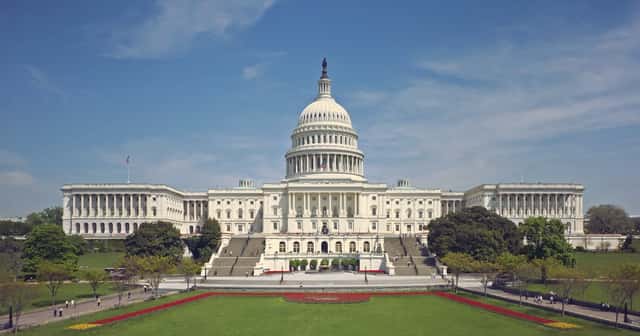
Photo: U.S. Capitol west front, 1997, Architect of the Capitol; derivative image by O.J., public domain. Original file and provenance. Archival image, cropped for publication.

Differing perspectives
What restrictions should Congress adopt on members’ individual-stock investments?
Each position is summarized as its supporters make it, with equal weight and in alphabetical order. A summary is not an endorsement; the evidence for each is weighed in the story above.
Advance purchase limits and sale notice
Who holds it: Senator Pete Ricketts
Ricketts argues that public service should not become a profit-making business and that Congress should advance the House-passed measure. He supports restrictions on covered purchases and advance public disclosure of sales by members and their families. He argues that blocking this legislation misses an opportunity to strengthen public trust in government.
In their words: Office of Senator Pete Ricketts, September 30, 2026 ↗
Ban ownership as well as trading
Who holds it: Senators Ashley Moody and Kirsten Gillibrand
The senators argue that lawmakers should focus on the nation’s needs rather than financial gains from office. Their proposal would restrict covered ownership and trading by members, spouses and dependent children. It would require divestment while preserving specified investment exceptions, seeking to remove company-specific interests rather than regulate transactions alone.
In their words: Office of Senator Ashley Moody, joint statement, January 15, 2026 ↗
Cite this article
567 Politics staff. “Most voters want Congress barred from stock trading. The fight is over how a ban would work.” 567politics. Published 2026-11-06. https://567politics.com/news/most-voters-support-congress-stock-trading-ban-polls-november-2026
Wikipedia citation
{{cite news |title=Most voters want Congress barred from stock trading. The fight is over how a ban would work |url=https://567politics.com/news/most-voters-support-congress-stock-trading-ban-polls-november-2026 |work=567politics |author=567 Politics staff |date=2026-11-06 |language=en}}CSL-JSON for reference managers
{
  "id": "https://567politics.com/news/most-voters-support-congress-stock-trading-ban-polls-november-2026",
  "type": "article-newspaper",
  "title": "Most voters want Congress barred from stock trading. The fight is over how a ban would work",
  "URL": "https://567politics.com/news/most-voters-support-congress-stock-trading-ban-polls-november-2026",
  "container-title": "567politics",
  "language": "en",
  "author": [
    {
      "literal": "567 Politics staff"
    }
  ],
  "issued": {
    "date-parts": [
      [
        2026,
        11,
        6
      ]
    ]
  }
}Citations identify this article and its publication date. Assess the reporting and its linked sources before using it as evidence.
Read this article as Markdown or JSON. Cite the original page and retain its sources, dates and qualifications.
Embed this article summary
Paste this HTML into your page. The summary stays linked to the full story and updates with it. No account required.
<iframe src="https://567politics.com/embed/news/most-voters-support-congress-stock-trading-ban-polls-november-2026?theme=auto" title="Most voters want Congress barred from stock trading. The fight is over how a ban would work by 567politics" width="100%" height="440" style="border:0;max-width:100%" loading="lazy"></iframe>
<p style="font-size:14px">Most voters want Congress barred from stock trading. The fight is over how a ban would work by <a href="https://567politics.com/news/most-voters-support-congress-stock-trading-ban-polls-november-2026" rel="nofollow">567politics</a></p>
<script async src="https://567politics.com/embed.js"></script>
READ BEYOND 567POLITICS
Alternate sources & perspectives
Independent coverage and primary evidence to help you compare arguments. A link is not an endorsement; perspective labels describe the linked material.
- primary evidence
Likely-voter survey on political profiteering ↗
Data for Progress
August 1–3 poll of 1,187 likely voters; exact questions, party breakdowns and methodology.
- primary evidence
Congressional stock-trading wording experiment ↗
The Economist/YouGov
May 22–26 adult-citizen survey; split-sample wording and disclosed method discrepancy.
- primary evidence
House-passed Stop Insider Trading Act ↗
U.S. Government Publishing Office
Purchase restrictions, sale notice, exceptions and voter-ID text; proposed rather than enacted law.
- primary evidence
Restore Trust in Congress Act introduced text ↗
U.S. Government Publishing Office
Broader ownership and trading limits, divestment and exceptions.
- primary evidence
Senate procedural vote on H.R.7008 ↗
U.S. Senate
53–47 cloture vote failed on September 30; was not final passage.
- independent analysis
Senate fight over scope and voter-ID provisions ↗
CQ Roll Call
Explains competing objections and defenses of the package.
- independent analysis
Cross-party senators launch broader ban ↗
Associated Press
January reporting on Moody and Gillibrand, divestment and presidential exemption.
Reviewed 2026-11-06. Reviewed original Data for Progress and Economist/YouGov questions and methods, official bill texts and Senate roll call, sponsors’ own statements, and Roll Call and AP reporting. The YouGov PDF has inconsistent total-sample descriptions, disclosed in the article. Congress.gov access failed; GovInfo supplied official texts. The Senate vote concerned a package including voter-ID provisions. No named lawmaker is accused of insider trading.