Roy Cooper flips North Carolina's Senate seat as AP, NBC and DDHQ call the race minutes after polls close
The former governor beat ex-RNC chair Michael Whatley for Thom Tillis's open seat, the first Democratic Senate win in the state since 2008. Gov. Josh Stein said voters chose "competence over chaos." The final margin, turnout and exit-poll data are still pending.
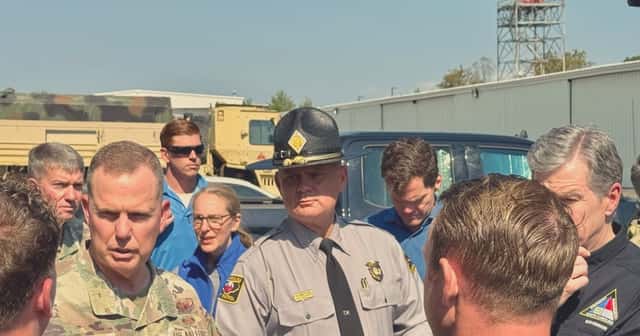
Democrat Roy Cooper, the former two-term governor who has never lost an election in North Carolina, is projected to win the state's open U.S. Senate seat. The Associated Press called the race at 8:23 p.m. ET on Tuesday, within minutes of the last extended polling site closing, according to WBTV's report of the AP call. NBC News and Decision Desk HQ made the same projection at about the same time, per The Assembly and the Decision Desk HQ post on X cited below. Cooper defeats Republican Michael Whatley, the former Republican National Committee chairman whom President Donald Trump recruited for the race. The seat is being vacated by Republican Thom Tillis$, who chose not to run again.
The result is the first Democratic flip of the night and the first Democratic Senate win in North Carolina since Kay Hagan in 2008, as WUNC's Colin Campbell reported. Our tracker for the North Carolina Senate race and our Senate control page have the running count.
What was known at 9:25 p.m. ET
Vote counting was far from finished when the networks called the race. At the moment of the AP call, with about 56% of the expected vote counted, Cooper had 66.8% to Whatley's 31.6%, the Washington Examiner reported. Those early returns were dominated by early and mail ballots, which in North Carolina are tallied first. By about 9:15 p.m., with more Election Day precincts reporting, Cooper's share had fallen to roughly 60%, per WUNC. The final margin will be narrower than the early numbers suggest. Final certified figures are weeks away.
The state board approved time extensions at five polling sites after technical problems on Election Day, so statewide reporting did not begin until the last site closed at 8:15 p.m. ET, according to the PBS NewsHour live blog. The longest extension was 45 minutes in Columbus County, where workers switched to paper poll books. Two Hertford County precincts and one each in Lenoir and Wilson counties stayed open 15 to 30 extra minutes. We covered those extensions earlier in the evening in our polling-hours story.
What the candidates and officials said
Cooper spoke to supporters at a hotel ballroom in Raleigh after the call. "Tonight, I am deeply grateful for and humbled by the confidence and trust you have once again placed in me," he said, as quoted by WUNC. He pledged to be "an independent voice ready to work with anyone to do what's right for this amazing state," and closed with: "Tonight we let everyone know that we are just getting started."
Whatley conceded from Gastonia shortly after the AP call. "I just placed a phone call into Gov. Cooper and congratulated him on his big win tonight," he said, according to WUNC. He said his commitment to the state "remains as strong as ever."
Gov. Josh Stein, Cooper's successor, told the Raleigh crowd that by electing Cooper, North Carolina voters chose "competence over chaos," PBS NewsHour reported at 8:47 p.m.. The same entry quoted state Democratic Party chair Anderson Clayton: "He's woven into the fabric of North Carolina."
Senate Majority PAC spokesperson Lauren French said: "Tonight, North Carolina voters rejected another Trump loyalist and elected a proven leader who knows how to get things done," per the Carolina Journal. The same outlet quoted Donald Bryson, CEO of the conservative John Locke Foundation: "Campaigns tell voters who candidates say they are; governing records tell us who they actually are." Bryson said voters would judge Cooper's Senate votes on tariffs, taxes and spending against his moderate campaign message.
We found no election-night statement from President Trump, the National Republican Senatorial Committee, or Senate leaders John Thune$ and Chuck Schumer$ specific to North Carolina by 9:25 p.m.
How the race got here
- Sen. Thom Tillis says he will not seek a third term, a day after voting against advancing Trump's tax and spending bill
- Roy Cooper enters the race; Trump recruits RNC chair Michael Whatley the same month
- Cooper and Whatley win their primaries
- Senate Leadership Fund pauses North Carolina ads after spending more than $30 million
- Trump posts that Cooper "has DISGRACED North Carolina"
- Early voting closes with 2.82 million accepted ballots
- AP calls the race for Cooper at 8:23 p.m. ET
Source: Fox News, Carolina Journal, NCSBE, WBTV
Tillis announced on June 29, 2025, that he would not run again, a day after he voted against advancing the Republican tax and spending package. In a floor speech he warned the bill "will hurt people who are eligible and qualified for Medicaid," Fox News reported. Trump welcomed the exit, writing: "For all cost-cutting Republicans, of which I am one, REMEMBER, you still have to get reelected. Don't go too crazy!"
Cooper, 69, announced his bid on July 28, 2025, per Wikipedia. He had served in the state House from 1987, the state Senate from 1991, as attorney general from 2001 and as governor from 2017 to the start of 2025, according to WBTV's profile. This is his seventh statewide win, the AP noted. He won the governorship in 2016 and 2020 while Trump carried the state on the same ballots. Our Roy Cooper profile has his full record.
Whatley, a former oil and gas lobbyist, chaired the North Carolina Republican Party and then the Republican National Committee. He had never run for office. Trump tapped him for the Senate race in July 2025, and he campaigned as "Trump's guy," The Assembly wrote. At his launch he cited "the complete and total endorsement of President Trump," and NRSC chair Tim Scott urged Senate Republicans to give maximum donations, The Assembly reported. Tillis was blunt about the matchup. "I think Michael's problem is he's got a patently partisan resume, right?" he told Politico, as quoted by the Washington Examiner.$
The arguments each side made
Cooper ran a message he branded the "Make Stuff Cost Less tour," focused on grocery, gas and housing costs, health care and Medicaid expansion, WUNC reported. After the March primary, he said: "I'll be a strong, independent senator who will work with this president when I can," per WRAL. His campaign labeled Whatley a "D.C. insider and big oil lobbyist" and a potential Trump "rubber stamp."
Whatley and his allies centered on crime and immigration. They criticized a COVID-era legal settlement that led to the early release of about 3,000 state prisoners, and they tied Cooper's record to the killing of Iryna Zarutska on Charlotte's light rail, The Assembly reported. Republicans also blamed Cooper for higher housing and energy costs. Trump posted on Truth Social on Oct. 11 that "Roy Cooper, likewise, has DISGRACED North Carolina, and disqualified himself from Public Office!" A Cooper spokesperson replied: "It's shameful they're using heinous crimes to try to deceive North Carolinians," per The National News Desk. For context, the AP noted that North Carolina's violent crime rate sits in the middle third of states in FBI data.
Whatley also defended the 2025 tax law's breaks on overtime, tips and Social Security benefits, per the AP. Cooper countered that the same law put school meals for 850,000 children at risk. Our final-weekend report covered the closing arguments.
The polls were right about the direction
Cooper never trailed in a public poll. The late surveys clustered around a nine- to 14-point Cooper lead. The table compares them with the partial count available at this writing; the count will change.
| Source | Dates / status | Cooper | Whatley |
|---|---|---|---|
| AtlasIntel, 1,459 LV | Nov. 2 release | 56% | 42% |
| East Carolina Univ., 1,041 LV | Oct. 26-29 | 54% | 45% |
| YouGov, 2,130 LV | Nov. 1 release | 55% | 44% |
| High Point Univ., 620 LV | Oct. 28 release | 54% | 40% |
| Partial count (AP call, ~56% in) | 8:23 p.m. ET Nov. 3 | 66.8% | 31.6% |
Poll figures are from 270toWin's North Carolina Senate page, which computed a Cooper 54.2% to Whatley 42.8% average from the five most recent polls. The count figures are from WBTV and the Washington Examiner.
The ECU poll used a mixed-mode design: 508 text-to-web interviews, 236 landline IVR calls and 297 online panel responses, with a credibility interval of plus or minus 3.5 points among registered voters who had voted or were likely to vote, per the ECU Center for Survey Research. Its director, Peter Francia, said: "Roy Cooper's lead over Michael Whatley has grown over the past several weeks."
Source: 270toWin, ECU Center for Survey Research
Show the numbers
| Poll | Cooper | Whatley |
|---|---|---|
| AtlasIntel (Nov. 2) | 56% | 42% |
| YouGov (Nov. 1) | 55% | 44% |
| East Carolina (Oct. 26-29) | 54% | 45% |
| High Point (Oct. 28) | 54% | 40% |
| Quantus Insights (Oct. 26) | 52% | 43% |
Whatley disputed the polling throughout. In September he called a Carolina Journal survey showing a 15-point gap a "trash poll" and said he would win "because I've been to all 100 counties," WUNC reported.
Early voting set a midterm record
The State Board of Elections' final pre-election absentee report shows 2,819,921 accepted ballots through Nov. 1: 2,726,324 in person and 93,597 by mail. That is 664,462 more than the 2,155,459 accepted at the same stage in 2022, a 30.8% increase, according to the NCSBE daily report published Nov. 2. By registration, 1,081,910 ballots came from Democrats, 991,939 from unaffiliated voters and 737,349 from Republicans. By our arithmetic that is about 38% Democratic, 35% unaffiliated and 26% Republican. Party registration does not reveal how anyone voted. We reported on the early-vote surge in this October story and in our Election Day guide.
The money
Cooper outraised Whatley by more than three to one, and outside groups on both sides pulled back in October. The candidate figures below are from the FEC's candidate pages, retrieved Nov. 3, 2026, and cover the 2026 cycle through the pre-general report (Oct. 14, 2026). Newly filed data can take up to 48 hours to appear.
| Candidate | Receipts | Disbursements | Cash on hand (Oct. 14) |
|---|---|---|---|
| Roy Cooper (D), Cooper for North Carolina | $49,585,341 | $40,496,482 | $9,088,860 |
| Michael Whatley (R), Whatley for Senate | $13,668,468 | $12,766,229 | $902,238 |
Sources: FEC, Cooper, S6NC00407 (coverage 7/25/2025 to 10/14/2026) and FEC, Whatley, S6NC00415 (coverage 6/30/2025 to 10/14/2026). Of Cooper's receipts, $28.25 million arrived as transfers from joint fundraising committees, and $18.99 million came as direct contributions.
On the outside-money side, the Senate Leadership Fund, aligned with Thune, paused its North Carolina ads on Oct. 2 after spending more than $30 million, and shifted money to Kansas, the Carolina Journal reported. NRSC spokesman Nick Puglia said at the time: "Michael Whatley will put North Carolina families first by cutting taxes and keeping criminals locked up." Senate Majority PAC, aligned with Schumer, and Americans for Prosperity Action also stopped advertising, per the Washington Examiner. Whatley's own campaign went off television nearly a month before the election, WRAL reported. Total ad spending ended near $90 million, per AdImpact figures cited by WUNC, far below the $500 million to $1 billion some forecasters expected. We could not find a complete outside-spending total on the FEC site tonight.
What it means for the Senate
Republicans entered the night with a 53-47 majority, so Democrats need a net gain of four seats, as the Carolina Journal noted. Two Democratic holds landed in the same hour: Jon Ossoff$ in Georgia, covered in our Georgia story, and Chris Pappas$ in New Hampshire, per PBS. North Carolina is the first net gain. Control remains undecided.
Exit polls
We found no North Carolina-specific exit poll figures published by 9:25 p.m. The AP Voter Poll's national findings, as summarized by PBS, were that "voters say the economy and the state of democracy are the top issues facing the country." Our national exit-poll analysis is being updated. The closest pre-election measure of independents came from an AARP survey by Fabrizio Ward and Impact Research (Sept. 17-20, 1,115 likely voters, plus or minus 2.9 points), which found Cooper ahead 58% to 33% among independents and Trump's North Carolina approval at 38% approve, 59% disapprove, Newsweek reported.
What people are saying on X
Method: we searched X through a web search index between about 8:30 and 9:25 p.m. ET for public posts about the North Carolina call. Our post-verification tool could not reach X tonight, so the posts below are reproduced as indexed by the search engine and labeled as such. Indexed results skew toward large accounts. Reddit listings could not be reached from our environment.
Decision Desk HQ, an election-results firm, posted: "Decision Desk HQ projects Roy Cooper wins the NC US Senate General Election #DecisionMade: 8:23 PM EST."
The Associated Press posted: "Democrat Roy Cooper defeats Michael Whatley in North Carolina, flipping a Republican-held Senate seat." (permalink)
NBC News posted: "BREAKING: Democrat Roy Cooper wins U.S. Senate race in North Carolina, NBC News projects." (permalink)
Patrick Ruffini, a Republican pollster at Echelon Insights, wrote on Oct. 31 as early-vote data came in: "NC bad. If a tsunami shows up, I expect to be here. But if Republicans can take any comfort from this it's that there aren't signs of this level of breakdown anywhere across the true Senate battlegrounds." (permalink)
Whatley's last indexed post before the call, from Raleigh on Monday, read: "North Carolina needs a fighter in the Senate who will stand up for our families and fight for our communities. Get out and VOTE!" (permalink)
What is still unknown
- The final margin. The early count overstated Cooper's share because early and mail ballots report first.
- Turnout. Election Day totals and provisional ballots are not yet tallied.
- Whether the Libertarian and Green candidates, Shannon Bray and Michael Dublin, drew enough votes to matter in the margin.
- How independents and 2024 Trump voters split. No North Carolina exit poll was available.
- Trump's and the NRSC's response to the loss.
- Total outside spending, which the FEC will not fully report for weeks.
How we reported this
This story was assembled on election night from the AP call as published by WBTV and Fox Carolina, the WUNC/WFDD results story, PBS NewsHour's live blog, the Carolina Journal, The Assembly, the Washington Examiner, WRAL's preview, FEC candidate pages, the North Carolina State Board of Elections' absentee statistics, the ECU Center for Survey Research release, and 270toWin's poll listing. Quotes are reproduced exactly as published by those outlets; we did not attend the Raleigh or Gastonia events. The NBC News and NC Newsline stories and the Washington Post live page could not be opened from our environment. Our X verification tool failed on every post, so the X section relies on search-engine indexes and is labeled as such. We will update vote counts and add exit-poll data as they are released.
Differing perspectives
What explains Roy Cooper's win in a state Trump carried in 2024?
Each position is summarized as its supporters make it, with equal weight and in alphabetical order. A summary is not an endorsement; the evidence for each is weighed in the story above.
A first-time candidate with a partisan resume could not win swing voters
Who holds it: Sen. Thom Tillis; NC State University political scientist Steven Greene
Some Republicans and independent analysts locate the problem in the nominee. Tillis told Politico, "I think Michael's problem is he's got a patently partisan resume, right?" and said Whatley's background put a steeper hill in front of the party in a cycle with expected headwinds. Greene described Whatley as a newcomer to campaigning and to North Carolina politics. Whatley had never run for office and campaigned closely with Trump, whose approval in the state polled at 38 percent approve, 59 percent disapprove in September. On this reading, the seat was winnable for a different Republican.
In their words: Washington Examiner (Tillis remarks to Politico) ↗
National Republicans pulled out and the race was lost before Election Day
Who holds it: Republican pollster Patrick Ruffini of Echelon Insights; Michael Whatley, who disputed the polls
Some Republican analysts point to the money and the early vote. The Senate Leadership Fund paused North Carolina spending on Oct. 2 after more than $30 million and moved money to Kansas; Whatley's own TV ads stopped weeks before the vote. As early-vote data arrived, Ruffini wrote that North Carolina looked bad for Republicans while arguing other battlegrounds showed no similar breakdown. Whatley rejected that reading in September, calling a 15-point poll a "trash poll" and saying he was "right at margin of error" and would win "because I've been to all 100 counties."
In their words: WUNC (Whatley remarks) ↗
The campaign message won, but Cooper's Senate record will be the real test
Who holds it: Donald Bryson, CEO of the John Locke Foundation; NRSC spokesman Nick Puglia
Conservatives argue Cooper won by making affordability the centerpiece and presenting himself as a moderate, while Republicans' crime and cost-of-living attacks did not stick. Bryson said: "Campaigns tell voters who candidates say they are; governing records tell us who they actually are," and said voters will judge whether Cooper's votes on tariffs, taxes and spending match his campaign. The NRSC's Puglia maintained in October that Whatley "will put North Carolina families first by cutting taxes and keeping criminals locked up." This view treats the result as a messaging outcome rather than a verdict on policy.
In their words: Carolina Journal (Bryson statement) ↗
Voters chose a known, moderate record over a Trump loyalist
Who holds it: Cooper campaign, Gov. Josh Stein, NC Democratic Party chair Anderson Clayton, Senate Majority PAC
Democrats say the result turned on Cooper himself. Stein told the Raleigh crowd that voters chose "competence over chaos," and Clayton said Cooper is "woven into the fabric of North Carolina." Cooper pledged to be "an independent voice ready to work with anyone," and his campaign framed Whatley as a "D.C. insider and big oil lobbyist." Senate Majority PAC's Lauren French said voters "rejected another Trump loyalist and elected a proven leader who knows how to get things done." On this view, Cooper's seven statewide wins, including two governor's races on Trump ballots, made him a candidate the state already trusted.
In their words: PBS NewsHour live blog (Stein and Clayton remarks) ↗
READ BEYOND 567POLITICS
Alternate sources & perspectives
Independent coverage and primary evidence to help you compare arguments. A link is not an endorsement; perspective labels describe the linked material.
- primary evidence
Roy Cooper wins 2026 US Senate race in North Carolina, AP projects ↗
WBTV (Associated Press)
The AP call at 8:23 p.m. ET with the partial count and candidate biographies.
- independent analysis
Democrat Roy Cooper wins U.S. Senate race ↗
WUNC / WFDD
Public-radio report with Cooper's victory remarks, Whatley's concession and AdImpact spending figures.
- primary evidence
FEC candidate page: Roy Cooper (S6NC00407), 2026 cycle ↗
Federal Election Commission
Receipts, disbursements and cash on hand through Oct. 14, 2026, retrieved Nov. 3.
- primary evidence
FEC candidate page: Michael Whatley (S6NC00415) ↗
Federal Election Commission
Whatley campaign finance totals through Oct. 14, 2026, retrieved Nov. 3.
- primary evidence
Daily absentee statistics report, 2026 general election (Nov. 2) ↗
North Carolina State Board of Elections
Final pre-election early and mail ballot counts by party registration.
- right argument
Cooper defeats Whatley, flips NC US Senate seat for Democrats ↗
Carolina Journal (John Locke Foundation)
Conservative outlet's results story with the John Locke Foundation's argument that Cooper's Senate votes, not his campaign message, will be the test.
- right argument
Senate Leadership Fund pauses funding in NC Senate race ↗
Carolina Journal
The Oct. 2 pullback by the main Republican Senate super PAC and the NRSC's statement defending Whatley.
- right argument
North Carolina Senate race 2026 results: Whatley vs. Cooper ↗
Washington Examiner
Conservative-leaning results story carrying Sen. Thom Tillis's view that Whatley's partisan resume hurt him and the outside-spending pullback.
- left argument
Election Day live blog: Cooper flips North Carolina seat ↗
PBS NewsHour
Carries Gov. Josh Stein's "competence over chaos" remark and the state Democratic chair's framing of the win.
- independent analysis
Cooper flips Trump's margin with independents by 29 points as Whatley flops ↗
Newsweek
AARP/Fabrizio Ward-Impact Research poll on independents and Trump's North Carolina approval, with a political scientist's assessment of Whatley.
- primary evidence
ECU Poll: Cooper leads Whatley by 9 points as Election Day nears ↗
East Carolina University Center for Survey Research
Final university poll with full methodology.
- other perspective
Whatley blasts 'trash poll' for showing big Cooper lead ↗
WUNC
Whatley's own rejection of the public polling, in his words.
Reviewed 2026-11-03. Reviewed on election night, Nov. 3, 2026. The connector's discovery search returned no relevant candidates for this topic, so the list was built from pages opened directly during reporting. NBC News, NC Newsline and the Washington Post results pages could not be opened from our environment. No election-night statement from the NRSC, the North Carolina Republican Party or President Trump was available; the right-leaning entries are a conservative think tank's reaction and a Republican-aligned PAC's October statement. No North Carolina exit poll was available. X posts could not be verified by our tool.