West Bank Olive Harvest Sees Record Settler Attacks, UN Says; Israel Cites Provocations, Arrests 10
OCHA counted 397 settler attacks through Oct. 26. Israeli officials condemn violence and cite provocations, while Palestinians report lost access to groves.
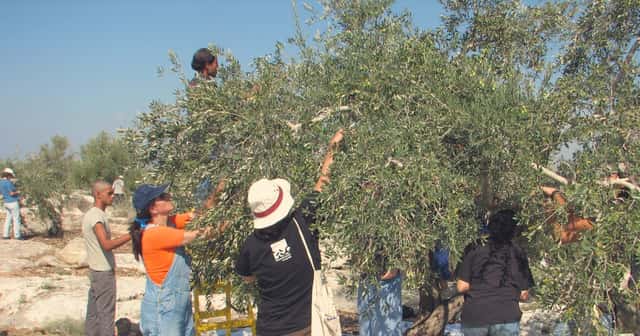
The West Bank olive harvest has become one of the most violent stretches of the year for Palestinian farmers. It has also become a test of how Israel's government, army and police respond to attacks by Israeli civilians.
The United Nations humanitarian office, known as OCHA, reported on Saturday that it documented 397 settler attacks causing casualties or property damage between Oct. 1 and Oct. 26. That is the most in any month since the UN began keeping such records in 2006, according to a summary of the report published on Nov. 1 by the Palestinian Information Center. The figure does not include the last five days of October.
Israeli officials describe a different picture in parts. Settler leaders say activists use the harvest to provoke confrontations. A security official told the Jerusalem Post that the army is deployed where harvests are coordinated "to prevent friction." Israel's Prime Minister's Office says it "unequivocally condemns violence against anyone."
This report draws on OCHA data as relayed by two Palestinian outlets, on Israeli and international news reports, and on statements from Israeli officials and settler councils. Several original sources could not be opened, and they are listed at the end.
What OCHA reported
OCHA's most recent weekly figures cover Oct. 20 to Oct. 26. In that week the office documented 62 settler attacks that caused casualties or property damage across 49 West Bank communities. Thirty-eight of them were linked to the olive harvest.
The office said 57 Palestinians, including nine children, were injured across the West Bank, including East Jerusalem. Twenty-three were injured by settlers. Thirty-four were injured by Israeli forces.
Of the total, 27 people, or 47 percent, were hurt by forces or settlers "in the context of settler attacks," OCHA said. Eighteen of those injuries came in olive-harvest incidents.
OCHA also reported displacement. In Khirbet Ras al Ahmar, in Tubas Governorate, 24 herding families, about 94 people including 40 children, were displaced. The office tied this to access restrictions and repeated settler attacks and intimidation.
The Palestinian news agency Wafa carried a similar summary. Wafa's version uses the word "colonists" for settlers. This report uses "settlers."
| OCHA figure | Number | Period |
|---|---|---|
| Settler attacks with casualties or damage | 397 | Oct. 1–26 |
| Such attacks in the latest week | 62 | Oct. 20–26 |
| Communities affected in that week | 49 | Oct. 20–26 |
| Palestinians injured in that week | 57 | Oct. 20–26 |
Source: OCHA figures as reported by the Palestinian Information Center and Wafa.
Early weeks: reports of attacks and a death
The harvest began in early October. Al Jazeera cited the Israeli rights group Yesh Din, which said it documented 109 harvest-related incidents in 75 Palestinian communities between Sept. 27 and Oct. 6. That is about 11 a day.
Al Jazeera also reported that a farmer named Ali Bazzari, 44, was killed on Wednesday, Oct. 7, between the villages of Ramin and Burqa. The report said armed settlers on tractors opened fire on farmers heading to their trees. His family said his only "crime" was trying to pick his olives. Witnesses told Al Jazeera that the Israeli army kept ambulances from reaching the wounded. This report could not find an Israeli military or police statement on that incident, so those accounts remain unconfirmed here.
NBC News reported that five settlers carrying bats came to the home of a farmer, Yousef Abu-Aisha, near Nablus at night. NBC said he described a beating to its reporters. This report opened only the opening lines of that article.
Al Jazeera's report also described Palestinian farmers who say they cannot reach land near settler outposts. In Qaryut, farmers said the army declared an area a closed military zone after they complained about settlers on their land. In Beit Rima, a farmer said bulldozers destroyed more than 400 trees after an Israeli military order.
Al Jazeera noted that the Israeli military has said in the past that it clears trees to prevent ambushes and security threats. Palestinians say the practice is a pattern of dispossession, the outlet reported. The Palestinian commission that tracks settlement and the separation barrier says settlers and soldiers have destroyed about 50,000 trees this year. That figure comes from the commission, as relayed by Al Jazeera, and is not independently verified here.
Oct. 16: Abu Falah
The best-documented incident took place on Friday, Oct. 16, near Abu Falah, northeast of Ramallah. Washington Post photojournalist Heidi Levine was wounded while covering the harvest.
Levine said she was knocked to the ground and kicked by masked attackers. "After about 10 minutes, they tried to make me get up; they pushed me back to the ground and continued kicking me," she told reporters, as quoted by the Jerusalem Post. She said her cameras and bag were taken. Middle East Eye, citing the Washington Post, reported that she needed surgery. Her daughter told the Associated Press that a finger was severed to the bone.
The Israeli military said forces and Border Police went to the area after reports of a violent confrontation. It said a female journalist was injured. It said troops "acted to disperse the confrontation using riot dispersal means." The military said the circumstances would be investigated. At a separate location, it said, soldiers fired warning shots in the air and then toward a suspect who ran at them with a sharp object.
The Prime Minister's Office issued its own statement. "Israel unequivocally condemns violence against anyone. Jews, Arabs, Christians, or journalists. Those responsible will be held accountable," it said. It added that reports indicated about 200 Arabs and left-wing activists had confronted around 40 Israeli youths. "The investigation must establish the facts, including who initiated the violence," the statement said. It also said Israel would not allow "disputed incidents to be exploited to demonize the hundreds of thousands of law-abiding Jewish residents of Judea and Samaria."
The Mateh Binyamin Regional Council, which administers settlements in the area, blamed the Palestinian Authority. The council said the authority had "led hundreds of anarchists and terrorists into a direct confrontation with Israelis." It said footage showed fireworks and stones thrown at Israelis. It also said Border Police dispersed the clashes and that several activists were hurt. The Jerusalem Post reported that these claims were the council's and that the identity of Levine's attackers was still unknown.
Nazem Saleh Shuman, the mayor of Abu Falah, told The New York Times that the area had become unlivable for residents. "This is our land, we were born here, our ancestors came from here, and we've lived here all our lives," he said, as quoted by the Jerusalem Post.
The Washington Post's executive editor said Levine wore visible press markings. He called the attack "unjustified."
Several Democratic members of Congress criticized the episode, according to the Jerusalem Post. Some called for an investigation. One asked whether Americans would tolerate violence by "right-wing vigilantes who operate with government protection." Another called for ending aid used to fund settler activity. The Prime Minister's Office had earlier said the facts remained unclear, and one lawmaker accused the prime minister of calling Levine a liar. This report has not seen a statement in which the prime minister used those words.
The next day, European diplomats visiting Taybeh were attacked, allegedly by settlers, i24NEWS reported, citing the Washington Post. The Belgian consul's vehicle was also targeted. An EU spokesperson said the bloc expected "full accountability as well as effective measures to prevent continued acts of violence."
Arrests and enforcement
On Oct. 19, police and the Shin Bet carried out a dawn operation in the Binyamin area called "Operation Olive Leaf." Police said 10 suspects were arrested. The arrests related to suspected violence, breaches of military orders closing areas, and illegal construction.
Police Commissioner Danny Levy said enforcement in the West Bank "must apply equally, regardless of identity or affiliation," i24NEWS reported. The commissioner also drew a line between the security agencies' duty to prevent violence and the police role in investigating offenses afterward. A separate legal dispute involving the commissioner is covered in our report on the Ben-Gvir petition.
Middle East Eye, citing Haaretz, reported that the Defense Minister said he would not bring back administrative detention for Jewish settlers. That is detention without charge, based on classified evidence. Israel uses it mainly against Palestinians. The Shin Bet director later told the Security Cabinet that he would seek to restore it for Jewish extremists if other measures fail, Ynet reported. The date of that meeting was not stated in the article, and the decision would rest with the defense minister.
At the same meeting, according to Ynet, the director said "there are not enough condemnations from the leadership, and that harms security and the settlement movement." The minister for settlements and national missions disagreed. "You are presenting it as though the Arabs are sweetness and honey and only the settlers are the problem," she said. "Palestinians attack shepherds, injure them and endanger their lives. Bring those attacks to the surface as well." She added that settlement leaders and rabbis had repeatedly condemned the violence. The Shin Bet director replied: "The Palestinians are not burning Jewish homes here."
A member of the Knesset then called for the Shin Bet director to resign, Ynet reported.
The security view
A security official quoted by the Jerusalem Post on Oct. 17 said the army would add combat troops to its West Bank division. He said that "in 98% of cases, there is no need to coordinate with the IDF to harvest olives," and that coordination is required in about 2 percent of the area. That is the official's figure, and this report could not check it.
The same official said the military faces threats from the other direction too. "Dozens of warnings come in every week," he said. A cell of four people planning an attack had been arrested near Jenin that week, he said.
The official also criticized rabbis who encourage the violence. "There are various reasons for nationalist crime, but it is also because they receive backing," he said. The Jerusalem Post reported that no arrests had yet been made in the incidents of the previous 24 hours.
Ynet reported that more than 100 Israeli agricultural farms now operate across the West Bank, covering more than 1.1 million dunams, about 272,000 acres, according to an association representing them. It said the army has had to change its deployment to protect these areas. Supporters of the farms see them as strategically important to the settlement movement.
Restrictions on activists
Before the harvest, the Yesha Council chairman asked the Defense Minister to keep activists out of harvest areas. The Yesha Council is the umbrella body for settlements. Its chairman, Yisrael Ganz, said, "Residents of Judea and Samaria are not props for campaigns by foreign activists." He added: "The olive harvest season must not become a tool for deliberately creating friction on the ground."
The Defense Minister told officials on Oct. 8 to pursue administrative removal orders against activists whose actions threaten public order or security. The request followed an announcement by the Global Sumud Flotilla that it was recruiting foreign activists for harvest areas. The Jerusalem Post named several other groups that Ganz said were organizing activities there.
On Sunday, Israeli authorities decided to deport 14 foreign activists arrested near Al-Lubban Al-Gharbi, northwest of Ramallah, the Jordan News Agency reported. It cited Israeli Army Radio. The activists came from seven countries. Israel's Population and Immigration Authority said they entered on tourist visas and violated a military order closing the area. The authority said they were suspected of trying to "disrupt public order."
The economic stakes
Ynet reported that West Bank olive oil production reached about 32,000 metric tons in 2022, according to Palestinian Authority agriculture officials. It said the 2024 harvest produced about 27,300 tons, and that output dropped to roughly 7,000 tons in 2025, a fall of about 75 percent. Ynet cited OCHA for the estimate that the territories had more than 10 million olive trees in 2019, supporting about 100,000 families.
The Israeli rights group B'Tselem says Israeli soldiers, police and settlers act with "broad impunity." Middle East Eye reported B'Tselem's finding that between 2016 and 2024, investigations were opened in 22.7 percent of 2,427 complaints against soldiers, and indictments were filed in 0.9 percent. B'Tselem also counted 1,087 Palestinians killed by the military and settlers in the West Bank and East Jerusalem between October 2023 and June 2026. That figure covers both groups and is not split by cause.
What is established and what is not
| Question | Status | Source |
|---|---|---|
| A record number of settler attacks in October | Reported by OCHA through Oct. 26 | OCHA via Palestinian outlets |
| Levine was injured near Abu Falah | Reported by the Washington Post and confirmed by the army | JPost, MEE |
| Who attacked Levine | Under investigation | JPost |
| Who started the Abu Falah confrontation | Disputed | PMO, council, Palestinian accounts |
| Ten suspects arrested on Oct. 19 | Police statement | i24NEWS |
| Ali Bazzari's death circumstances | Family and witness accounts only | Al Jazeera |
| Army kept ambulances away | Witness claim, not confirmed | Al Jazeera |
| 50,000 trees destroyed this year | Palestinian commission's figure | Al Jazeera |
| 98 percent of land needs no coordination | One security official's claim | JPost |
What to watch
OCHA's next weekly update will show whether the pace changed after the arrests. The harvest continues through November, according to the Jerusalem Post, which reported on Oct. 17 that another month remained.
Israel's post-election politics may also matter. Official results from the Oct. 27 election are due to be certified on Wednesday, and the next government will set policy on West Bank enforcement. See our reports on the Hebron withdrawal and the return of displaced residents, on the election certification dispute, on coalition talks and on stalled Gaza diplomacy.
Sources not opened
The OCHA report itself, the original New York Times and Washington Post reports, the Times of Israel and the Haaretz report were not opened. B'Tselem's figures come through Middle East Eye. OCHA figures come through the Palestinian Information Center and Wafa, which are Palestinian outlets. Only the opening lines of the NBC News report were available.
Funding and financial-interest context
No U.S. politician is quoted by name in this report, and it makes no claims about campaign funding or financial interests.
Differing perspectives
How should Israel respond to violence during the West Bank olive harvest?
Each position is summarized as its supporters make it, with equal weight and in alphabetical order. A summary is not an endorsement; the evidence for each is weighed in the story above.
Enforce more strictly against attackers
Who holds it: An Israeli security official, per the Jerusalem Post
A security official said nationalist violence has increased sharply in frequency and severity, and that the army will add combat troops to its West Bank division. He said such crime continues partly because offenders receive backing, and he criticized rabbis who encourage the violence. He also said the army must guard against terror threats at the same time, with dozens of warnings each week and a four-person cell arrested near Jenin, so forces are stretched between both tasks.
In their words: The Jerusalem Post ↗
Investigate first and avoid blaming all settlers
Who holds it: Israel's Prime Minister's Office and the army
The Prime Minister's Office says Israel condemns violence against anyone and that those responsible will be held accountable. It says an investigation must establish the facts, including who started the violence at Abu Falah, and that disputed incidents should not be used to demonize law-abiding Jewish residents of the West Bank. The army says it dispersed the confrontation, will investigate the circumstances, and condemns violence against civilians as undermining security in the area.
In their words: The Jerusalem Post ↗
Keep provocateurs out of harvest areas
Who holds it: Yesha Council and settler regional councils
The Yesha Council chairman asked the defense minister to keep activists out of harvest areas, which he described as a stage for provocations and confrontations. He said residents are not props for campaigns by foreign activists and that the harvest must not become a tool for creating friction. The Mateh Binyamin council says the Palestinian Authority led hundreds of people into a confrontation near Abu Falah and that footage shows fireworks and stones thrown at Israelis.
In their words: The Jerusalem Post ↗
Protect farmers' access to their land
Who holds it: Palestinian farmers and Palestinian officials
Palestinian farmers describe this year as the worst yet and say settlers take or destroy their olives and trees while the army closes land to them. Al Jazeera reports that Yesh Din documented 109 harvest-related incidents in 75 communities in ten days, and that a Palestinian commission counts about 50,000 trees destroyed this year. Farmers in Qaryut and Beit Rima told the outlet that closure orders and bulldozing have cut them off from groves. The army has said in the past that it clears some trees for security reasons.
In their words: Al Jazeera ↗
READ BEYOND 567POLITICS
Alternate sources & perspectives
Independent coverage and primary evidence to help you compare arguments. A link is not an endorsement; perspective labels describe the linked material.
- other perspective
OCHA: Record 397 West Bank settler attacks in October, highest in 20 years ↗
Palestinian Information Center
Quotes the OCHA report; Hamas-affiliated outlet, so figures should be checked against OCHA.
- other perspective
UN: Colonists carried out 397 attacks against Palestinians in the West Bank last month ↗
WAFA
Palestinian Authority news agency; second summary of the OCHA report.
- other perspective
US, Israeli officials condemn West Bank violence after journalist wounded ↗
The Jerusalem Post
Abu Falah incident, army, PMO and council statements.
- other perspective
More IDF soldiers expected in West Bank amid recent increase in violent clashes ↗
The Jerusalem Post
Anonymous security official's account.
- other perspective
Israel Katz orders removal of activists ahead of West Bank olive harvest ↗
The Jerusalem Post
Yesha Council request and Defense Minister's order.
- other perspective
Israeli settlers take Palestinian olives, and their harvest traditions ↗
Al Jazeera
Qatar-funded outlet; Palestinian farmers' accounts. Contains loaded language not repeated here.
- other perspective
Ten arrested in West Bank raids after attacks on journalist and foreign diplomats ↗
i24NEWS
Police statement on Operation Olive Leaf.
- other perspective
Israel arrests 10 settlers over attacks on US journalist and European officials in West Bank ↗
Middle East Eye
Relays Haaretz report and B'Tselem figures.
- other perspective
Shin Bet chief threatens return of detention without trial for Jewish extremists ↗
Ynetnews
Security Cabinet exchange; farm and olive oil production data.
- other perspective
Israeli Authorities Order Deportation of 14 Foreign Activists During West Bank Olive Harvest ↗
Petra (Jordan News Agency)
Cites Israeli Army Radio.
- independent analysis
Israeli settler attacks and military lockdown upend Palestinian olive harvest ↗
NBC News
Only the opening lines were retrievable.
Reviewed 2026-11-02. Reviewed Nov. 2, 2026 (ET). The OCHA report, New York Times, Washington Post, Times of Israel (blocked), Haaretz and AP originals were not opened; OCHA figures come via two Palestinian outlets and B'Tselem figures via Middle East Eye. The Bazzari death and the claim that ambulances were blocked rest on family and witness accounts reported by Al Jazeera; no Israeli statement was found. The date of the Security Cabinet meeting reported by Ynet is not stated in the article. No politician is named in the article; Israeli and US officials are referred to by title. The photo is an undated-location file image.